"We have to stop this debate. For me, this is over" - Lance Armstrong calls Tadej Pogacar 'the greatest of all time, by far' after Tour of Flanders victory
CyclingMonday, 06 April 2026 at 10:30
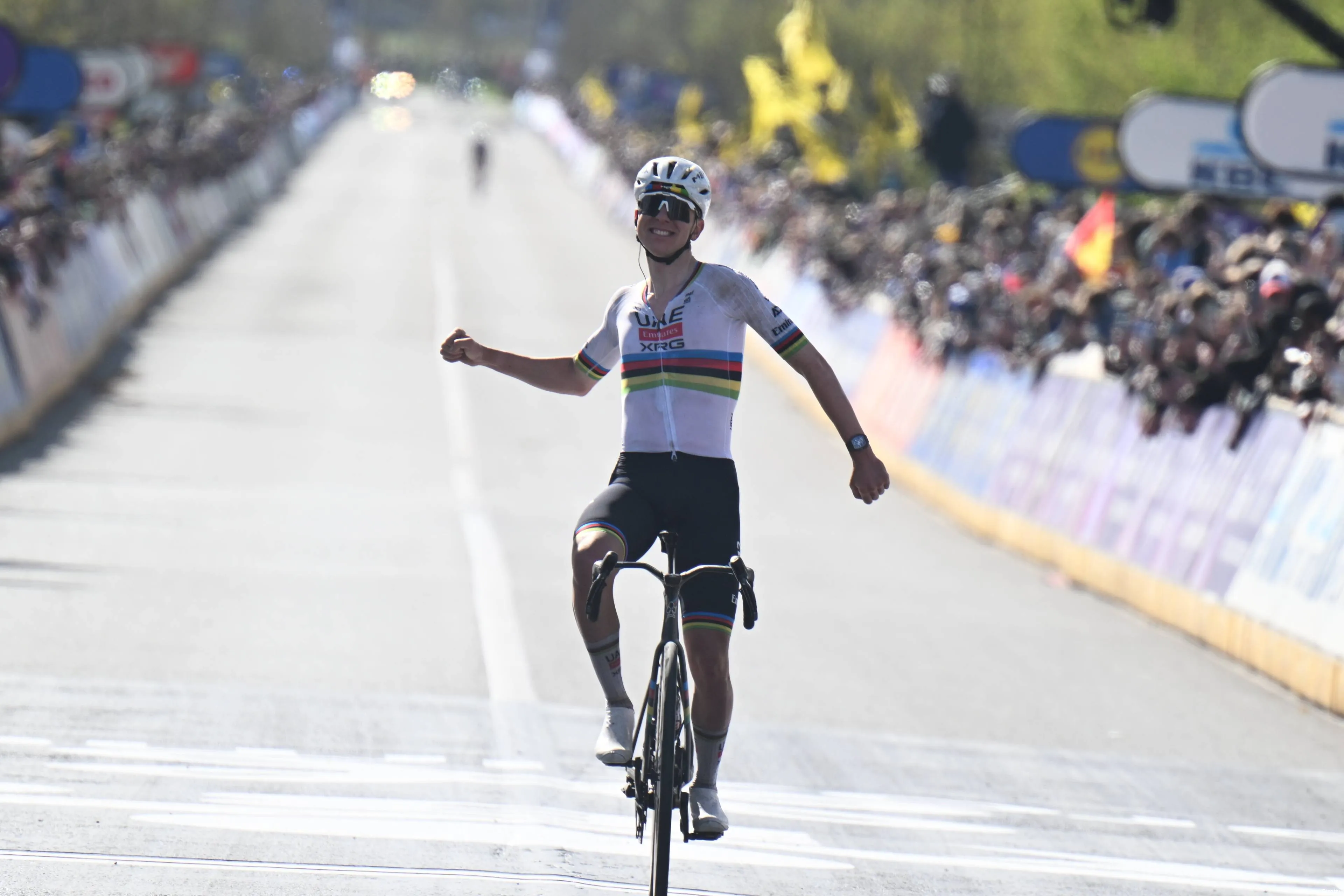
Yesterday we witnessed a historic exhibition from Tadej Pogacar at the Tour des Flandres, as he joined the exclusive club with three wins at the Belgian Monument. The Slovenian once again rode away from Mathieu van der Poel, who could not live with him on the brutal ramps of the Oude Kwaremont and Paterberg, and had to settle for second in a race where Remco Evenepoel and Wout van Aert were also key actors.
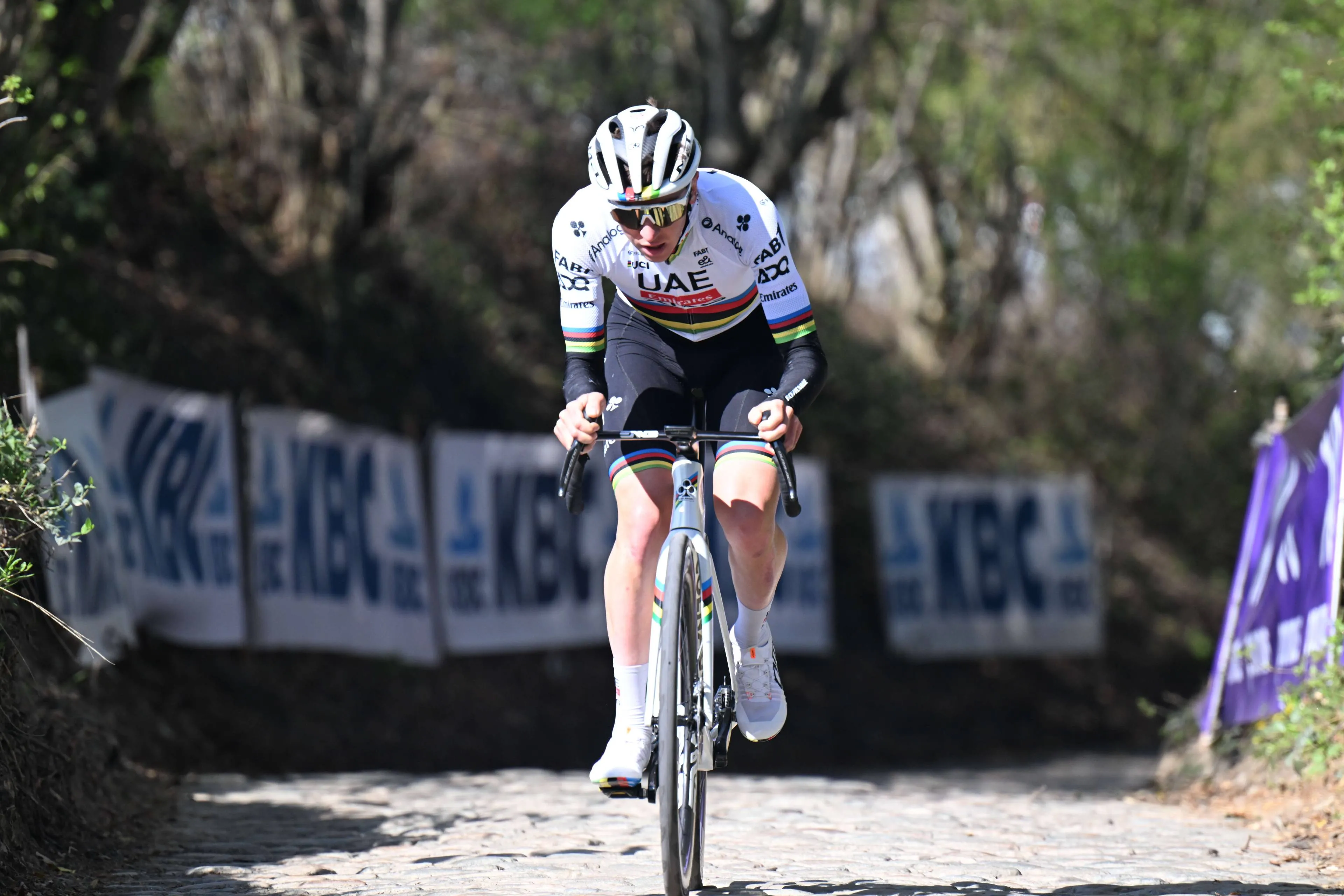
Lance Armstrong, George Hincapie, Johan Bruyneel and Spencer Martin provided their feedback of the race on The Move podcast, tackling a race that was dominantly won by Tadej Pogacar using the same tactics as in 2025, with a sequence of attacks on the cobbled climbs that ultimately saw all of his rivals get dropped.
Armstrong struck the most categorical tone. His analysis leaves no room for ambiguity or open-ended comparisons: “We have to stop this debate. For me, this is over. This guy is that good. He’s the greatest of all time, by far.” It is not just a hot take after a win, but a conclusion that, in his view, rests on repeating patterns. Pogacar not only wins, he does so in completely different scenarios, always imposing a sense of control.
That perception grows more forceful when Armstrong describes what he believes is happening inside the peloton: “You can see it in the other riders… they know. They know how this goes. The only factor that could change anything would be a crash or bad luck, and even that might not stop him.” The idea of inevitability is not only media-driven or external. It is, in his analysis, part of the group’s competitive psychology. Rivals are not only racing Pogacar, but also the expectation that, sooner or later, he will prevail.
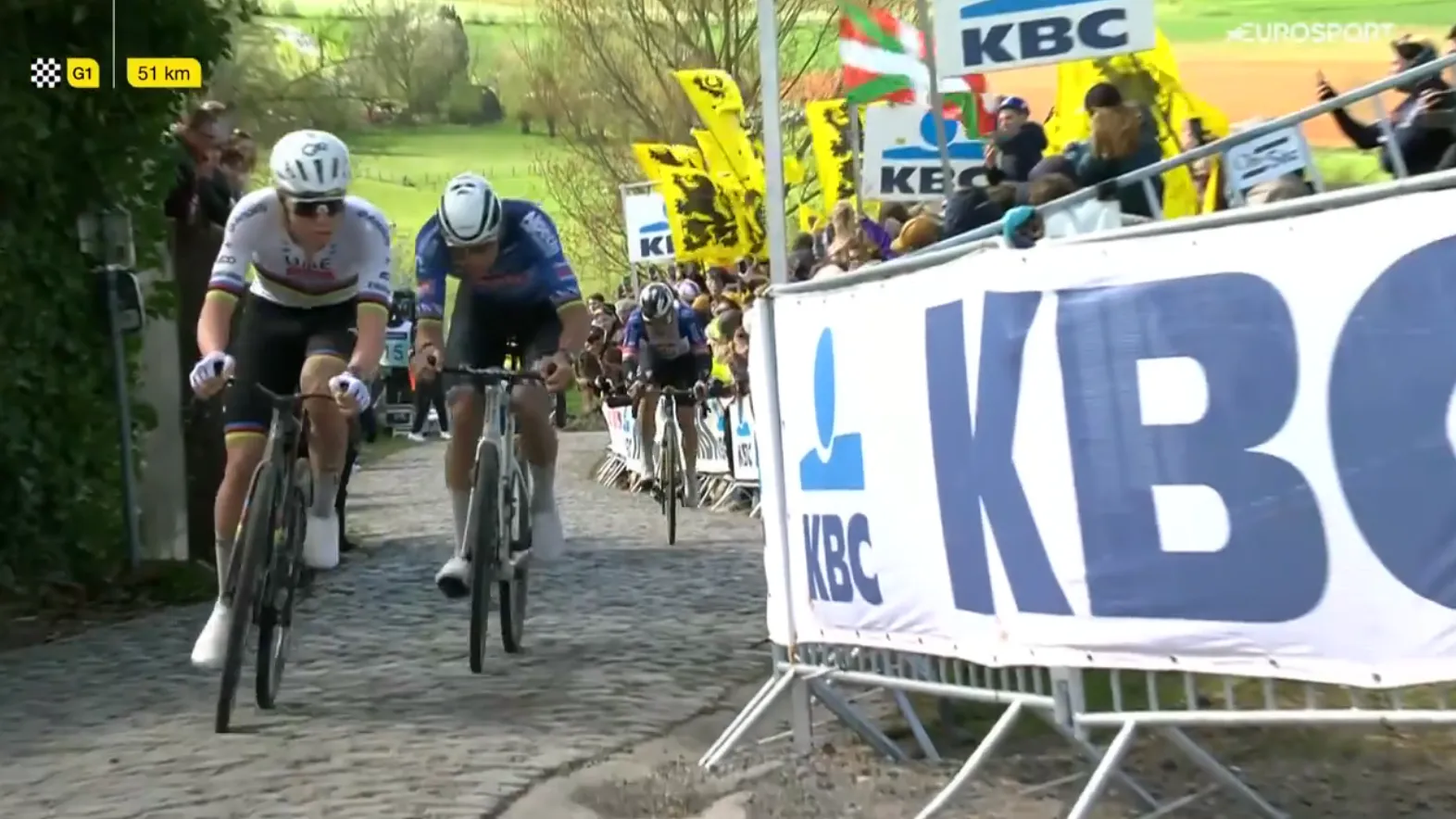
In the same vein, Armstrong reduces the problem to near absolutes: “It’s almost impossible to beat him.” Far from rhetoric, that claim was reinforced by how the race unfolded in Flanders, where tactical moves failed to disrupt the expected script.
From a more structural angle, Bruyneel adds a key nuance: Pogacar’s dominance is not confined to a single specialty. “The fact that he can win and dominate practically any race… he doesn’t race much, but when he does, he races to win. And he almost always wins.” This versatility, combined with selective scheduling, boosts his strike rate and amplifies the sense of superiority.
A brutal Tour des Flandres
The race itself reinforced that idea. Bruyneel highlighted a telling detail: “The fact that the top five came in one by one is a clear indication of how brutally hard the race was. It’s pure elimination.” It was not decided by a single tactical flourish, but by extreme attrition where, progressively, only the strongest survived. Among them, Pogacar once again made the difference.
Not every analysis focused solely on individual superiority, though. Hincapie introduced a critical point about the bunch’s collective behaviour: “They just kept rotating and holding the gap… they made the race hard, which basically means racing for Pogacar.”
His view points to a paradox. By hardening the race without an alternative plan, the rivals ended up playing into the hands of the strongest rider. This also applied to the final hour of racing where Remco Evenepoel and Mathieu van der Poel both collaborated with the World Champion despite knowing this could bite back later on.
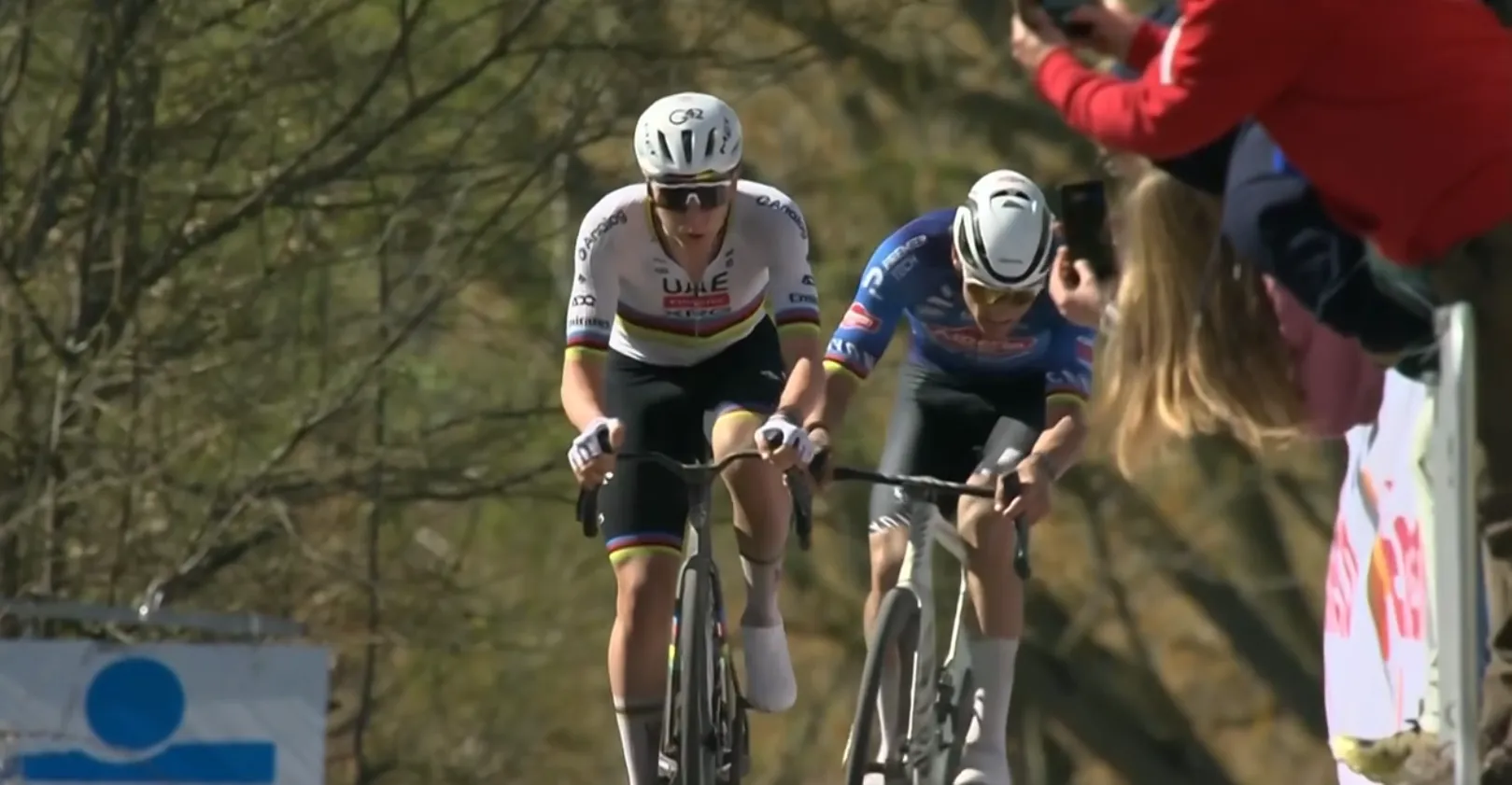
From there, he proposed an option he felt was underused: “Why not send other riders up the road and stop pulling in that group? That forces Pogacar to chase.” The idea suggests a more aggressive, less predictable approach, shifting responsibility for the race onto the favourite.
Even so, Bruyneel brought in a dose of reality that limits such plans: “Most of those riders were already at their limit just to be there. To attack you needed the legs, and many were just hanging on.” In other words, tactical theory collides with physiology. In a race as demanding as the Tour of Flanders, there is not always the physical margin to execute ideal strategies".
The debate, therefore, is not only tactical but cultural. Hincapie explained it from the mindset of the professional rider: “It’s not in their DNA not to work. When they’re in front, they work. They want a fair race and they’re all very confident.” That reveals an internal peloton logic that makes strategic cooperation against a clear dominator difficult. Even when they race each other, riders follow certain codes that shape their decisions".

Tadej Pogacar is the best cyclist in the world
Modern cycling
Bruyneel broadened the point with a reflection on modern cycling: “These days tactics are overrated… each team sticks to its plan and there’s no cooperation to go against one rider.” In this context, strategic fragmentation benefits figures like Pogacar, who do not need alliances to impose their will.
The end result is a landscape where, as Bruyneel admits, the ambitions of the rest adjust to a different reality: “From a certain point, everyone tries to consolidate their position and get the best possible result… you have to think about being in the best spot for second in case something happens to Pogacar.” That line sums up a profound shift in competitive logic. When winning seems out of reach, the goal becomes to maximize the outcome within that limit.
Read also
Rúben SilvaEditor-in-Chief
A founding contributor to CyclingUpToDate since its launch in January 2022, Ruben Silva has played a central role in shaping the site’s editorial direction and long-term growth. Before joining the project, he built his experience through independent blogging at Echelons Hub and by producing race previews for Ciclismo Internacional, developing a strong analytical voice rooted in daily engagement with professional cycling.
Beyond editorial work, he has been closely involved in the expansion and coordination of CyclingUpToDate’s wider network, helping establish and support sister platforms across multiple languages. This includes ongoing collaboration with CiclismoAlDia (Spanish), CiclismoAtual (Portuguese), WielrennenUpToDate (Dutch), and RadsportAktuell (German), contributing to a shared editorial vision and consistent international coverage.
He also helps oversee editorial governance across the network, setting standards for accuracy and consistency and coordinating updates or corrections when needed.
Originally from the Porto metropolitan area in Portugal, he holds a bachelor’s degree in Geography. His path into cycling journalism was shaped not through formal media training, but through independent reporting, community engagement, and sustained on-the-ground involvement in the sport.
Over the course of his career, he has conducted approximately 100 interviews across road cycling and cyclocross, ranging from one-to-one conversations and online formats to press conferences and on-site pre- and post-race coverage. His interviews include leading riders, team managers, and prominent figures within cycling media: Tadej Pogacar, Jonas Vingegaard, Mathieu van der Poel, Primoz Roglic, Wout van Aert, Joao Almeida and Tom Pidcock; managers like Patrick Lefevere and Joxean Matxin; and YouTube personality Bryan Kennedy (BKXC)...
Within 18 months of launch, he helped grow CyclingUpToDate’s English-language platform into one of the most-read cycling news websites, built entirely from the ground up. As both a professional journalist and lifelong cycling enthusiast, his focus remains on delivering accurate, timely, and well-contextualized coverage.
claps 11visitors 8
Just in
Popular news
Latest comments
- Yes lets hope he is not on the same stuff as Tyler or he will be in trouble🤣🤣🤣paultryan200202-07-2026
- I hope the other way around.mus-musculuspeedypogigonzales02-07-2026
- The Team ******** Them-Who-Must-Not-Be-Named.. LOL... But Ruben has a kind of point..Even other Sponsors of that team, asked for the name chage In october 2025, after the vuelta.. Its important NSN that casual fans don´t associate the team with Israel..Specialy right now...Alexcavalera02-07-2026
- JV first TDF win dependeing on TP riding one mountain stage in the dumbest way possible, his DS should have been fired. JV second TDF win came because TP was recovering from a broken hand after a bad crash.Cyclingnut02-07-2026
- The then-23-year-old Antonio Tiberi was sitting in 4th overall and in the white jersey at the 2024 Vuelta à España when he pulled out due to heatstroke. It might be worse this Tour. And God forbid what will happen when this year's south-focused Vuelta comes round
 Rafionain-Glas02-07-2026
 - Bit of lol and lets get in Vins head from old team matepaultryan200202-07-2026
- Not sure he quiet has Froomes pedigree, but lets hope!whit2pet02-07-2026
- What a worthless story. Don't let the spotlight be taken off the allmighty Pogacar for a moment!whit2pet02-07-2026
- One race at a time! Remember what happened to Christopher Froome.leodis02-07-2026
- You can't handle the truth !!!mus-musculuspeedypogigonzales02-07-2026
Loading
21 Comments