Volta a Catalunya 2026 preview, profile, favourites & predictions - Vingegaard versus Evenepoel; Can Pidcock and Almeida surprise?
Cycling
The 2026 Volta a Catalunya takes place from the 23rd to the 29th of March. The Catalan race has been widely regarded as the most important mountain test throughout the spring and is one of the most difficult races outside of the Grand Tours, which often sees many of the best climbers in the world go head-to-head in the Pyrenees. We preview the race ahead.
The race was first held in 1911, won by Sebastián Masdeu at the time. The race stopped during World War 1 but not during World War 2, remaining one of the top races in the calendar throughout those years. It is not only an event that holds great importance currently, as in the past, none other than Jacques Anquetil and Eddy Merckx also won it on consecutive occasions. The race's winner list is no joke, featuring the likes of Felice Gimondi, Bernard Thévenet, Freddy Maertens, Francesco Moser, Sean Kelly, Robert Millar, Miguel Induráin and Fernando Escartin still in the 20th century.
This century, the race has become part of the then-created World Tour and has been won by Spain's golden generation with Alberto Contador (later removed), Alejandro Valverde and Joaquím Rodríguez all in the winner list; Nairo Quintana, Richie Porte and most recently two Slovenians have won the race. In 2024, Tadej Pogacar took the title, and in 2025, Primoz Roglic did it for the second time in his career.
Read also
At a glance:
| Category | Details |
| Total Distance | ~1,100 km (estimate) |
| Summit Finishes | 3 (Vallter 2000, Coll de Pal, Queralt) |
| Queen Stage | Stage 5 (Coll de Pal) |
| Final Stage | Barcelona (Montjuïc Circuit) |
Profile stage 1: Sant Feliu de Guíxols - Sant Feliu de Guíxols

Sant Feliu de Guíxols - Sant Feliu de Guíxols, 172.6 kilometers
The race begins, as usual, in Sant Feliu de Guíxols, on the Mediterranean coast. It is a day where the sprinters, classics riders and GC specialists can all fight for the stage win, whilst the overall classification is always at play in the treacherous finale.
At first glance, the stage does not seem too difficult, with a few climbs in the first two-thirds; however, nothing excessive. The riders arrive at the key part of the stage relatively fresh; it is the final 23 kilometers that really create damage.
That is because the riders take on a road which is famously a non-stop twist-and-turn, with several small climbs and technical descents. These are roads where positioning is absolutely key, and so there will constantly be a very high pace over terrain where the peloton will inevitably be stretched, and with several climbs to tackle.
Whilst attacks aren't likely to succeed here, there is a very technical descent all the way into the final kilometer where last year Tibor del Grosso almost took a breakthrough win on the road. The final. The final 600 meters then average 5%, a sprint that is by no means easy and can in itself be a massive barrier for the sprinters.
Profile stage 2: Figueres - Banyoles

Figueres - Banyoles, 167.4 kilometers
The second day of racing sees the riders start from Figueres and finish in Banyoles, with a few short and sharp climbs early on where a strong breakaway can be formed. However, out of all the stages in this race, this one is the most likely to end in a bunch sprint.
By no means is it a flat day; it is rather hilly, but perhaps it has the easiest finale of all. It features 1800 meters of climbing and a few uncategorized climbs towards the end, which aren't easy, but aren't too difficult. The finale in Banyoles, albeit slightly technical, is flat and should see a bunch sprint come to light.
Profile stage 3: Mont-roig Del Camp - Vila-seca

Mont-roig Del Camp - Vila-seca, 159.5 kilometers
The third day of the race starts in Mont-roig Del Camp and has 159 kilometers on the menu. Those who pay close attention to the race will know the first half of the stage, as the profile is essentially the very same as stage 6 of the 2022 race, where Richard Carapaz and Sergio Higuita raided the GC whilst João Almeida and Juan Ayuso didn't get along behind and lost the overall classification.
Before the race reaches the mountains, it is hard to see the same scenario. But the first two climbs of the day are the same, and so we could see GC attacks, motivated by what's happened there before. The first is 10.4 kilometers at over 6%, whilst the second one is 4 kilometers long at 4.7%. Not brutal, but hard enough for there to be chaos.
The riders make the race, and on this day, that couldn't be closer to the truth - because if the pace is taken easy and the breakaway is controlled, we could see a bunch sprint. The stage is hard, but the only truly hard climb finishes with 125 kilometers to go.
From there on it's slightly easier to control the race, although it is a profile that suits a breakaway quite well. The final climb of the day comes with 44 kilometers to go; it is 5.7 kilometers long and averages just over 4%. From there on, there is a technical descent and then a 30-kilometer-long flat section to end the stage in Vila-seca.
Profile stage 4: Mataró - Vallter

Mataró - Vallter, 173 kilometers
Stage 4 is the first true mountain stage of the race, an 'unipuerto', as the Spaniard call it. Whilst not completely flat, it is a day where most of the terrain is flat, until the riders reach the final climb to Vallter 2000, one of the race's most famous ascents, which is certain to create important differences.
The stage is all about that final climb, which brings in the altitude factor to the table - the finish line is at 2143 meters of altitude. The climb in itself is 11.4 kilometer long at 7.6%, most of the time spent a little above that; however, from 5 to 3 kilometers to the finish, there is a slight lowering of the gradients. A key day, and one which will create a clear order in the fight for the overall classification.
Profile stage 5: La Seu d'Urgell - La Molina

La Seu d'Urgell - La Molina, 155.3 kilometers
The queen stage? Perhaps, as the organizers have decided to host a stage finish in La Molina (only by name), however, through a new mountain, which changes everything. Although there are only 155 kilometers on the menu, this is a stage with 4500 meters of climbing, an insanely difficult day.
When looking at the profile, it becomes clear where this comes from, as the day features five categorized climbs, evenly spaced throughout the day, each with its own descent. It begins with the Port Coldarnat (15.4Km; 4.8%); followed by the Coll de Josa (2.6Km; 7.2%):
The real difficulty begins with the Coll de Fumanya, which is 5.5 kilometers long at 9%, featuring some very steep ramps. It ends with 62Km to go and is followed by a very technical descent. The fourth climb is slightly easier, being 7.3 kilometers long at 6.7% - the Coll de Sobirana ends with 35 kilometers to go.
However, the difficulty of the final climb is such that it is unlikely that anyone will take major risks beforehand. Now it must be said, the riders won't actually finish in the La Molina station, but instead on the Coll de Pal. The climb is 16.5 kilometers long at 7.2%, a true mountain where it is impossible to hide and where the altitude, 2109 meters at the summit, will also play a role. A proper pure mountain stage.
Profile Stage 6: Berga - Queralt

Berga - Queralt, 158.2 kilometers
The sixth stage of the race is a copy of the 2024 queen stage, where Tadej Pogacar obliterated the competition with a long-range attack. It is a stage designed for that; if the GC riders have the legs to turn the race around, they also have the terrain to make it happen.
158 kilometers in distance, starting in Berga, but with very little to mention on the first half of the day. It is the Coll de Pradell which really takes the spotlight. In total, the climb is 14.6 kilometers long at 6.9%, but this hides something as the climb has a descent and an easier first half.
The first 5.5 kilometers of the climb average 11%, which in itself is a brutality, but here it's only part of the climb. It ends with 59 kilometers to go, and the terrain to the finish is either up or down, making GC raids quite a viable option, as on the climb itself, teammates matter little as well.
The riders still have two categorized climbs on the route; however, one of them is the Coll de Saint Isidre (5Km; 7.9%; 26Km to go), and finally the summit finish in Queralt itself. The final climb, even if the race hasn't exploded by then, still does provide more roads for differences to be created. With 6 kilometers in length and 7% in gradient, after such a race and stage, the climb can create bigger differences than one would expect.
Profile stage 7: Barcelona - Barcelona

Barcelona - Barcelona, 95.1 kilometers
The race ends, as always, in the city of Barcelona with a circuit that is a perfect fit for the race and is perhaps the face of it. The first third of the stage is pan-flat and should be very fast, and very quickly the riders will begin an explosive route in and around the Parc de Montjuic.
The stage is a mere 95 kilometers in length; it's not designed to be a race of attrition but one where the peloton can explode at any moment. That is because the circuit, which the 2026 Tour de France will also be riding, is only 8 kilometers in length and either goes up or down.
There is the ascent to Montjuic itself, 2.5 kilometers in length, but what matters are the final 900 meters, which average 10% and at its steepest go quite above that. A very fast descent all the way to the finish line follows, interrupted by a small hilltop, which is around 500 meters long at 6%.
The distances make it even more impactful. Not only is it a very difficult circuit but the efforts are very close to each other. From the final categorized ascent to the finish line there are also only a mere 4.5 kilometers to go.
Volta a Catalunya 2026 Favourites
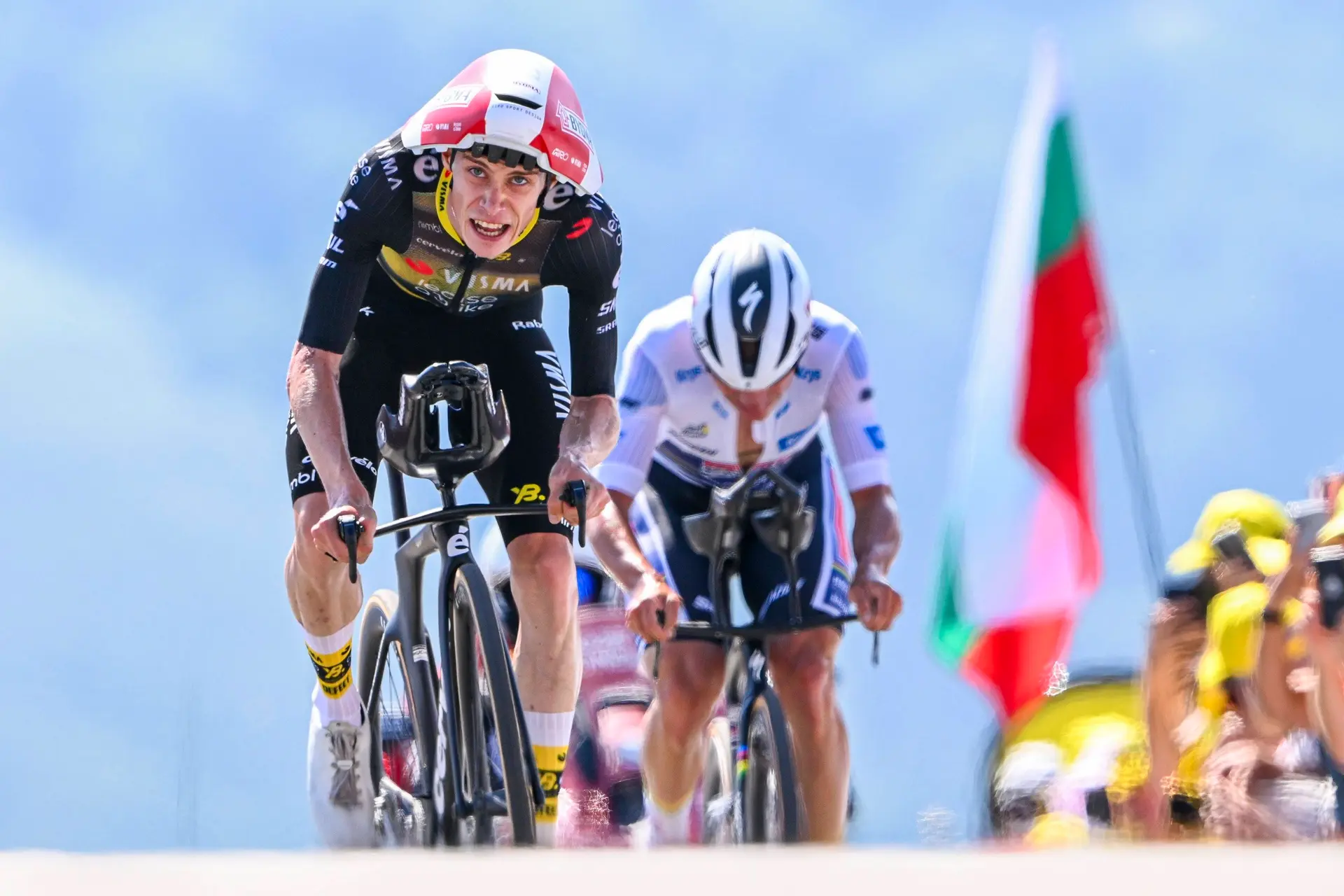
Jonas Vingegaard - This is a Tour de France-level field, not only because of the headliners but because of the extreme depth that the race has. Aside from the Grand Tours, Catalunya has matched the Dauphiné as the most reputable stage race in the calendar. The main favourite is perhaps Jonas Vingegaard, because of his recent triumph at Paris-Nice and his adaptation to the high mountains. He is backed by a team of climbers, one that can't be argued is luxurious, but at Paris-Nice, he thrived, and here the stages suit him much better. On the long climbs and high-mountain days, he can make the difference, and this is his last test before the Giro d'Italia.
João Almeida - Additionally, only Vingegaard and João Almeida of the main favourites are preparing for the Giro, which puts them in a better position at this point in the season. The UAE rider was sick and skipped Paris-Nice, however. He has a great level and great consistency; it will be interesting to see how he fares against Vingegaard, only just over a month before the Corsa Rosa. UAE have a very strong Brandon McNulty and also Marc Soler and Jay Vine backing him up, but these are men that are nowhere near as consistent, and should be chasing stage wins as well as being in a domestique role.
Remco Evenepoel & Florian Lipowitz - BORA have a key test here, as Florian Lipowitz hasn't looked great yet this season and Remco Evenepoel lacked the long climbing efforts. With an altitude camp in the bag now - even if with a messy end - this should be fixed. It has to, for their own sake. I don't think we will see the very best level from both just yet, or perhaps in the opening days of the race, but they should reach very high. Realistically, only they can take down Jonas Vingegaard here in regular conditions, but if both are in good form, they will be very dangerous and can legitimately do it because, although of course, they will have to make the difference outside of the main climbs, which is not so easy.
Tom Pidcock - The Briton is on stellar form, but he has likely put his emphasis on explosivity so far this season. For the classics, it's worked very well, and his second place at Milano-Sanremo is the best possible example. Fatigue can be at play for the Briton, however, I would argue that we won't likely see the Vuelta Pidcock just yet - or maybe I'm wrong, but in any case, this is a race decided only in the high mountains, and it will be hard for him to match the other big climbers.
The field is extremely strong, however, and is not limited to these men. The depth is otherworldly... Lidl-Trek, for example, lacks the injured Juan Ayuso but is throwing in all they have with Giulio Ciccone, Derek Gee and Mattias Skjelmose at the start line to test their climbing form - one of them at least should do very well.
The race has no time trial, which means the pure climbers actually have a chance to win it. Lenny Martínez is at the start, and his level at Paris-Nice was incredible. Whilst the climbers are longer here and the stages are not ideal, if he is consistent, he is a podium contender, with Santiago Buitrago backing him up. Decathlon have both Matthew Riccitello and Felix Gall at the start line, the purest of climbers who will love what this race has to offer. Then there is INEOS with Oscar Onley at the start, but also Carlos Rodríguez.
We have Mikel Landa also starting his season here, Richard Carapaz, who didn't have the form at Tirreno-Adriatico but looked to be improving; Movistar's Enric Mas and Cian Uijtdebroeks, who are both recovering from injuries; Guillaume Martin, Lorenzo Fortunato, Cristian Rodríguez, Ben O'Connor and David Gaudu as potential outsiders for the overall classification.
Prediction Volta a Catalunya 2026 overall classification:
*** Jonas Vingegaard
** Remco Evenepoel, Florian Lipowitz, João Almeida, Tom Pidcock, Oscar Onley, Lenny Martínez
* Brandon McNulty, Giulio Ciccone, Derek Gee, Mattias Skjelmose, Lorenzo Fortunato, Mikel Landa, Felix Gall, Santiago Buitrago, Richard Carapaz, Cian Uijtdebroeks
** Remco Evenepoel, Florian Lipowitz, João Almeida, Tom Pidcock, Oscar Onley, Lenny Martínez
* Brandon McNulty, Giulio Ciccone, Derek Gee, Mattias Skjelmose, Lorenzo Fortunato, Mikel Landa, Felix Gall, Santiago Buitrago, Richard Carapaz, Cian Uijtdebroeks
Pick: Jonas Vingegaard
Original: Rúben Silva
Rúben SilvaEditor-in-Chief
A founding contributor to CyclingUpToDate since its launch in January 2022, Ruben Silva has played a central role in shaping the site’s editorial direction and long-term growth. Before joining the project, he built his experience through independent blogging at Echelons Hub and by producing race previews for Ciclismo Internacional, developing a strong analytical voice rooted in daily engagement with professional cycling.
Beyond editorial work, he has been closely involved in the expansion and coordination of CyclingUpToDate’s wider network, helping establish and support sister platforms across multiple languages. This includes ongoing collaboration with CiclismoAlDia (Spanish), CiclismoAtual (Portuguese), WielrennenUpToDate (Dutch), and RadsportAktuell (German), contributing to a shared editorial vision and consistent international coverage.
He also helps oversee editorial governance across the network, setting standards for accuracy and consistency and coordinating updates or corrections when needed.
Originally from the Porto metropolitan area in Portugal, he holds a bachelor’s degree in Geography. His path into cycling journalism was shaped not through formal media training, but through independent reporting, community engagement, and sustained on-the-ground involvement in the sport.
Over the course of his career, he has conducted approximately 100 interviews across road cycling and cyclocross, ranging from one-to-one conversations and online formats to press conferences and on-site pre- and post-race coverage. His interviews include leading riders, team managers, and prominent figures within cycling media: Tadej Pogacar, Jonas Vingegaard, Mathieu van der Poel, Primoz Roglic, Wout van Aert, Joao Almeida and Tom Pidcock; managers like Patrick Lefevere and Joxean Matxin; and YouTube personality Bryan Kennedy (BKXC)...
Within 18 months of launch, he helped grow CyclingUpToDate’s English-language platform into one of the most-read cycling news websites, built entirely from the ground up. As both a professional journalist and lifelong cycling enthusiast, his focus remains on delivering accurate, timely, and well-contextualized coverage.
claps 4visitors 4
Just in
Popular news
Latest comments
- Could we give Seixas time to be Seixas and not make comparisons too soon? Maybe it’s my age speaking, but he’s a mere 20, barely started. Sure, a phenom, but so young. Will he win 8 Monuments like van der Poel so far, will he win 4 grand tours like Vingegaard? Those have been the two seconds to Pogačar’s first, since covid. Yes, there’s an eventual changing of the guard, but Seixas will need time to build the palmares to make his case. Might we please give him that time (while we enjoy the hell out of his riding)?RidesHills15-10-2026
- You've been dropped multiuple times from this site LOL !frieders315-10-2026
- 'Seixas will never each Pogi's level?' WTF...you have a crystal ball or you just blowing more smoke here !frieders315-10-2026
- lol great point, but the riders have to do something. I know these are open roads, lots of cars, but these is not good for the riders of course.mij15-10-2026
- its kind of hard to believe that standing at the starting line in protest, at a race that didn't have a saftey issue, hasn't fixed the problem......jad2914-10-2026
- Comparing young riders to greats leaves them open for failure and disappointment. At one time, Moscon was compared to Boonen by his team and it turned out nothing like that. Currently its a very crowded space especially with Pogi wining everything.abstractengineer14-10-2026
- This is crazymij14-10-2026
- This is crazymij14-10-2026
- This is crazymij14-10-2026
- problem is they are not stacked at all with most of their stars declining. Behind jonas they basically have zero climbers of top tier quality its insanely bad.miguel14-10-2026
Loading
1 Comments