"He’s even blocked all cycling-related accounts on social media" - Simon Yates retirement "strange" but in keeping with burnout claims, says expert
CyclingSunday, 25 January 2026 at 17:25

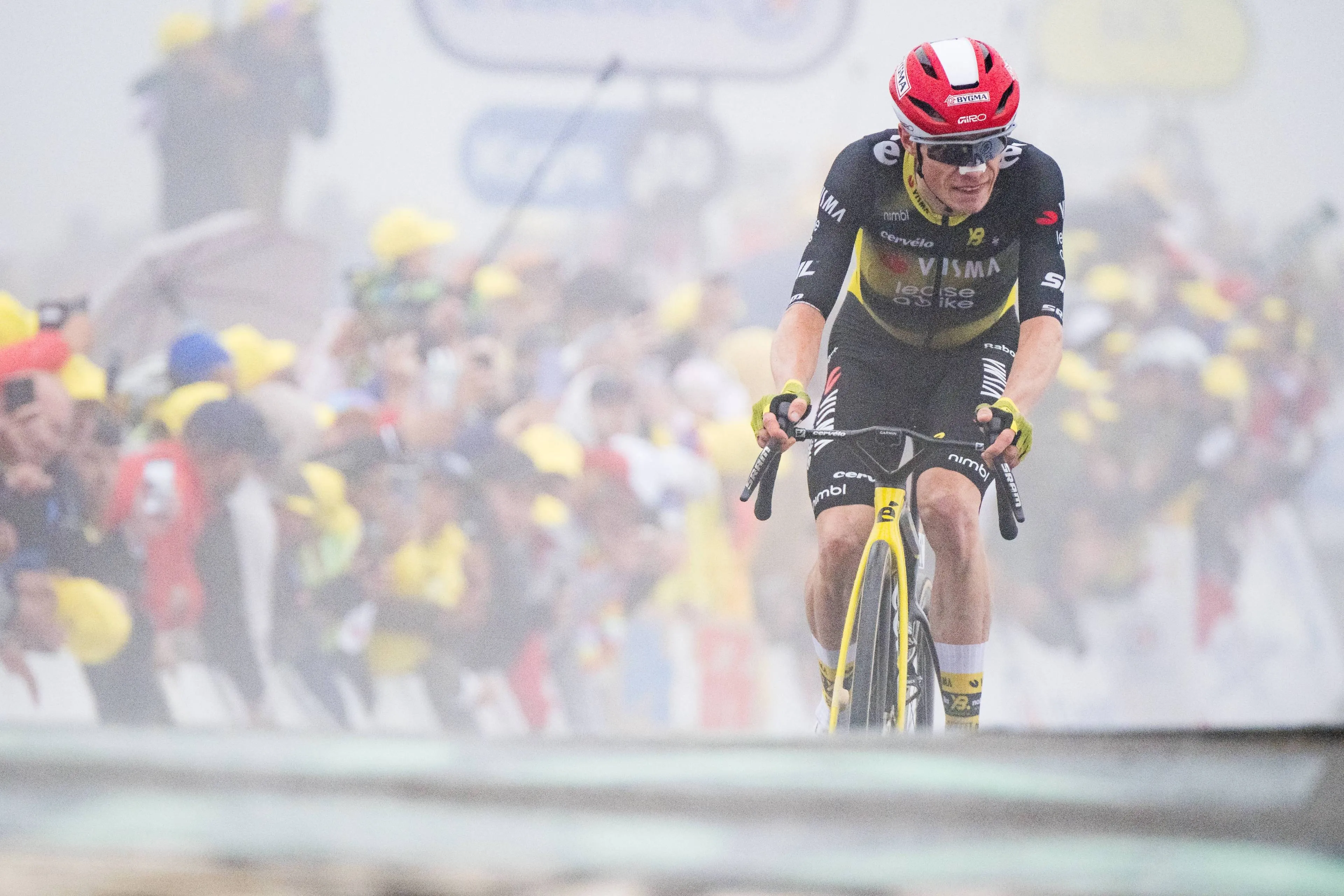
Team Visma | Lease a Bike are heading into the 2026 season with more questions hanging over them than at any point in recent years.
The shock retirement of Simon Yates has removed a proven Grand Tour winner from their plans, creating a late and unexpected hole in a structure that had already been carefully mapped out.
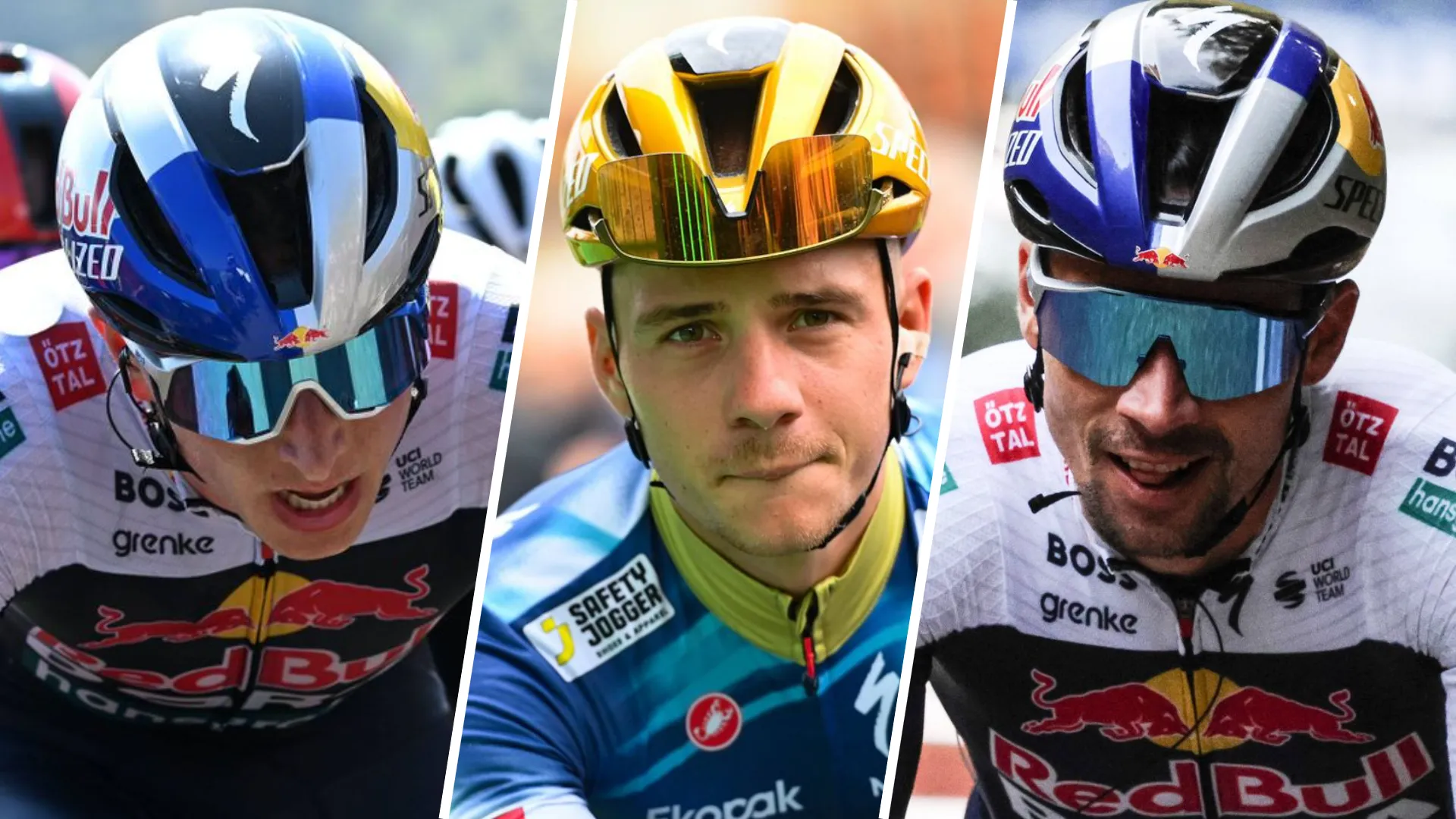
At the same time, the wider landscape has shifted. UAE look stronger again, Red Bull - BORA - hansgrohe have added more firepower, and Lidl–Trek are stacking points and depth. Against that backdrop, Visma’s winter has been defined less by recruitment and more by internal reshuffling.
That combination has prompted some pointed analysis in the latest edition of Eurosport’s Kop over Kop podcast, where concerns were raised not only about Yates’ exit, but about whether Visma have done enough to stand still while others move forward.
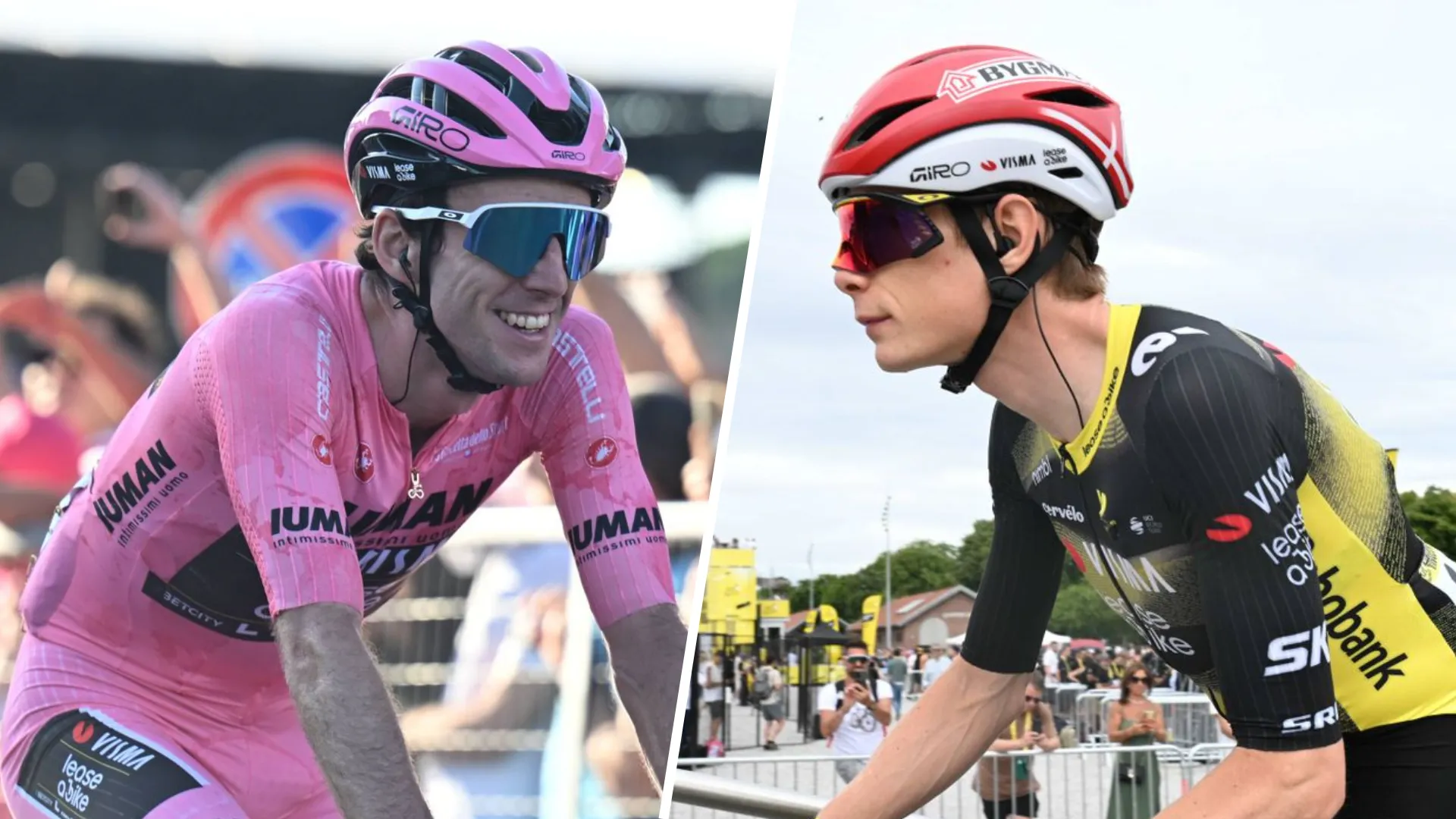
Yates exit leaves a late-season problem
When the podcast panel ran through the list of departures, the scale of the change was hard to ignore. Alongside Yates, riders such as Dylan van Baarle, Attila Valter, Cian Uijtdebroeks and Olav Kooij are no longer part of the project.
“It’s still a strong team, but they haven’t become stronger,” said Jeroen Vanbelleghem on Kop over Kop, pointing directly to the timing of Yates’ decision. “How are you going to replace Simon Yates this late? It’s already January.”
That lateness is key. Visma had already shaped their 2026 Grand Tour plans around Jonas Vingegaard, with Yates no longer positioned as a co-leader but still expected to be a central pillar. His retirement removed that safety net without offering the team any real time to react externally.
Vanbelleghem does believe Visma will look inward for solutions, adding: “It could be that Ben Tulett gets a bigger role.” But that, too, underlines the risk. Promotion from within is a necessity, not a luxury.
Burnout signs hard to ignore
The circumstances of Yates’ exit also drew scrutiny. Bobbie Traksel did not shy away from suggesting a deeper issue, calling the situation “very painful” and adding: “He’s completely done. He’s even blocked all cycling-related accounts on social media. That fits with burnout, in my view.”
What puzzled the panel further was how abruptly that end appeared to arrive. Vanbelleghem questioned why Yates had still appeared publicly in Visma colours and attended Giro-related events, while Jan Hermsen noted that Yates himself had expressed a desire to defend his title, even if the team had not yet confirmed it.
“That’s probably because Jonas Vingegaard is going,” Vanbelleghem speculated, before asking whether that really had to be a problem. Hermsen’s response was blunt: “That doesn’t have to clash with each other.”
Taken together, the comments paint a picture not of a planned transition, but of a late rupture that leaves Visma exposed in areas where stability has long been one of their strengths.
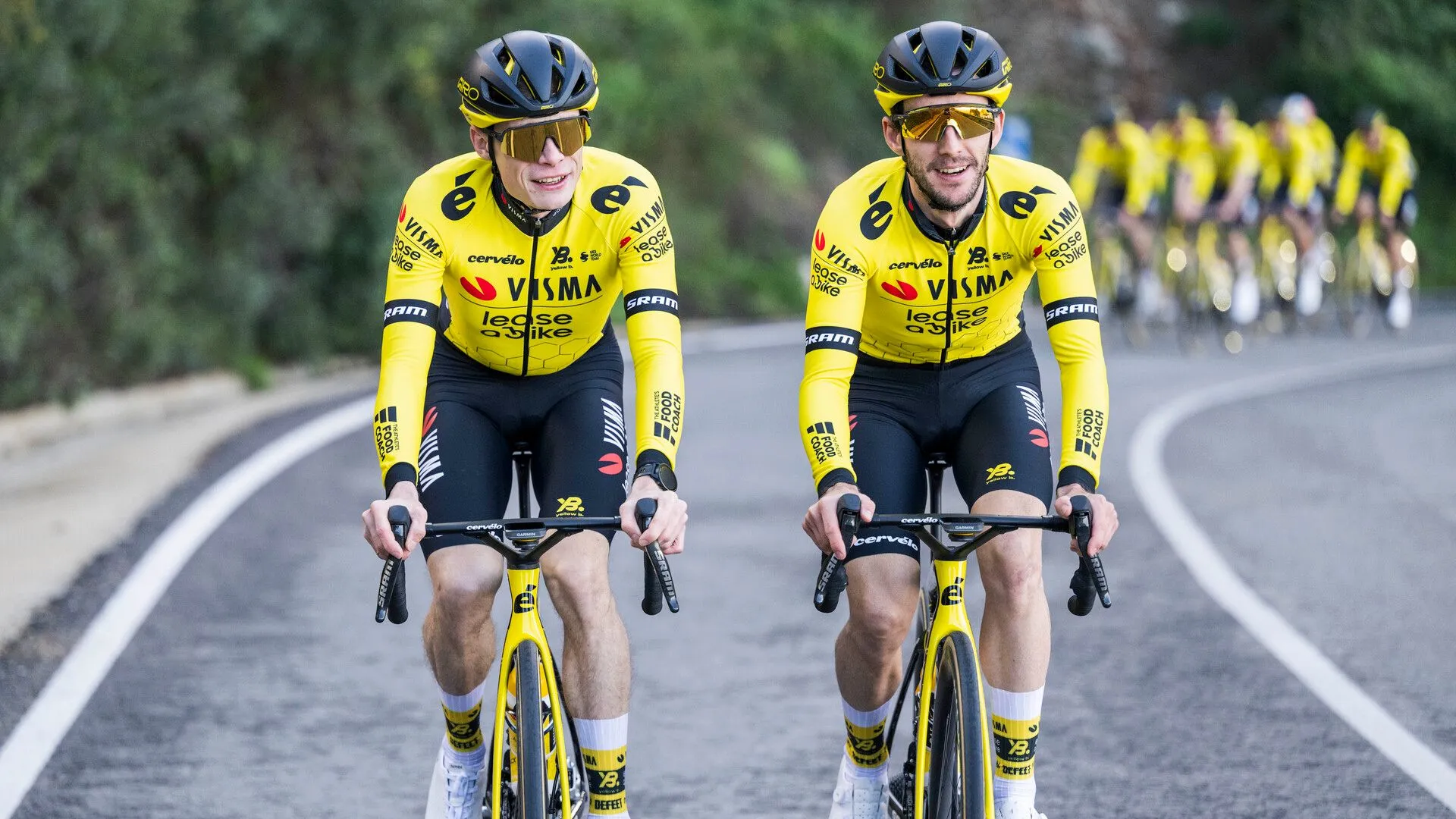
Pressure building from every side
Beyond Grand Tours, the podcast panel also looked at Visma’s broader position in the WorldTour hierarchy. Vanbelleghem warned that their second place on the UCI ranking behind UAE is no longer secure.
“They’re going to face serious competition,” he said. “Lidl–Trek are going to hurt them, especially now they’ve added Juan Ayuso as a real points scorer. And Visma no longer have Kooij.”
Matthew Brennan was mentioned as a possible partial solution, but even that was framed as compensation rather than progression. Traksel added that Red Bull, bolstered by Remco Evenepoel, are also closing fast.
The consensus was clear. Visma are not collapsing, but the margins that once separated them from the chasing pack are thinning.

Still strong, but no longer untouchable
None of the Kop over Kop contributors suggested Visma are about to fall away. The team still revolves around one of the most reliable Grand Tour leaders in the sport, and their internal structure remains among the best in cycling.
But the tone of the discussion marked a shift. For the first time in years, Visma are being analysed less as the benchmark and more as a team under pressure to defend its place.
As the experts made clear, 2026 may not be defined by whether Visma can catch UAE, but by whether they can hold off a rapidly closing pack behind them.
claps 14visitors 7
Just in
Popular news
Latest comments
- Certainly he doesn't have anything left to prove in cyclocross. he's already GOAT in that niche of cycling.mobk10-03-2026
- Oscar is the 'young Brit' now, when the team is in a good position, but when he gets dropped later on he'll be the 'young Scot'. Typical
 Rafionain-Glas10-03-2026
 - It reads as if there is a mix of AI generated text, Google translate, and then just sloppy editing and typos. A case of "you get what you pay for"?mobk10-03-2026
- What a win (although if he didn't win it'd have been bigger)! Personally I was most impressed by Giulio Pellizzari. After his debut at Strade Bianche where he exploded but still said that it'll be a fixed race for him for the next 10 years, there were probably some doubts but he silenced them. Also, Isaac Del Toro has a 2nd place curse with gravel races... 2nd in Classíca Jaén Paraíso Intérior 2025 (to Kwiatkowski), 2nd on stage 9 of the 2025 Giro (to van Aert), 2nd in Strade Bianche 2026 (with his duel with Seixas) and now 2nd to van der Poel here in Tirreno-Adriatico.Rafionain-Glas10-03-2026
- like anyone asked him to do so.mij10-03-2026
- and who made him the self appointed minister of safety???mij10-03-2026
- here is what I don’t get in the basque country crash. they did a recon. they notified the organizer the road was bumpy due to tree roots. yet he still went full gas into the corner? didn’t give gaps? he know it was a rough road and didn’t take precautions? how is that the organizers fault. and BTW, trees grow and disrupt surfaces. everyone has a brake on their bikes.mij10-03-2026
- They haven't actually published his numbers from saturday, it's all guesswork.JWB10-03-2026
- Yes, Mathieu, go for itRafionain-Glas10-03-2026
- no, I think they use a lot of AI, standard stuff. they recycle about half of their photos at least, from older racesmij10-03-2026
Loading
3 Comments