“The star of the future” - Tadej Pogacar’s superagent sets sights on women’s cycling’s first €1m contract as Paula Blasi’s explosion changes the game
Cycling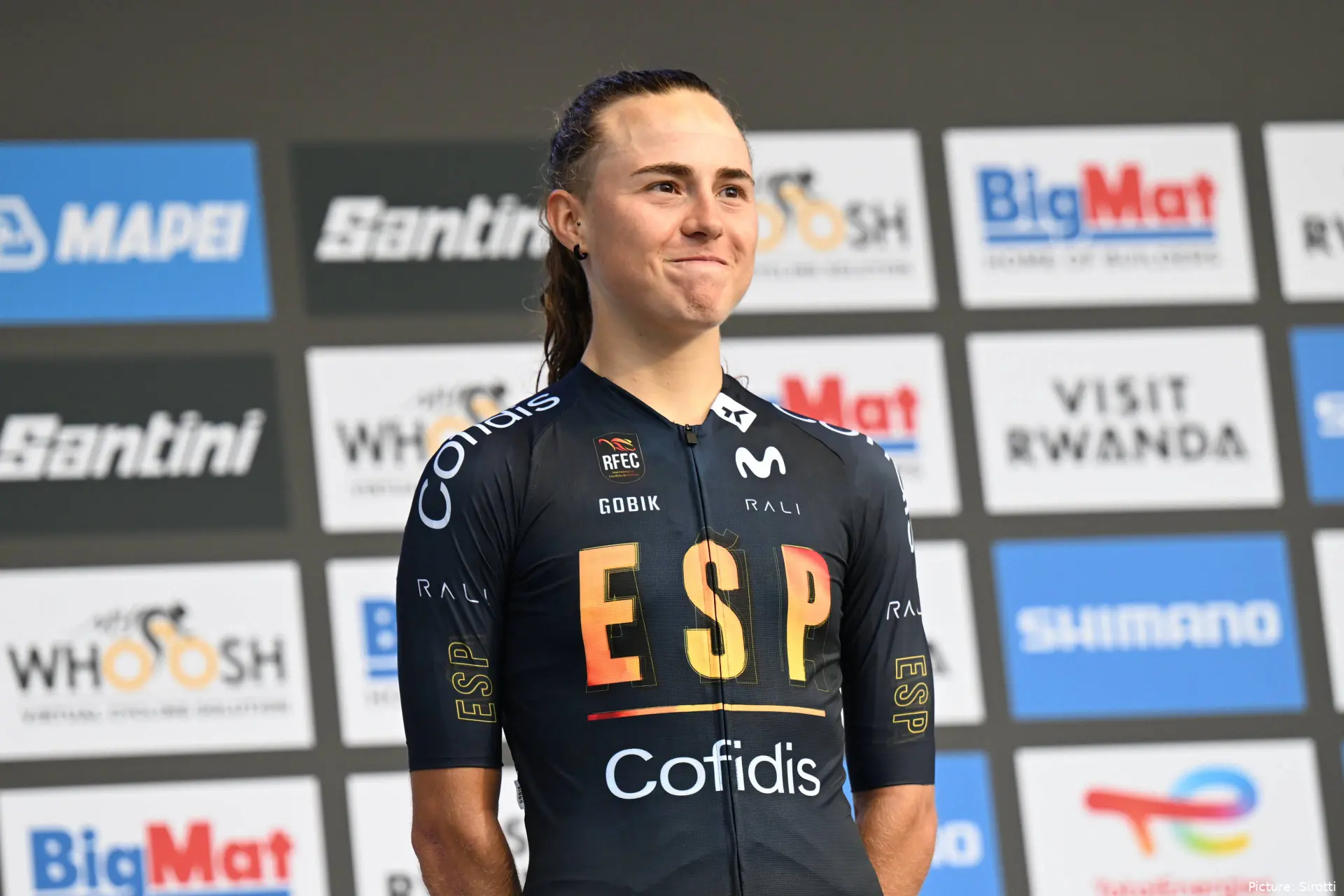
Women’s cycling has been moving towards its first million-euro salary for years. Alex Carera now believes Paula Blasi could be the rider who finally takes it there.
That is no small statement. Carera is not just another agent talking up a client. The Italian represents Tadej Pogacar, Jasper Philipsen and Isaac Del Toro among others, giving him a level of influence few figures in cycling can match. Now he has placed Blasi at the centre of what could become the next major financial leap in the women’s peloton.
The timing is what makes the claim so striking. Blasi is not being positioned as a future project with distant potential. After winning the Amstel Gold Race and La Vuelta Femenina in the same spring, the 23-year-old Spaniard has suddenly become one of the most valuable names in women’s cycling. Speaking to The Athletic, Carera made clear where he believes that rise should lead. Asked about his ambition to make Blasi the first female rider to earn €1m per year, he replied: “That is my goal.”
For Carera, the reasoning is simple. “Because she is the star of the future in cycling,” he said.
Blasi is forcing women’s cycling to rethink its ceiling
The significance of Carera’s comments goes beyond one contract negotiation. Blasi is already tied to UAE Team ADQ until the end of 2027, having signed that deal midway through last season. Since then, her value has changed dramatically.
Her Amstel Gold Race victory transformed her status in the Classics. Her overall win at La Vuelta Femenina pushed her into an even bigger category. Across one spring, Blasi proved she could win a major one-day race, handle the demands of a Grand Tour, and compete under the kind of pressure usually reserved for the most established names in the sport.
That matters because the top end of women’s cycling is changing quickly. Demi Vollering’s move to FDJ-SUEZ already showed how aggressively the market is developing, while Lotte Kopecky remains one of the sport’s most valuable and recognisable riders at SD Worx-Protime. Both are believed to be close to the million-euro mark, though the exact salary ceiling in the women’s peloton remains difficult to verify.
Not a one-race wonder
Blasi now sits in that wider conversation. The difference is how fast she has arrived there. And this is what gives the story its edge as Carera is not simply arguing that Blasi deserves to be well paid. He is publicly setting a benchmark for what the next generation of women’s cycling stars should be worth.
Blasi’s 2025 results make that argument easier to understand. Alongside her wins at Amstel and La Vuelta Femenina, she finished third at La Fleche Wallonne and fifth at Liege-Bastogne-Liege. That gave her spring campaign real depth. It was not one surprise result followed by silence. It was a sustained arrival at the highest level.
For UAE Team ADQ, that makes Blasi both a prize asset and a long-term challenge. They already have one of the most exciting riders in the peloton under contract, but if her value keeps climbing at this speed, keeping her beyond her current deal could become one of the defining contract stories in the women’s sport.
Carera’s €1m target is a market signal
The “superagent” label fits Carera because his influence goes far beyond routine contract work. In a sport that has traditionally not operated like football, he is one of the closest things cycling has to a genuine market powerbroker.
His client list gives him reach across the biggest storylines in the men’s peloton, with Pogacar the defining rider of his generation and Philipsen among the most successful sprinters in the world. Blasi gives him a stake in one of the biggest stories now developing on the women’s side of the sport.
That is why his €1m target carries weight. It is not an outside prediction. It is a marker laid down by someone who understands how elite riders are valued, how teams compete for future leaders, and how quickly a rider’s commercial worth can shift when results, profile and potential all land at once.

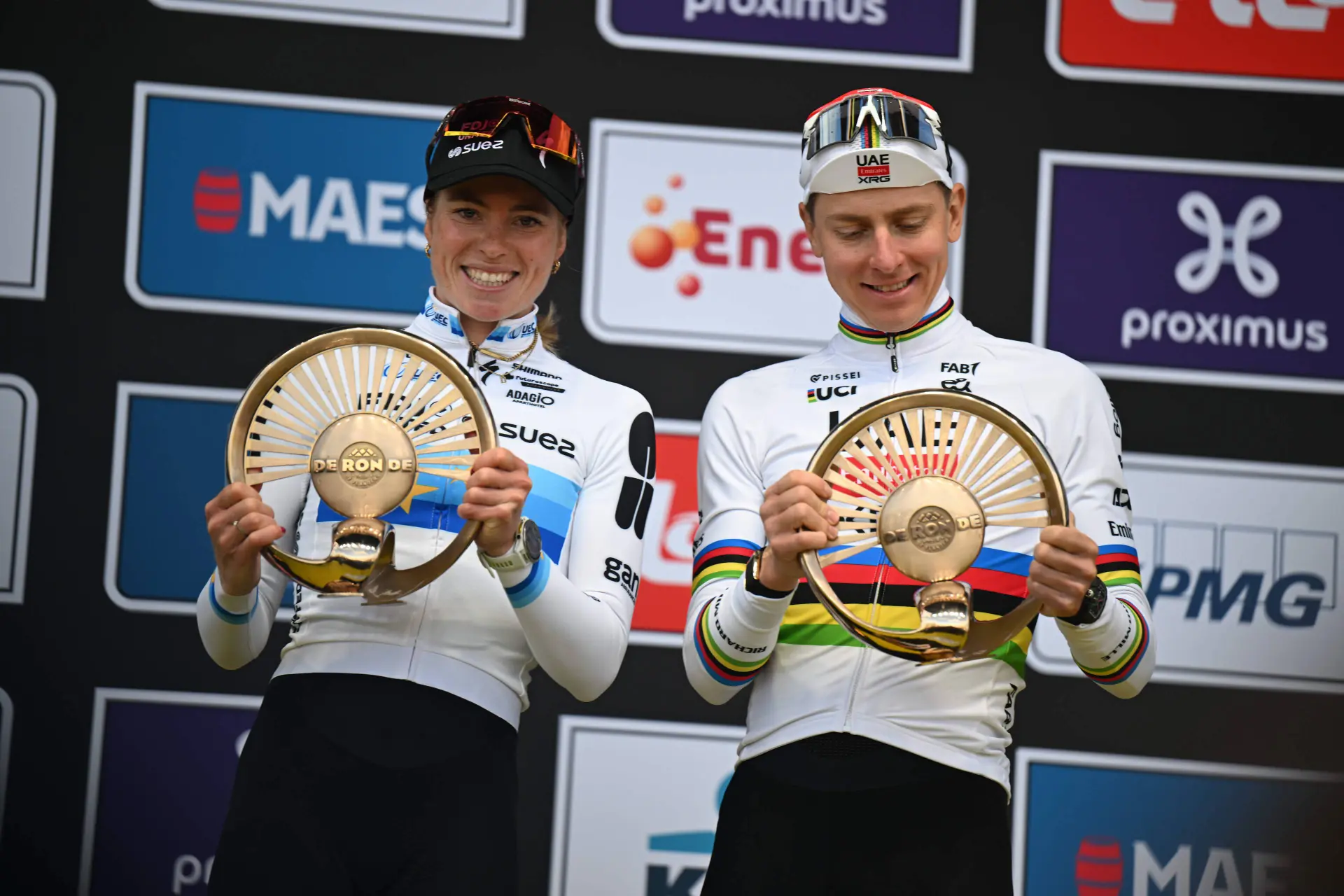
Super-agent Alex Carera speaks to the media
The next barrier for women’s cycling
Blasi’s appeal is obvious. She is young, Spanish, already winning at WorldTour level, and still feels as though her ceiling has not been found. For a women’s peloton looking for its next global figureheads, that is a powerful combination.
The current salary picture remains unclear. Vollering is reported to earn slightly under €1m per year at FDJ-SUEZ, while Kopecky is believed to be on a similar level at SD Worx-Protime. Carera’s ambition for Blasi is therefore about more than getting one rider paid. It is about breaking through a symbolic barrier the sport has been edging towards for some time.
Women’s cycling has already changed dramatically in visibility, team investment and competitive depth. The next question is whether the money at the very top can now follow the same curve.
Blasi’s explosion has arrived at exactly the right moment to test that. Carera has made clear where he thinks the market should go next. Now the sport has to decide whether its newest superstar is also the rider who finally changes the price of its future.

Kieran WoodDeputy Editor-in-Chief
Kieran Wood is a sports journalist based in Wales and has been active in journalism since 2022. He regularly contributes to DartsNews.com and CyclingUpToDate.com, where he covers professional cycling and darts. In cycling, his work includes liveblogs from major races, including the Tour de France, the Giro d’Italia, and La Vuelta a España, alongside race reports and analysis. He has also conducted interviews with professional riders.
His reporting spans the full racing calendar, from one-day classics to stage races, with a focus on accurate, real-time coverage and clear contextual analysis. For statistics, results, and historical context, he regularly uses resources such as ProCyclingStats. To support reporting on rider activity and training context where relevant, he also references Strava.
In his work, Kieran places strong emphasis on careful sourcing, editorial accuracy, and updating articles as new, verified information becomes available.
claps 1visitors 1
Just in



Popular news
Latest comments
- Can we get a comment from the UCI on this. The silence from Aigle is deafening! Come on cycling journalists , start annoying them to get a comment please.Paul53111-10-2026
- A shame to see him retire, I really liked him as a rider. His dignified tribute along with Matej Mohorovic to Gino Mader after his death was class and will always live in my memory. Enjoy your retirement.GregT11-10-2026
- A shame to see him retire, I really liked him as a rider. His dignified tribute along with Matej Mohorovic to Gino Mader after his death was class and will always live in my memory. Enjoy your retirement.GregT11-10-2026
- I thought Seixas had hit the end of the road from a fatigue standpoint, after the WC meltdown - and he still finished ok. This was impressive and an amazing return.mij11-10-2026
- totally, eating crow for breakfast this morning. after the world championships I thought we were looking at a late season fade from fatigue. way to go Paul!mij11-10-2026
- Well if UAE the best team in history comes knocking their the only team in the world who can get Seixas. Seixas will become unbeatable and incredible there. Lets see if he stays at decathlon or goes to UAE.miguel11-10-2026
- Pogi would have won the Vuelta at around 10 min. But it would have been boring for fools like you. Capish?PogiSloFans11-10-2026
- Rather than me describing the technology at length on here, If you google. Line-scan cameras. They are also sometimes called Slit-Scan cameras. Either search will fill you in. You can read all about how they. work. Enjoy! Just to be clear the cyclist is saying he wants to see exactly where the digital finish line is in relation to the actual physical finish. At this point we only have the word of the authority that the digital line corresponds to the exact starting edge of the physical finish line. That seems like a reasonable request to me.Prorodsandstuff11-10-2026
- 100% @Jumpyjohn, good point well raised.anonymouscyclist11-10-2026
- The media keep stirring the soup.. or spitting in it
 leedorney11-10-2026
Loading
Write a comment