Tadej Pogacar at the Tour de France - How much protein and carbs does the World Champion consume on a mountain stage?
Cycling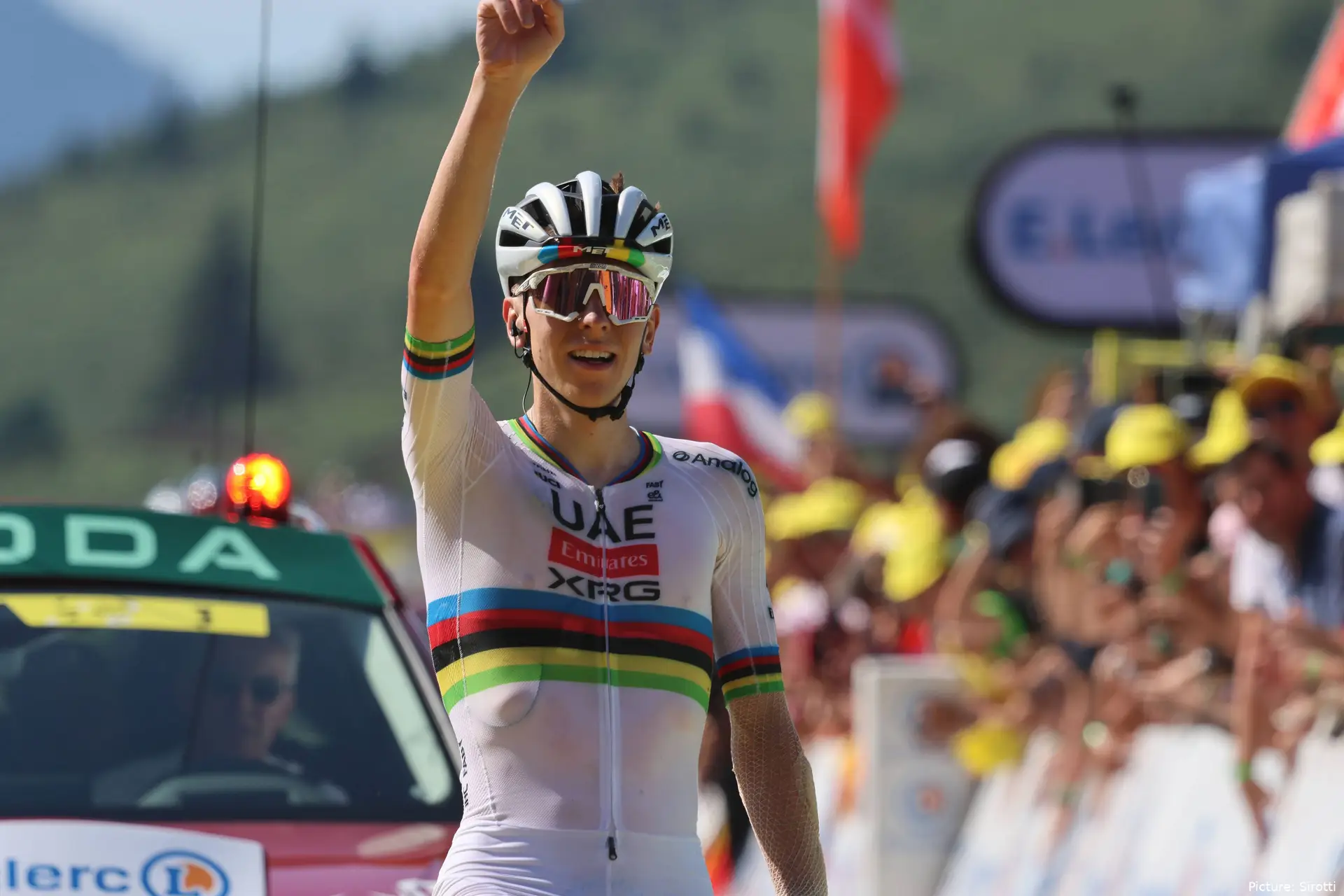
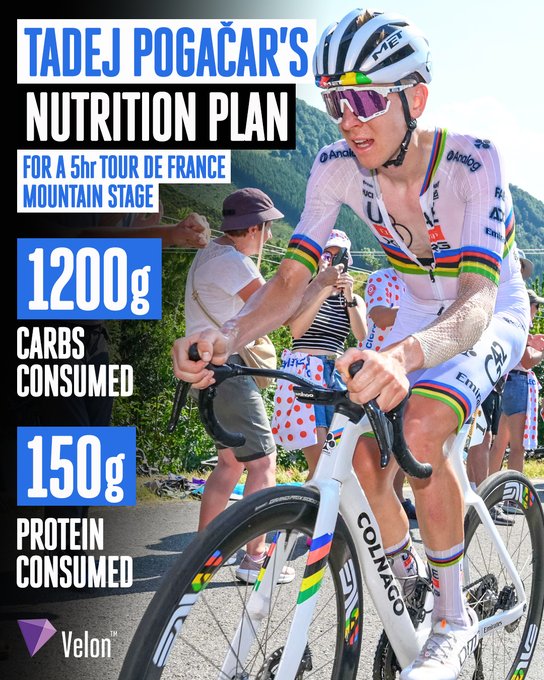
How much does a pro cyclist eat during the Tour de France? This is one of the most interesting questions that most sports fans in the world are interested in, and it varies widely depending on the rider and the day of the competition. Velon gathers some of this data from the riders throughout the race including Tadej Pogacar and they have revealed how many carbs and protein the World Champion consumes in a mountain stage.
More and more riders have nutrition as an absolutely key factor in cycling, as training the stomach to absorb high amounts of carbs aids in the energy reserves and is one of the biggest evolutions pro athletes have had in recent years. This does also mean that on the daily, the riders at the Tour consume an enormous amount of food, be it calories, carbs or protein, so as to sustain the performance day after day in an incredibly difficult environment.
The amount of food consumed depends on the stages. Much has been said about the 'magical' 120 number, which is the amount of carbohydrate grams riders are now able to digest per hour, but this is only reserved for specific days or moments of races, as it is difficult on the stomach on unsustainable in the long-term. Easier days on the bike lead to smaller energy expenditure. Nevertheless, riders can consume from 6000 to 8000 calories a day in the sport's biggest race - the same applying to other Grand Tours.
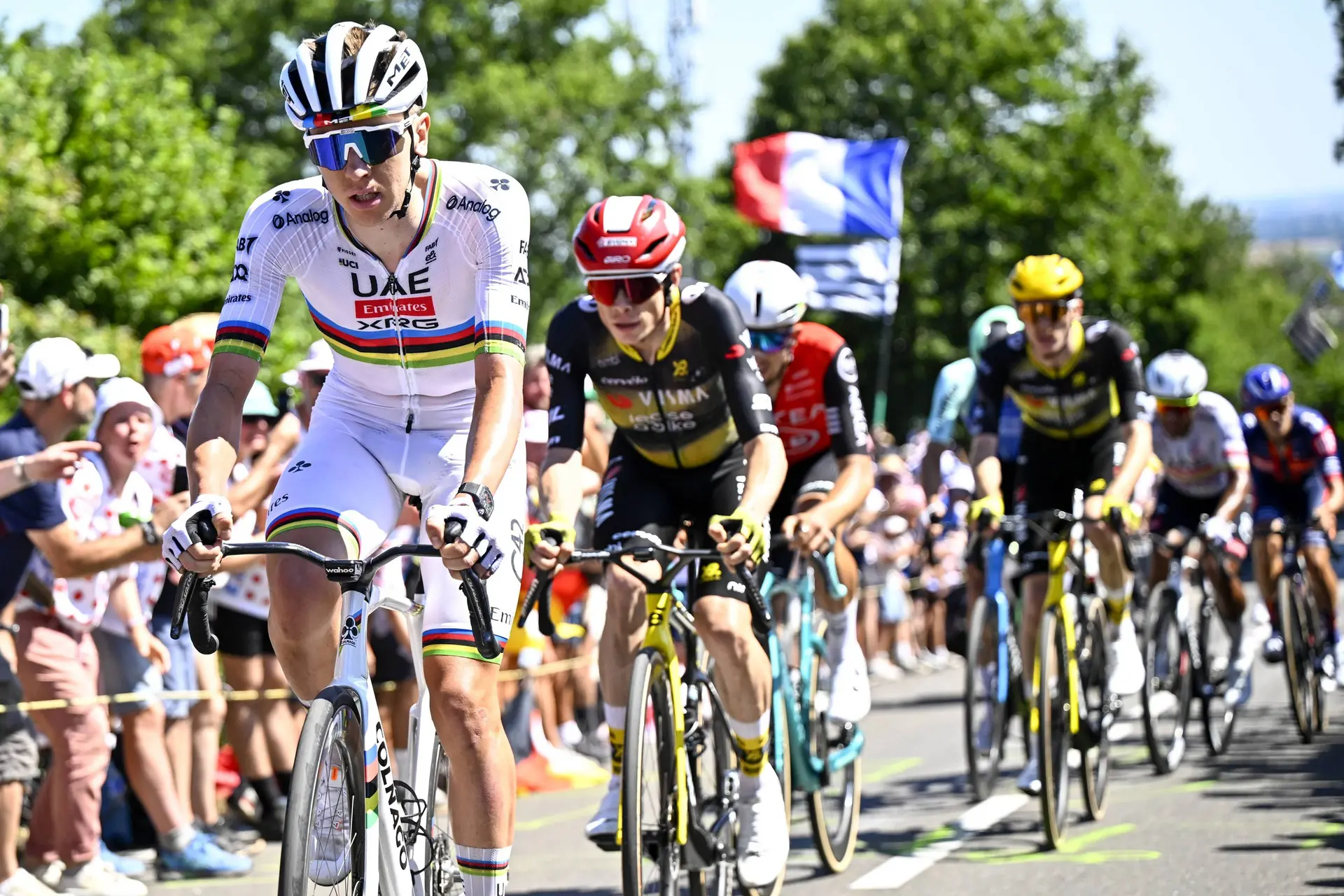
According to Velon, on a five-hour mountain stage at the Tour de France, Pogacar consumes around 1200 grams of carbs and 150 grams of protein. This has also been split according to the times of day:
Breakfast: 230g carbs; 25g protein
Pre-Race: 30g carbs; 1g protein
During Race: 460g carbs; 4g protein
Post-Race: 480g carbs; 120g protein
This insight first and foremost provides very interesting data on a rider that is at the absolute top of the sport, allowing fans to have an idea of what it takes to be able to fuel the body at the top sport. Athletes have to be able to do this on the daily too with feeding, which in itself is a key part of training that is rarely discussed.
Coaches of rival teams will be aware of these numbers and implement them on their own riders, naturally, but there are a few interesting conclusions to be taken from it. Breakfast is typically the most fat-dense meal of the day; right before and during the race the riders opt for food that has very little to no protein whilst focusing almost exclusively in the content of carbs. 460 carbs in a 5-hour race will also equal to an average of 92 grams of carbs per hour.
Post-race there is the need for immediate feeding after the finish line, a post-race meal, and a hefty dinner, which see the grand majority of all the protein consumed in a day, which aids in recovery in the great part. These nutrition plans are trained during the year and also tested and implemented in smaller stage-races throughout the year, which is one of the reasons why it is important for Grand Tour contenders to participate in stage-races all-year round even if they thrive in other aspects of the sport.
Rúben SilvaEditor-in-Chief
A founding contributor to CyclingUpToDate since its launch in January 2022, Ruben Silva has played a central role in shaping the site’s editorial direction and long-term growth. Before joining the project, he built his experience through independent blogging at Echelons Hub and by producing race previews for Ciclismo Internacional, developing a strong analytical voice rooted in daily engagement with professional cycling.
Beyond editorial work, he has been closely involved in the expansion and coordination of CyclingUpToDate’s wider network, helping establish and support sister platforms across multiple languages. This includes ongoing collaboration with CiclismoAlDia (Spanish), CiclismoAtual (Portuguese), WielrennenUpToDate (Dutch), and RadsportAktuell (German), contributing to a shared editorial vision and consistent international coverage.
He also helps oversee editorial governance across the network, setting standards for accuracy and consistency and coordinating updates or corrections when needed.
Originally from the Porto metropolitan area in Portugal, he holds a bachelor’s degree in Geography. His path into cycling journalism was shaped not through formal media training, but through independent reporting, community engagement, and sustained on-the-ground involvement in the sport.
Over the course of his career, he has conducted approximately 100 interviews across road cycling and cyclocross, ranging from one-to-one conversations and online formats to press conferences and on-site pre- and post-race coverage. His interviews include leading riders, team managers, and prominent figures within cycling media: Tadej Pogacar, Jonas Vingegaard, Mathieu van der Poel, Primoz Roglic, Wout van Aert, Joao Almeida and Tom Pidcock; managers like Patrick Lefevere and Joxean Matxin; and YouTube personality Bryan Kennedy (BKXC)...
Within 18 months of launch, he helped grow CyclingUpToDate’s English-language platform into one of the most-read cycling news websites, built entirely from the ground up. As both a professional journalist and lifelong cycling enthusiast, his focus remains on delivering accurate, timely, and well-contextualized coverage.
claps 0visitors 0
Just in
Popular news
Latest comments
- What a remarkable experience. I would've loved to ride with Mathieu however everyone passes me on a 2% climb. I'm 74 and getting slower by the year.... :~ )Paggss16-11-2026
- Decent!
 leedorney16-11-2026
- Ridiculous how he came back from 2 mins down that day!Lozza16-11-2026
- I'm not talking about amateurs, I'm talking about riders having Froome or Bernal like near death experiences. Career ending things. It simply doesn't happen in the UCI World Cup. there are a fair number of broken bones for sure, and a couple of riders have missed half a season. but in UCI World Cup mountain biking, nothing like the gnarly horrific road accidents. not even close. the bikes are going a lot slower. the trails are softer than tarmac. I ride road, mountain and gravel. I'd rather crash on a MTB all day long. there are monthly reports of deaths on the road in Orange County, CA. None none on the trails. And, there are zero cars on the trails. Remco, Egan, etc - those are vehicle issues which is 2 x as bad.mij16-11-2026
- The military is a completely incorrect analogy. Generally, in war, officers use a threat of punishment to get compliance (and bare compliance isn't much), so showing their men they are suffering with them goes a long way to get respect, and more effort. These people get paid a ton of money to support their leader. If they want to give it less than 100%, they should be fired. -A crazed cyclist, Economist, and former US Marineacem8216-11-2026
- He's too heavy
 Front24216-11-2026
- He's too heavyFront24216-11-2026
- waiting for pogislo‘s praise …😉Ketterechts16-11-2026
- This is dumb, he won 7 Tours against equal competition. He might be a complete prick, but he still be every other doped rider.textrips16-11-2026
- I think they just like to stir the pot! 😆Lozza16-11-2026
Loading

How Pogi fuels for a big mountain day 🚵 World champion Tadej Pogačar consumes 1200g of carbs and 150g of protein on the day of a five-hour Alpine or Pyrenean stage at the Tour de France. 📸 Sprint Cycling
1 Comments