"Some climbing times where I'm as fast as Armstrong..." - Guillaume Martin understands that modern peloton races an incredible speeds
Cycling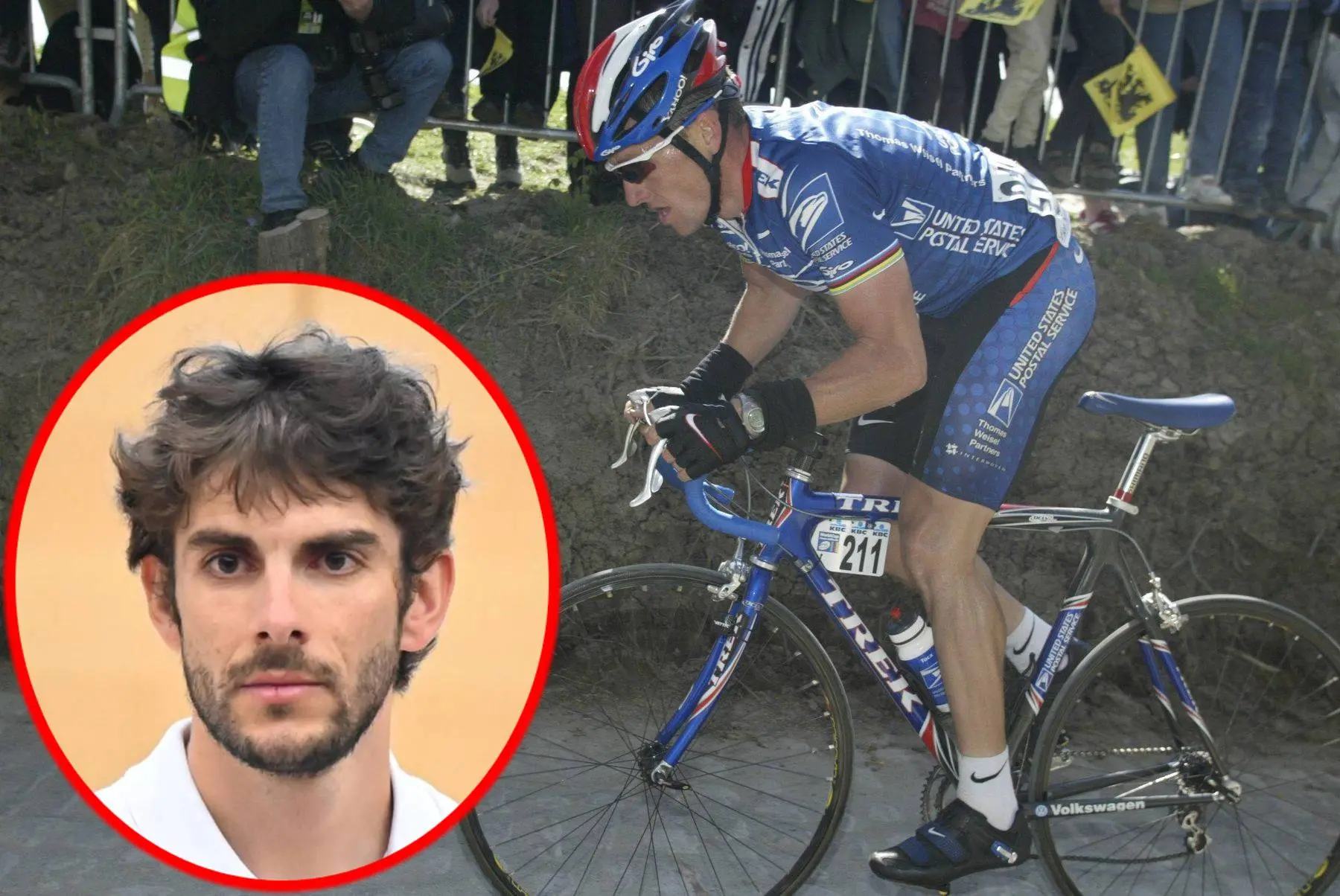
Racing in the 2020's is a completely different ordeal than previous decades, the focus on performance and every small detail that comes with it is incredibly high. Guillaume Martin puts it in the open quite clearly, stating that in some cases, he himself is climbing as fast as Lance Armstrong did during his Tour de France-winning years.
"It's true that when I have meetings at the library, for example, the question of doping comes up less often. The fact is, there isn't a great deal of evidence to support it either," Martin said in an interview with AFP.
"There may be suspicion, but what can it be based on? The performances themselves are undeniably impressive. But there are also many factors contributing to the professionalization of the sport that could explain them. I avoid dwelling on it too much because I'm just reasoning in a vacuum, lacking any real evidence".
Firstly the changes in aerodynamics are very dramatic over the past 20 years, with riders now even racing in skinsuits and aero bikes up the mountains of the Tour de France, whilst two decades ago it was barely a factor in the minds of the climbers. Secondly nutrition has been turned upside down over the past few years, and training methods become more and more evolved, as well as specific to the efforts the riders have in race.
"I myself see some climbing times where I'm as fast as Armstrong," Martin, a rider who finished at the Top10 of the Tour twice, admits. "This clearly demonstrates that by being more professional and mastering all aspects of performance, one can still reach a high level".
"Of course, there's a world of difference between me and those who dominate the Tour. But I can't allow myself to judge or accuse. I also don't want to come across as bitter. A rider in the National 1 division, the highest amateur level, trains just like me, and yet there's a world of difference between my level and his. I don't want him accusing me of doping simply because I'm stronger. Perhaps the riders at the front are naturally stronger. Throughout the history of sport, there have been some who were a class above the rest. We have to accept that".
Performance or feel?
Martin is a rider well known for his aggressive racing style, and being a pure climber with a very popular approach to racing. But he understands that if he wants to keep achieving results and maintain his position near the top of the sport, he has to take all aspects of the sport seriously and he cannot afford to leave any stone unturned.
"Sometimes I want to distance myself from this extremely scientific approach to performance management and focus more on enjoyment than control," he admits, citing the extremely high demand. "At the same time, I find it interesting. It's still a way to learn more about your body, all the tools at our disposal, and all the competent people around us. Here every evening we have meetings about equipment, nutrition, etc., and I learn something new every night. It nourishes me intellectually".
He has been able to do this thus far, and in 2025 he took back-to-back victories at the Classic Grand Besançon and Tour du Jura, was 10th at the highly-contested Criterium du Dauphiné, but at the Tour de France he wasn't able to achieve a meaningful result. "The goal remains the same: to cross the finish line first. But beyond that, the change is impressive".
"There are a huge number of tests of all kinds on equipment and the body, which means that performance is increasingly governed by science and that we make fewer and fewer mistakes. As a result, each rider manages to get the most out of their physiology. And so the overall level of the peloton is much higher. With riders also entering the professional world at increasingly younger ages. Which inevitably raises some issues".

Martin racing for Groupama - FDJ during the 2025 season. @Sirotti
But Martin launches a dire warning to the youth, which is something that is more and more common in the current peloton. The demand that it takes to be at a high level can only be kept for many years for a very select few, and if they do not have balance early in their career when trying to achieve their best level, it can end very quickly.
"Young riders can compare themselves to each other, and for those who have different trajectories or don't manage to perform well right away, it can be difficult to cope with," he says. "There's also the fact that it inevitably leads them to drop out of school earlier. Being confronted with so much pressure at such a young age can lead to psychological risks. Despite this, all the teams are focusing on this niche to stay competitive. So what if there are some duds?"
Regarding the dangers in the sport, the 32-year old doesn't believe enough is being done, and that it is quite more dangerous currently. He recently experienced it, crashing out of La Vuelta on stage 2, suffering a fractured vertebra. "It's more dangerous insofar as it's objectively faster. And since riders are doing fewer races, there's more at stake in each race, more pressure, and a fiercer battle for position in the peloton".
"What's surprising is that there hasn't been any significant progress on safety in the last ten years, even though there are certainly things that could be considered, like airbags. If they were mandatory, they would become as routine as helmets," he concluded.
Read also

Rúben SilvaEditor-in-Chief
A founding contributor to CyclingUpToDate since its launch in January 2022, Ruben Silva has played a central role in shaping the site’s editorial direction and long-term growth. Before joining the project, he built his experience through independent blogging at Echelons Hub and by producing race previews for Ciclismo Internacional, developing a strong analytical voice rooted in daily engagement with professional cycling.
Beyond editorial work, he has been closely involved in the expansion and coordination of CyclingUpToDate’s wider network, helping establish and support sister platforms across multiple languages. This includes ongoing collaboration with CiclismoAlDia (Spanish), CiclismoAtual (Portuguese), WielrennenUpToDate (Dutch), and RadsportAktuell (German), contributing to a shared editorial vision and consistent international coverage.
He also helps oversee editorial governance across the network, setting standards for accuracy and consistency and coordinating updates or corrections when needed.
Originally from the Porto metropolitan area in Portugal, he holds a bachelor’s degree in Geography. His path into cycling journalism was shaped not through formal media training, but through independent reporting, community engagement, and sustained on-the-ground involvement in the sport.
Over the course of his career, he has conducted approximately 100 interviews across road cycling and cyclocross, ranging from one-to-one conversations and online formats to press conferences and on-site pre- and post-race coverage. His interviews include leading riders, team managers, and prominent figures within cycling media: Tadej Pogacar, Jonas Vingegaard, Mathieu van der Poel, Primoz Roglic, Wout van Aert, Joao Almeida and Tom Pidcock; managers like Patrick Lefevere and Joxean Matxin; and YouTube personality Bryan Kennedy (BKXC)...
Within 18 months of launch, he helped grow CyclingUpToDate’s English-language platform into one of the most-read cycling news websites, built entirely from the ground up. As both a professional journalist and lifelong cycling enthusiast, his focus remains on delivering accurate, timely, and well-contextualized coverage.
claps 0visitors 0
Just in
Popular news
Latest comments
- Will ineos be able to field a team next season?leodis03-10-2026
- But remco cant even beat Pogacar domestiques. First Del TOro in montrela and then Mcnulty in WC. How on earth is Evenepoel ever gonne beat Pogacar when Evenepoel isnt even stronger than UAE domestiques. Applies for everyone else too but its just wild. The rest cant even handle Del Toro and hes riding for Pogacar lol..how are they suppose to challenge pogacar on that team lolmiguel03-10-2026
- Sometimes I watch races during the slow parts just for the scenery. This one for sure - Slovenia looks so much like where my family is from in Austria just over the border, the mountains from the south remind me of the view from the north, it’s a specific kind of joy and homesickness wrapped in one. Oh, and there’s also a race going on, look at that!RidesHills03-10-2026
- Jorgenseon wins teammate of eye race award again, and Pidcock got so close after having an anchor for so long. Congratulations to Piganzoli, a perfectly timed attack on the descent after the TJV one-two. I love this race, what a great show over the last few rounds.RidesHills03-10-2026
- they are without a doubt falling behind when they clearly cant keep up with lidl and RBH on the transfer market and gradually just getting worse. Rest goes without saying as its kinda obvious.miguel03-10-2026
- LIdl buying Ganna now too maybe. Visma bought jakobsen haha and donavan. Visma isnt a top 3 team anymore. Its interesting however Lidl have alot of power they might be the only team able to challenge UAE 3-4 years down the road.miguel03-10-2026
- Here's a question: when del Toro was working (and he did do a lot after McNulty went) did the gap actually go down?
 Rafionain-Glas03-10-2026
 - I agree... and Pogi would give it to him with all his heart. Primož was his hero before Pogi became a professional.PogiSloFans03-10-2026
- What's very clear is that it's not very simple. 74% of those who cast their vote in the poll, when asked if racing is better without Pogi on the startline, disagreed. And, if his influence does bring attention to the sport, then you would assume that most of that attention is from those who like watching him race.Pogthegoat03-10-2026
- They won KBK, Roubaix, and Giro among others, plus 7 stages at La Vuelta. Had a bad TDF by their standards, but mostly due to crashes. Obviously other teams have increased their budgets so that Visma can't keep everyone they would like. But calling them "terrible" is ludicrous.MidnightRider03-10-2026
Loading
Write a comment