DISCUSSION | Paris-Nice 3 & Tirreno-Adriatico 2 - Clash of the titans Van der Poel, Pellizari and Del Toro, INEOS brutal force, Jorgenson & Arensman unlucky
Cycling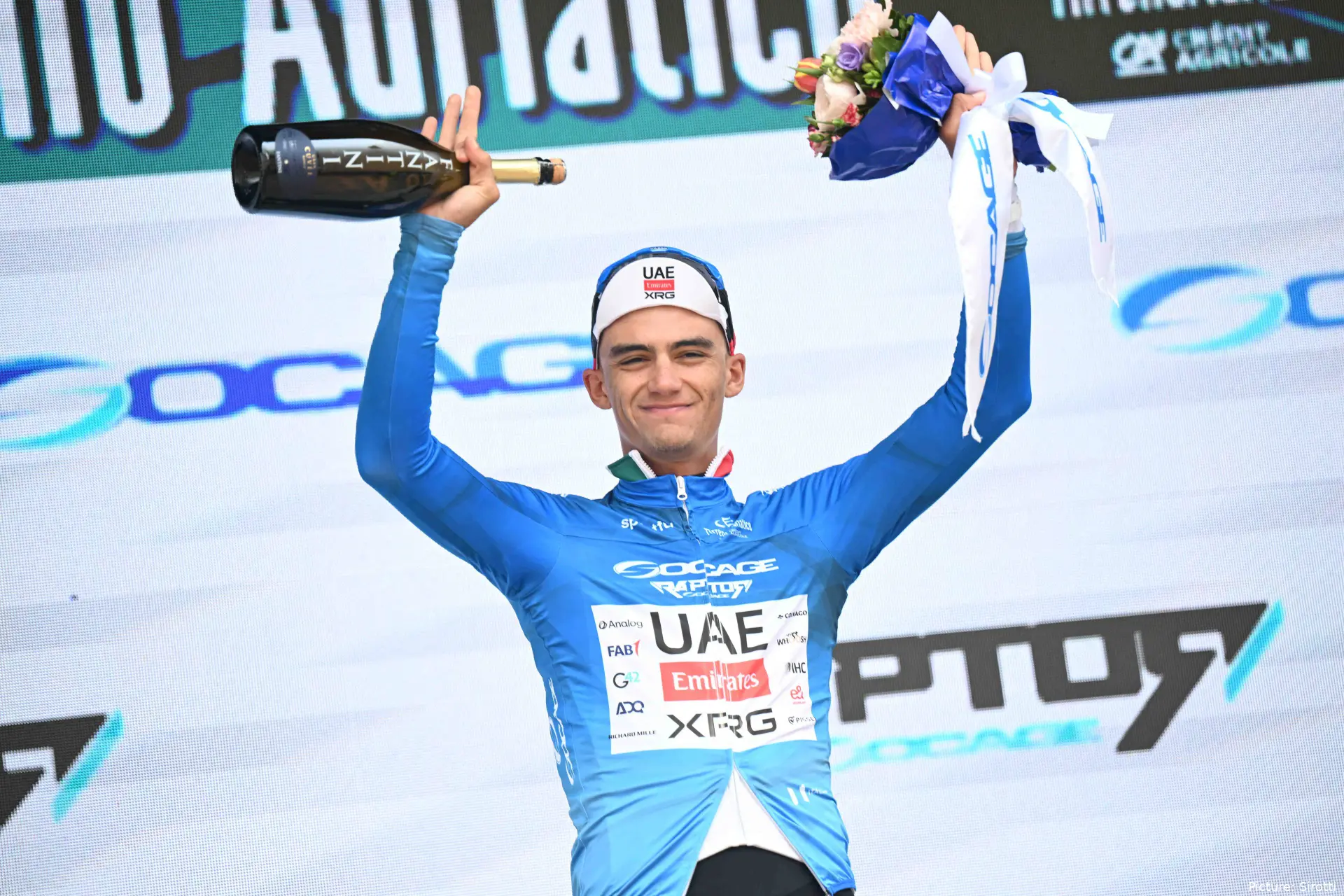
It was a day full of action and drama, both at Tirreno-Adriatico and Paris-Nice. The gravel stage in Italy promised excitement, attacks and time gaps, and it fully delivered on expectations. Meanwhile, the team time trial in France was thrilling to follow right down to the final seconds. Days like this are exactly why cycling fans love the sport.
Tirreno - Adriatico
The stage got underway with the early ascent of Montemagno, where the first attacks immediately began to fly in the peloton. The move of the day eventually formed with four riders going clear, Manuele Tarozzi (Bardiani CSF 7 Saber), Joan Bou (Caja Rural - Seguros RGA), Diego Pablo Sevilla (Team Polti VisitMalta) and Alessandro Iacchi (Solution Tech NIPPO Rali).
The breakaway animated the opening kilometres of the stage and steadily built an advantage of around four minutes over the peloton. The race then headed towards Pomarance, where an intermediate sprint was on offer, and the gap began to come down as the peloton showed signs of wanting to contest the bonus seconds.
However, the bunch never fully committed to the chase, allowing the escapees to reach the intermediate sprint first and effectively removing the battle for bonus seconds between the general classification contenders.
On the climb to Castelnuovo Val di Cecina the breakaway briefly split after a series of attacks and counter-attacks, but the riders regrouped after the summit and combined their efforts again, holding a slender advantage of just over 30 seconds.
The move was finally brought back with 39 kilometres to go, as INEOS Grenadiers took control at the head of the peloton and increased the pace heading towards the decisive part of the stage. Inside the final 17 kilometres the rain had stopped, but the roads remained extremely wet and slippery.
The peloton was travelling at high speed and spread across the road while approaching the much-anticipated gravel sector. Giulio Pellizzari lifted the pace on the sterrato, forcing the main contenders to move up and fight for position at the front of the race.
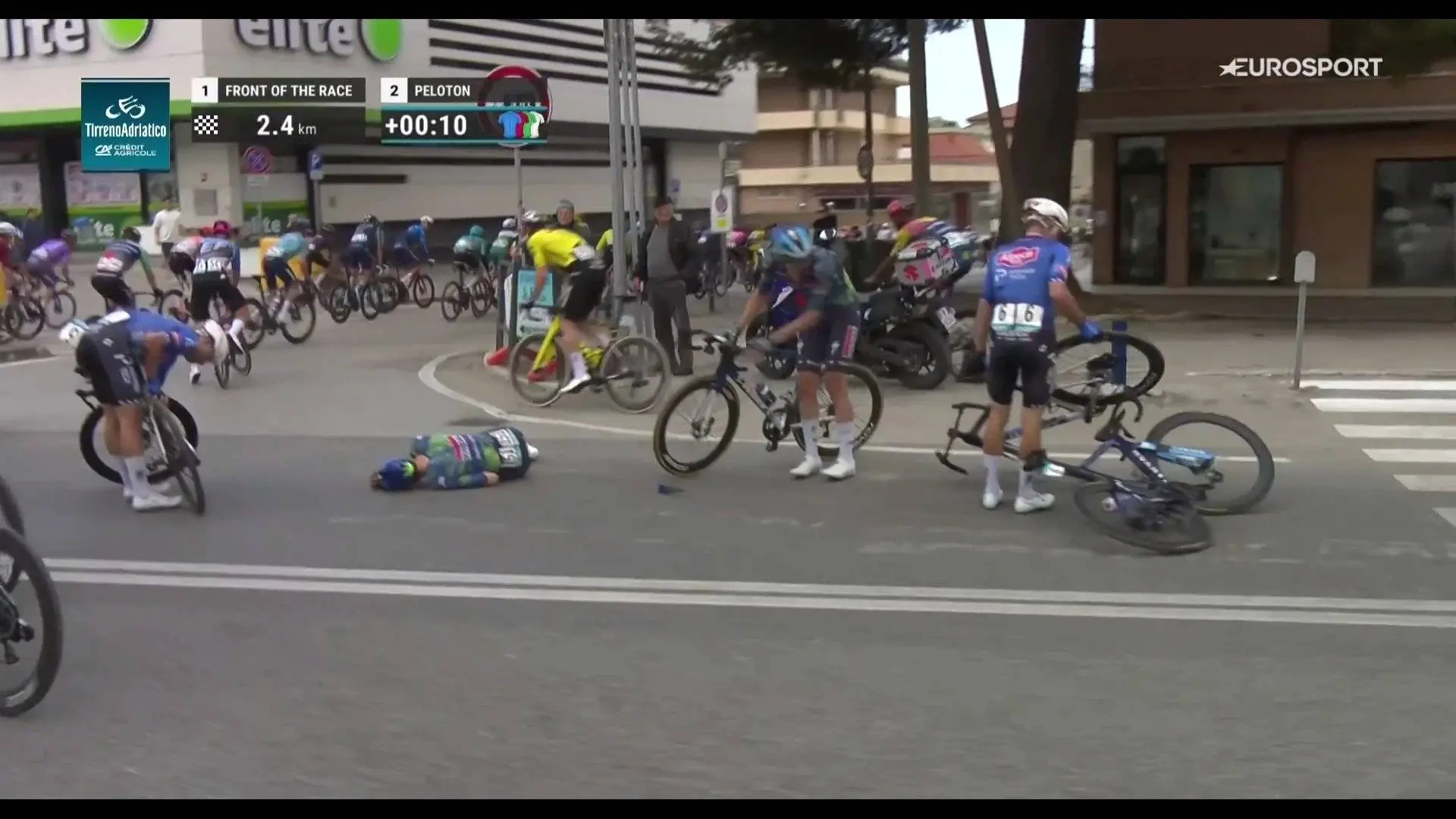
With seven kilometres remaining, Matteo Jorgenson crashed in a corner, and Mathieu van der Poel immediately accelerated. Only Isaac del Toro and Giulio Pellizzari were able to respond to the move from the Alpecin rider.
The two riders managed to bridge across to van der Poel, who himself almost went down in a corner shortly afterwards. Once the trio regrouped, it became clear that the stage would be decided in the final metres.
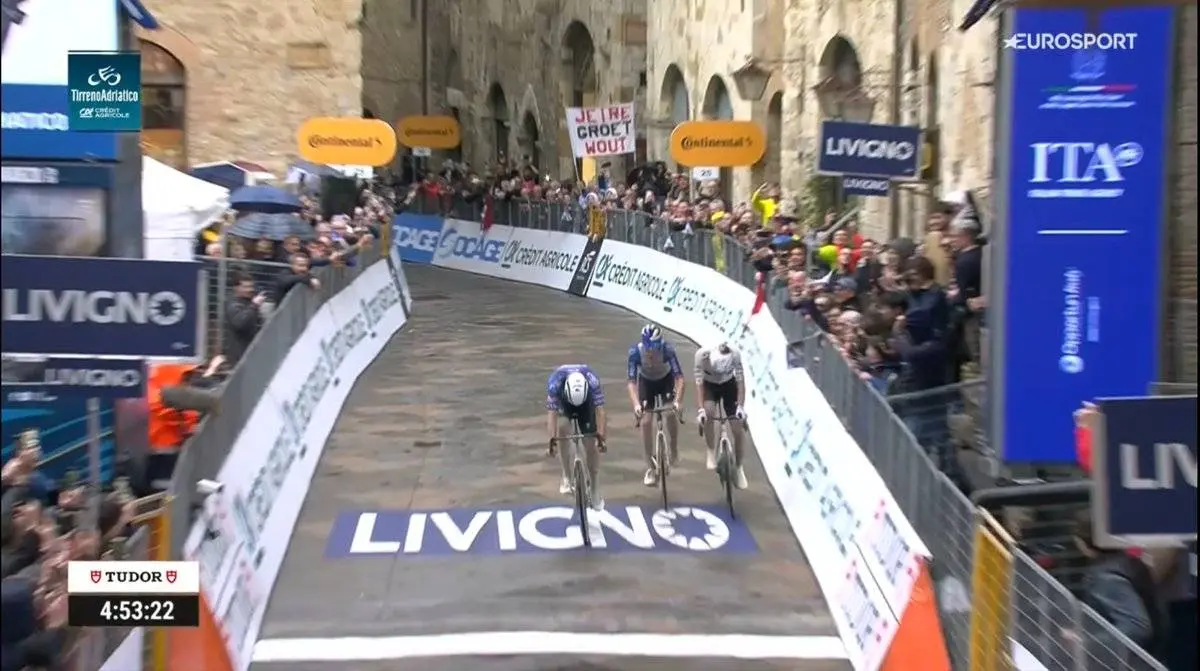
Pellizzari opened the sprint first, with van der Poel quickly coming past, while Del Toro initially seemed out of contention. Van der Poel edged ahead of the Italian, but Pellizzari managed to hold his wheel, and from behind Del Toro surged back into the fight to contest the stage.
In a thrilling three-man sprint, Mathieu van der Poel powered to victory, with Isaac del Toro coming around Pellizzari to take second place, while the Italian rider of Red Bull–BORA–hansgrohe finished third.
Paris - Nice
The team time trial created the first real differences in the overall classification of the 2026 edition of Paris-Nice. Stage 3 reshaped the general classification, rewarding the best collective performances and placing several contenders for victory in stronger positions for the decisive part of the race.
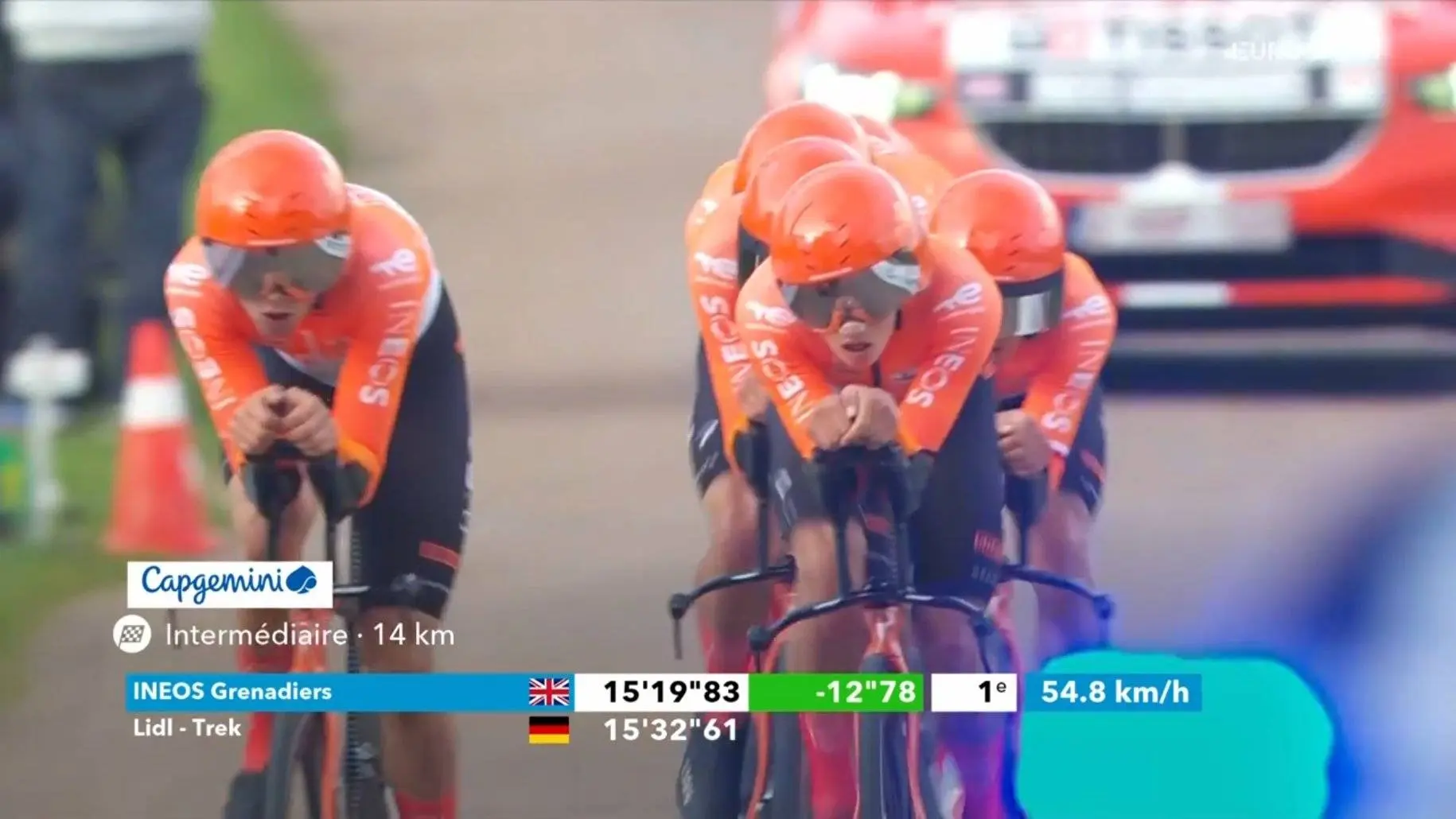
INEOS Grenadiers dominated the 23.5-kilometer team time trial between Cosne-Cours-sur-Loire and Pouilly-sur-Loire, beating their rivals by a minimal margin. The British team withstood a strong Lidl-Trek time trial, winning the stage by just 2.47 seconds after recording the best time at the intermediate checkpoint.
The crucial moment of the stage occurred at the intermediate checkpoint, where INEOS recorded the best time of the day. Fueled by powerful engines, including those of Joshua Tarling, Oscar Onley, and Kevin Vauquelin, the team crossed the checkpoint 13 seconds faster than Lidl-Trek.
Earlier, Juan Ayuso had briefly put Lidl-Trek in the lead with a strong final effort. The Spaniard completed the final meters solo, stopping the clock nine seconds faster than the previous best time, set by Decathlon.
Before the main contenders finished, the benchmark had already changed hands several times. Team Visma | Lease a Bike was the first of the favorites to set a benchmark, being 22 seconds faster than the UAE Team Emirates - XRG.
Their time was subsequently surpassed by Decathlon, with Daan Hoole riding solo the final kilometers to put the French team in the provisional lead. This effort was eventually surpassed by Lidl-Trek and then by INEOS, as the stage entered its decisive phase, with the British team delivering the best collective performance of the day.
Carlos Silva (CiclismoAtual)
The team time trial at Paris-Nice delivered exactly what this discipline should always provide, suspense, tactical variety and real differences between the favourites. It was the kind of stage that reminds us why collective effort still has a place in modern stage racing, even in an era increasingly dominated by individual performances.
We first saw a surprising finish from Dan Hoole, who pushed all the way to the line as Decathlon clearly wanted the stage win.
That commitment forced other teams to take risks, and soon after Lidl-Trek came flying through with Mathias Vacek doing an enormous pull to carry Juan Ayuso deep into the final metres, enough for the Spaniard to move into the overall lead.
It was a perfectly executed effort, the kind that shows how much detail goes into these performances.
But the final act still had to come, and that act was called Ineos Grenadiers. The British team looked frighteningly strong.
With Kevin Vauquelin and Oscar Onley they suddenly have two genuine cards to play for the general classification, and on top of that they took the stage victory. More than the result itself, what stood out was the power. When Ineos have engines like that, the entire race changes.
We had already seen a sign of that strength at Tirreno-Adriatico the day before, when Ineos finished the individual time trial with three riders in the top five. At the moment, the teams to beat in time trials are clearly Ineos and Lidl-Trek. I wrote it before and I will repeat it again, in this area they are setting the standard.

Tirreno-Adriatico then gave us a completely different kind of stage, one that stayed relatively calm until the final twenty kilometres. Once the peloton entered that phase, the wet roads increased the tension immediately.
The speed was high, the positioning fight was constant and the atmosphere felt chaotic, exactly the kind of scenario where anything can happen.
On the gravel, Julian Alaphilippe briefly appeared at the front but quickly disappeared again, as the Red Bull team took control. Giulio Pellizzari set a hard tempo and the contenders started to move up, but for me the key moment of the race came when Matteo Jorgenson crashed in that corner.
Incidents like that change the entire dynamic of a stage, especially when the pace is already on the limit.
Mathieu van der Poel was in full attack mode and only Isaac Del Toro and Giulio Pellizzari managed to follow him. The three of them stayed together until the finish, and in the end experience and raw strength decided the outcome. Van der Poel never really left an opening, although Del Toro gave the impression that he could surprise him.
If the stage had been ten metres longer, would the Dutchman have been beaten? I think so. They were all on the limit, completely empty, and the younger riders clearly wanted to take down the cyclocross world champion. That is what made the finish so fascinating.
This stage also made me even more curious about the Giro. Vingegaard and Almeida should pay attention, because this may not be a battle only between Visma and UAE... the next Grand Tour could be far more open than many expect.
Ruben Silva ( CyclingUpToDate)
I wouldn't say Paris-Nice was just about what you'd expect, however in the bigger picture it very much is. The stage win was taken by INEOS, a nice one which continues to show - as was the case the day before at Tirreno-Adriatico - that in the time trialing area, they continue to be technologically at the top.
This puts both Oscar Onley and Kévin Vauquelin truly in the fight for victory, whilst I believed it would only be between Juan Ayuso and Jonas Vingegaard. Ayuso is now in the lead, exactly due to the intermediate sprint bonification he captured yesterday.
Again, 4 gaps don't usually mean a lot if you make the direct math at the end of the race; but if it is the difference between leading the race or being second at some point, it can change tactics significantly. He can afford to go defensive, and the 13 seconds gained on Jonas Vingegaard are not nothing.
All in all INEOS have gotten in the battle, whilst the gaps created to begin to pile on for everyone else - under regular circumstances.
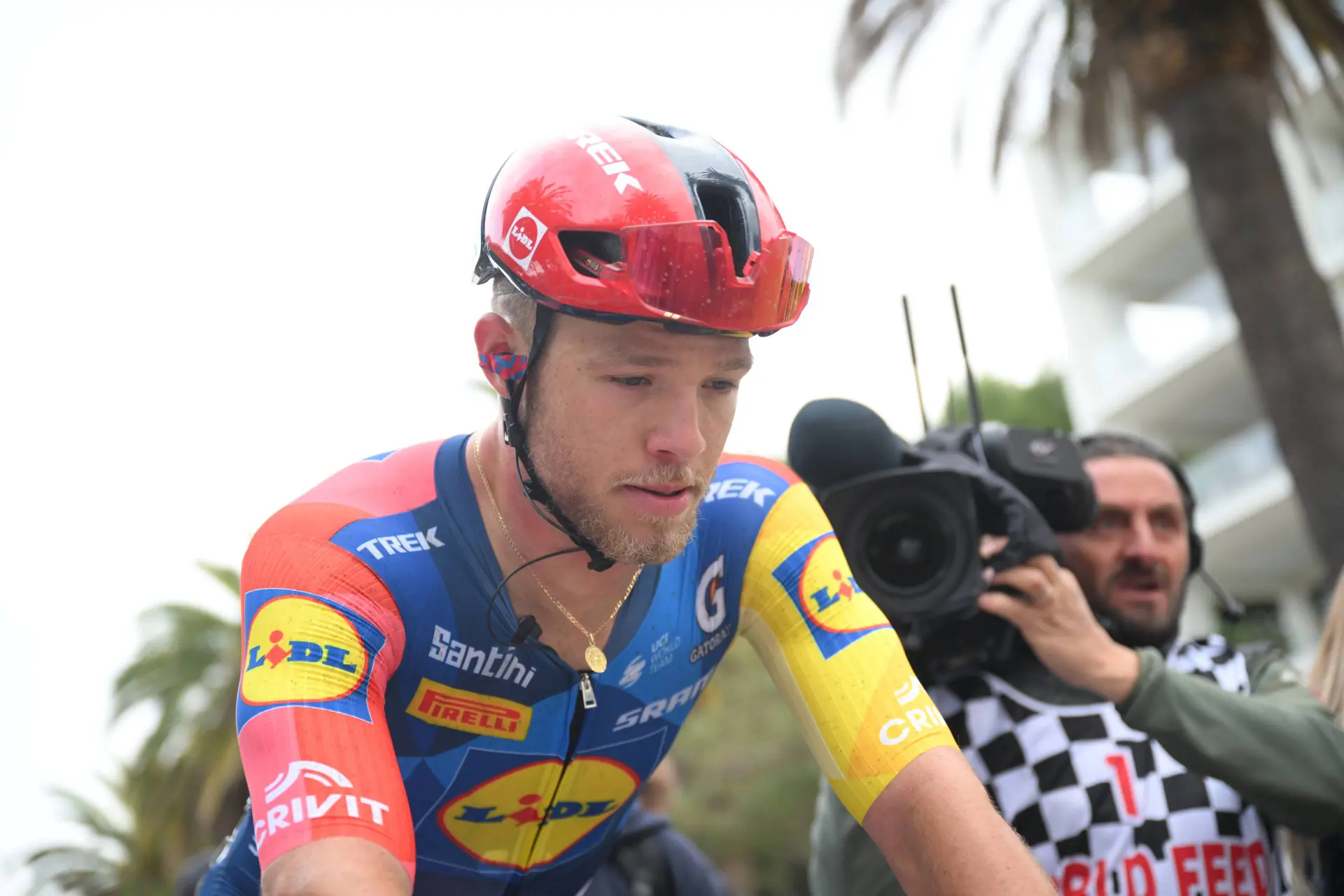
At Tirreno-Adriatico we got a properly exciting finale, just what the Italian race delivers best, with explosive terrain and this time around some sterrato to make make positioning and explosivity key to the climbers who otherwise prefer the longer efforts.
In all honesty there wasn't really any surprise, Mathieu van der Poel is the master of positioning and the climbs were short enough for him, so a win was very much the most likely scenario; and Isaac del Toro finishing second was also what was expected.
The Mexican was the strongest on the day, he worked the most in those final kilometers and still almost won, which completely diverges from the idea that he wouldn't be the main favourite to win the GC here.
He is now already in the lead, with Giulio Pellizzari being the only rider able to match him today. The gap is small enough for it to be quite exciting actually, but Pellizzari can neither sprint or is explosive, so directly it will always be very hard for him to directly take on Del Toro.
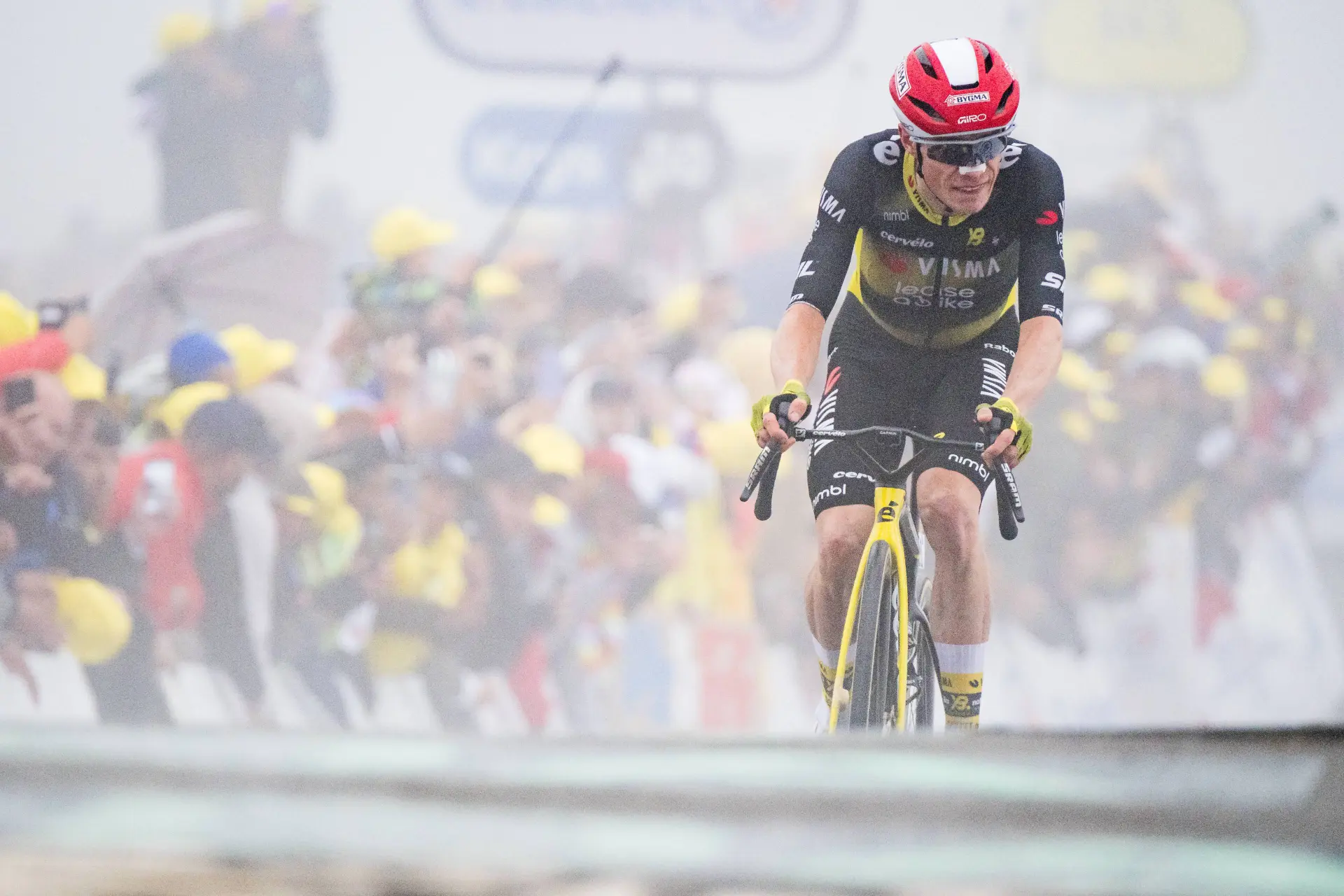
This will have to happen through BORA's tactics, with Primoz Roglic and potentially Jai Hindley. On the Visma corner Matteo Jorgenson looked very strong, but again had something happen at a key moment, this time around a crash.
Visma did good work for him and Wout van Aert but the Belgian once again showed how he cannot properly engage with the modern battles for positioning. He was never even in contention for the stage win truly, having started the gravel sector about 50 riders away from the peloton.
Whilst his form looks to be evolving well towards the classics, he simply cannot take better results than what he's had before if he doesn't have a lucky strike. Positioning wise van der Poel and Pogacar will 9/10 times do better and create an even better situation on top of usually having better legs.
And you, what did you think of the Paris-Nice and Tirreno-Adriatico races? Give us your opinion and join the discussion.
Carlos Silva is a writer for CyclingUpToDate.com, where he contributes race reports, interviews, analysis pieces, and live coverage of the international cycling calendar. Holding a degree in Sports from the Jean Piaget Institute, he combines academic knowledge of performance, training, and competition with hands-on journalism experience in professional cycling.
Throughout his career, Carlos has conducted interviews with leading figures in the sport, including Alberto Contador, Joaquim Rodríguez, Óscar Pereiro, João Almeida, Isaac del Toro, Derek Gee, John Degenkolb and Geraint Thomas. These conversations reflect direct engagement with Grand Tour winners, Classics specialists, and emerging talents.
He has provided on-site coverage at major events ranging from the Vuelta a España to the Tour de France, alongside stage races such as Vuelta a Andalucía, Volta ao Algarve, Volta a Portugal and O Gran Camiño. Covering the mythical climbs of the Giro d'Italia remains one of his professional ambitions.
Carlos is responsible for liveblog coverage of all major WorldTour races and beyond, including the Tour de France, Giro d'Italia and Vuelta a España. His reporting integrates verified data from ProCyclingStats to ensure statistical accuracy, contextual depth, and analytical precision.
A lifelong cycling enthusiast, he approaches storytelling across written, photographic, and video formats with a focus on credibility, tactical insight, and informed race interpretation.
claps 1visitors 1
Just in

Popular news
Latest comments
- Listen, you have a point but on the other hand in cycling, once some of the riders go solo and build a minute’s gap, there’s hardly any action left to watch. Cycling is definitely not for today’s generations of accelerated viewing. Other people find skydiving or chess exciting but you can’t force everyone to feel the same.Jumpyjohn19-10-2026
- That’s a funny one. Yeah obviously he’s more aero than some but most of the aero effect at elite level is the bike. Now you have me starting to feel sorry for the guy behind him when he pulls a groupetto.Jumpyjohn19-10-2026
- Knew a World Tour promotion was coming for Ben this season. Thrilled for him, and can't wait to see what he can do at this level. Another one to watch at the TTs.anonymouscyclist19-10-2026
- It honestly breaks my heart to see this. I had a feeling this might happen over the last few years, but I kept praying it wouldn't, and that Joey would find his niche, especially back racing alongside his brother. After growing up racing alongside PH-MAS, the Pidcock brothers have always felt like one of our own, as we’ve watched them grow from Club level all the way up to PC and WT. I wish Joey nothing but the best of luck in whatever he does next, but selfishly… I do wish for him to move into the role of Q36.5 team staff.anonymouscyclist19-10-2026
- Predictable, sure! But boring??? OMG! Was Mike Tyson predictable and boring in his prime? Air Jordan? Schumacher or Senna? OMG!!!MajorPayne19-10-2026
- how it is "We’ve taken another big step forward for next year" he just lost in lombardia to a 20 year old, and two 30+ year olds. and not even top 10 for WCRR.abstractengineer19-10-2026
- This is similar to Lebron. first he said i need to consult my family , my daughter, need respectable money blah blah blah and then dont care about family , dont care about money, only onion rings, am off to Philly, very very far from family. Off season should be with family more, no?abstractengineer19-10-2026
- I hope he comes back strong for a proper battle with Tadejmij19-10-2026
- congrats to a great career and good retirement.mij19-10-2026
- Any artificial product should be reported.Any team that doesn't should be stripped of wins and fined.I know that this level of transparency does not and will never exist.All anyone can do is continue to test riders on a regular and surprise basis.If the test comes back clean then all any of us can assume is the rider is clean.
 Brucegel19-10-2026
Loading
Write a comment