Some of the big teams didn’t just
shuffle riders, they moved whole plans. Some of it is transfer politics, some
of it is ego, and some of it is simply two or three riders trying to work out
who gets to be the main character. Here are the five things I can’t stop
thinking about as the new season creeps closer.
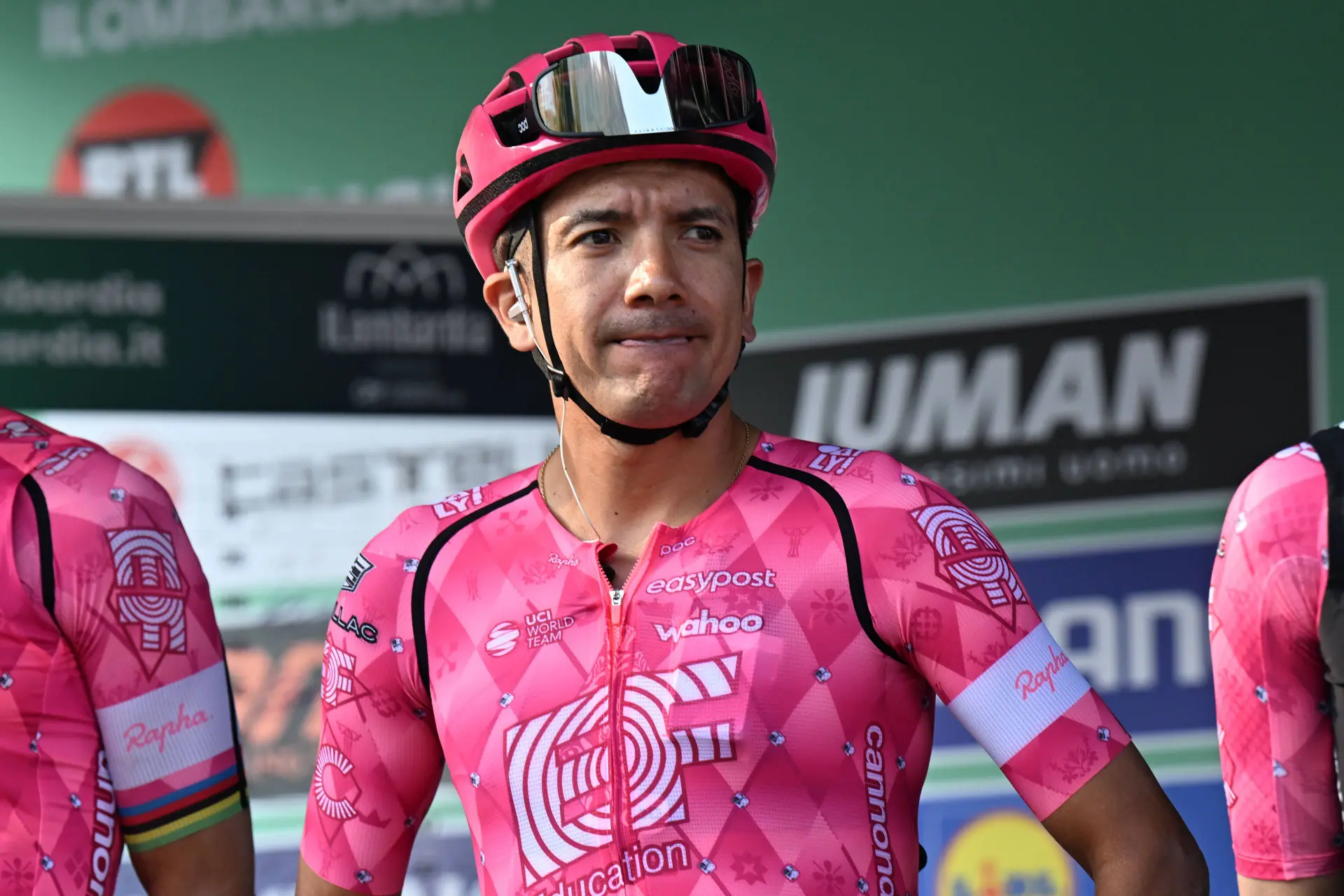
Remco Evenepoel’s Red Bull – BORA – hansgrohe debut
The
Evenepoel move is real, official, and massive: Soudal Quick-Step confirmed
he’ll leave at the end of 2025 to join Red Bull–BORA–hansgrohe. The line that
sticks with me is the bluntest version of the whole idea: “I want to be better
than Pogačar... that's why I came here”.
Now
that, is fighting talk. That’s not a rider asking for “support”; that’s a rider
asking for a new ceiling.
Why
jump? Quick-Step was built around Remco, but Red Bull–BORA is trying to build
something bigger than one rider: deeper climbing support, more science, more
resources, more everything. Evenepoel himself pointed to “all the scientific
aspects involved” and “a lot of room for improvement,” which reads like a
polite way of saying he thinks he can level up in places he couldn’t fully
attack before.
But
the pressure doesn’t disappear, it mutates. Evenepoel walks into a team that
already has Florian Lipowitz as a serious GC pillar, as well as five time grand
tour winner Primoz Roglic, and it’s a squad that has lived through the “two
leaders” problem often enough to know how messy it can get (just think of the
tension in the final week of the 2025 Tour de France).
If
Remco wants to be the undisputed number one, he’ll have to earn it on the road,
not in a press release. And if he really does dabble with a Tour of Flanders
debut, that’s another kind of test: not just watts, but positioning, patience,
and nerve on the tightest stage in cycling. I for one would love to see the
double Olympic champion on the cobbles!
Pogacar vs Van der Poel in the spring classics
I’ll
say it plainly: I enjoyed the 2025 Classics more than the Grand Tours. Not
because the Tours were bad, but because the Classics felt like a weekly
showdown where nobody could hide, especially once it became Pogacar vs Van der
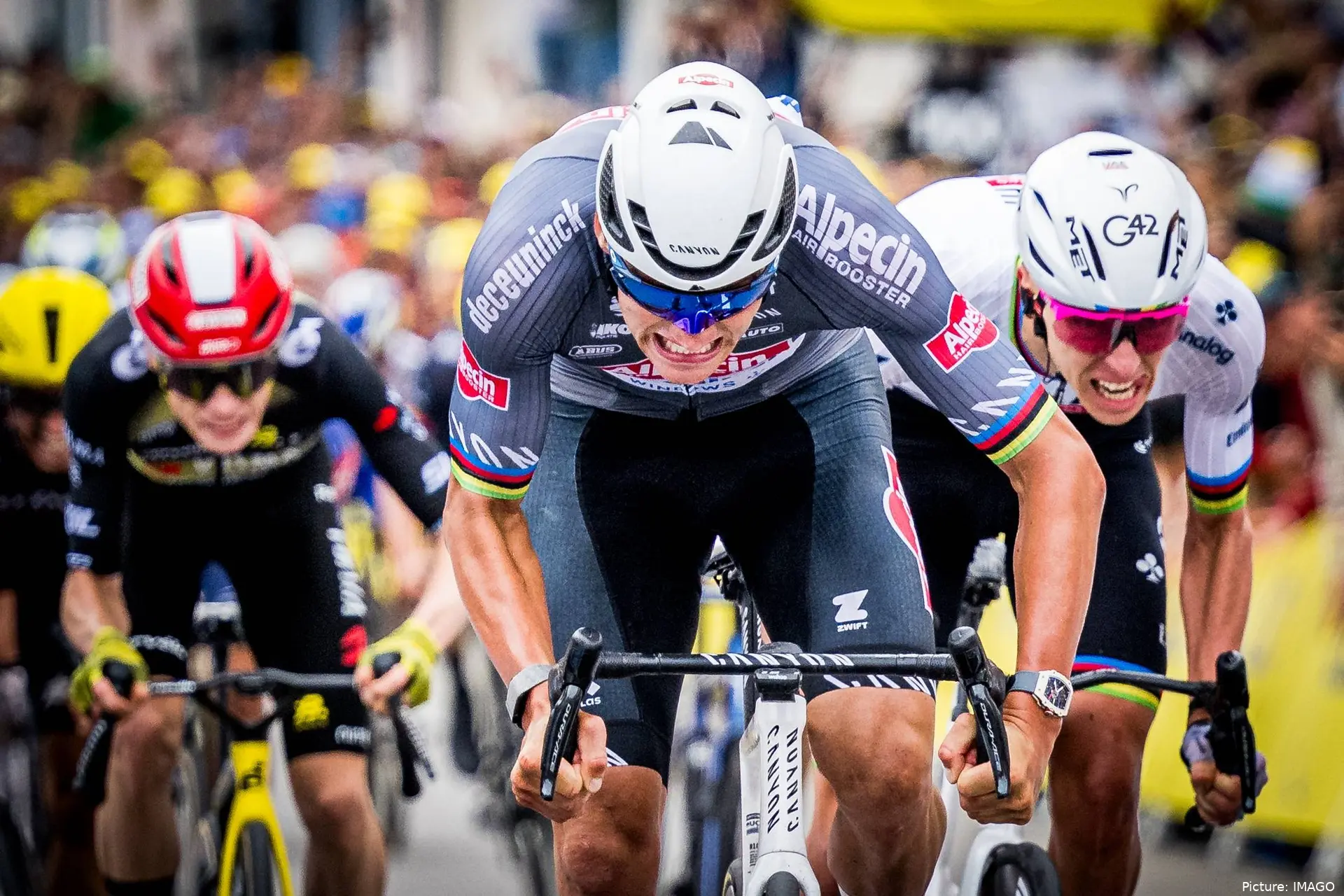
Poel season again. Milano-Sanremo was the perfect example: Pogacar lit the
fuse, Van der Poel refused to blink, and the race turned into a three-man knife
fight all the way to the Via Roma with Filippo Ganna tagging along.
What
I love is how their rivalry forces both of them to race “wrong.” Pogacar is
built to turn climbs into a slow-motion demolition, yet he’s coming back to San
Remo and Roubaix because the gap between “almost” and “Monument winner” bothers
him. After San Remo, he didn’t dress it up, he basically promised a rerun: “We
will come back next year for more”. And on Roubaix, the questions get even
louder because he’s openly talked about how much that first win would mean.
Van
der Poel, meanwhile, has reached the scary phase of greatness where the history
book starts calling. After winning Roubaix for a third time in a row, he framed
it in pain, not poetry: “It has been the Roubaix I’ve suffered the most in my
career”. That’s the thing, he’s not
“talented” there, he’s hardened there. And Pogacar pushed him harder than ever
in 2025. So yes, I’m obsessed with the 2026 versions of the questions: can Pogacar
win Roubaix on the second attempt, and can Van der Poel actually pull off a
fourth Flanders and a fourth Roubaix?
If they both show up healthy, the sport gets
its purest product: two geniuses trying to out-stubborn each other. Sorry
Vingegaard, but this is now the best rivalry in the sport.
Jonas Vingegaard and the Giro temptation
Vingegaard already has the Tour de
France (twice) and, now, the Vuelta a España. The Giro is the missing piece,
the one that would turn a brilliant career into a neat set.
And
he’s basically admitted the pull. Cyclingnews reported him saying, “I think I'd
prefer to win all three Grand Tours,” while still acknowledging the Tour
remains the “biggest objective.” I read that as a rider trying to negotiate
with his own legacy in public: he knows what he’s supposed to say, but he also
knows what would actually satisfy him. Yes he wants the yellow jersey back, but
what about the Maglia Rosa?
The
Giro organisers are pushing too, and you can feel the sales pitch. Mauro Vegni
put it about as directly as you ever hear in modern cycling: “If I was Jonas
Vingegaard I wouldn't let a chance like this escape him. If he won the 2026
Giro, he'd complete the Grand Tour set.”
So
what’s the tension? The Giro is May, the Tour is July, and the modern Tour is a
brutal, specialised machine that teams plan around all year. A Giro–Tour double
is possible, but it’s a gamble with form, fatigue, and crashes. But… Tadej
Pogacar did actually reclaim the Tour de France right after winning the Giro in
2024.
Read also
Oscar Onley in INEOS colours
Oscar
Onley finishing fourth at the 2025 Tour de France still feels slightly unreal
to me, partly because it didn’t come with the usual superstar noise. It was
just this calm, steady accumulation of time, and then suddenly you’re staring
at a Brit in fourth on GC. That result is exactly why INEOS interest has turned
into a full-on transfer saga, and one of the best signings in recent years too.
To
be clear: as of mid-December 2025, it’s still not formally announced as
completed. But the logic of the link is obvious. INEOS needs a new pillar for
its Grand Tour ambitions, and Onley is suddenly the most convincing British GC
bet of his generation. Yes, I think even
above Tom Pidcock. If you’re Onley, you’re looking at the biggest home team,
bigger resources, and a clearer long-term platform.
And
then there’s the part I’m personally fascinated by: Geraint Thomas moving into
management at INEOS, specifically as Director of Racing. Thomas described the
role in a way that sounded like a rider who still thinks like a rider: “This
team has been my home since day one, and stepping into this role feels like a
natural next step.” If Onley lands there, I can imagine that relationship
working, not because Thomas will “mentor” him in a cheesy way, but because
Thomas understands the daily realities of defending GC: the boring bits, the
stress bits, and the parts where your legs are fine but your head is fried.
Could
Onley podium a Grand Tour in 2026? At the Tour, maybe it’s still too stacked if
everyone is on top form. But at the Giro or Vuelta, with the right route and
the right support, I genuinely think it’s on the table, and I want to see how
INEOS handles having a GC talent who isn’t trying to act like a celebrity.

Onley at the 2025 Tour de France
Juan Ayuso at Lidl-Trek
Ayuso
to Lidl-Trek is confirmed, and it’s the kind of move that raises as many
questions as it answers. The exit from UAE wasn’t brushed off as “timing” or
“opportunity”, in fact, Cycling Weekly reported the contract was terminated
after “differences in alignment with team's sporting philosophy”. That phrase
is doing a lot of work. It suggests tension about role, direction, maybe even
internal hierarchy, all the stuff that’s hard to prove from the outside, but
never fully disappears inside a team bus.
Ayuso,
for his part, leaned into the reset: “Joining Lidl-Trek is the start of an
important new chapter in my career”. That’s the clean PR version, but the
underlying question is the one I can’t wait to see answered: how does a GC
project live inside a team that already has huge, fully-formed identities
around Mads Pedersen and Jonathan Milan?
Because
Lidl-Trek doesn’t do quiet. They race hard, they race for wins, and their
Classics/sprint core is already one of the most defined in the sport. That’s
why Ayuso is so intriguing there: he isn’t joining a blank canvas, he’s joining
a painting that’s already half finished. The upside is obvious, a team with
serious engines, serious organisation, and now a long-term GC spearhead.
The
risk is equally obvious: Grand Tour GC requires a kind of selfishness that can
clash with a squad built to light up stages and Monuments. And does Ayuso have
the sort of temperament that could disrupt the harmony at Lidl-Trek?
If
it clicks, Lidl-Trek suddenly becomes the most interesting “two-team teams” in
the peloton: a Classics/sprint monster that can also play the three-week game.
If it doesn’t, you’ll feel it fast, in who gets protected, who gets asked to
work, and who starts drifting to the edges of the plan.
Which
of the five scenarios listed above are you must excited for in 2026?

Fin MajorCycling Journalist
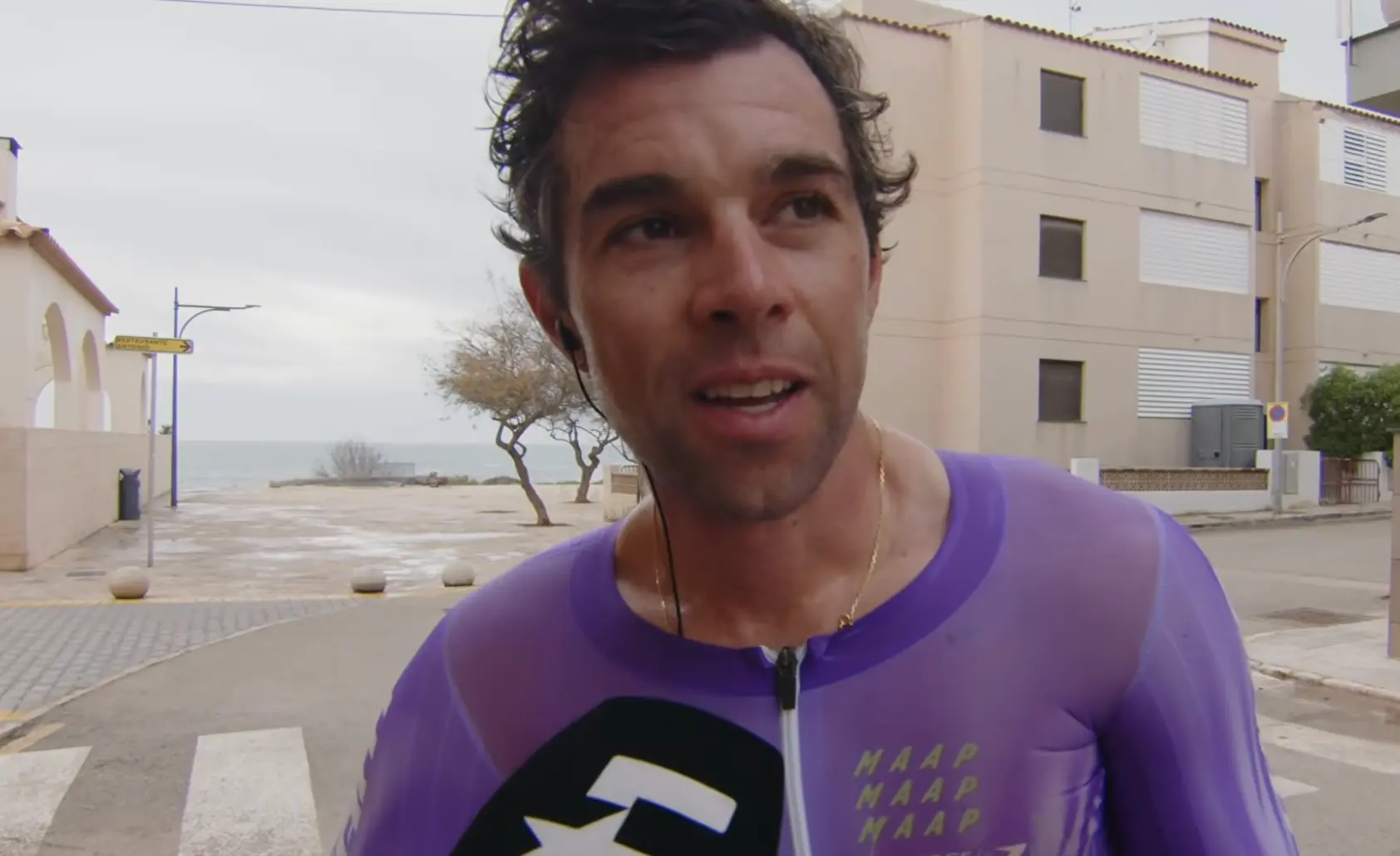
Fin Major is a UK-based writer at CyclingUpToDate and has been part of the team since 2024. He is the site’s main writer for FAQs and evergreen explainers and has written around 2,000 pieces for the platform. Alongside this work, he focuses on in-depth analysis and covers the biggest races on the calendar, including the Tour de France, the Giro d’Italia, and La Vuelta a España, providing clear context around performance trends, tactics, and key storylines.
In his reporting, Fin uses reputable data sources such as ProCyclingStats for results, statistics, and historical context. He places strong emphasis on careful sourcing, editorial accuracy, and updating articles promptly when new, verified information becomes available. Outside of writing, Fin is an active cyclist, which supports his practical understanding of the sport and its demands.
claps 0visitors 0
Just in
Popular news
Latest comments
- I would prefer him to do the Giro and Vuelta, and leave Seixas, Remco and Jonas to fight it out in France. Btw 'redemption' implies he has disappointed us and has something to prove. I don't think he has anything to prove, but of course ticking off the Vuelta would be good. Pity he can't get a 'prior learning credit' for the first week in the Vuelta, and join in for the last two weeks!Hills3320-10-2026
- Bet you 90% of Slovenians will stop watching cycling once your boy stops. But. More pertinently, have you prepared for his retirement? I think you have extreme difficulties in understanding the difference between being a fan of cycling and being fan of a cyclist.Jumpyjohn20-10-2026
- I would keep a VERY open mind.Jumpyjohn20-10-2026
- Listen, maybe he did, maybe it’s more complicated but unless there are images* or witnesses, I wouldn’t go on stats alone. There are so many factors, terrain, wind, pacing, psychological/hormonal effects, etc. and that’s without consideration of Remco maybe changing his effort. As a rider I know all too well the effect of being overtaken can have, just like it’s always easier to push yourself when you are racing instead of training where you have no target to catch or pressure from behind. * obviously there is going to be a lack of commissaires in TTs to keep a constant eye on things but hey it’s 2026, these problems can be solved cheaply with on-board cameras or drones, they could even increase revenue and attractiveness through broadcasting right.Jumpyjohn20-10-2026
- Do you watch dog racing too? Do you remember what Einstein said about madness? What are you watching specifically, the way his ass moves over the saddle more efficiently? You should really ask yourself some psychological questions if what you enjoy is watching someone do exactly the same as all the others only slightly faster some of the time but not in any way noticeably without the immediate proximity of competitors. Would you watch time trials if no results or times were taken? You should really think about the real reasons why you enjoy watching someone much more than others (or why you can’t enjoy watching others doing the same). If you would argue it was for other reasons than simply wanting to watch the best (and I’m pretty sure you don’t watch e.g. cyclocross or kayaking because you want to dictate a hierarchy in sport) I would have more understanding (nothing else) for your choices (nationalism, ego, prediction talents, etc.)Jumpyjohn20-10-2026
- In theory you’re right but sometimes news is sparse or not funny or the discussion rather limited or predictable so a little lighthearted mocking can be a welcome distraction. Also, it doesn’t hurt to attract to agendareers and schemers.Jumpyjohn20-10-2026
- A suggestion to commentators, prepare to include interesting unrelated material when there’s little to report on. This is why the TdF grew an audience, it attracted more than hardcore cycling fans or fans of particular riders who’d find it interesting to hear or even discuss their choice of toilet paper at home. If you can’t keep viewers’ attention with surroundings, history, tourist information, etc. there’s always, highlights, best of past races, betting odds, international newsflashes, weather forecasts, etc. or the suggestion to go make a cup of tea. In fact, maybe the whole idea of one long live broadcast is the problem, a general sports update during the race would probably interest many, like the format in football where they flip across matches where goals or interesting events happen. Can’t see the point of comparing watching a guy turning his pedals in a constant fashion on an empty road with one hitting a tennis ball in a different strategic place each time or moving around a football field in an infinite number of unpredictable combinations wrt teammates and opponents every minute.Jumpyjohn20-10-2026
- Says Mr Non-stop repeating himselfJumpyjohn20-10-2026
- Phew I hope we do not get Jiffygate 2🤣🤣🤣🤣🤣 oh and by the way Bradley still has not answred the question re jiffygate even in his latwst book🙄🙄🙄🙄paultryan200220-10-2026
- What a stupid comment. If they are as good and if not better why should they sit on seasoned pros wheels. Sexias is a prime example . Move with the times they are fitter and more hungry and more ambition. If you cannot abide being 2nd string find a new profession.paultryan200220-10-2026
Loading
Write a comment