“Most of the women are making less than $10k a year... Nobody cares” - Trek boss slams cycling's gender prize money gap after paying over $300k to bridge divide
Cycling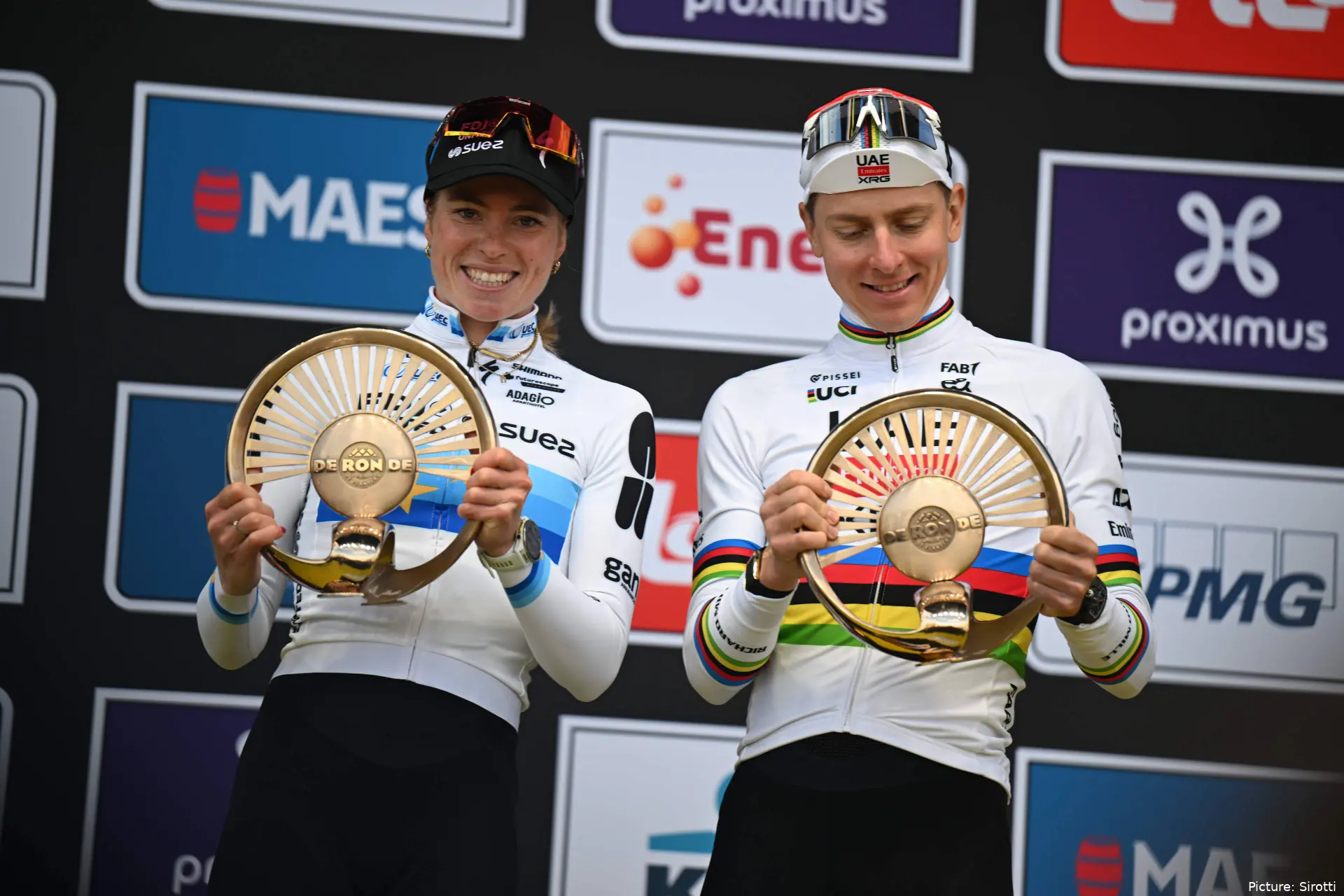
Trek has paid more than $300,000 in recent years to bridge prize money gaps for its women’s riders, stepping in at races where payouts remain significantly lower than in the men’s peloton.
Between 2021 and 2025, the American manufacturer contributed approximately $308,000 in top ups for its Lidl-Trek team, covering the difference at events where the financial rewards on offer did not match those available in equivalent men’s races.
Prize money gaps still visible in 2026
Those disparities remain clearly visible in 2026. At Liège-Bastogne-Liège Femmes, the total prize fund stood at just over €22,000, compared to €50,000 for the men’s race held on the same day.
At an individual level, the difference is just as pronounced. A sixth-place finish in the women’s race returned roughly €400 in official prize money, compared to around €1,500 for the equivalent placing in the men’s event. In that scenario, Trek would step in to cover the shortfall, adding approximately €1,100.
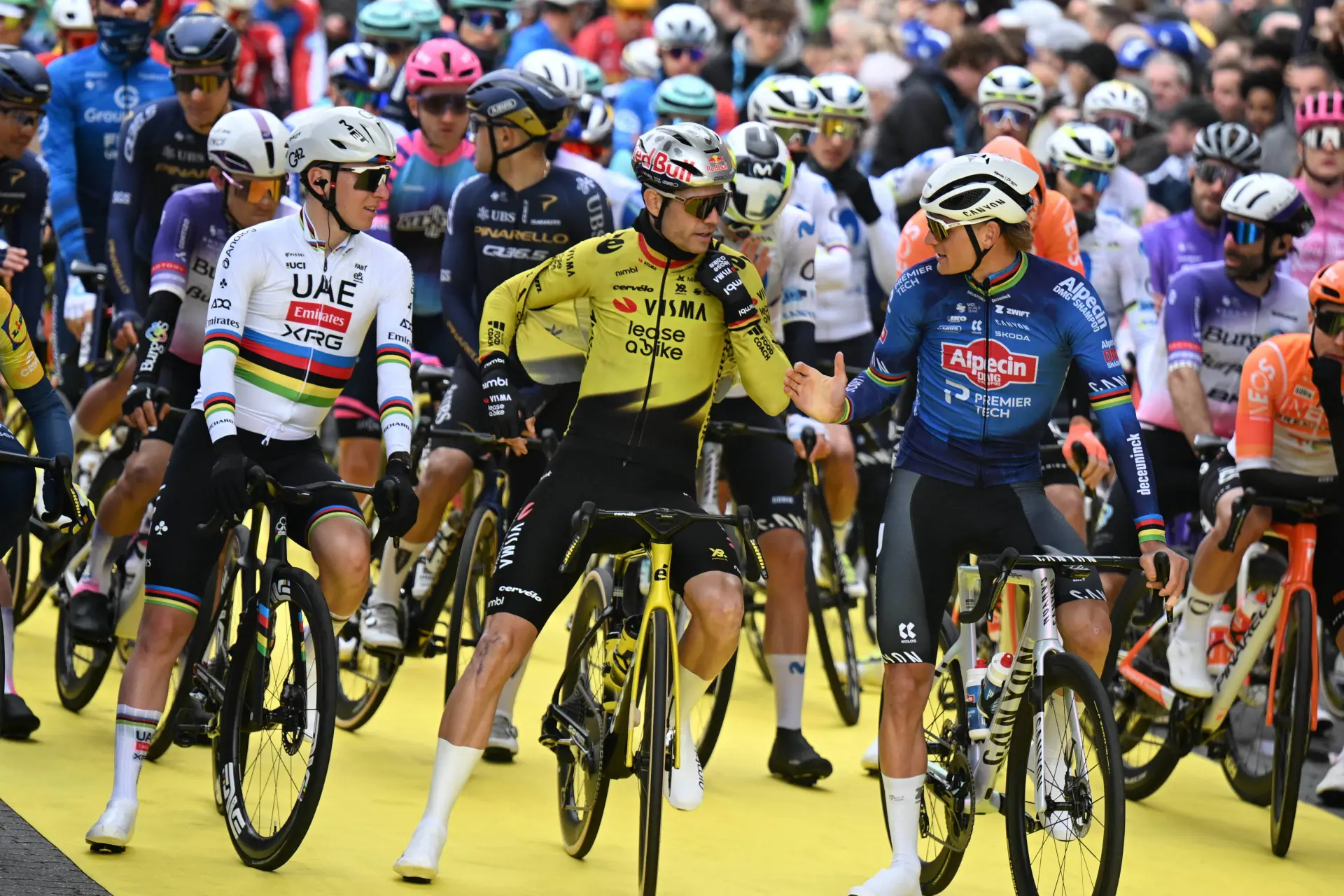
Set against the wider Spring Classics picture, those figures underline the scale of the gap. On the men’s side, leading riders have accumulated five-figure totals across the same block of races, with Tadej Pogacar approaching €100,000 in prize money alone across the spring, and both Mathieu van der Poel and Wout van Aert also building substantial totals.
“Nobody cares”: Burke on the origins of Trek’s approach
Speaking to Fortune, Trek CEO John Burke outlined the thinking behind the initiative. “One of the things we do with the bike company is we try and make a difference in the world,” he said.
He also recalled the conditions he encountered when the team was first being developed, following a visit to European races. “He said, ‘I was just over there in Europe, and it’s embarrassing. Most of the women are making less than $10,000 a year. They get secondhand bikes. They stay at shitty hotels. They’re flown in the night before the race. Nobody cares.’”
Building a team on equal footing
From the outset, Trek aimed to provide riders with comparable support to their male counterparts. “We said we’re going to treat women the same way the men are treated,” Burke said. “We’re going to pay them liveable wages, we’re going to give them the best equipment, we’re going to give them great coaching. We’re going to take really good care of them the same way we take care of men.”
Lizzie Deignan, who joined the team while pregnant despite being ranked number one in the world at the time, highlighted the impact of that approach. “To be a professional athlete in every sense of the word is transformative in terms of performance,” she said. “There’s no way that anybody managing all those extra things that come with a second job has the capacity to perform at the same level as someone who’s full-time.”
She added: “I felt incredibly grateful to Trek for the opportunity to join the team, because when I announced that I was pregnant, I didn’t know what my future looked like in the sport. Despite being ranked number one in the world at the time, I didn’t have a secure team.”

British cycling icon Lizzie Deignan is one of those to feel the financial disparity
A gap that still shapes the sport
Despite the progress made in recent years, the financial gap across comparable races remains evident. Prize funds continue to differ significantly between men’s and women’s events, leaving teams and sponsors to play a role in bridging that divide.
“The biggest thing that we do is be an example,” Burke said. “The impact that Trek’s made on women’s cycling isn’t just the Trek team. It’s all of the teams who saw what Trek was doing, and they made big changes.”
“Too many people are focused on the short term and on what they get,” he added. “Doing good things builds a brand over a long period of time.”
The figures from the Spring Classics underline that progress has been made, but also that the gap Trek set out to address has not yet been closed.

Kieran WoodDeputy Editor-in-Chief
Kieran Wood is a sports journalist based in Wales and has been active in journalism since 2022. He regularly contributes to DartsNews.com and CyclingUpToDate.com, where he covers professional cycling and darts. In cycling, his work includes liveblogs from major races, including the Tour de France, the Giro d’Italia, and La Vuelta a España, alongside race reports and analysis. He has also conducted interviews with professional riders.
His reporting spans the full racing calendar, from one-day classics to stage races, with a focus on accurate, real-time coverage and clear contextual analysis. For statistics, results, and historical context, he regularly uses resources such as ProCyclingStats. To support reporting on rider activity and training context where relevant, he also references Strava.
In his work, Kieran places strong emphasis on careful sourcing, editorial accuracy, and updating articles as new, verified information becomes available.
claps 0visitors 0
Just in

Popular news
Latest comments
- What the tdf have done here is make a very intriguing route, Pog by nature is more at home on the mountains, Remco TT's, Seixas an all-rounder.. RE, nearly got the better of Pog this yr & they've capitalised on that!
 leedorney22-10-2026
 - Hopefully any potholes on the British roads can be repaired so everyone arrives safely in France, and Pog, Jonas, Remco and Seixas can all be fighting it out in Paris.Hills3322-10-2026
- If Pogi is once again successful this year... next year we can expect 100 km or more of flat Time Trials ... and just one proper mountain stage, in the penultimate stage, the year after that. :)) :)) :))PogiSloFans22-10-2026
- EXTRA EXTRA - Read all about it !!! Plans for TDF 2028 and 2029 !!!! If Pogi is once again successful this year... next year we can expect 100 km or more of flat Time Trials ... and just one proper mountain stage, in the penultimate stage, the year after that. :)) :)) :))PogiSloFans22-10-2026
- If Pogi is healthy and in the same shape as he was this year, then we’re getting a 6 ⭐⭐⭐⭐⭐⭐TDF winner... 100%. Let’s go Pogi! 💪👍 In their efforts to make the route as anti-Pogačar as possible, they ended up striking the biggest blow to the one rider who has managed to beat Pogi at the Tour twice!?!? The "poor" Danes are swearing and spitting at Christian Prudhomme: Hvad fanden laver du? ... Du er kraftedeme dum! Det er noget lort! ... Skrid ad helvede til! ... For helvede, mand! ... Jeg er pisseligeglad! PS: Ha ha ha ha ... ChatGPT told me these swear words.PogiSloFans22-10-2026
- Pogi will probably focus more on the time trials, as he’ll have to, and I don’t expect him to lose 3 seconds per kilometer. Maybe in the first time trial, if he has a really bad day, but certainly not across both combined. He might even win the second one, which is shorter, features a short climb, and takes place in the third week. I expect him to take the yellow jersey after Stage 10 and keep it until the end. He also has a tough World Championships and the Vuelta coming up after the Tour, so he’ll need to manage his energy wisely. If Pogi is healthy and in the same shape as he was this year, then we’re getting a 6 ⭐⭐⭐⭐⭐⭐TDF winner... 100%. Let’s go Pogi! 💪👍PogiSloFans22-10-2026
- What if Seixas has an open road to 2nd, or Vingegaard... or both of them? Well then, Remco will just have to be 4th.PogiSloFans22-10-2026
- Said it in a different thread: I wish the races with gravel/off-road sections (Strade Bianchi, Paris-Tours, Tro Bro Léon, Veneto, In Flanders Field, and more) could be combined into a some kind of points series that could provide some kind of marketing to them all.RidesHills22-10-2026
- What a fascinating top 10 that is. Pidcock ahead of Vingegaard? Gall ahead of van der Poel? And Pogačar, even after his injuries, has more points than Evenepoel and Roglič combined.RidesHills22-10-2026
- Remco has an open road to the 2nd place next yearBenAflec22-10-2026
Loading
5 Comments