“Mads Pedersen is not someone you should write off” – Former teammate offers hope over Mads Pedersen’s Spring Classics recovery
Cycling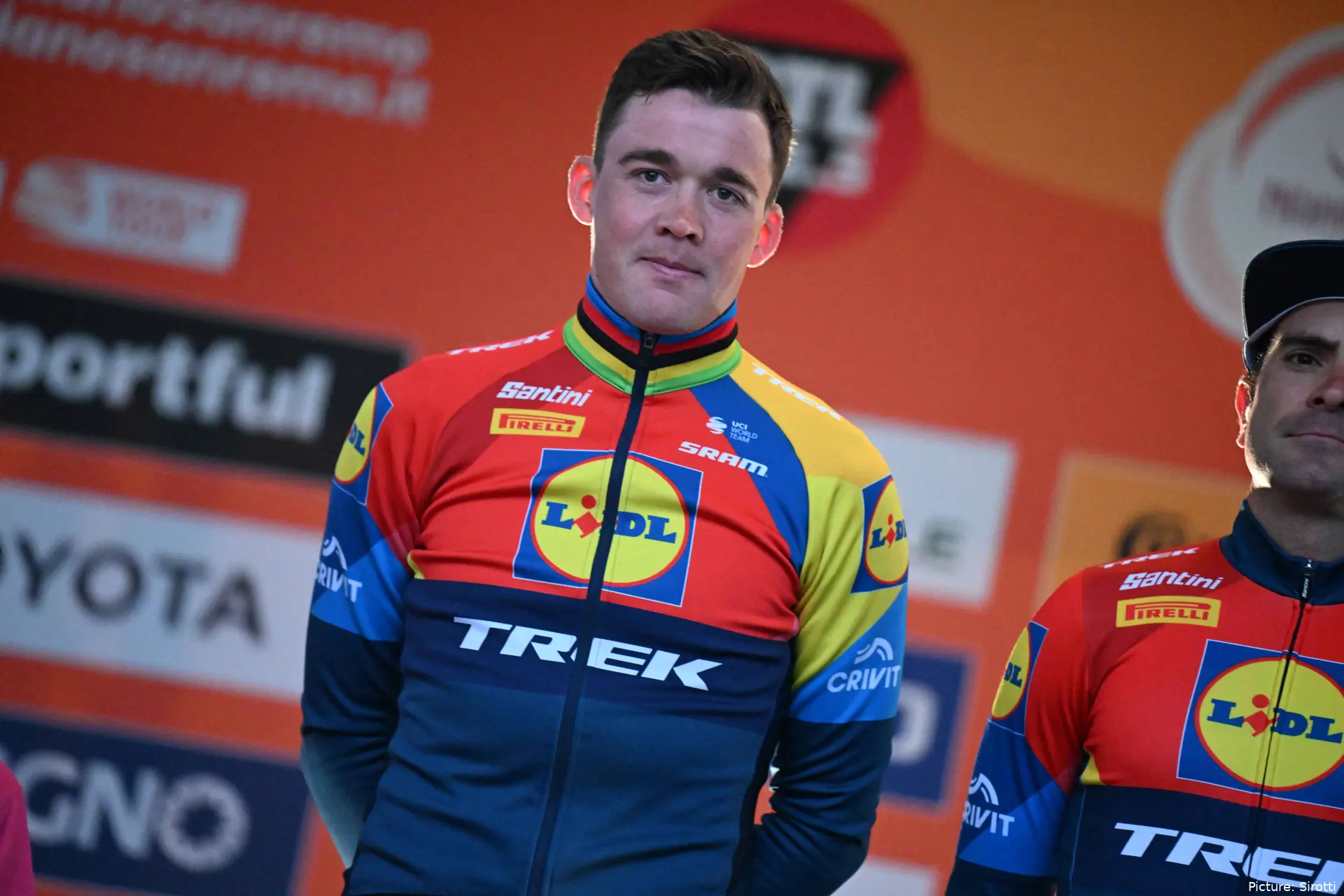
As questions continue to swirl around Mads Pedersen’s chances of making a meaningful impact in the Spring Classics after his early-season crash, one former teammate believes it is far too early to rule him out.
Jasper Stuyven, who spent nine seasons alongside Pedersen at Lidl-Trek, has urged caution against drawing firm conclusions, pointing to both Pedersen’s mentality and the potential value of unconventional preparation methods during recovery. Speaking to Sporza, Stuyven struck a tone of realism rather than blind optimism, but made clear that Pedersen’s situation is far from hopeless.
“Mads is not someone you should write off,” Stuyven said.
Pedersen crashed and abandoned his season debut at the Volta a Comunitat Valenciana with fractures to both his wrist and collarbone, an outcome that immediately cast doubt over a spring campaign built around the cobbled Classics. Lidl-Trek quickly acknowledged that the Flemish races would be difficult, with the wrist injury in particular presenting an obvious complication.
Why early movement matters
A short video showing Pedersen already training on the rollers has since drawn attention, but Stuyven was quick to explain that such behaviour is typical among elite riders rather than a guarantee of rapid recovery.
“That’s typical of cyclists,” he said. “After a crash, most riders want to get back on the bike as quickly as possible.”
“You might then, perhaps against better judgment, try to move a bit on the rollers. And then you just hope that it goes well.”
For Pedersen, the ability to maintain some form of structured workload while protecting the injured wrist could prove valuable, particularly with time already lost from a carefully planned early-season build-up.

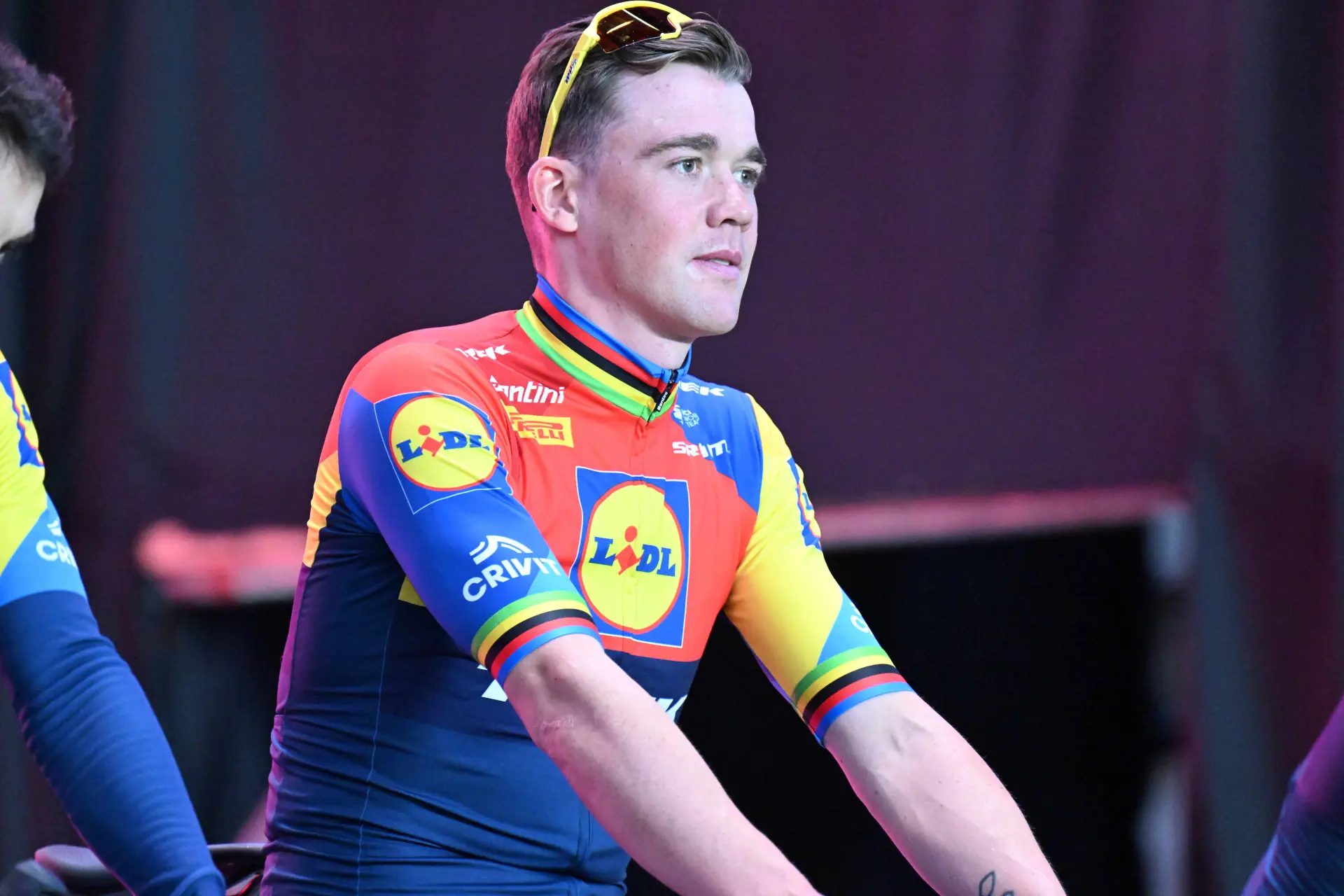
Stuyven was previously a key part of Lidl-Trek's Classics ambitions alongside Pedersen
Lessons from experience
Stuyven’s perspective is shaped by experience. Two years ago, he himself broke his collarbone in the mass crash at Dwars door Vlaanderen, an incident that derailed his own spring campaign.
“Unlike Mads, I wasn’t back on the rollers after five days,” he explained. “Not because my broken collarbone limited me, but because of the heavy impact of that nasty crash.”
“For the first few days I couldn’t breathe properly and my rib cage was badly bruised. Because of that, getting back on the bike wasn’t even something I was thinking about at that moment.”
Stuyven did not return to the rollers until ten days after his crash, which coincided with the day of Paris-Roubaix, before eventually making his comeback a month later at the Giro. The comparison underlines how individual recovery timelines can vary widely, even with similar injuries.
Rollers as a bridge, not a solution
The sight of Pedersen training indoors has also prompted comparisons with Mathew Hayman, who famously prepared for weeks on the rollers after breaking his elbow in 2016 before winning Paris-Roubaix. Stuyven cautioned against simplistic parallels, but acknowledged the role rollers can play.
“Training on the rollers is very efficient in terms of workload,” he said. “You can carry out your intervals in a very targeted way.”
“If you have the mental strength for it, training on the rollers can certainly be a good bridging period after an injury.”
That mental component is key. Pedersen had been scheduled to attend altitude camp and race through Paris-Nice as part of his route toward the Classics, plans that are now off the table. Indoor training may help preserve fitness, but it cannot fully replicate the demands of the road.
A spring still shaped by uncertainty
Stuyven was careful not to overstate Pedersen’s chances, stressing that every injury must be assessed individually and that the wrist will ultimately dictate how quickly full training can resume.
“The key thing for Mads will be when he can really start putting load through his wrist again in training,” he said. “That will largely determine how fit he is when the spring begins.”
It is a measured view that aligns with earlier assessments: the collarbone is expected to heal predictably, while the wrist remains the great unknown, particularly for a rider targeting the brutal stresses of Tour of Flanders and Paris-Roubaix.
For now, optimism is conditional rather than guaranteed. But in Stuyven’s eyes, Pedersen’s resilience and willingness to adapt mean one thing is clear.
Mads Pedersen, he insists, is not someone to write off just yet.


Kieran WoodDeputy Editor-in-Chief
Kieran Wood is a sports journalist based in Wales and has been active in journalism since 2022. He regularly contributes to DartsNews.com and CyclingUpToDate.com, where he covers professional cycling and darts. In cycling, his work includes liveblogs from major races, including the Tour de France, the Giro d’Italia, and La Vuelta a España, alongside race reports and analysis. He has also conducted interviews with professional riders.
His reporting spans the full racing calendar, from one-day classics to stage races, with a focus on accurate, real-time coverage and clear contextual analysis. For statistics, results, and historical context, he regularly uses resources such as ProCyclingStats. To support reporting on rider activity and training context where relevant, he also references Strava.
In his work, Kieran places strong emphasis on careful sourcing, editorial accuracy, and updating articles as new, verified information becomes available.
claps 0visitors 0
Just in
Popular news
Latest comments
- i think he can continue to race for maybe another 2 years till he drops out of podium contention. With his TT and his follow the leader in the Mountains,he should not need too many teammates too.abstractengineer14-10-2026
- Aren't they still shopping around for a main sponsor for next year?wrsty14-10-2026
- How broke is visma now? wtf they cant even fight moviestar and decathlon for riders and lose both their mid targets based on their budget and they cant even get those? Crazy...:/miguel13-10-2026
- TT But he won by a minute so he could have cut down on some of it
 Rafionain-Glas13-10-2026
 - weight is measurable. power is measurable. So why didn't he prepare that way from the TDF if he wanted to beat Pogi and after Pogi wasn't going to be there, to win.abstractengineer13-10-2026
- I hope Thibau and Tibor don't do the sameRafionain-Glas13-10-2026
- Seixas is exactly what I would like Pogi to be mentally and in his statements. Both come across as shy and who don't talk much but with Seixas, you can see that he enjoys success, that it boosts his ego, unlike Pogačar who seems to feel increasingly uncomfortable the more he wins. He's won so many times, people are saying he's boring. The french media hate him for winning so much, the french cycling fans are booing him... etc. etc. But remember one thing, Seixas will never physically reach Pogi's level. He's excellent, but he isn't at that level nor will ever be. His talking to the media, his relationship with people is already at a high level.PogiSloFans13-10-2026
- Paul Seixas is now the second-best rider in the world.megasmacky13-10-2026
- When will they start dropping Pogi? Oh yeah, when Pogi reaches 40+ years, that's when young cyclists will start dropping him. But until then... eat your hearts out and cry. Pogi will remain the G.O.A.T. for years to come. Capish?PogiSloFans13-10-2026
- I figure he would have found out how to outsprint Paul and take the win, maybe. He's 28 now but I would say he's right at the peak of his powers. It was great race though, Paul showed me something different about himself.awp13-10-2026
Loading
Write a comment