Legendary mentor of Boonen, Alaphilippe & Evenepoel leads Quick-Step into new era in 2026: “I do not know what boredom is - the Wolfpack spirit is always there”
Cycling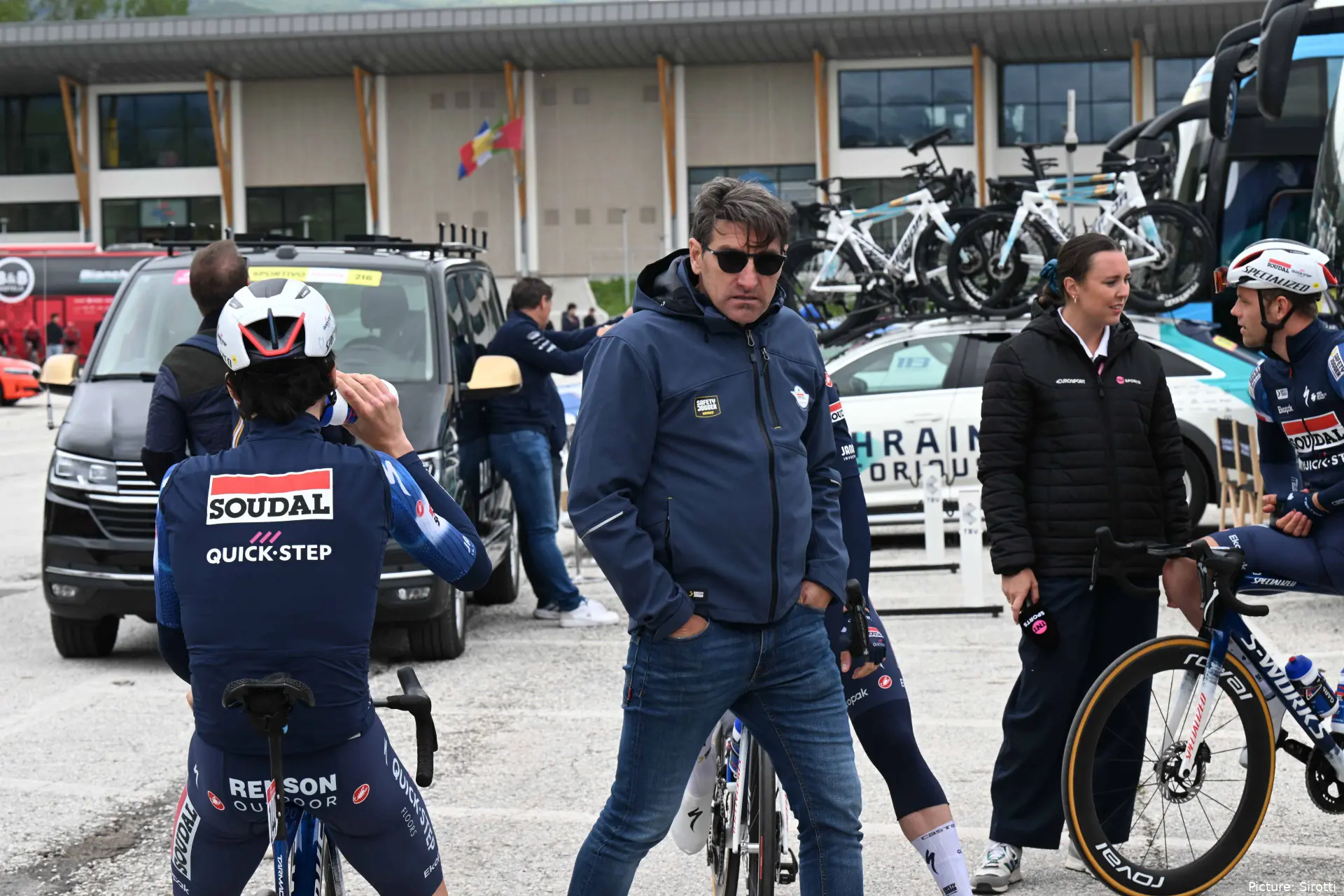
Two decades in the team car is not survival. It is authority. At Soudal - Quick-Step, Davide Bramati has lived every version of the modern Wolfpack, from the classics machine built around Paolo Bettini and Tom Boonen, through the one-day dominance of Julian Alaphilippe, to the Grand Tour pivot led by Remco Evenepoel.
In 2026, with Evenepoel gone and Patrick Lefevere no longer at the helm, Bramati stands as the living bridge between what Quick-Step was and what it now wants to become.
“I do not know what boredom is,” Bramati said in conversation with Bici.Pro. “Every year everything is erased and you start again, with the same emotion, impatience, desire to do well.”
That restlessness now defines Quick-Step’s next phase. The team is stepping into a season without the rider who shaped its recent identity and without the manager who built its empire. What remains is the culture. And few people embody that culture more clearly than Bramati.
From rider to architect of the Wolfpack
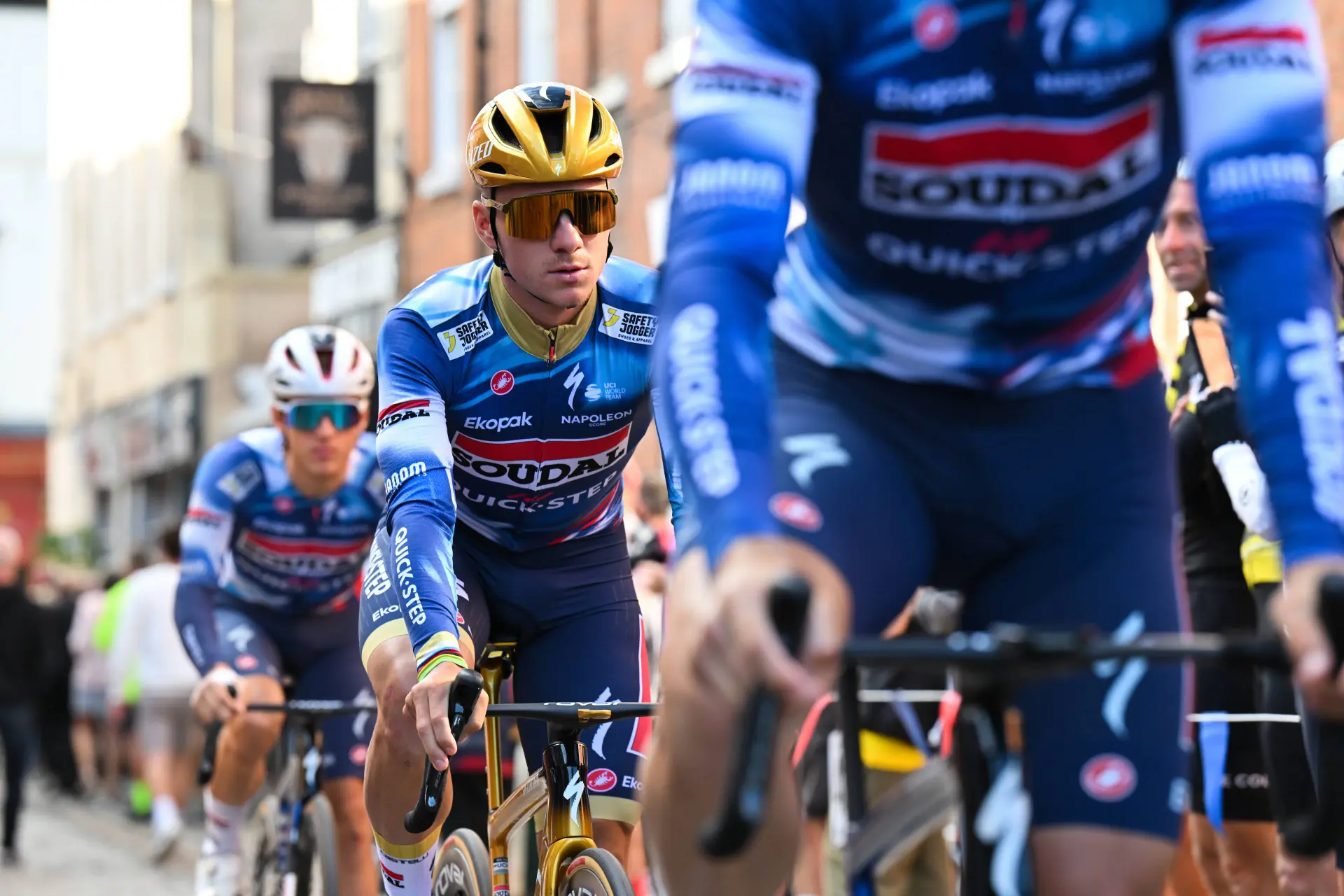
Bramati’s life in cycling never had a real pause. He ended his own career at the 2006 Giro d’Italia, but the transition had already begun. “I stopped at the Giro d’Italia in 2006, but already the year before, knowing that retirement was around the corner, the team had floated this idea to me,” he explains. “A bit as a bet with Lefevere, I thought it was an opportunity.”
He walked into the role carrying lessons from figures who shaped modern team management. “I had great teachers, like Alvaro Crespi but also Guercilena, Parsani, all people who are still in the sport, a wealth of experience to draw from.”
That foundation allowed him to grow into the job rather than inherit it. “As long as you race, you think about yourself, about doing your best,” Bramati says. “As a DS it is different, you have to direct the group, the riders, it is another job that changes continuously.”
That change has never slowed him. “The job changes every year, there is always something to do to improve yourself,” he says. “And this always gives me enthusiasm.”
The names that shaped his journey
Across twenty years, Bramati’s career has been defined by riders who came and went, but also by the emotional weight of what they represented. “I am attached to Bettini because he was part of my beginnings,” he says. “The joys I lived together with him and with Boonen… many Northern campaigns full of epic moments.”
The classics era gave way to a different kind of dominance. “The emotions thanks to Alaphilippe,” he adds, pointing to the years when Quick-Step ruled the one-day races again through a new kind of star.
And then came the most recent chapter. “Finally you cannot forget Remco, he too has given me many satisfactions.”
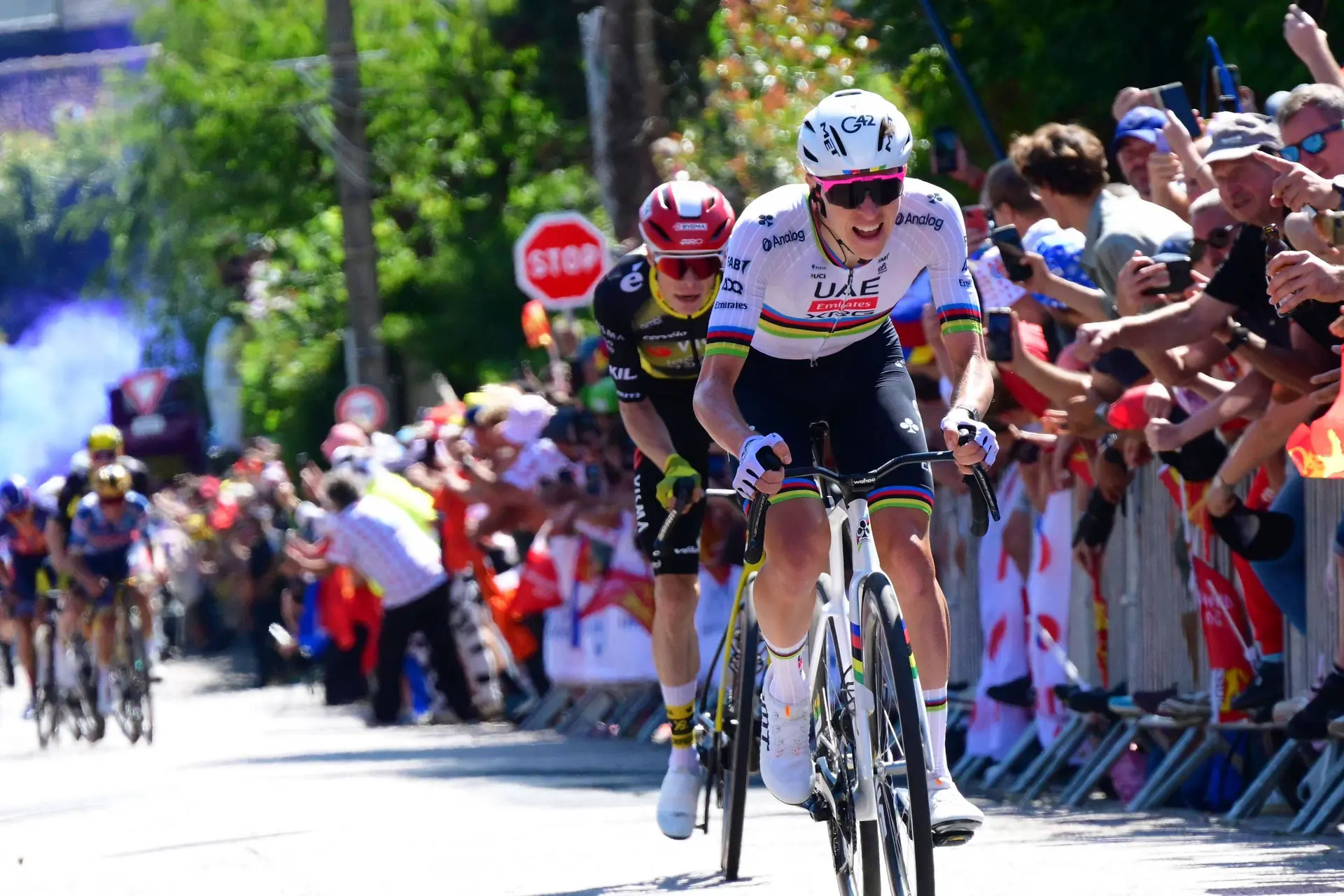
Bramati has lived those victories from the front seat. “I certainly live all victories with strong passion, it is part of my character,” he says. But not all wins are equal. “If I have to name one, maybe I will surprise people, but I name Valentin Paret Peintre’s success at the last Tour because he won against all predictions on a historic mountain like Ventoux.”
A job that never stands still
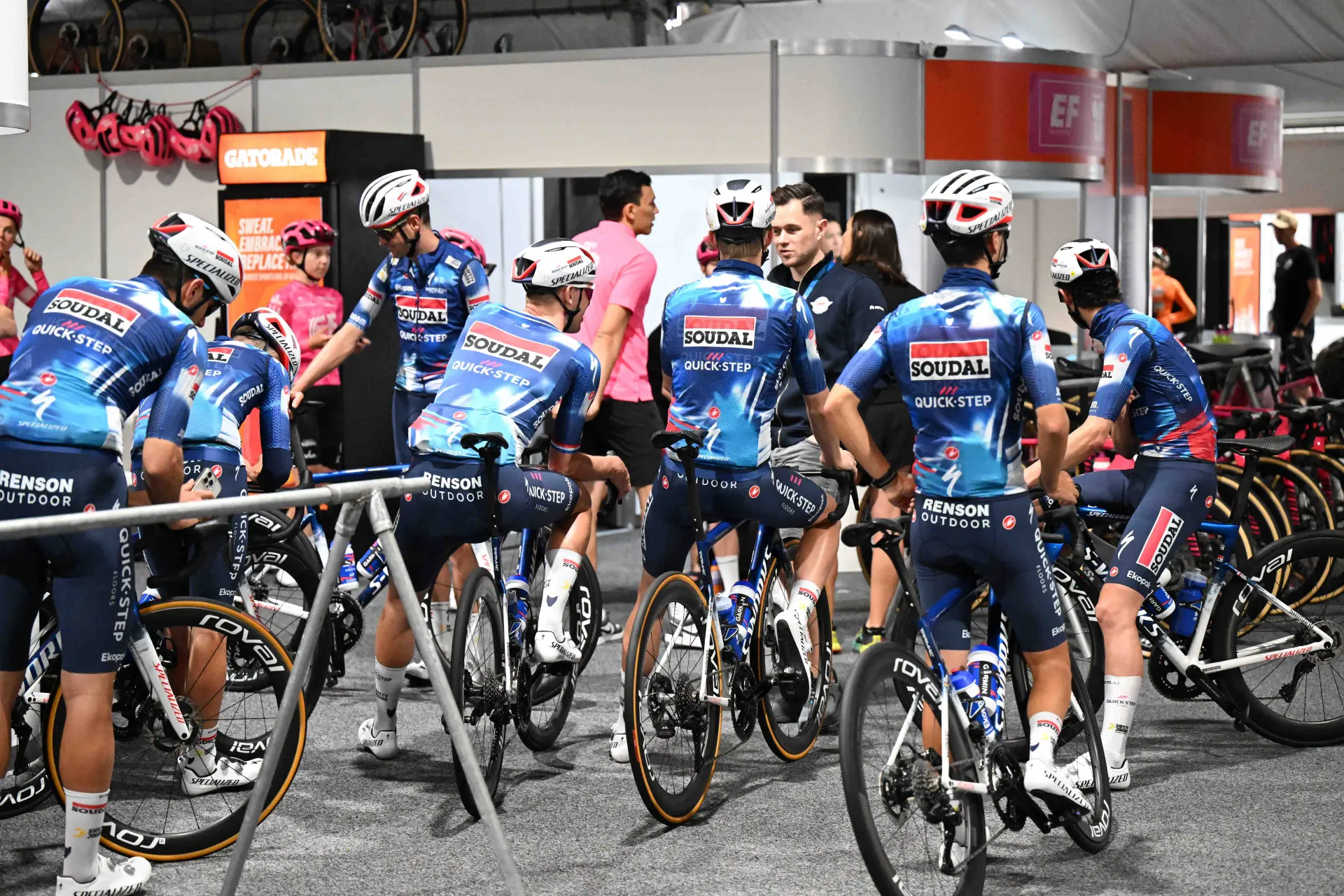
Modern cycling has reshaped the role of a directeur sportif, but Bramati has never resisted that evolution. “Once, GPX files did not exist and the presentation of a stage or a one-day race to the riders was done on paper,” he recalls. “Today you analyse it on the bus to the extreme, the routes you almost have to learn like ski slopes.”
Communication, for him, is non-negotiable. “I think our job is also made of communication,” he says. “It is like putting a football, basketball or volleyball coach on the touchline and he cannot communicate with his players. Giving instructions to your boys seems completely normal to me.”

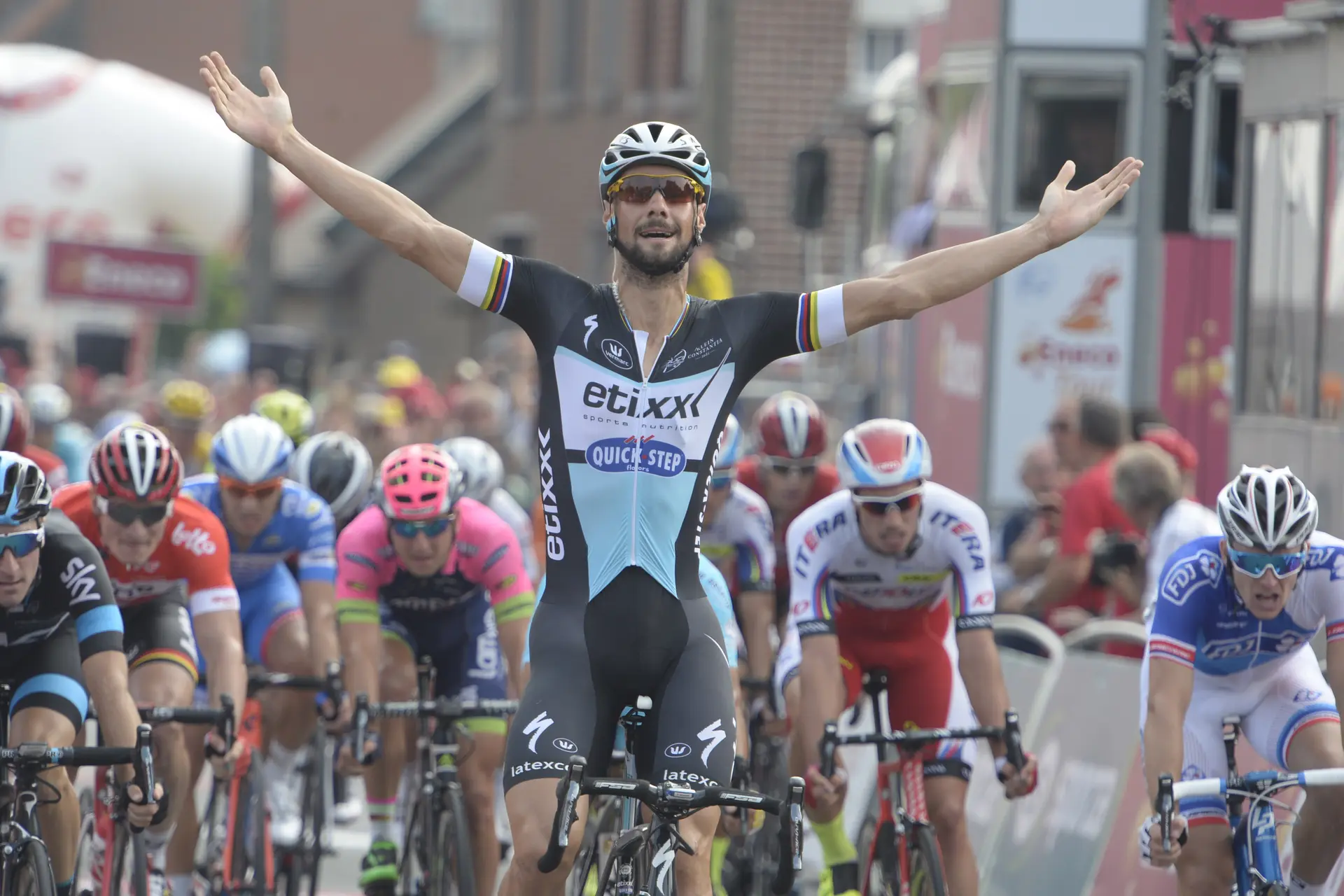
Tom Boonen was one of those who flourished under Bramati's guidance
Leading Quick-Step into 2026
The Wolfpack of 2026 will not look like the Wolfpack of 2020, or even 2023. Evenepoel’s departure ends the Grand Tour-centred identity that defined recent seasons. Lefevere’s step back closes a management era that lasted decades. The reset is real.
But Bramati rejects the idea that the soul has faded. “I think the Wolfpack is still such today,” he says. “We are certainly not standing still and the Wolfpack spirit is always there.”
That belief now matters more than ever. Quick-Step is no longer built around one superstar. It is rebuilding its future around collective ambition, new leadership, and a return to the culture that made the team feared long before Grand Tours defined its success.
Bramati knows what that cycle feels like. “Every year new riders arrive, you have to get to know them and let yourself be known,” he says. “Every year everything is erased and you start again.”
In 2026, that sentence is not routine. It is the story of the team itself.
Kieran WoodDeputy Editor-in-Chief
Kieran Wood is a sports journalist based in Wales and has been active in journalism since 2022. He regularly contributes to DartsNews.com and CyclingUpToDate.com, where he covers professional cycling and darts. In cycling, his work includes liveblogs from major races, including the Tour de France, the Giro d’Italia, and La Vuelta a España, alongside race reports and analysis. He has also conducted interviews with professional riders.
His reporting spans the full racing calendar, from one-day classics to stage races, with a focus on accurate, real-time coverage and clear contextual analysis. For statistics, results, and historical context, he regularly uses resources such as ProCyclingStats. To support reporting on rider activity and training context where relevant, he also references Strava.
In his work, Kieran places strong emphasis on careful sourcing, editorial accuracy, and updating articles as new, verified information becomes available.
claps 0visitors 0
Just in
Popular news
Latest comments
- He didn't even try to sprint all outvappaxbipmv18-10-2026
- Campenaerts looked like a rolling pumpkin with that all orange leaders skinsuit !frieders318-10-2026
- He can take his dumb a$$ politics somehwere else !frieders318-10-2026
- good to have her back. fingers crossed she‘ll be able to stay!Ketterechts17-10-2026
- A tenner and he wins the Tour next year, too 😂anonymouscyclist17-10-2026
- the answer is either stick to classics or GTs but not bothabstractengineer17-10-2026
- the exodus already stared with Ciccone. Already they were struggling with two sprinters, now there are three. Also Ganna will demand leadership. Gall is the most proven GC, Ayuso has the most potential. GC leadership for everybody will be impossible. Literally a UAE style mess without pogi.abstractengineer17-10-2026
- I raced as an amateur for 12 years, including six years on my country’s national road cycling team. I secured two national titles and competed in three World Championships plus more than 15 international stage races. At 23, we travelled to Italy for a training camp—or so I assumed. On a rest day, we watched a presentation about adopting a more “professional” training approach. It was crystal clear what “professional” meant. That moment first exposed me to this dilemma. After returning from Italy, I left cycling—at least at the competitive level I had known. Over the following two years, the whole team was caught doping. I hold that everyone is innocent until proven guilty. In my view, current stakeholders operate on a different scale, and the sums involved are vast. I am unsure whether any doping would ever be revealed. I try to stay positive and enjoy the show. My 2c.
 vannpelt17-10-2026
 - Fiver he wins 🤣
 leedorney17-10-2026
 - “…measures to reduce speeds.” Might as well shorten the race course to just 50km as well? ASO generates at minimum €300m a year and 30- 40% profit. Maybe stop being greedy and spend more of the profit to protect the riders instead.b3tlla17-10-2026
Loading
Write a comment