“Tadej Pogacar has reached his ceiling” – But Spanish cycling legend still gives Vingegaard & Evenepoel little chance of closing the gap
Cycling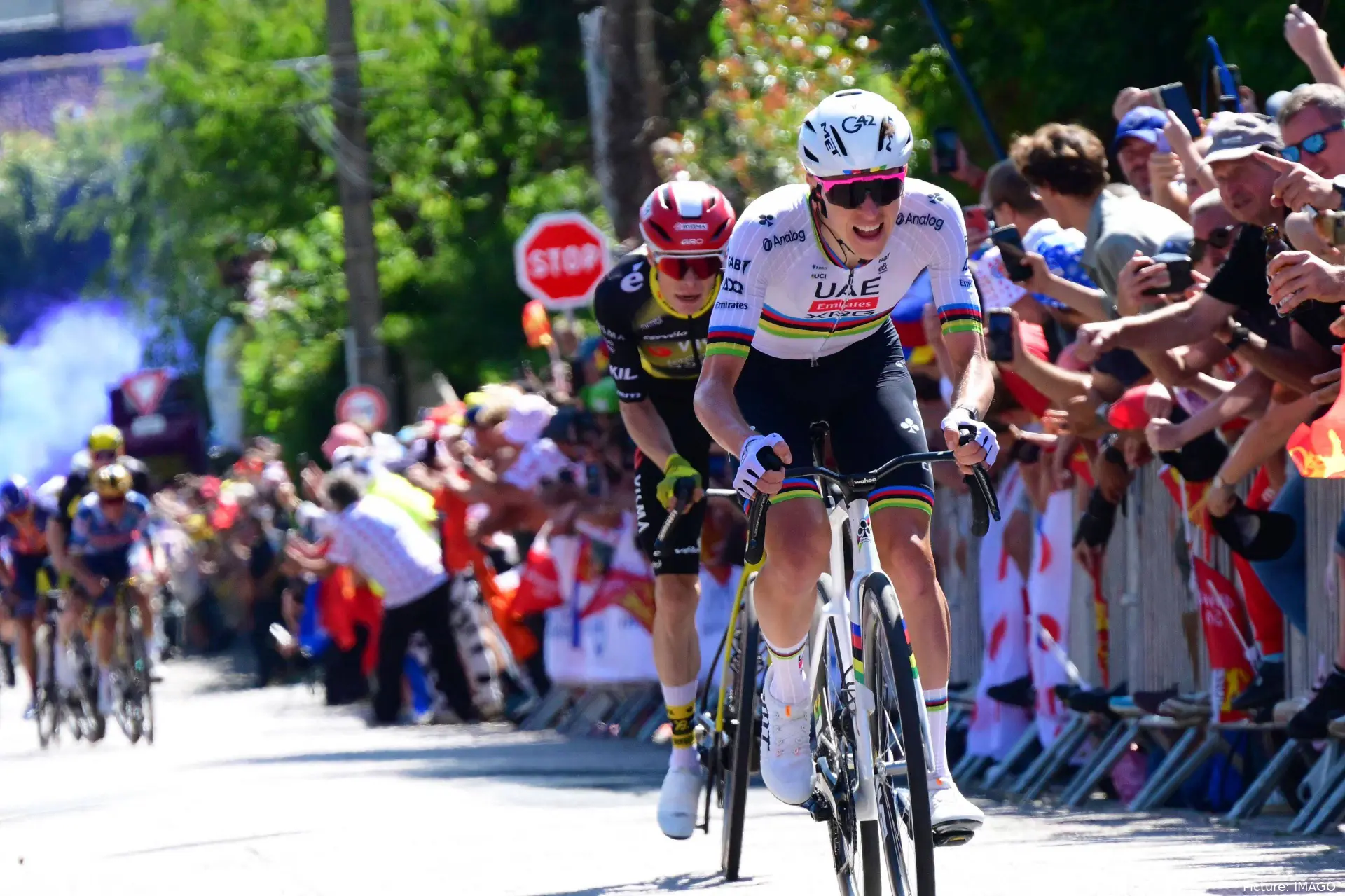
If Tadej Pogacar has already reached the very best version of himself, then the uncomfortable truth for everyone else is that it may not matter.
That is the verdict from Spanish cycling legend Pedro Delgado, speaking in a wide-ranging interview with Marca, where he argued that Pogacar has already hit his absolute top level, but that this level is still so high it keeps him comfortably ahead of his closest rivals.
When asked directly whether Pogacar has already reached his ceiling, Delgado did not hesitate. “I think so, that he reached it last year.”
For Delgado, that does not mean decline. It means Pogacar has reached the highest possible version of himself, and can now simply remain there. “With my experience, he can maintain that ceiling for three years without a problem.”
In Delgado’s view, the current version of Pogacar is not about to fade away. “This year he’ll continue to be untouchable and in 27 as well.” Only later, he suggests, might something other than the legs become the real test. “In the last Tour de France he looked different, not as natural as always.”
Even then, Delgado is careful to separate physical limits from mental ones. “Physically, right now he has two more years at that level: 26 and 27. In 28, we’ll see.”
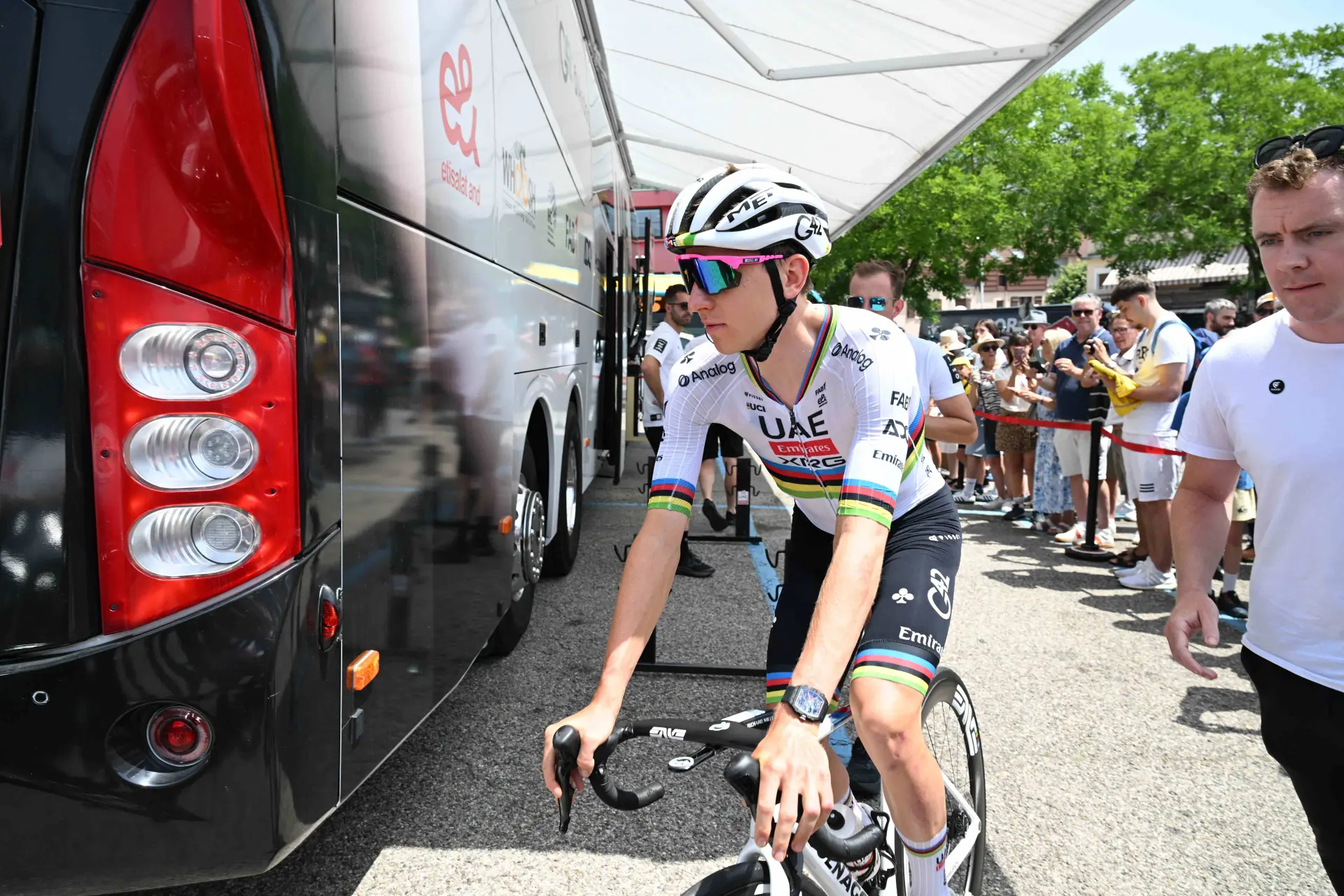
Why the gap may stay
If Pogacar is no longer improving, the natural assumption is that rivals might finally be able to catch him. Delgado does not really buy into that.
For him, the story of modern cycling is not always about stars falling, but about others rising. “Sometimes it’s not that you go down, it’s that others go up.”
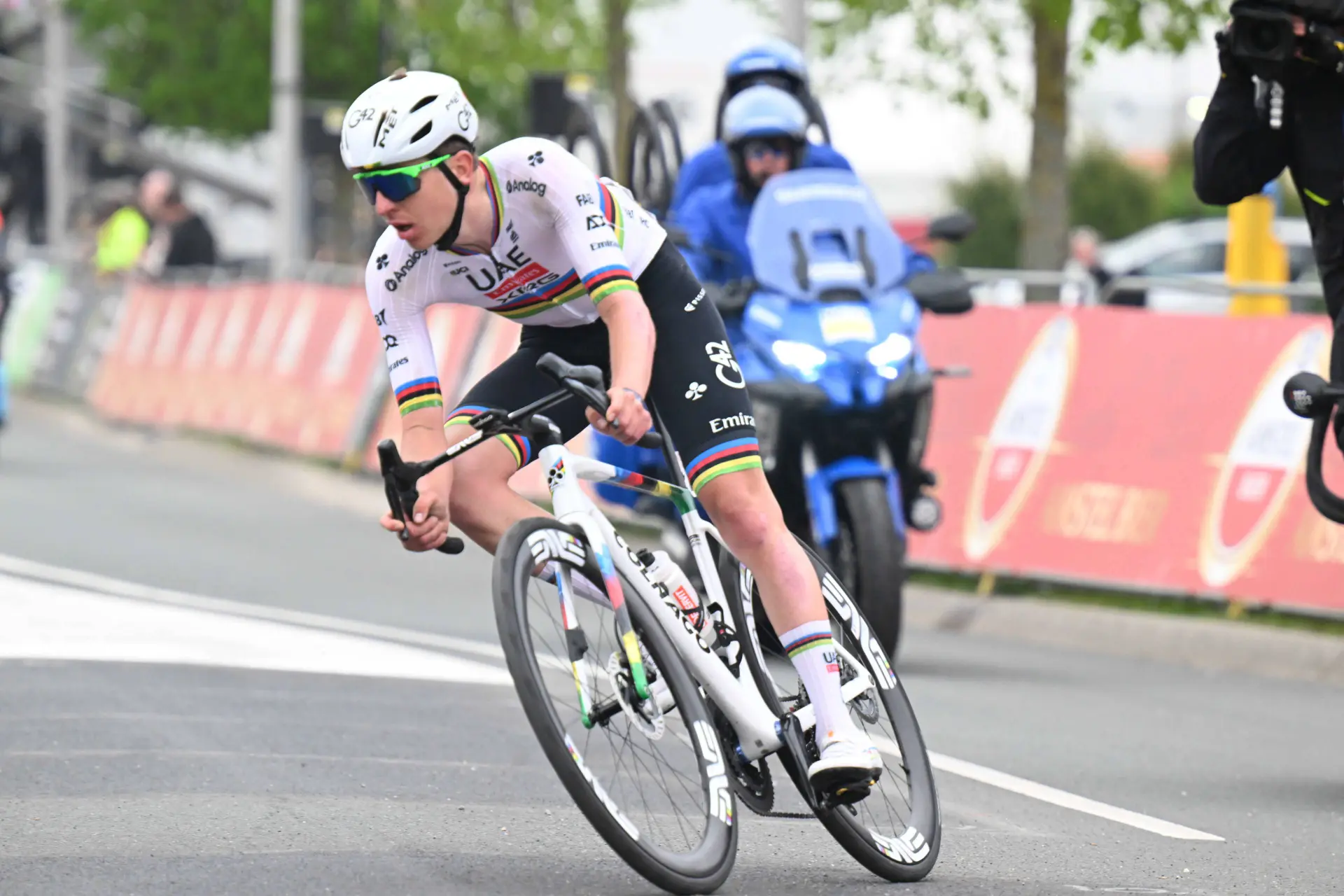
But even framed that way, he still places Pogacar in a different category. “Pogacar is two steps above the good riders.”
That hierarchy, in Delgado’s mind, still leaves Jonas Vingegaard and Remco Evenepoel chasing something that remains out of reach. “Vingegaard is one step below him, but one above others like Evenepoel.”
In other words, even if Pogacar has already peaked, Delgado believes that peak is still high enough to control the sport for the next couple of seasons. His ceiling is not a warning sign, but a benchmark that no one else has yet reached.
The only space Delgado sees for genuine movement is among the next layer of challengers. “I’d like to see the development of Lipowitz, to see if he takes another step up.”
But until that happens, Delgado’s message is stark. Tadej Pogacar may already be the best version of himself, but that version is still good enough to keep Jonas Vingegaard, Remco Evenepoel and everyone else looking up for some time yet.

Kieran WoodDeputy Editor-in-Chief
Kieran Wood is a sports journalist based in Wales and has been active in journalism since 2022. He regularly contributes to DartsNews.com and CyclingUpToDate.com, where he covers professional cycling and darts. In cycling, his work includes liveblogs from major races, including the Tour de France, the Giro d’Italia, and La Vuelta a España, alongside race reports and analysis. He has also conducted interviews with professional riders.
His reporting spans the full racing calendar, from one-day classics to stage races, with a focus on accurate, real-time coverage and clear contextual analysis. For statistics, results, and historical context, he regularly uses resources such as ProCyclingStats. To support reporting on rider activity and training context where relevant, he also references Strava.
In his work, Kieran places strong emphasis on careful sourcing, editorial accuracy, and updating articles as new, verified information becomes available.
claps 6visitors 6
Just in

Popular news
Latest comments
- Seixas is exactly what I would like Pogi to be mentally and in his statements. Both come across as shy and who don't talk much but with Seixas, you can see that he enjoys success, that it boosts his ego, unlike Pogačar who seems to feel increasingly uncomfortable the more he wins. He's won so many times, people are saying he's boring. The french media hate him for winning so much, the french cycling fans are booing him... etc. etc. But remember one thing, Seixas will never physically reach Pogi's level. He's excellent, but he isn't at that level nor will ever be. His talking to the media, his relationship with people is already at a high level.PogiSloFans13-10-2026
- Paul Seixas is now the second-best rider in the world.megasmacky13-10-2026
- When will they start dropping Pogi? Oh yeah, when Pogi reaches 40+ years, that's when young cyclists will start dropping him. But until then... eat your hearts out and cry. Pogi will remain the G.O.A.T. for years to come. Capish?PogiSloFans13-10-2026
- I figure he would have found out how to outsprint Paul and take the win, maybe. He's 28 now but I would say he's right at the peak of his powers. It was great race though, Paul showed me something different about himself.awp13-10-2026
- Slowly, very slowly... 5-7 yrs. ;)MajorPayne13-10-2026
- Up to this point: "It is just not yet at the level of Vingegaard and Pogacar." First Jonas, and then level of Tadej. Period!MajorPayne13-10-2026
- The sport has long had a divide between the more diesel-like riders and the more explosive riders. Where does Pogačar fit? His explosive attacks are followed by a high speed diesel climb and he's rarely been caught in the past 5 years (people can name the moments, it's so rare). Seixas is young and we have no idea where his body will end up on this spectrum (just like we didn't with Pogačar when he was 20 and being a diesel up the Vuelta mountains of 2019). Speculation is fun, being a fan while it unfolds is going to be more fun.RidesHills13-10-2026
- yeah it'll be an epoch shift when Pog can't drop people, and/or when they start dropping him.wrsty13-10-2026
- Yes, he won't ride away yet, but he will and that day will be notable
 leedorney13-10-2026
 - Expect the young French rider to slowly asphyxiate the Slovenian into retirement.
 Front24213-10-2026
Loading
7 Comments