“It’s not possible that he suddenly gets dropped like the last rider in class” – Former Vuelta stage winner casts doubt on Remco Evenepoel’s UAE Tour struggles
Cycling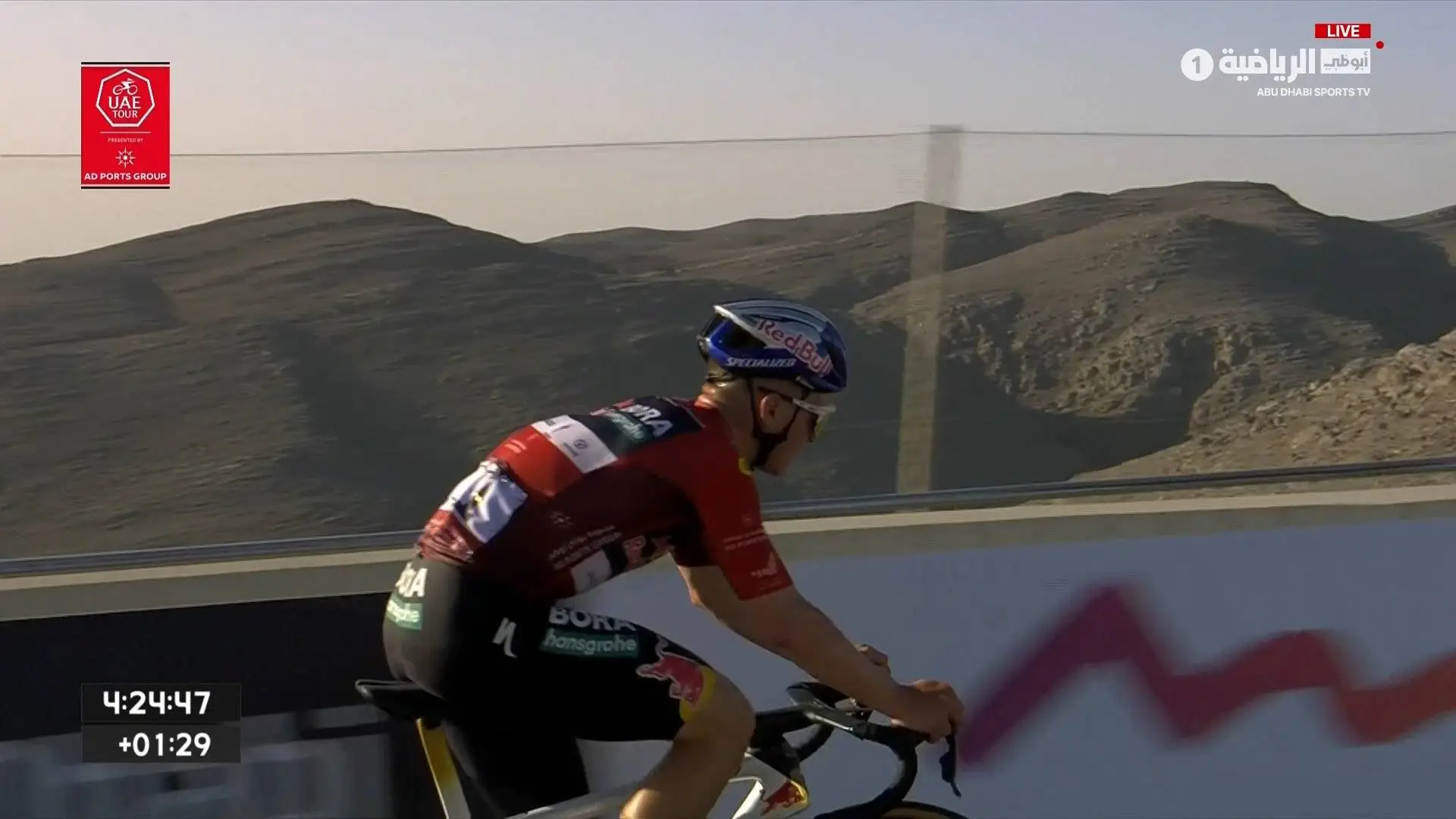
Remco Evenepoel left the UAE Tour searching for explanations. Former Vuelta a Espana stage winner Adriano Malori is not convinced they are the right ones.
Evenepoel’s week in the Emirates followed a sharp arc. A dominant time trial victory. Then heavy time losses on Jebel Mobrah. Then another mountain setback on Jebel Hafeet. The Belgian pointed to fatigue from pushing a 68-tooth single chainring in the time trial, recovery issues earlier in the race and simply not yet reaching the necessary climbing level.
For Malori, the swing is too abrupt to be read at face value. “It’s not possible that a rider who dominated the week before suddenly gets dropped like the last rider in class,” the former Movistar Team rider told Bici.Pro.
That sentence cuts straight to the core of the debate. Just days before arriving in the UAE, Evenepoel had controlled races in Spain with authority, riding rivals off his wheel without appearing strained. In Abu Dhabi, he was suddenly isolated and distanced on gradients that, historically, suit his sustained tempo style.
Malori does not believe the explanation lies in desert heat or simple fatigue. “To me it looked like Evenepoel went there to test the time trial, and the rest of the race didn’t interest him that much,” he said.
The 68-tooth test
The time trial itself is central to Malori’s reading of events.
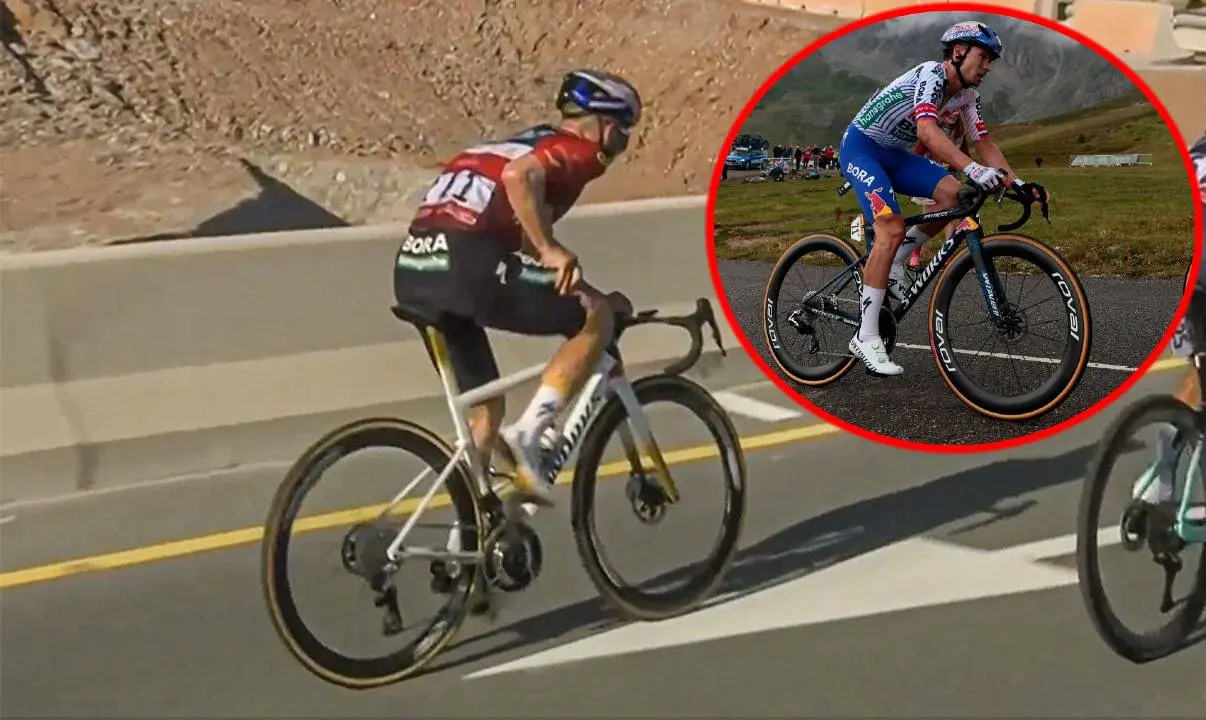
Evenepoel rode the stage with a 68-tooth single chainring, a significant choice even in today’s high-speed aero era. He later suggested the effort may have contributed to the difficulties that followed in the mountains.
Malori sees it differently. “It was an extremely fast course, and this year he has changed many things, from preparation to equipment,” he explained. “You have to test that gear in competition. You need to understand how to launch it, how to accelerate, how the chain works across the cassette.”
In other words, this was not an indulgence. It was a rehearsal.
He dismissed the idea that such a gear would leave lasting damage in modern stage racing. “There is no disadvantage. The distances are shorter now, cadence is higher. It’s not like the old 50-kilometre time trials at 78 rpm. The problem doesn’t exist.”
The implication is clear: the mountain losses were unlikely to have been caused by mechanical overreach.
“Jebel Hafeet is not Alpe d’Huez”
Perhaps Malori’s most pointed observation concerns the terrain itself. “Jebel Hafeet is longer and harder, but it’s not Alpe d’Huez,” he said.
Evenepoel’s profile has always been built around steady-state climbing rather than explosive accelerations. On paper, Hafeet suits that engine. For Malori, the version of Evenepoel seen in Spain should not be distanced so decisively on such a climb unless the broader objective lay elsewhere. “I think he went there to test the time trial, he won it, and then he drew a line,” he added.
That interpretation reframes the week entirely. The GC was not the priority. The time trial was.
A staged build towards bigger goals
Malori also questioned the structure of Evenepoel’s early season. Mallorca. Andalucia. UAE. Then, a month away from racing before Catalunya. “You might expect that from Van Aert targeting the Classics, not from Evenepoel,” he observed, suggesting the UAE Tour may have doubled as an endurance block rather than a peak performance target.
He even noted that Evenepoel did not yet appear at his leanest racing condition. “If you look at the photos, he is still slightly above his usual standard,” Malori said, implying that February was not meant to showcase final climbing form.
That matters when weighing the broader context. Evenepoel has repeatedly stated that his defining goal remains beating Tadej Pogacar at the Tour de France. February in the desert is not July in the Alps.
Excuses – or transparency?
Evenepoel’s openness in dissecting his setbacks has drawn mixed reactions. He acknowledged being dropped. He referenced recovery, illness and effort distribution. He did not hide from the outcome.
Malori’s perspective does not accuse him of indifference. Instead, it questions whether the narrative of collapse is misplaced. “He knows his programme, and he did what he had to do,” Malori said. “The important thing is that the team knew it. The rest doesn’t matter.”
The UAE Tour, in this reading, becomes less a warning sign and more a controlled checkpoint in a longer preparation arc.
Whether that interpretation proves accurate will only become clear later this spring, and ultimately in July.
But for Malori, the idea that Evenepoel simply “lost his level” in a matter of days is the least convincing explanation of all.
Kieran WoodDeputy Editor-in-Chief
Kieran Wood is a sports journalist based in Wales and has been active in journalism since 2022. He regularly contributes to DartsNews.com and CyclingUpToDate.com, where he covers professional cycling and darts. In cycling, his work includes liveblogs from major races, including the Tour de France, the Giro d’Italia, and La Vuelta a España, alongside race reports and analysis. He has also conducted interviews with professional riders.
His reporting spans the full racing calendar, from one-day classics to stage races, with a focus on accurate, real-time coverage and clear contextual analysis. For statistics, results, and historical context, he regularly uses resources such as ProCyclingStats. To support reporting on rider activity and training context where relevant, he also references Strava.
In his work, Kieran places strong emphasis on careful sourcing, editorial accuracy, and updating articles as new, verified information becomes available.
claps 7visitors 7
Just in


Popular news

Latest comments
- It sure can feel or seem that way but I wonder if the same amount of prodigious performances (compared to the others) would occur if no one was ever doping at all.flyer25-11-2026
- Given the similarity of two articles (published on I think the same date), I'm reusing (copy-n-pasting) my post from the twin: I've always thought the last day of each of the grand tours was problematic mostly in that the GC is considered completed before the race starts when that is not really true. There is some tension, but not desirable tension. What saves the awkward practice is the race finish is legit for those who participate - so it's not wholly different from the other stages. That neutralizations usually make good sense demonstrates their necessity so if that has to be the way to go I agree that the design plan for the neutralization should be completed before the race starts. This years end stage in the Vuelta had one of the best first half's I've seen in that many of the riders looked to be thoroughly enjoying themselves making it a joy to watch. But I think it was slightly closer to the exception rather than the rule.flyer25-11-2026
- Even I often win without being there at all, not even breaking a sweat. Beat that!flyer25-11-2026
- It is not about rest and peaking again - 5 weeks is not enough for that. It is about recovery while maintaining form. 4 weeks is easier for that. With a Giro-Vuelta, the 12 week break is enough to rest and then peak again. Not for the Tour
 Rafionain-Glas25-11-2026
- I fully agree that "2027 could completely reshape the pecking order" because this competition is a mix of skill, team support, luck opposition, and health. (What BS - as I start writing this post a popup hides what I've written so my only sane options are to hit POST prematurely or leave or reload the page. What a pathetic operation. I forgot where I was so I'm getting out of this crap trap.)flyer25-11-2026
- I've always thought the last day of each of the grand tours was problematic mostly in that the GC is considered completed before the race starts when that is not really true. There is some tension, but not desirable tension. What saves the awkward practice is the race finish is legit for those who participate - so it's not wholly different from the other stages. That neutralizations usually make good sense demonstrates their necessity so if that has to be the way to go I agree that the design plan for the neutralization should be completed before the race starts. This years end stage in the Vuelta had one of the best first half's I've seen in that many of the riders looked to be thoroughly enjoying themselves making it a joy to watch. But I think it was slightly closer to the exception rather than the rule.flyer25-11-2026
- Apparently that week is a MAJOR training disadvantage as "three major benefits" were claimed. When I read a proposal such as this, I want to also read the reasons why changing might not be so good - the CONS.flyer25-11-2026
- most likely they fudged it but i think they want to set an example to the riders that even the top riders are not exempt in the top races even during nighttime as a precedenceabstractengineer25-11-2026
- I think Isaac is in the perfect position to grow as a rider. Looks like Tadej has taken him under his wing and has a strong team around him to also help him grow. I believe he can sign with another team in a few years if he wants to become a team leader. I think he will have a long wait with Tadej.Paggss25-11-2026
- Indeed, if one's goal in life is to be the best possible cyclist, one should delay having kids. If, however, one's goal is to be the most fulfilled human as possible, one shouldn't delay having kids. -An Economist, crazed cyclist, and father of 3 who started having kids too lateacem8225-11-2026
Loading
20 Comments