“It’s something he’s asked for, but do the Giro and the Tour… then we’ll see” – Quick-Step DS addresses rumours of Mikel Landa’s Grand Tour hat-trick in 2026
Cycling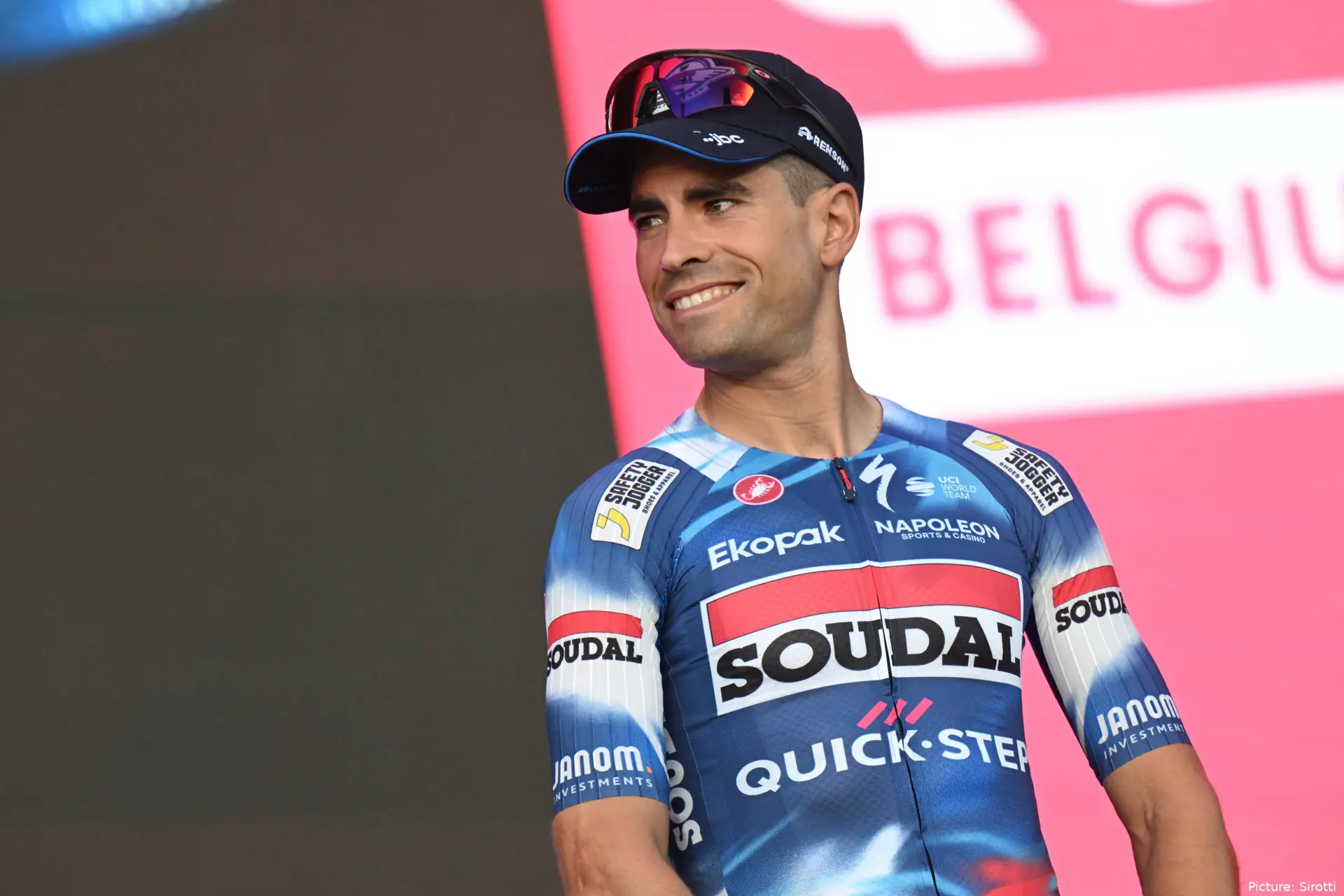
The idea of Mikel Landa riding all three of cycling's Grand Tours in a single season has always felt more like romantic speculation than a realistic plan. Yet heading into 2026, the conversation has shifted from fantasy to conditional possibility.
Not because of public ambition, but because the request has come from Landa himself, and because Soudal - Quick-Step are entering a very different phase of their history.
“It’s something he’s asked for, but do the Giro and the Tour… then we’ll see,” sports director Davide Bramati said in conversation with Bici.Pro, laying out the clearest framework yet for how far the team are prepared to go.
That line does a lot of work. It confirms intent, sets boundaries, and makes clear that any talk of a Grand Tour hat-trick will be earned rather than granted.
A rider who has done everything but all three
For all of Landa’s longevity at the top level, one box remains unticked. He has never ridden the Giro d’Italia, Tour de France and Vuelta a Espana in the same year.
Across his career he has started more than 20 Grand Tours, with repeated appearances at all three and podium finishes at the Giro. He has proven capable of backing up strong form across long blocks of racing, but always with limits applied. Even in his peak seasons, programmes were built around two Grand Tours at most.
That is what gives weight to the 2026 discussion. This would not be a symbolic farewell tour or a vanity project. It would be something entirely new for a rider now in the latter phase of his career. “I continue to enjoy what I do and I have the same passion as on my first day with the team,” Landa said. “Now I’m about to start my sixteenth year as a professional, something I would never have imagined when I turned pro.”
That perspective matters. This is not a rider chasing nostalgia, but one who believes there is still space to compete meaningfully across the biggest races on the calendar.
Giro first, and unfinished business
If there is one Grand Tour that still defines Landa’s career, it is the Giro d’Italia. Twice on the podium, often among the strongest climbers in the race, but repeatedly undone by crashes or misfortune.
Last season followed that pattern brutally, when a crash on the opening day ended his race almost before it had begun. “Before the Giro everything was going perfectly, I was in excellent shape and felt very good,” Landa recalled. “I was ready to fight for a good general classification. Then that accident happened and everything went up in smoke.”
Bramati has not forgotten that context. “Mikel will be at the Giro and he will be our leader,” he said. “Stages or general classification? Why not try to ride for the general classification. Let’s remember that he has an unfinished story with the Giro, and it is also a very nice Giro.”
That choice of words is revealing. This is not framed as a transitional role or a reduced ambition. The Giro remains the foundation of any wider plan.
Why the Tour matters before the Vuelta
The Tour de France sits at the centre of Bramati’s conditional approach. Historically, it has been the race where Landa has either consolidated his form or reached his limit. Strong performances there would make any discussion about a third Grand Tour credible. Weak ones would likely close the door.
That is why the Vuelta, despite being Landa’s home Grand Tour, is treated as optional rather than guaranteed. Bramati’s “then we’ll see” is not evasive. It is structural.
Modern cycling does not reward sentiment. “You have to deal with modern cycling, which is very demanding,” Bramati said. “For now he will do the Giro and then the Tour, and then we’ll see.”
The implication is clear. Two Grand Tours at a high level open the conversation. Anything less ends it.

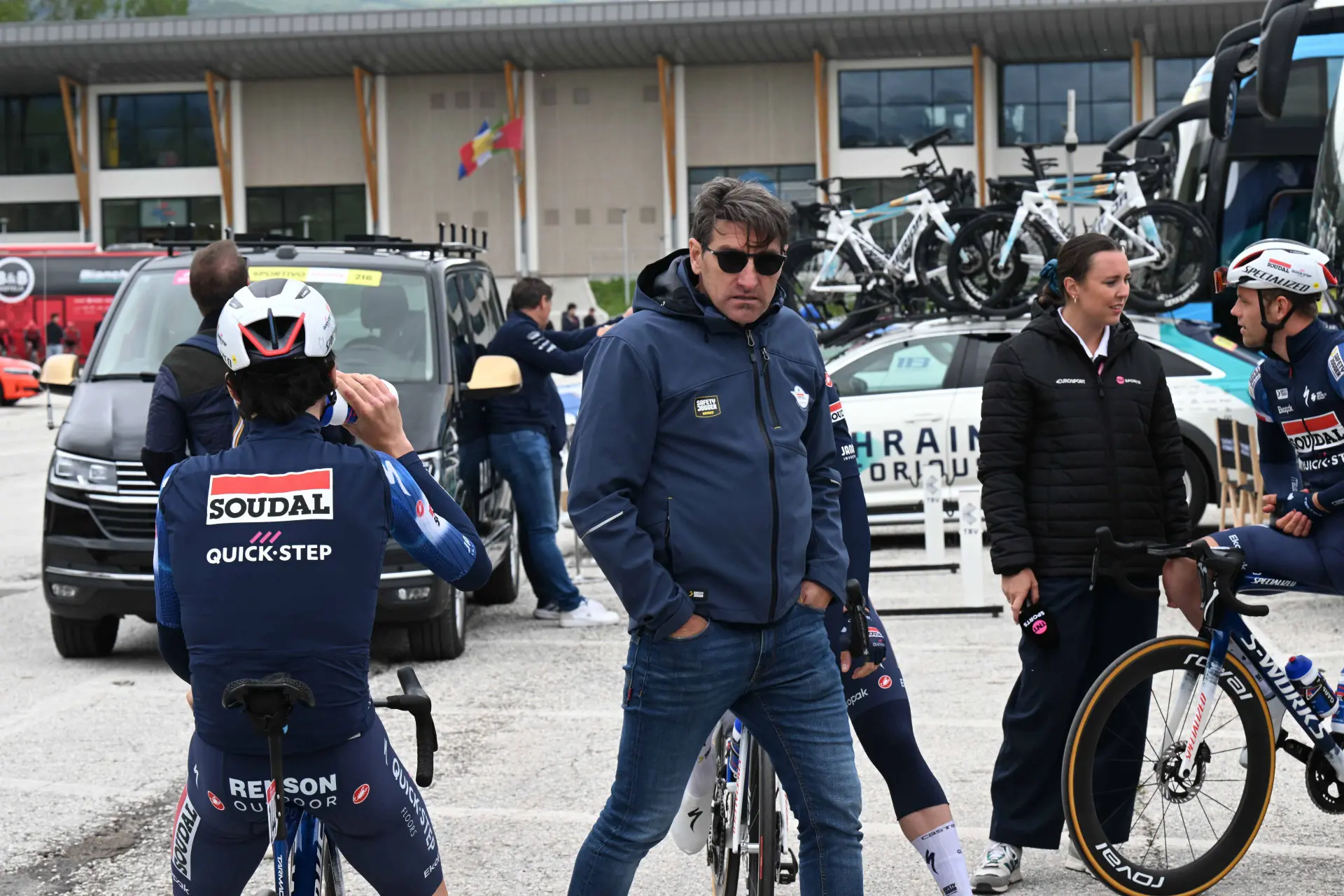
Bramati has been a key figure at Quick-Step for nearly two decades
A different role in a changing team
There is also a broader context at play. With Remco Evenepoel no longer part of the team, Quick-Step’s Grand Tour strategy has reset. Landa is no longer supporting a single dominant leader. He is now the reference point.
That responsibility has sharpened his standing inside the group. Bramati describes him as “a real example for the young riders”, highlighting his professionalism and impact beyond results.
For a team rebuilding its identity, that matters. A potential Grand Tour hat-trick would not just be about Landa. It would be about demonstrating that experience, resilience and ambition still have a place in Quick-Step’s future.
Whether the idea ever reaches the start line of the Vuelta remains uncertain. That uncertainty is the point. In 2026, nothing is automatic. For Landa, the door is open. But only if he earns the right to walk through it.


Kieran WoodDeputy Editor-in-Chief
Kieran Wood is a sports journalist based in Wales and has been active in journalism since 2022. He regularly contributes to DartsNews.com and CyclingUpToDate.com, where he covers professional cycling and darts. In cycling, his work includes liveblogs from major races, including the Tour de France, the Giro d’Italia, and La Vuelta a España, alongside race reports and analysis. He has also conducted interviews with professional riders.
His reporting spans the full racing calendar, from one-day classics to stage races, with a focus on accurate, real-time coverage and clear contextual analysis. For statistics, results, and historical context, he regularly uses resources such as ProCyclingStats. To support reporting on rider activity and training context where relevant, he also references Strava.
In his work, Kieran places strong emphasis on careful sourcing, editorial accuracy, and updating articles as new, verified information becomes available.
claps 0visitors 0
Just in

Popular news
Latest comments
- Says Mr Non-stop repeating himselfJumpyjohn20-10-2026
- Phew I hope we do not get Jiffygate 2🤣🤣🤣🤣🤣 oh and by the way Bradley still has not answred the question re jiffygate even in his latwst book🙄🙄🙄🙄paultryan200220-10-2026
- What a stupid comment. If they are as good and if not better why should they sit on seasoned pros wheels. Sexias is a prime example . Move with the times they are fitter and more hungry and more ambition. If you cannot abide being 2nd string find a new profession.paultryan200220-10-2026
- Hey MajorPayne, I think you've noticed by now, how many fools there are in cycling, calling themselves "fans."... I can't understand it either. I guess Michael Jordan, Le Bron, Gretzky, Messi, Ronaldo, Shumacher, Novak Džoković, Federer, Rossi, Marquez, Phelps, Michaela Shiffrin, Venus Williams, Merckx, Hinault, Indurain... etc. were all boring.PogiSloFans20-10-2026
- Listen to this BS: "Whilst I love Tadej (and Remco, who deserves to be mentioned here, too), @JumpyJohn makes a valid point, and he isn’t wrong @MajorPayne. It is a fact that today’s official broadcasters of cycling struggle to keep our attention once the likes of Tadej (or Remco) attacks at ~80km or so.... bla bla bla ... OK, now I wil bla bla bla ... Reading BS comments brings me to saying: Let's cancel road cycling as a sport. The history books, that will be read in the future, will say: "Years ago, there was a sport called road cycling and it stopped to exist. A cyclist from Slovenia, Tadej Pogačar-Pogi, was so good, cycling became boring. Everyone stopped watching, even the Slovenians. Snooker, curling, chess, dart throwing and Olympic games shooting (rifle, pistol and shotgun) which is watched mostly by the Americans, are very popular sports... bla bla bla bla ..." ... STOP MAKING FOOLS OF YOURSELVES!!!PogiSloFans20-10-2026
- Look at all this BS!!! Yes, I repeat...BS...!!! - Tadej Pogacar's 2027 Tour-World-Vuelta combo under scrutiny. - We're going to have nonstop Pogacar action pretty much from the beginning of the Tour to the end of the Vuelta. - It's a surprise that he's announced his intention to ride the Vuelta so explicitly. - Can Pogacar keep his form throughout Tour and Vuelta? - Pogacar won't be able to recover much, but instead train to maintain his form - and that could prove costly for the Vuelta. I just don't understand. Is this hatred towards Pogi, or just sheer stupidity? 1) Pogi proved this year that he had no problem winning the Vuelta after the Tour. We all know he would have won by a big margin if he didn't crash out. 2) Last year Jonas proved that he could have won the Tour and Vuelta, but unlucky for him, he was second in the Tour. If Pogi wasn't at the Tour, Jonas would have done it. So WTF are they talking about??? 3) Pogi proved in 2024, by winning the Giro, Tour and WC, that it was no problem for him. If journalists have no material to write about because of cyclists winter break, then don't write anything...PogiSloFans20-10-2026
- He’s already had months off racing, so he’s probably ready to get back to business.wrsty20-10-2026
- CyclingUpToDate - can't not do a headline about Tadej Pogacar
 leedorney20-10-2026
 - that is why I used the word "hope" lolmij20-10-2026
- I didn't see it so I can't comment, but I'll take your word for it, and your stats.mij20-10-2026
Loading
1 Comments