Is Pro Cycling failing riders mentally? “Only a handful of teams actually employ a sports psychologist,” warns former WorldTour pro
Cycling
In a sport obsessed with marginal gains, it’s easy to assume that every detail is accounted for — from wind tunnel testing to blood lactate profiling. But according to former WorldTour rider Martijn Tusveld, there’s one area where much of the peloton is still falling short: the mind.
Despite a racing career that spanned all three Grand Tours with the now-named Team Picnic PostNL team, Tusveld says the mental side of performance remains an afterthought for many teams — a blind spot in an otherwise data-driven era.
“Only a handful of teams actually employ a sports psychologist,” he tells Procycling. “More often, it’s an external consultant that riders have to seek out themselves, or someone brought in only when there’s a problem. But I believe that’s going to change. I think the next big innovation in cycling is personal attention to the mind.”
The Hidden Margins
Tusveld’s perspective isn’t coming from the outside looking in — it’s informed by personal experience. After his contract wasn’t renewed at the end of 2024, he looked set to put racing behind him and return to his Psychology degree. But a lifeline came from BEAT Cycling, a Continental-level Dutch outfit with a progressive approach to mental support.
At BEAT, psychology isn’t a box-ticking exercise — it’s embedded into the team’s philosophy. The squad works with Lex Ligtenberg as an in-house mental coach, allowing riders regular access to guidance and support. “It’s been great to combine my studies with riding again, especially in a team where the mental side is taken seriously,” Tusveld explains. “I still believe there’s a lot to gain in cycling when it comes to the brain.”
And for someone who’s felt the weight of expectation up close, that support isn’t abstract. Back in 2014, after a standout fourth place at U23 Liège–Bastogne–Liège the previous year, Tusveld struggled under self-imposed pressure — an all-too-common experience for young riders trying to prove themselves.
“I couldn’t replicate the result, and I noticed in other races that when I had expectations, I underperformed. But when I went in without them, I rode well,” he recalls. “That’s when I first worked with a mental coach. I didn’t even know how to recognise pressure, let alone handle it. That process gave me tools I still use now.”
The Current Landscape
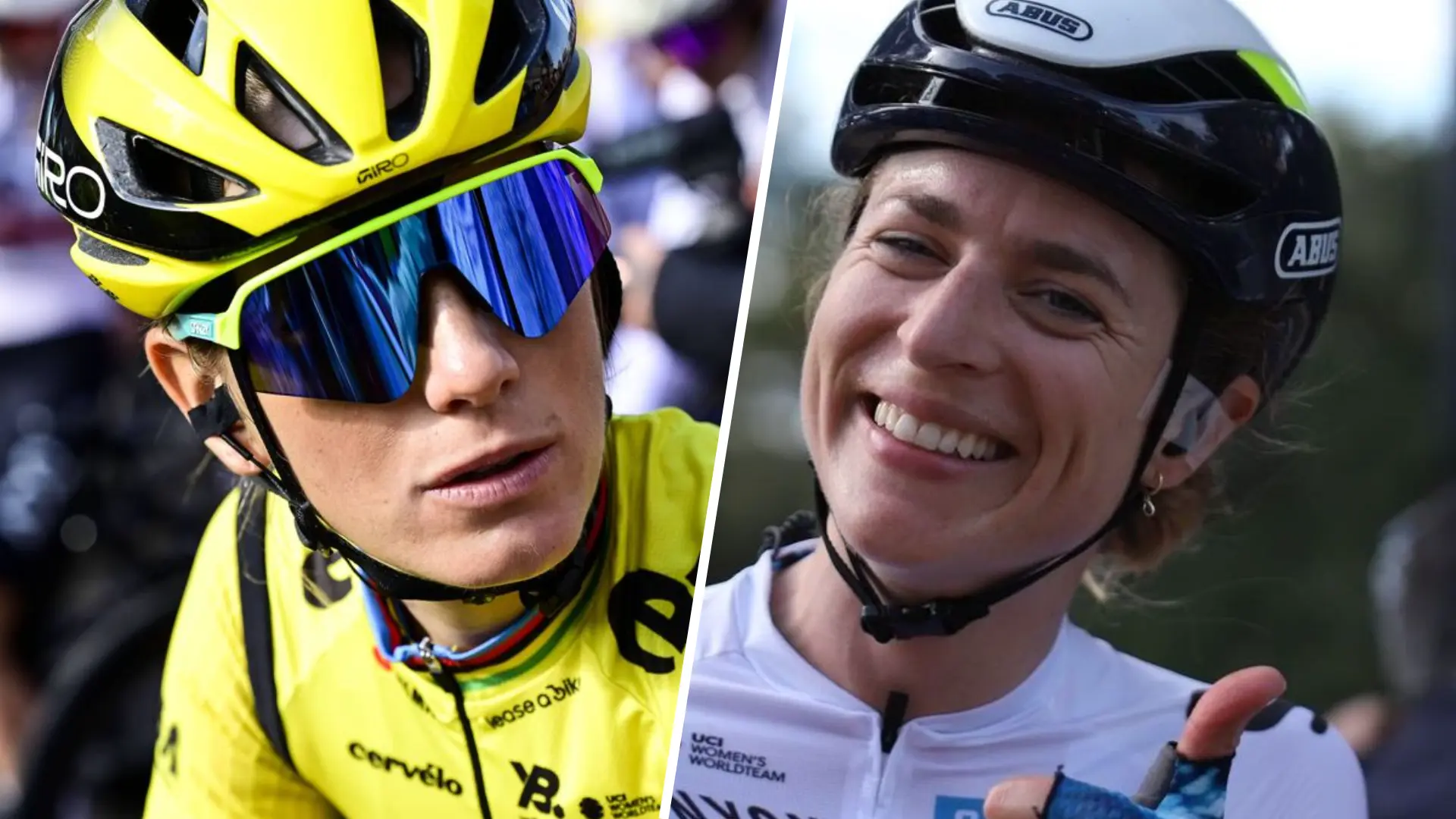
While sports psychology is gaining ground in the WorldTour, it’s far from standardised. A few teams — like Team Visma | Lease a Bike and EF Education-EasyPost — have well-integrated mental performance departments, but many others rely on ad hoc arrangements, if anything at all. Young riders in particular are often left to figure it out alone, with limited support beyond traditional coaching staff.
“It’s not that teams don’t care,” Tusveld notes. “It’s just that mental coaching still isn’t baked into the day-to-day system like nutrition or training are. And yet, it can be the difference between unlocking performance and plateauing — especially when pressure, injury, or personal setbacks hit.”
This isn’t about mental health in the clinical sense, though that too is important. Tusveld is pointing to something more specific: performance psychology. The art of handling pressure, maintaining focus, and building resilience — skills as critical to winning as a big engine or perfect race craft.

Tusveld in action at the 2024 Vuelta a Espana
A Future Shift?
With more teams investing in marginal gains, it’s not hard to imagine a shift on the horizon. Tusveld believes it’s inevitable.
“Every rider, at some point, runs into something mental that affects performance. It might not always be obvious, but it’s there — burnout, pressure, fear of failure, lack of motivation. If you can learn how to deal with those things earlier, the payoff is huge,” he says. “We’re still only scratching the surface. I think we’ll look back in ten years and wonder why it wasn’t taken more seriously sooner.”
As teams continue to hunt for fractions of a percent in performance, perhaps it’s time they started looking not just at watts — but at what’s going on between the ears.

Kieran WoodDeputy Editor-in-Chief
Kieran Wood is a sports journalist based in Wales and has been active in journalism since 2022. He regularly contributes to DartsNews.com and CyclingUpToDate.com, where he covers professional cycling and darts. In cycling, his work includes liveblogs from major races, including the Tour de France, the Giro d’Italia, and La Vuelta a España, alongside race reports and analysis. He has also conducted interviews with professional riders.
His reporting spans the full racing calendar, from one-day classics to stage races, with a focus on accurate, real-time coverage and clear contextual analysis. For statistics, results, and historical context, he regularly uses resources such as ProCyclingStats. To support reporting on rider activity and training context where relevant, he also references Strava.
In his work, Kieran places strong emphasis on careful sourcing, editorial accuracy, and updating articles as new, verified information becomes available.
claps 8visitors 4
Just in
Popular news
Latest comments
- Nothing. Against Pogi nothingabstractengineer18-10-2026
- He didn't even try to sprint all outvappaxbipmv18-10-2026
- Campenaerts looked like a rolling pumpkin with that all orange leaders skinsuit !frieders318-10-2026
- He can take his dumb a$$ politics somehwere else !frieders318-10-2026
- good to have her back. fingers crossed she‘ll be able to stay!Ketterechts17-10-2026
- A tenner and he wins the Tour next year, too 😂anonymouscyclist17-10-2026
- the answer is either stick to classics or GTs but not bothabstractengineer17-10-2026
- the exodus already stared with Ciccone. Already they were struggling with two sprinters, now there are three. Also Ganna will demand leadership. Gall is the most proven GC, Ayuso has the most potential. GC leadership for everybody will be impossible. Literally a UAE style mess without pogi.abstractengineer17-10-2026
- I raced as an amateur for 12 years, including six years on my country’s national road cycling team. I secured two national titles and competed in three World Championships plus more than 15 international stage races. At 23, we travelled to Italy for a training camp—or so I assumed. On a rest day, we watched a presentation about adopting a more “professional” training approach. It was crystal clear what “professional” meant. That moment first exposed me to this dilemma. After returning from Italy, I left cycling—at least at the competitive level I had known. Over the following two years, the whole team was caught doping. I hold that everyone is innocent until proven guilty. In my view, current stakeholders operate on a different scale, and the sums involved are vast. I am unsure whether any doping would ever be revealed. I try to stay positive and enjoy the show. My 2c.
 vannpelt17-10-2026
 - Fiver he wins 🤣
 leedorney17-10-2026
Loading
Write a comment