“We secretly hoped she wouldn’t win” – Marlen Reusser joins growing concern over Pauline Ferrand-Prévot's dramatic weight loss tactics at 2025 Tour de France Femmes
Cycling
Marlen Reusser doesn’t often mince her words. The Swiss time trial specialist and trained physician has long been a voice of reason and reflection in the professional peloton — but her recent comments about 2025 Tour de France Femmes winner Pauline Ferrand-Prévot strike a chord that resonates far beyond team buses and podiums.
“We secretly hoped that she wouldn’t be successful,” Reusser admitted in a recent interview with Tages-Anzeiger, reflecting on Ferrand-Prévot’s dominant, yet controversial, victory. At the heart of her concern is not simply a matter of performance — it's a question of the message being sent to the next generation of riders, and what that message means for the long-term health and sustainability of the women’s peloton.
Ferrand-Prévot’s triumph was, on the surface, a storybook moment. After years focused on mountain biking, the French rider returned to the road this season, winning Paris–Roubaix and now, finally, claiming a historic Tour title that had eluded her nation for four decades. But her comeback came with a cost — or, more precisely, a calculated shedding of mass. Ferrand-Prévot isolated herself in Andorra, skipped months of racing, and followed a rigorous diet, reportedly losing four kilos — nearly 10% of her body weight.
For Reusser, and others within the peloton, this isn’t just a footnote. It’s a red flag.
A New Standard — and New Pressure
“Ferrand-Prévot has set a new standard,” Reusser evaluates. “When riders are this successful by becoming so thin, it puts pressure on all of us.”
That pressure is compounded by the visibility of Ferrand-Prévot’s transformation. From her skinfold measurements before breakfast to her apparent pride in donning a race jersey that now hangs loose, the optics are hard to ignore — especially for impressionable riders coming up through the ranks. Reusser’s own young teammate reportedly asked her: “Did you see? She checks her skinfolds before deciding whether to eat.”
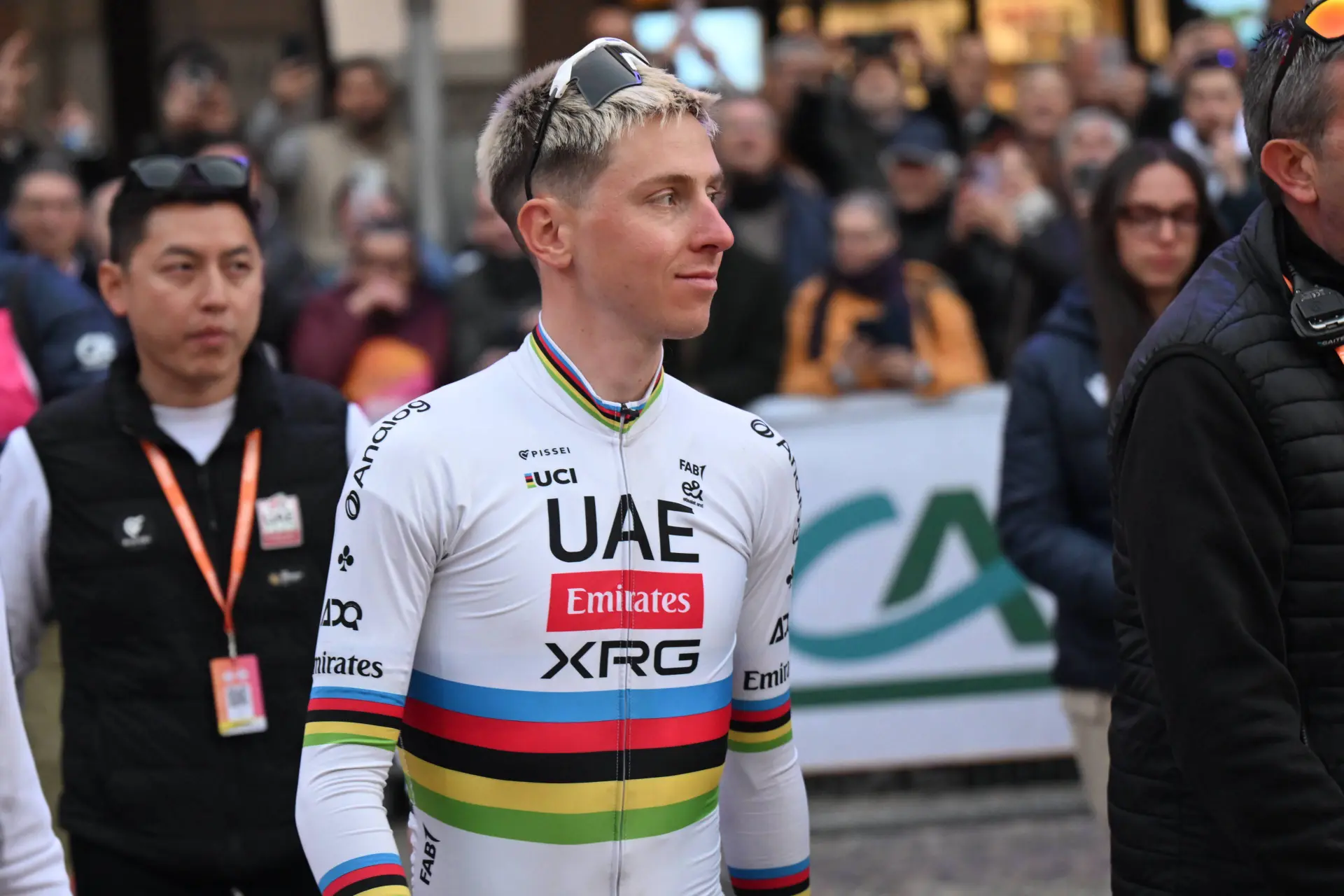
It’s not just about one rider’s approach; it’s about the ripple effects it sends across a sport already grappling with its historical baggage. The shadow of disordered eating, RED-S (Relative Energy Deficiency in Sport), and body image pressures has never been far from cycling’s margins. In the men’s peloton, lessons seem to have been learned: fuelling strategies have shifted, riders like Tadej Pogacar are celebrated not for gaunt physiques but for well-balanced, power-fuelled racing.
In the women’s peloton, however, signs suggest a dangerous backslide.
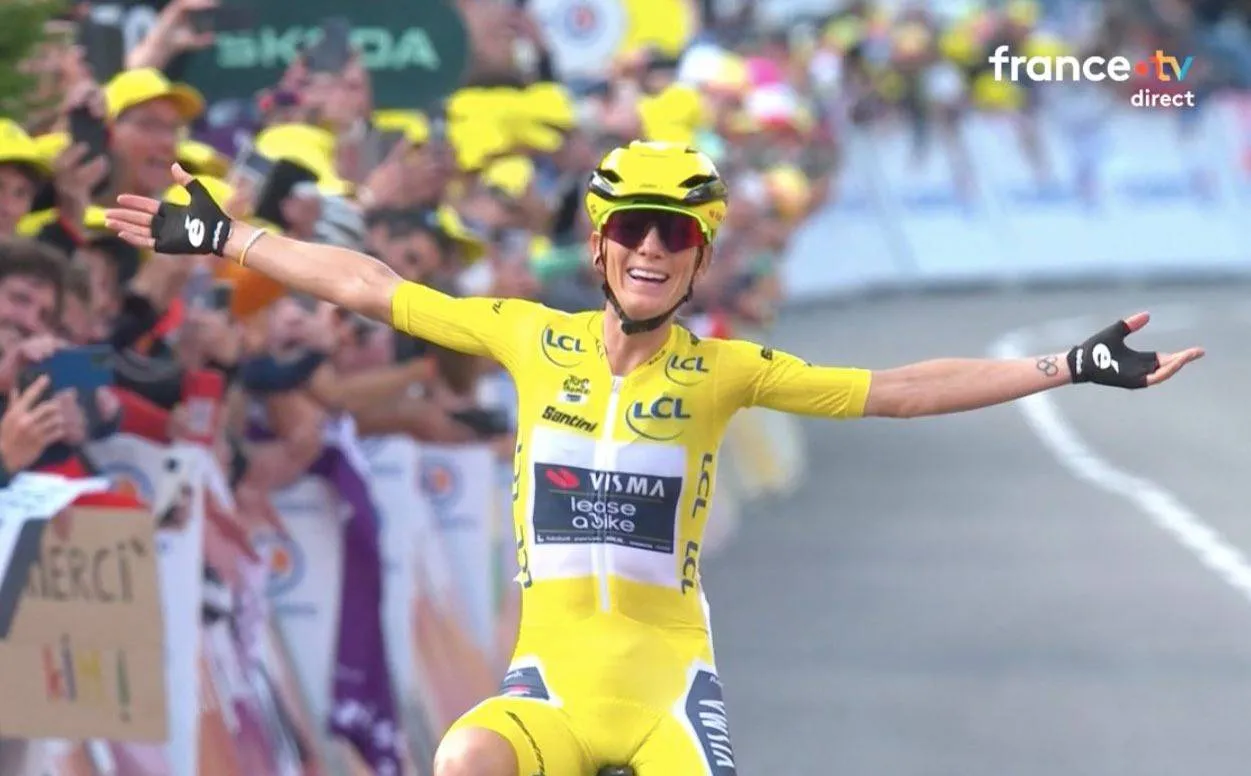
Ferrand-Prevot ended the long wait for a French Maillot Jaune winner
The Weight of Success
Ferrand-Prévot’s weight loss was not incidental; it was strategic. And while the tactic yielded results — she was peerless in the mountains — it raised alarms for competitors like Reusser. “As a fellow athlete, I admire her. As a doctor, I’m concerned,” she said, highlighting the tension between performance optimisation and long-term health. “Is it really harmless if the deficiency is only short-term? Where is the line between smart performance management and harm?”
Reusser references the clinical warning signs: hormonal disruption, immune dysfunction, mental health issues. RED-S isn’t theoretical. It’s real — and it’s in the peloton. When winning is linked to extreme weight loss, it’s not just a personal strategy anymore. It becomes a standard, a blueprint, even if unintentionally.
And then there’s the symbolism. Ferrand-Prévot’s leaner frame, her oversized jersey, her public weigh-ins — all easily interpreted as success being synonymous with skinniness. That message, Reusser warns, is amplified when the president of France himself calls to congratulate you.
A Divided Peloton?
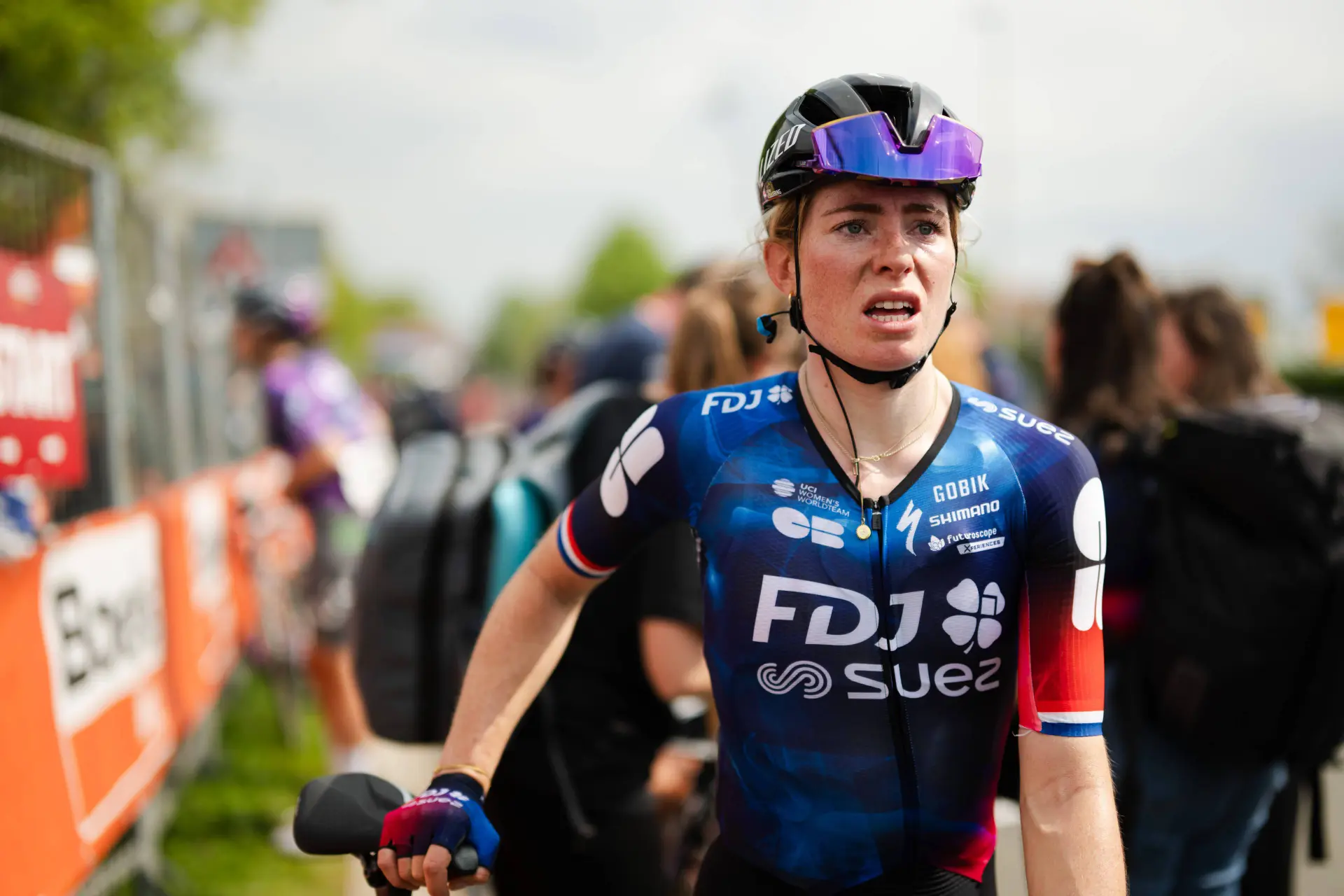
Despite her admiration for Ferrand-Prévot’s talent, Reusser isn’t alone in her discomfort. Demi Vollering, runner-up at the Tour, also spoke out: “I’m not built to be the lightest rider in the peloton. And I won’t force my body to become something it isn’t.” Her message to young riders was direct: “Take care of yourselves. Ask questions. Trust your body.”
The peloton may not be openly divided, but the tension is palpable. Riders are watching closely, weighing not only grams but also consequences.
It’s worth noting that Ferrand-Prévot has suggested she plans to return to her normal weight post-Tour. If true, it suggests a deliberate periodisation rather than a long-term shift. But even temporary measures carry influence. And in a sport where data, marginal gains, and modelling dominate, what’s visible becomes aspirational — especially when it wins races.
Regulation or Responsibility?
Reusser has been here before. Years ago, she called on the UCI to introduce minimum body fat standards — a safeguard against precisely this kind of pressure. Her efforts went unanswered. Now, with the spotlight back on weight and wellness, she’s urging the cycling world — media included — to treat the topic with critical care. “We’ve worked for years to educate against eating disorders,” she says. “But what’s the takeaway for a 17-year-old without a nutritionist, seeing this kind of body ideal being celebrated?”
That’s the question the sport must now confront. Because cycling is no longer just a private competition between professionals. It’s an increasingly global, visible, and influential culture — one where success stories are instantly amplified, and the fine line between dedication and danger is walked in full view of a watching audience.
For Reusser, it comes down to balancing ambition with integrity. She remains committed to her path — to fighting for wins on her own terms, with her health intact. And with eyes already on the 2026 Tour, she has no plans to fade quietly into the background. But as the sport evolves and the stakes grow ever higher, so too does the need for an honest reckoning. Not just about how races are won — but at what cost.
Kieran WoodDeputy Editor-in-Chief
Kieran Wood is a sports journalist based in Wales and has been active in journalism since 2022. He regularly contributes to DartsNews.com and CyclingUpToDate.com, where he covers professional cycling and darts. In cycling, his work includes liveblogs from major races, including the Tour de France, the Giro d’Italia, and La Vuelta a España, alongside race reports and analysis. He has also conducted interviews with professional riders.
His reporting spans the full racing calendar, from one-day classics to stage races, with a focus on accurate, real-time coverage and clear contextual analysis. For statistics, results, and historical context, he regularly uses resources such as ProCyclingStats. To support reporting on rider activity and training context where relevant, he also references Strava.
In his work, Kieran places strong emphasis on careful sourcing, editorial accuracy, and updating articles as new, verified information becomes available.
claps 29visitors 16
Just in

Popular news
Latest comments
- Nothing. Against Pogi nothingabstractengineer18-10-2026
- He didn't even try to sprint all outvappaxbipmv18-10-2026
- Campenaerts looked like a rolling pumpkin with that all orange leaders skinsuit !frieders318-10-2026
- He can take his dumb a$$ politics somehwere else !frieders318-10-2026
- good to have her back. fingers crossed she‘ll be able to stay!Ketterechts17-10-2026
- A tenner and he wins the Tour next year, too 😂anonymouscyclist17-10-2026
- the answer is either stick to classics or GTs but not bothabstractengineer17-10-2026
- the exodus already stared with Ciccone. Already they were struggling with two sprinters, now there are three. Also Ganna will demand leadership. Gall is the most proven GC, Ayuso has the most potential. GC leadership for everybody will be impossible. Literally a UAE style mess without pogi.abstractengineer17-10-2026
- I raced as an amateur for 12 years, including six years on my country’s national road cycling team. I secured two national titles and competed in three World Championships plus more than 15 international stage races. At 23, we travelled to Italy for a training camp—or so I assumed. On a rest day, we watched a presentation about adopting a more “professional” training approach. It was crystal clear what “professional” meant. That moment first exposed me to this dilemma. After returning from Italy, I left cycling—at least at the competitive level I had known. Over the following two years, the whole team was caught doping. I hold that everyone is innocent until proven guilty. In my view, current stakeholders operate on a different scale, and the sums involved are vast. I am unsure whether any doping would ever be revealed. I try to stay positive and enjoy the show. My 2c.
 vannpelt17-10-2026
 - Fiver he wins 🤣
 leedorney17-10-2026
Loading
53 Comments