“I can’t help wondering whether there are untold reasons behind this” – Expert claims Visma have ‘reason to be unhappy’ with Simon Yates surprise retirement
CyclingMonday, 12 January 2026 at 10:34
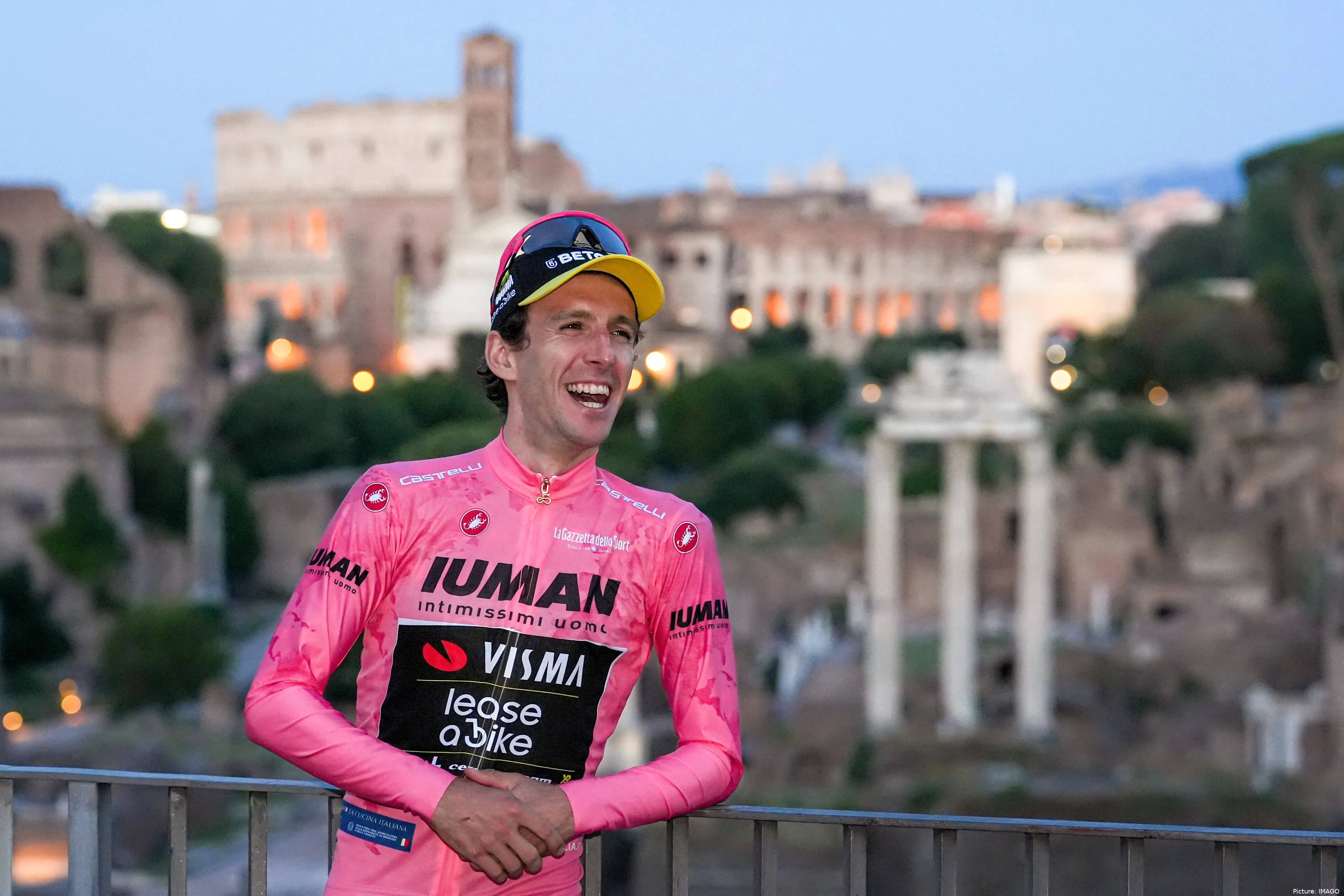
Simon Yates’ decision to end his professional career with immediate effect has closed one story and opened another.
Team Visma | Lease a Bike confirmed the Brit’s retirement in a statement on 7 January, describing it as the end of a final season that delivered both a Giro d’Italia victory and a Tour de France stage win. Yates himself said he had been thinking about stepping away “for a long time” before deciding now was the right moment.
But not everyone is convinced the explanation is that simple.
Danish analyst Emil Axelgaard believes the way and the moment the decision arrived have consequences that cannot be separated from the choice itself. “His decision puts Visma in a very awkward position,” Axelgaard writes in his column for TV2. “They were already facing the coming season with a weakened squad, and in recent years it has in fact been Yates who has been their only truly significant external reinforcement.”

The problem of timing
Yates’ final public appearances as a Visma rider came in December, during the team’s winter activities. “He took part in the team’s training camp in December, and the team published photos of him when they presented their new kit,” Axelgaard said. “In other words, this must be a decision that was made over Christmas and New Year.”
Axelgaard also referred to reports that the idea of stopping had existed long before the official announcement. “There have apparently been rumours about his retirement already during 2025, and if that is true, then these are thoughts he has been carrying around for a long time,” he said.
The issue for him is not the right to retire, but the lack of time left for the team to respond. “In that light, one can reasonably expect and demand that he make a decision early enough for the team to have time to react,” Axelgaard said. “This late decision leaves them without any chance.”
“I can’t help wondering…”
Axelgaard repeatedly returned to the question of whether everything behind the decision has been made public. “I cannot help wondering whether there are other, untold reasons behind this,” he said. “That is of course, pure speculation.”
He stressed that he does not know what has happened behind closed doors. “Of course, we do not know the details and we do not know what has gone on behind the scenes,” he said, “but in any case it is a decision that has come suddenly.”
That suddenness shapes his judgement of how the team may view the situation. “That is why management also has reason to be unhappy with Yates’ decision,” Axelgaard said.
Possible background factors
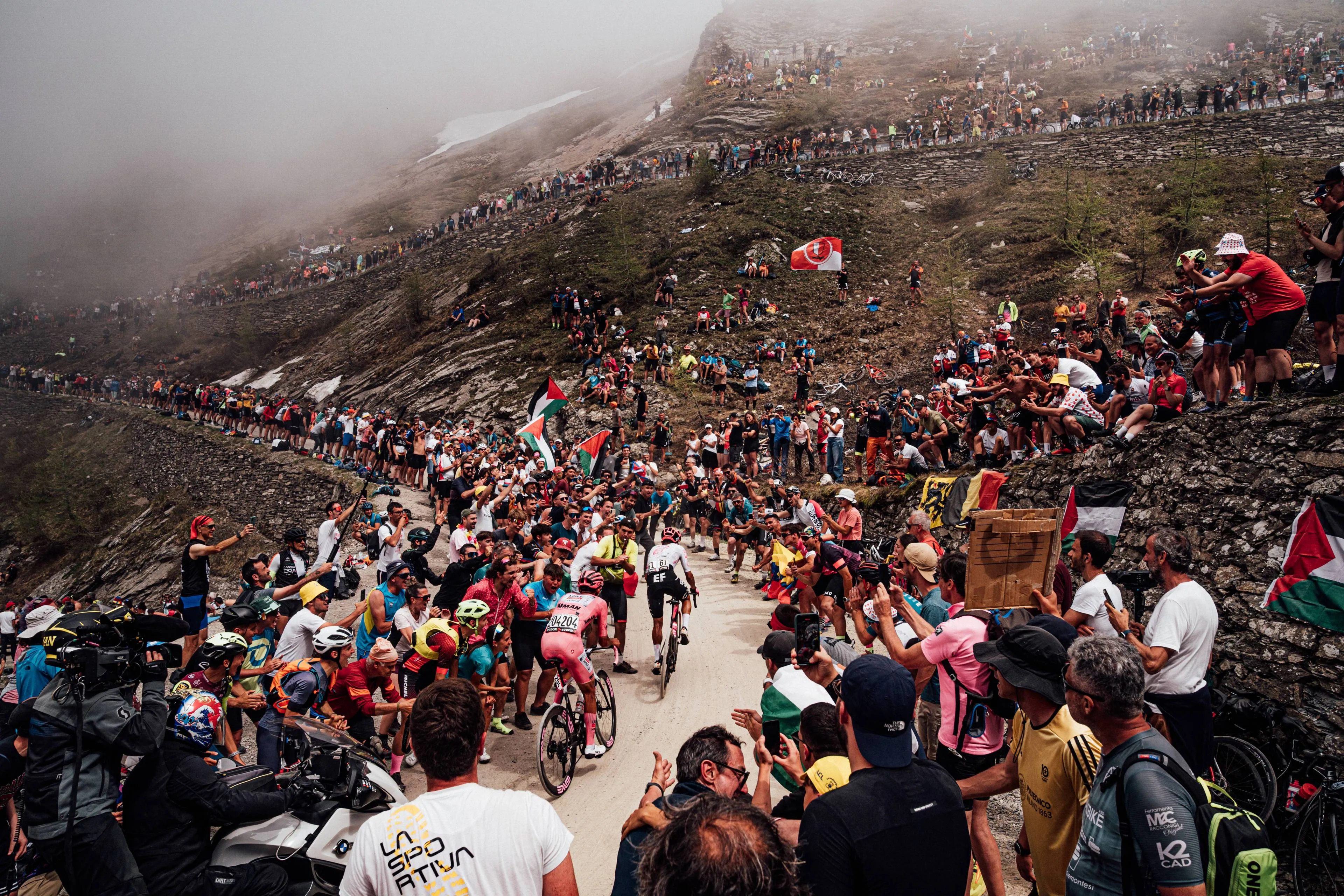
Axelgaard mentioned one possible element that could have influenced Yates, while underlining that he was speculating. “Maybe he is unhappy with the race calendar that was outlined for him and discussed at the training camp in December,” he said. “It would probably have meant that he was to act as a helper for Jonas Vingegaard, and then perhaps get his own chance at the Vuelta.”
Even that, in his view, would not explain the timing. “That is not really a valid excuse, because he knew the conditions when he changed teams and left a squad where he was the big star,” Axelgaard said. “He even has a twin brother who could tell him what it is like to be a luxury helper on a big team… It cannot have come as a huge surprise.”
Two sides of one decision
Yates leaves the sport after a final season that included winning the Giro d’Italia and a stage at the Tour de France. For him, it marks the end of a long career on his own terms.
Axelgaard, however, looks at the same moment from the team’s side. “At the moment, it is impossible to fill that hole, even if they have the money, because there are no riders of that class available on the market,” he said.
And that, in his view, is why the timing matters as much as the decision itself.
claps 25visitors 15
Just in
Popular news
Latest comments
- Are you by chance Tadeg's daddy which is why you are so over the top here on this site with his promotion? No CAPISH !frieders303-04-2026
- It was the original plan to have Jasper Philipsen sprint for the win, it won't be that way in Flanders, MvdP will work to reel POGAČAR in.alsene03-04-2026
- The Godfather of Saunier DuvalMistermaumau02-04-2026
- We hardly have cat. 5 races anymore, too complicated for organisers, more and more they mix up plenty of categories which makes things far more dangerous, we were 180 at the start for an 8 circuitMistermaumau02-04-2026
- I gathered that but for some I was the equivalent so just a bit of fun. I gather he’s still around, maybe he just took my advice?Mistermaumau02-04-2026
- He doesn't have to quit cycling for that? And maybe they don't want kids, not everyone doesvampa02-04-2026
- Primož Roglič will be the best domestíque. In order to facilitate Pogačar's long range solo win, he will attack early to get rid of all of Team Slovenia's domestíques. Due to being such a valiantly hard working domestíque, he will pay for his selfless efforts and crack, so Pogačar can't use him anymore. This will mean that Pogačar will have to launch very early. In the chasing group behind, Roglič will have recovered. He'll disrupt the cooperation in the chase by attacking, in the form of long, powerful turns on the front. And of course Pogačar wants a challenge, he does not want it ti be easy, so Roglič will pull fir the chasers to do so. Meanwhile, 20 year old Jakob Omrzel will be tge perfect domestíque
 Rafionain-Glas02-04-2026
 - Pogačar won two years, lost two years and won two years — will he lose this year?Rafionain-Glas02-04-2026
- Pogačar to crash in a very rainy Roubaix, taking him out of the following races. Disclaimer: nit limited to this yearRafionain-Glas02-04-2026
- Oh you fool who doesn't understand anything, IF Pogi wins Flanders AND Roubaix, then yes... he will probably win all 5 Monuments. LBL and Lombardy are his races to lose. It will be tough, especially Roubaix, but Pogi is the Greatest Of All Time... maybe he can pull it off. CAPISH? CAPISH? CAPISH?Mou-Cro-HR02-04-2026
Loading
16 Comments