“He rode his fastest Roubaix ever” - Tom Boonen says Mathieu van der Poel was “by far the best rider” at Paris-Roubaix 2026 despite finishing 4th
Cycling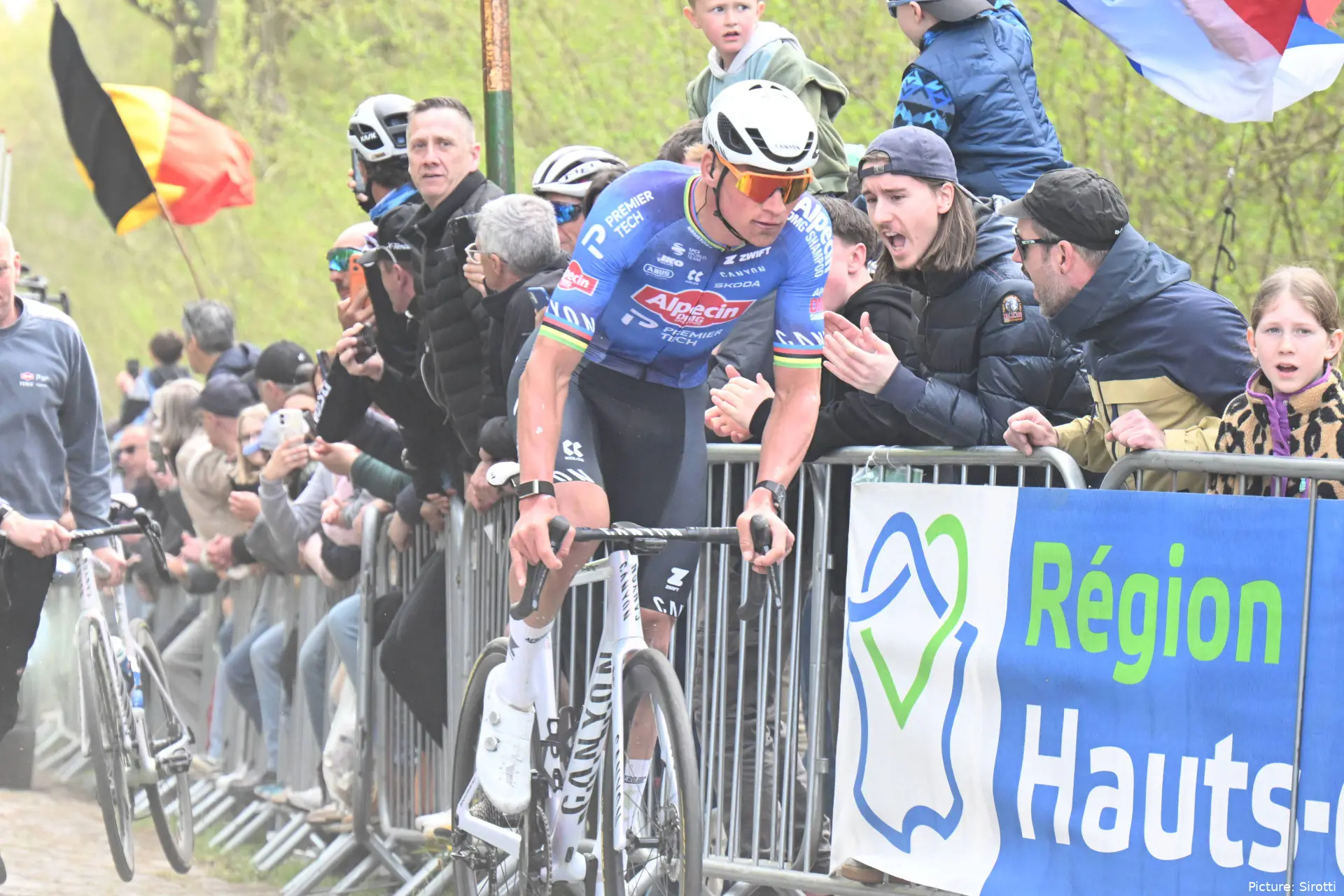
The result sheet from Paris-Roubaix 2026 tells one story. The race itself, and the performances behind it, tell another. While Wout van Aert finally claimed his long-awaited victory in the velodrome, much of the post-race debate has centred on Mathieu van der Poel and whether the fourth-place finisher was, in fact, the strongest rider on the day.
That is exactly the position taken by Tom Boonen, a three-time winner of the race, who believes the raw result fails to reflect the true hierarchy on the cobbles. “He was impressive. He was by far the best rider in the race,” Boonen said on Wielerclub Wattage. “He didn’t win, but he rode his fastest Roubaix ever. But the winner has the final say.”
Performance versus outcome in a chaotic Roubaix
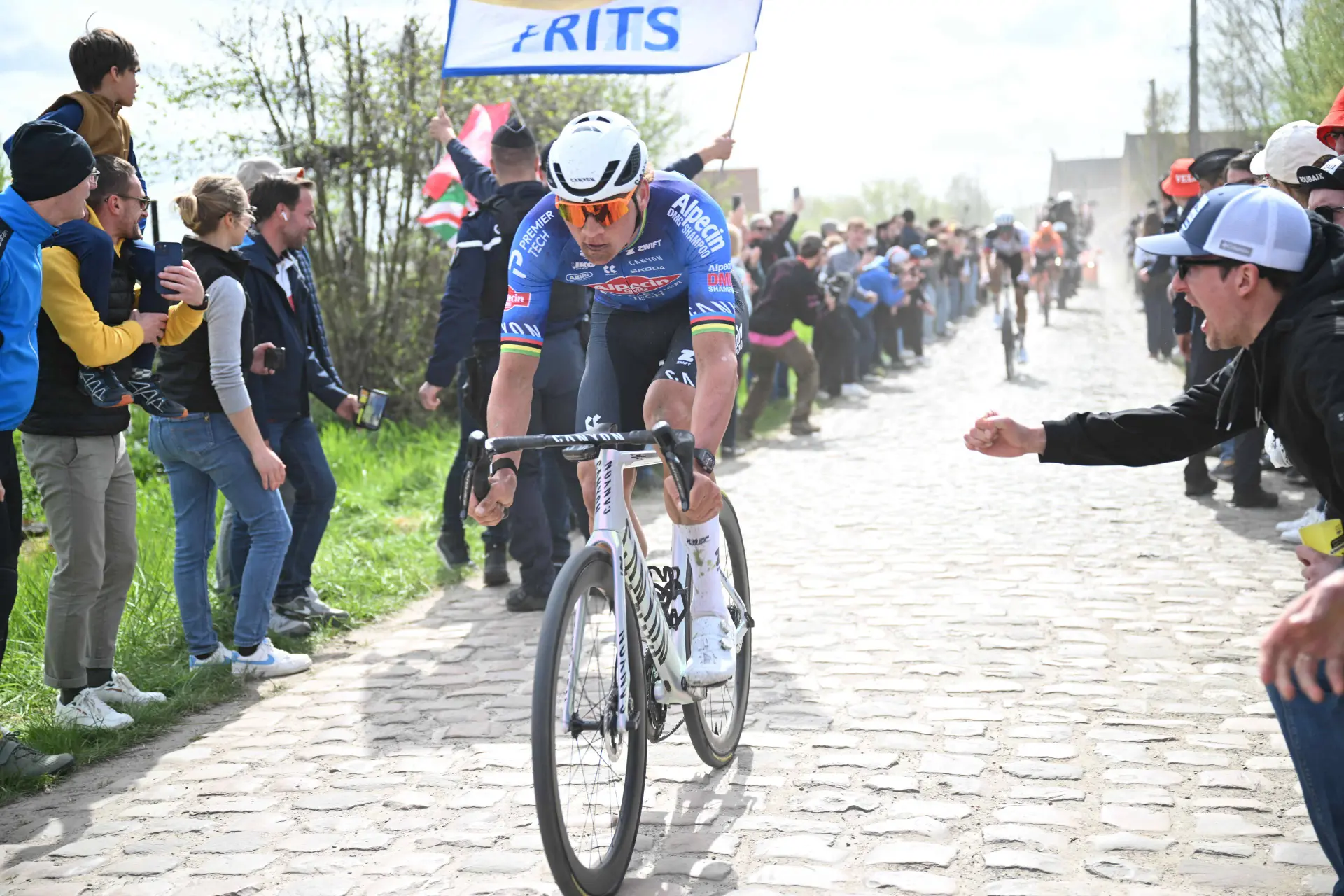
That distinction between performance and outcome sits at the heart of the 2026 edition. This was not a controlled, tactical Paris-Roubaix. It was a race shaped by disruption. Punctures, bike changes and mechanical incidents hit all of the main contenders at different points, breaking rhythm and forcing repeated resets. Tadej Pogacar lost significant time early after a wheel failure and a neutral service bike change, while Van der Poel’s race unravelled in and around the Forest of Arenberg.
Despite that, Van der Poel still returned to contention and finished just seconds behind the decisive move. In pure physical terms, the argument that he operated at the highest level across the race is not difficult to make, especially in what became the fastest edition in the race’s history.
Boonen’s reading leans into that broader view of Roubaix, where survival, positioning and luck remain inseparable from strength. The strongest rider does not always win. In 2026, that gap between the two was unusually visible.
The pedal issue that defined the race
Much of the scrutiny around Van der Poel’s ride has focused on the now widely discussed equipment problem. At a critical moment, taking a bike from a teammate did not provide a solution. The issue, centred around incompatible pedals, turned what should have been a routine exchange into a decisive loss of time.
For Sporza commentator José De Cauwer, the significance of that moment goes beyond bad luck. “What’s striking about the whole story is that it happens to that team, that it’s Christoph Roodhooft, who is perhaps the biggest specialist in terms of equipment in the peloton,” he said. “The fact that it happened is simply a mistake. It shouldn’t be able to happen.”
In a race where margins are measured in seconds after more than five hours of racing, that kind of detail becomes decisive.

Mathieu van der Poel suffers mechanical at Paris-Roubaix
“At that moment, it changes nothing”
The question that followed immediately in the aftermath was whether a different decision could have salvaged the situation. Should a teammate have handed over a bike earlier? Could the time loss have been limited?
Boonen is unequivocal in his answer. “At that point in the race, it solves nothing to give up your bike, as Jasper Philipsen,” he explained.
It is a typically Roubaix conclusion. By the time something goes wrong, it is often already too late to fix it. The race does not allow for recovery in the same way as other Classics.
A Roubaix that will be debated beyond the result
What makes this edition linger is not just the winner, but the number of unresolved what if scenarios.
Van Aert took the victory, and as Boonen himself acknowledged, that ultimately settles the record. But behind that result sits a race where Pogacar lost time to early misfortune, Van der Poel’s challenge was compromised by equipment, and the strongest legs did not translate cleanly into the top step of the podium.
That tension between who won and who was strongest is what continues to drive the conversation days after the finish. And in that debate, Boonen’s verdict is clear. The numbers say fourth, but the performance suggests something else entirely.

Kieran WoodDeputy Editor-in-Chief
Kieran Wood is a sports journalist based in Wales and has been active in journalism since 2022. He regularly contributes to DartsNews.com and CyclingUpToDate.com, where he covers professional cycling and darts. In cycling, his work includes liveblogs from major races, including the Tour de France, the Giro d’Italia, and La Vuelta a España, alongside race reports and analysis. He has also conducted interviews with professional riders.
His reporting spans the full racing calendar, from one-day classics to stage races, with a focus on accurate, real-time coverage and clear contextual analysis. For statistics, results, and historical context, he regularly uses resources such as ProCyclingStats. To support reporting on rider activity and training context where relevant, he also references Strava.
In his work, Kieran places strong emphasis on careful sourcing, editorial accuracy, and updating articles as new, verified information becomes available.
claps 1visitors 1
Just in
Popular news
Latest comments
- Del Toro did a LOT of work in that group, riding on the front and pulling it along. By the time McNulty attacked I should think he was mostly cooked!Lozza30-09-2026
- I don’t entirely agree with this @RidesHills. Whilst I can entertain what you’re arguing, writing off IDT’s inability to follow Pidcock purely as IDT being "gassed" ignores the complex tactical chess match happening on the road. IDT’s body language, in the final kms, showed plenty of hesitation, tactical marking, and looking around. With the addition of the WC pitting teammates against each other, there were several moments that indicated his behaviour was a calculated refusal to destroy McNulty’s, and by that extension, UAE’s chances of maintaining their hold on the rainbow stripes. We know IDT had the ability to win that race, I stand by the belief that he chose not to chase after his team mate. Whilst I was frustrated watching it… I can respect it.anonymouscyclist30-09-2026
- I guess the president is very happy to see one American win in Canada. Leave the president and politicians aside the sports. Was a great victory from a very smart move in the right moment. Quick Step won a lot of classics like this. Having numbers. Del Toro also played some part. Going to blame him? Thats a great friend. Also don't forget McNulty last time in Montreal. He was there with Pogacar. When big guns control each other others can win. Well done McNulty.
 PAULO30-09-2026
 - Not sure why you are hating on Americans but looking at cycling there are many more Europeans that cheated in cycling than Americans. Looking at the TdF's that Armstrong won, the top 5 -10 in all those doped and weren't Americans.GB30-09-2026
- if you get to within just 10 seconds and can't close the gap that's on you Tom and Mike. both of these losers wanted del Toro to help them which of course wouldn't be cross border collusion, it's only collusion if it's perceived that he's helping someone else besides them. sour grapes all around. bunch of pussies in the UK and Australia. bring a better team next time.whkman30-09-2026
- yeah sucks your guy lostwhkman30-09-2026
- @MrMauMau: at the moment that McNulty took off, del Toro had Seixas on his wheel. Later on, was he able to follow Pidcock as he linked up to and passed Ciccone? He was not. That tells me what I need to know - he was gassed and couldn't follow. Maybe he had less reason because of team politics, but it can't have all been politics.RidesHills30-09-2026
- The level of the sport even at lower ranks is very high, maybe too much..
 leedorney30-09-2026
 - I heard Wout had been instrumental that day in chasing back MVDP’s attacks, tho tbh I didn’t watch more than short highlights. (Don’t need to watch Remco winning 😖)Lozza30-09-2026
- 😂 Me too (in the absence of Pogi)!Lozza30-09-2026
Loading
7 Comments