“In 10 or 15 years, we’ll be able to say we were teammates with him” - Paul Seixas' impact already leaving Decathlon team stunned
Cycling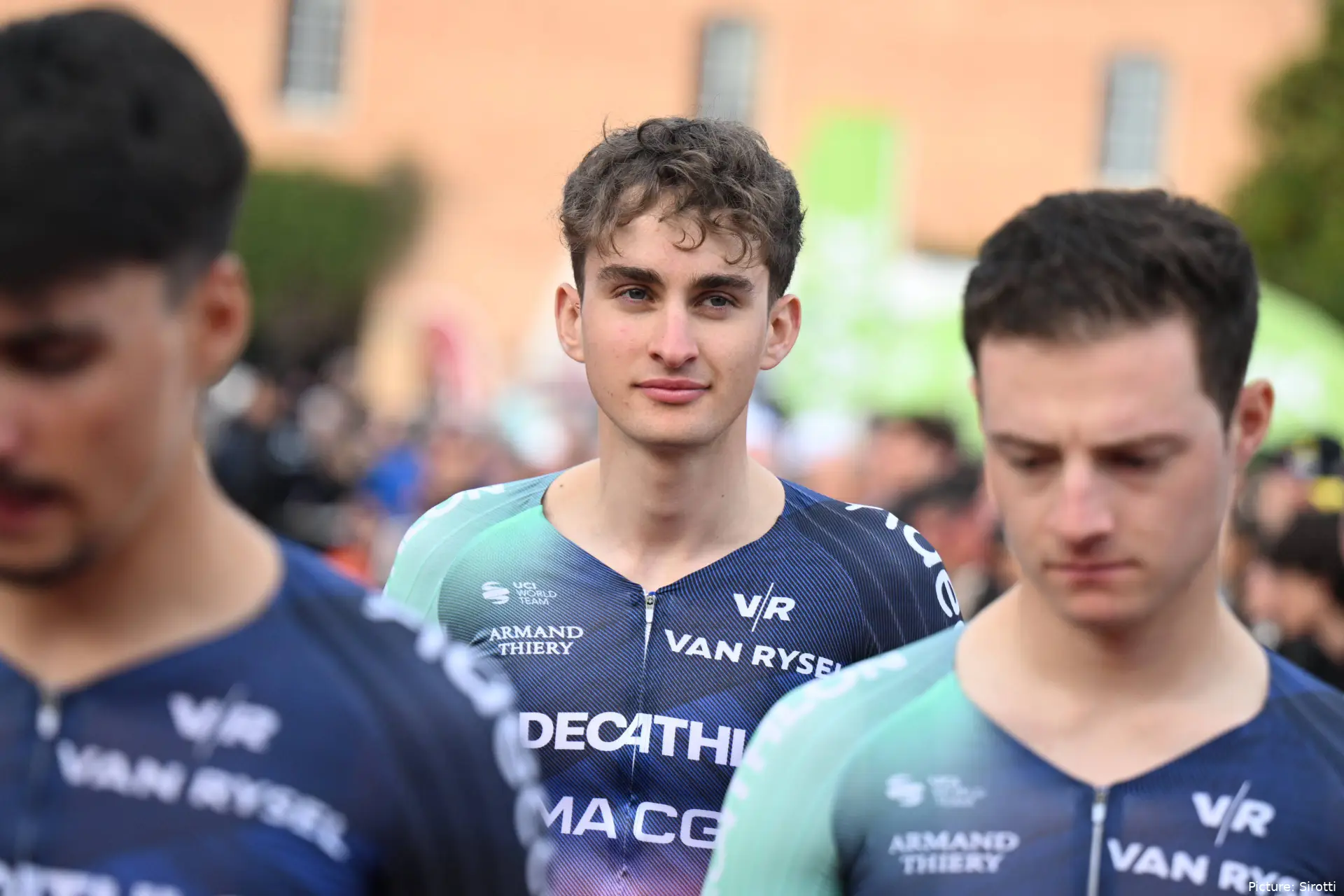
At just 19, Paul Seixas is no longer being framed as a rider for the future. The conversation has already shifted to what he is doing now.
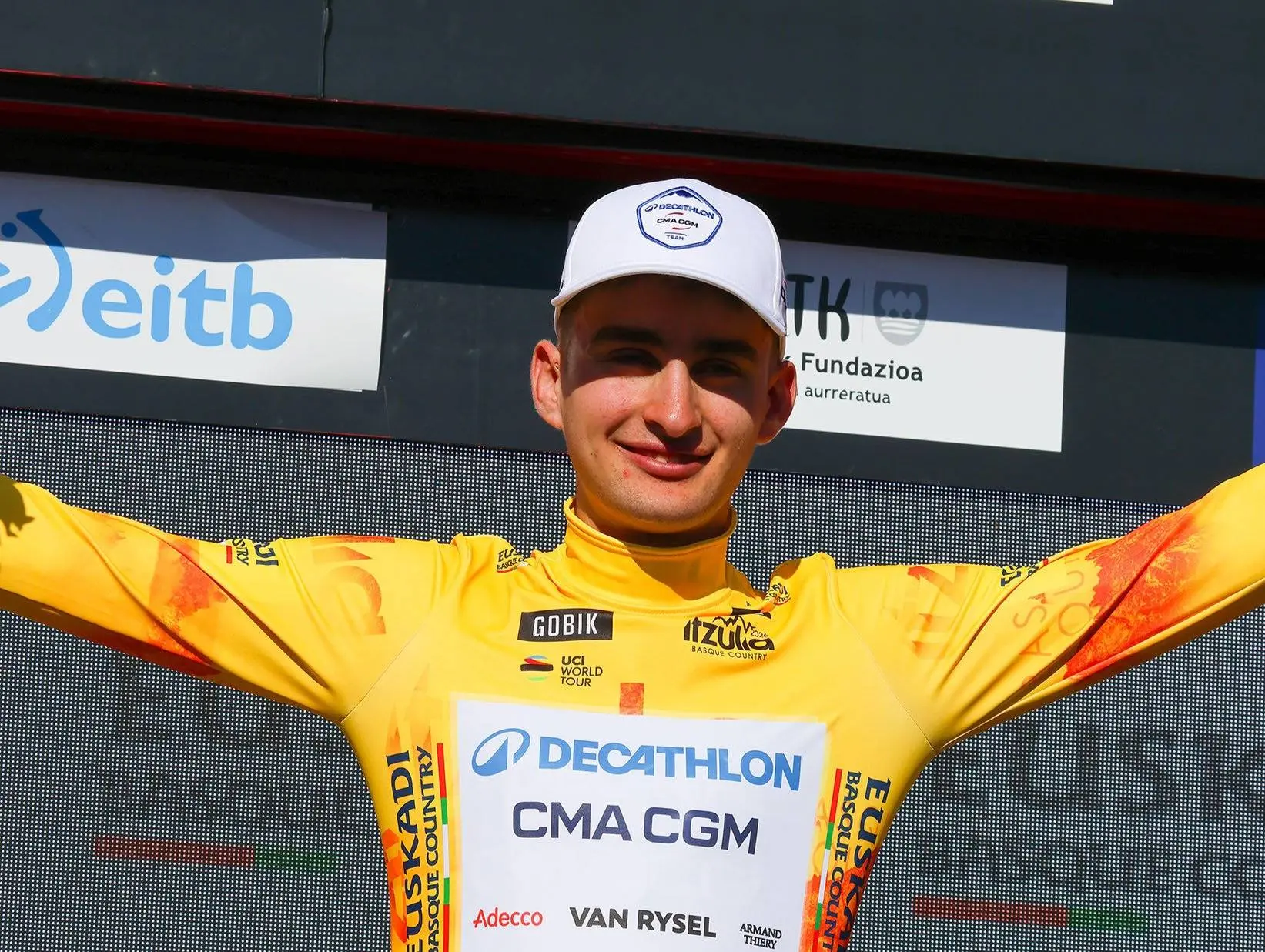
A stage win and second overall at the Volta ao Algarve, second behind Tadej Pogacar at Strade Bianche, victory at Faun Ardeche Classic and then a dominant overall win at Itzulia Basque Country. The results alone mark him out as one of the defining breakthrough riders of the season. Inside Decathlon CMA CGM Team, the effect has gone further than results. It has changed the way the team rides.
From option to leader
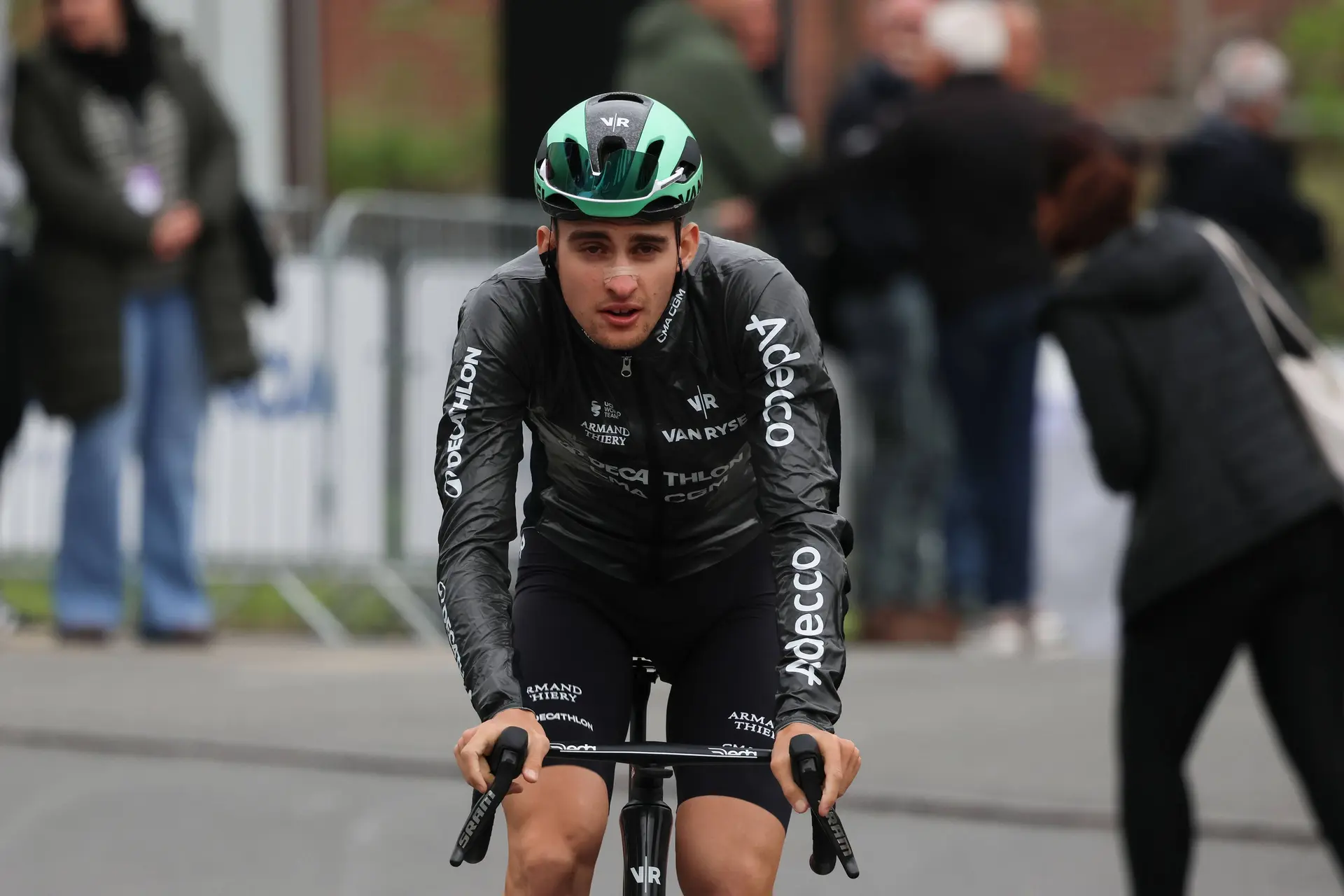
Seixas did not arrive at Itzulia as the undisputed leader. He left it as the rider everything was built around. “His physical level, his leadership is so unquestionable that I think for the team-mates, it’s completely natural to ride for Paul,” Aurelien Paret-Peintre said in conversation with Eurosport.fr.
That kind of acceptance is not automatic, particularly when the rider in question is still in his second professional season. It usually takes years to establish that position. In this case, it has taken months. Rather than forcing the issue, Seixas has removed the debate entirely. His level has made the decision for everyone else.
A breakthrough that confirmed internal belief
Within the team, the shift had already been building. “We could already feel that he had the potential to be a leader and that it almost shook things up a bit for Felix Gall,” Nicolas Prodhomme explained, also speaking to Eurosport.fr.
What Itzulia provided was confirmation. Not just that Seixas could lead, but that he could control a WorldTour race from start to finish.
That control was built on preparation as much as performance. “He didn’t arrive saying, ‘I’m going to win’, far from it,” Paret-Peintre said. “But he knew he would be able to fight at the front.”
From there, the team committed fully to a plan that revolved around decisive moments, particularly on the climb to San Miguel de Aralar. “It was planned that Jordan would do the lower part, and that I would take over for the second part, up to that steep section where Paul wanted to attack,” Prodhomme said.
The execution followed the plan exactly. Seixas attacked where intended and immediately created the separation that defined the race.

Paul Seixas at Itzulia Basque Country 2026
Even those closest to him were surprised
The scale of that performance was not fully anticipated, even inside the team. “When he crossed the line, I was on the bus and I saw he had taken 28 seconds out of Roglic,” Paret-Peintre said. “In a time trial, we often talk about seconds per kilometre. Here, that’s almost two seconds per kilometre. That really surprised me.”
That reaction is telling. It highlights the gap between expectation and delivery, even among those working with him every day. Across the week, Seixas did not just respond to the race. He dictated it.
Learning while already leading
Despite the results, his development as a leader is still ongoing. “He will grow more and more into that role. At 19, it’s not easy to address your team-mates, even if we had a young team. I think he will gradually mature in that area,” Paret-Peintre said.
There are also tactical details to refine. “You have to find the right balance, not to annoy the other teams too much,” Prodhomme added. “Sometimes we were a bit too demanding. You have to accept letting certain riders go.”
Those are the margins that experience will shape. The foundations are already in place.
A glimpse of something bigger
What stands out most is not just the level Seixas reached during the week, but the effect it is already having around him. Within the team, the reaction is not framed in terms of potential, but perspective. Those alongside him are already placing what they experienced into a longer timeline, aware that this may only make full sense with distance.
“It was great to be by his side last week. We don’t know how far Paul will go, but in 10 or 15 years, we’ll be able to say that when we ended that 20-year drought without a WorldTour win, we were there with him. The team-mates are getting stronger alongside him. We want to push ourselves to support him as far as possible,” Paret-Peintre said.
That reflection shifts the focus away from a single result. It places Seixas within something broader, where his impact is already being measured by how he is changing the riders around him.
At 19, that is what separates a promising talent from something more significant. Not just the ability to win, but the ability to reshape the environment in which those wins happen.

Kieran WoodDeputy Editor-in-Chief
Kieran Wood is a sports journalist based in Wales and has been active in journalism since 2022. He regularly contributes to DartsNews.com and CyclingUpToDate.com, where he covers professional cycling and darts. In cycling, his work includes liveblogs from major races, including the Tour de France, the Giro d’Italia, and La Vuelta a España, alongside race reports and analysis. He has also conducted interviews with professional riders.
His reporting spans the full racing calendar, from one-day classics to stage races, with a focus on accurate, real-time coverage and clear contextual analysis. For statistics, results, and historical context, he regularly uses resources such as ProCyclingStats. To support reporting on rider activity and training context where relevant, he also references Strava.
In his work, Kieran places strong emphasis on careful sourcing, editorial accuracy, and updating articles as new, verified information becomes available.
claps 2visitors 2
Just in

Popular news
Latest comments
- bam! two grand tour starts claimed by the younger sprinter just like this. what if merlier also plans for 2 grand tours?Ketterechts25-11-2026
- writing about yourself in third person ... please, at least have someone else from your staff author these self-coverage articles!Ketterechts25-11-2026
- Don’t forget Yates’s podium at 2023 TdF!Lozza25-11-2026
- It was stage 14 to Morzine that Carlos Rodriguez won in 2023, not Puy de Dome. And Kwiato actually won the previous stage himself to Grand Colombier!Lozza25-11-2026
- Go Pogi!! 🐐❤️Lozza25-11-2026
- They didn’t have or need “extraordinary information”. All they needed was for a French judge to sign off on the night-time testing for it to go ahead.Lozza25-11-2026
- If the sponsors voted for Primoz then you get him, otherwise not.flyer25-11-2026
- It sure can feel or seem that way but I wonder if the same amount of prodigious performances (compared to the others) would occur if no one was ever doping at all.flyer25-11-2026
- Given the similarity of two articles (published on I think the same date), I'm reusing (copy-n-pasting) my post from the twin: I've always thought the last day of each of the grand tours was problematic mostly in that the GC is considered completed before the race starts when that is not really true. There is some tension, but not desirable tension. What saves the awkward practice is the race finish is legit for those who participate - so it's not wholly different from the other stages. That neutralizations usually make good sense demonstrates their necessity so if that has to be the way to go I agree that the design plan for the neutralization should be completed before the race starts. This years end stage in the Vuelta had one of the best first half's I've seen in that many of the riders looked to be thoroughly enjoying themselves making it a joy to watch. But I think it was slightly closer to the exception rather than the rule.flyer25-11-2026
- Even I often win without being there at all, not even breaking a sweat. Beat that!flyer25-11-2026
Loading
2 Comments