Dwars door Vlaanderen 2026 preview, profiles, favourites & predictions - Can Wout Van Aert take big win before Flanders?
Cycling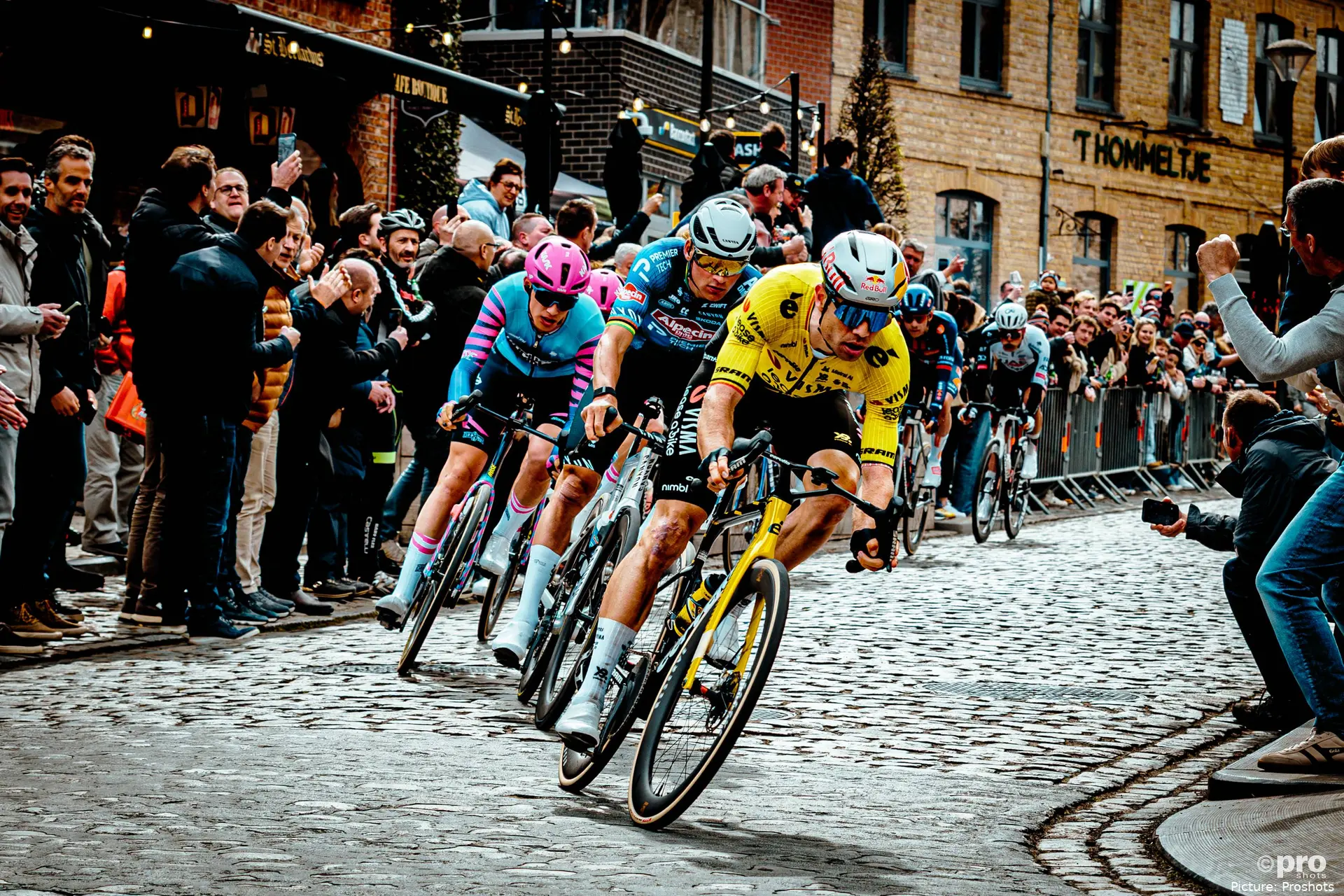
Dwars door Vlaanderen is the fourth out of five World Tour classics in Flanders which make up for the final block of cobbled classics in the region. It takes place on the 1st of April this year and is the final big race before the Tour of Flanders. We preview the race, which is estimated to start and finish at 11:00 and 15:05CET.
Created back in 1945, Dwars door Vlaanderen was first won by Belgian legend Rik van Steenbergen, immediately cementing the event as a top race in the spring classics scene. The likes of Johan Museuuw leads a wide array of Belgian riders who have won the race through the years.
Tom Boonen, won it once back in 2008 but surprisingly his rival Fabian Cancellara never did so. The race was not always part of the World Tour, but since 2019 it has been won by no less than some of the absolute best in this terrain. Mathieu van der Poel, Dylan van Baarle, Christophe Laporte and Matteo Jorgenson made for an exclusively Visma-Alpecin domination from 2019 to 2024; however in 2025 Visma had three men out front and infamously led the victory slip away to the hands of Neilson Powless.
Profile: Roeselare - Waregem

Roeselare › Waregem, 184.6 kilometers
The start in Roeselare leads into an opening 50 kilometers which virtually flat, with no major difficulties. This initial stretch favours the formation of the day’s break and allows the favourites’ teams to keep things in check without excessive cost.
From km 47.5 the first climb, Hellestraat (1.3 km at 3.7%), signals the beginning of a phase of gradual wear. It is not selective on its own, but it changes the rhythm. Shortly after come Volkegemberg (1.1 km at 4.0%) and Berg Ten Houte (1 km at 5.8%), raising the bar and forcing riders to fight for position.
The key section sits between Km 90 and 115. Several tougher climbs are packed into this segment:
- Knokteberg - Trieu (1.1 km at 7.7%), one of the hardest of the day.
- Hotond (1.2 km), which adds duration to the effort.
- Ladeuze (1.4 km at 6.9%), which prolongs accumulated fatigue.
- Berg Ten Houte (1 km at 5.9%), a second passage.
This block is crucial because it combines difficulty and tight sequencing, which can force the first serious splits if the pace is high or the wind picks up. Even so, there is still a long way to the finish, which tempers all-out moves.
After a brief relative lull, the second decisive point arrives between km 130 and 145:
- Another pass over Knokteberg - Trieu.
- Hotond (1.2 km at 3.3%).
- Eikenberg (1.2 km at 5.0%).
This sequence, closer to the finish, is the prime spot for major tactical moves. The repetition of climbs already tackled deepens muscle fatigue and sharpens the selection in the front group.
The final 40 kilometers are gentler, though not entirely flat. Nokereberg (0.4 km at 2.8%) and the final rise to Nokere (0.7 km at 4.0%) within the last 10 km stand out. These climbs are not decisive by gradient, but they can spring late attacks or trim the bunch before the finale.
The run-in to Waregem is favourable and relatively flat, which opens several scenarios:
- A small group finish if the race fractures on the second block of climbs.
- Partial regrouping and a sprint from a reduced selection.
- A late attack after Nokere, exploiting accumulated fatigue.
Overall, the profile does not feature extremely long climbs or very steep gradients, but it does pack a high density of short, repeated efforts. That dynamic rewards resistance to intermittent efforts and the ability to hold power after multiple accelerations.
The Favourites
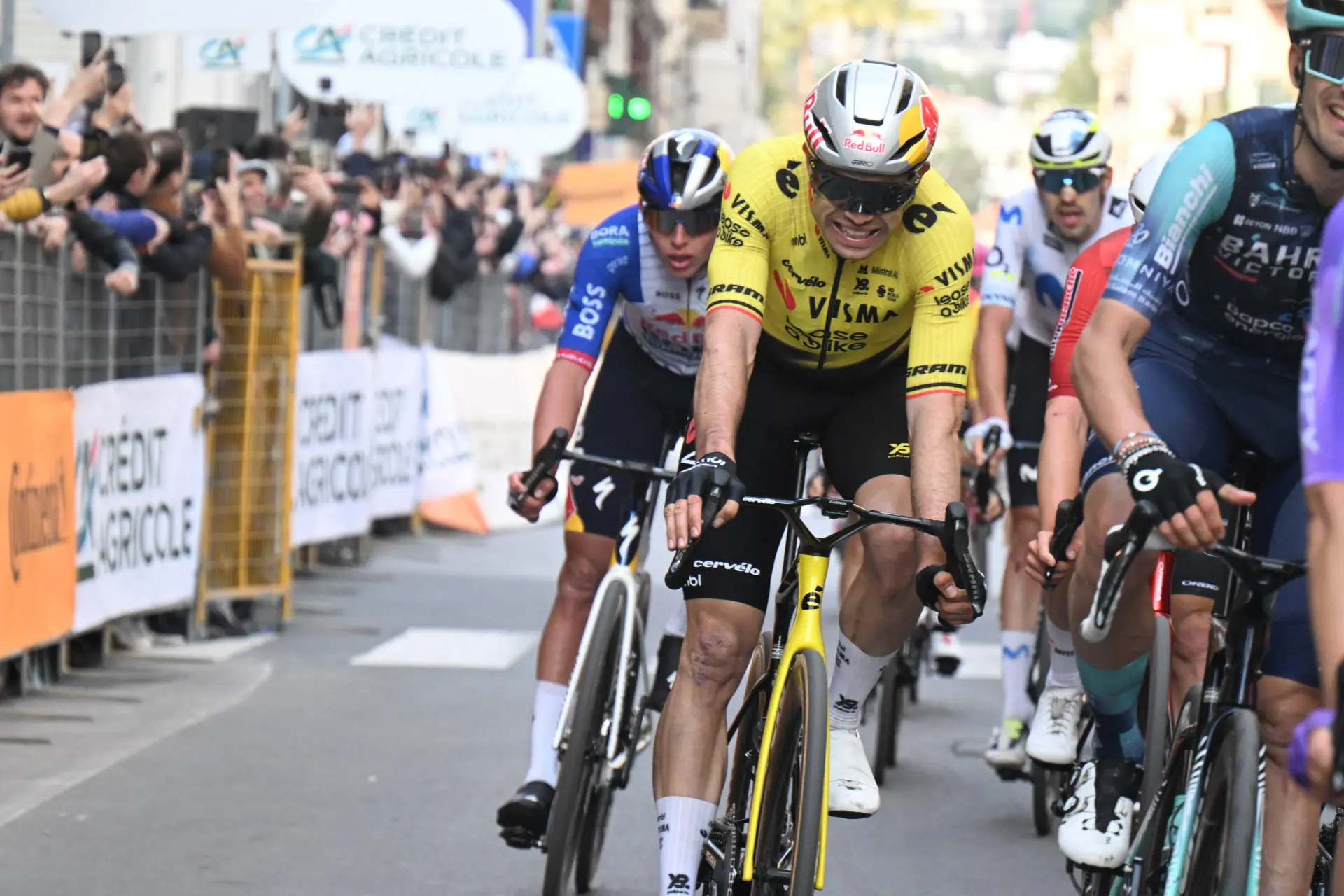
Visma - The team had it all last year with a perfectly timed and executed attack, but threw it all away as they looked to give Wout Van Aert the victory. That won't be forgotten, the same tactic cannot possibly be repeated, but it's also unlikely that this can happen again.
Visma have Van Aert in top form and without Mathieu van der Poel or Tadej Pogacar, he does stand a chance of winning. He will have to attack for this, but Visma can actually do this and have Christophe Laporte, Per Strand Hagenes and who knows, maybe Matthew Brennan as well covering attacks or making their own throughout the day. They have the cards and are perhaps the strongest team. But despite having good riders, they cannot try and make a sprint happen.
Tobias Lund Andresen - Decathlon should unapologetically put all their efforts into controlling the race and forming alliances to bring things back to a sprint. Tobias Lund Andresen has been on storming form this year and looks to be in top condition everywhere he goes. A sprinter, but also a very capable classics rider, and his second place at Middelkerke - Wevelgem confirms he is still in great form. He can go with attacks but in any group scenario, he is a threat. Out of the sprinters, he is the best equipped to win from an attack over the climbs.
In a race without the difficult climbs we certainly must expect Florian Vermeersch, Alec Segaert and Jonas Abrahamsen to battle with the very best, if they are not the very best themselves of course. Here, Filippo Ganna should have freedom to do his thing and is clearly on good form.
Tim van Dijke and Laurence Pithie for BORA can definitely aim for a win as well, they are talented enoug for it; There are the experienced names such as Dylan van Baarle, Matej Mohoric and Michael Valgren; and others such as Romain Grégoire, Aimé de Gendt and Brent van Moer who stand a chance of performing here.
If it comes down to a sprint, which is well possible, there's plenty fish in the sea. Visma and Andresen definitely are options but there's plenty more. In Wevelgem we've seen how a coordinated chase can bring back even the strongest, and this race is less difficult. It is a matter of there being the right group and the right alliances. Alpecin definitely have reasons to put all their chips into a sprint as Jasper Philipsen is leading the way, and in great form. But he can find support from Lidl-Trek who have Jonathan Milan but also mainly Mads Pedersen who isn't a defensive rider but also doesn't have his best form.
Arnaud de Lie for Lotto, Paul Magnier for Quick-Step, Biniam Girmay for NSN - these are teams that are likely to dedicate themselves fully to these men as they are their best chance of taking a top result. Within reason, if attacks fail, other teams such as Uno-X (Soren Waerenskjold) and INEOS (Ben Turner or Sam Watson) could also change and deploy their classics specialists in service of their sprinters. Luca Mozzato, Fred Wright, Max Kanter, Anthony Turgis, Lukas Kubis and Ivan García Cortina are other riders to take into consideration for this scenario.
Prediction Dwars door Vlaanderen 2026:
*** Wout Van Aert, Tobias Lund Andresen, Jasper Philipsen
** Christophe Laporte, Mads Pedersen, Florian Vermeersch, Jonas Abrahamsen
* Per Strand Hagenes, António Morgado, Tim van Dijke, Alec Segaert, Filippo Ganna, Dylan van Baarle, Romain Grégoire, Biniam Girmay, Jonathan Milan, Paul Magnier, Arnaud de Lie
** Christophe Laporte, Mads Pedersen, Florian Vermeersch, Jonas Abrahamsen
* Per Strand Hagenes, António Morgado, Tim van Dijke, Alec Segaert, Filippo Ganna, Dylan van Baarle, Romain Grégoire, Biniam Girmay, Jonathan Milan, Paul Magnier, Arnaud de Lie
Pick: Tobias Lund Andresen
How: Small group sprint.
Original: Rúben Silva
Rúben SilvaEditor-in-Chief
A founding contributor to CyclingUpToDate since its launch in January 2022, Ruben Silva has played a central role in shaping the site’s editorial direction and long-term growth. Before joining the project, he built his experience through independent blogging at Echelons Hub and by producing race previews for Ciclismo Internacional, developing a strong analytical voice rooted in daily engagement with professional cycling.
Beyond editorial work, he has been closely involved in the expansion and coordination of CyclingUpToDate’s wider network, helping establish and support sister platforms across multiple languages. This includes ongoing collaboration with CiclismoAlDia (Spanish), CiclismoAtual (Portuguese), WielrennenUpToDate (Dutch), and RadsportAktuell (German), contributing to a shared editorial vision and consistent international coverage.
He also helps oversee editorial governance across the network, setting standards for accuracy and consistency and coordinating updates or corrections when needed.
Originally from the Porto metropolitan area in Portugal, he holds a bachelor’s degree in Geography. His path into cycling journalism was shaped not through formal media training, but through independent reporting, community engagement, and sustained on-the-ground involvement in the sport.
Over the course of his career, he has conducted approximately 100 interviews across road cycling and cyclocross, ranging from one-to-one conversations and online formats to press conferences and on-site pre- and post-race coverage. His interviews include leading riders, team managers, and prominent figures within cycling media: Tadej Pogacar, Jonas Vingegaard, Mathieu van der Poel, Primoz Roglic, Wout van Aert, Joao Almeida and Tom Pidcock; managers like Patrick Lefevere and Joxean Matxin; and YouTube personality Bryan Kennedy (BKXC)...
Within 18 months of launch, he helped grow CyclingUpToDate’s English-language platform into one of the most-read cycling news websites, built entirely from the ground up. As both a professional journalist and lifelong cycling enthusiast, his focus remains on delivering accurate, timely, and well-contextualized coverage.
claps 8visitors 7
Just in
Popular news
Latest comments
- no i just type inivitable facts, nothing else. I wish UAE wasnt so damn good but hey the reality is they are. Visma on opposite direction crashing with no money and riders, coaches leaving mid contract ffs..i wish that wasnt the case but im not pretednig its not real when it is reality... RbH and Lidl i UAE cloesst opponents now thats clear. But if were real how can you stop that team with del toor and pogacar (greatest ever rider they made him) and you have mcnulty as a dom with (who would be captain in other teams and wins world and 10 more behind him..) history also says their the best team by far so what you want me to say? fake and be delusional and tell myself things? Its not a matter for praising anyone its a matter of beeing real nothing else, i wish visma for instance was better and like before but they cant buy any proper climbing guys cause their broke...heck they cant even keep their riders and coaches who flee mid contract what you want me to do lol.miguel24-10-2026
- Far as I recall, Nibali used the 2012 tdf UK stages to win it, most wanting to get them over with, cept he built his lead in them.. Armstrong's wrong, IF and it's an IF, the summers good in '27 like 26 then it'll be attritional.. if it's 'normal, then it'll be 50/50 on the weather, also the roads are VERY VERY narrow, very windng + on the 2nd steep short little climbs I know cause it goes thru my arse 👍
 leedorney24-10-2026
 - ❤️Lozza24-10-2026
- No, it's not about him crashing... he just won't win. Ad acta.PogiSloFans24-10-2026
- I'm always gutted to see the road season come to an end, but the excitement for cyclocross to kick off totally makes up for it.anonymouscyclist24-10-2026
- Nah, Pogi will Baby Hulk - "smash" - Remco. Ad acta !!!PogiSloFans24-10-2026
- I expect to read at least one enthusiastic post, regardless of who it concerns from you a year, time is running out. Do you actually like anyone in cycling?Jumpyjohn24-10-2026
- In cycling, any comment before final results is noise as anything can always happen, and even when it doesn’t, something can still happen post race like cancellation of results. I sincerely hope after what’s been happening in athletics recently this isn’t premonitory but there really is no reason to expect cycling to be different.Jumpyjohn24-10-2026
- so Remco takes 2 minutes. that means Tadej wins the GC by 8 minutes instead of 10.mij24-10-2026
- facts are facts. he has podiumed over 50% of his tts and won about 30% of them.mij24-10-2026
Loading
Write a comment