CyclingUpToDate Podcast - "The timing of the attack is outstanding" as Brandon McNulty brings America the rainbow jersey
CyclingMonday, 28 September 2026 at 16:42
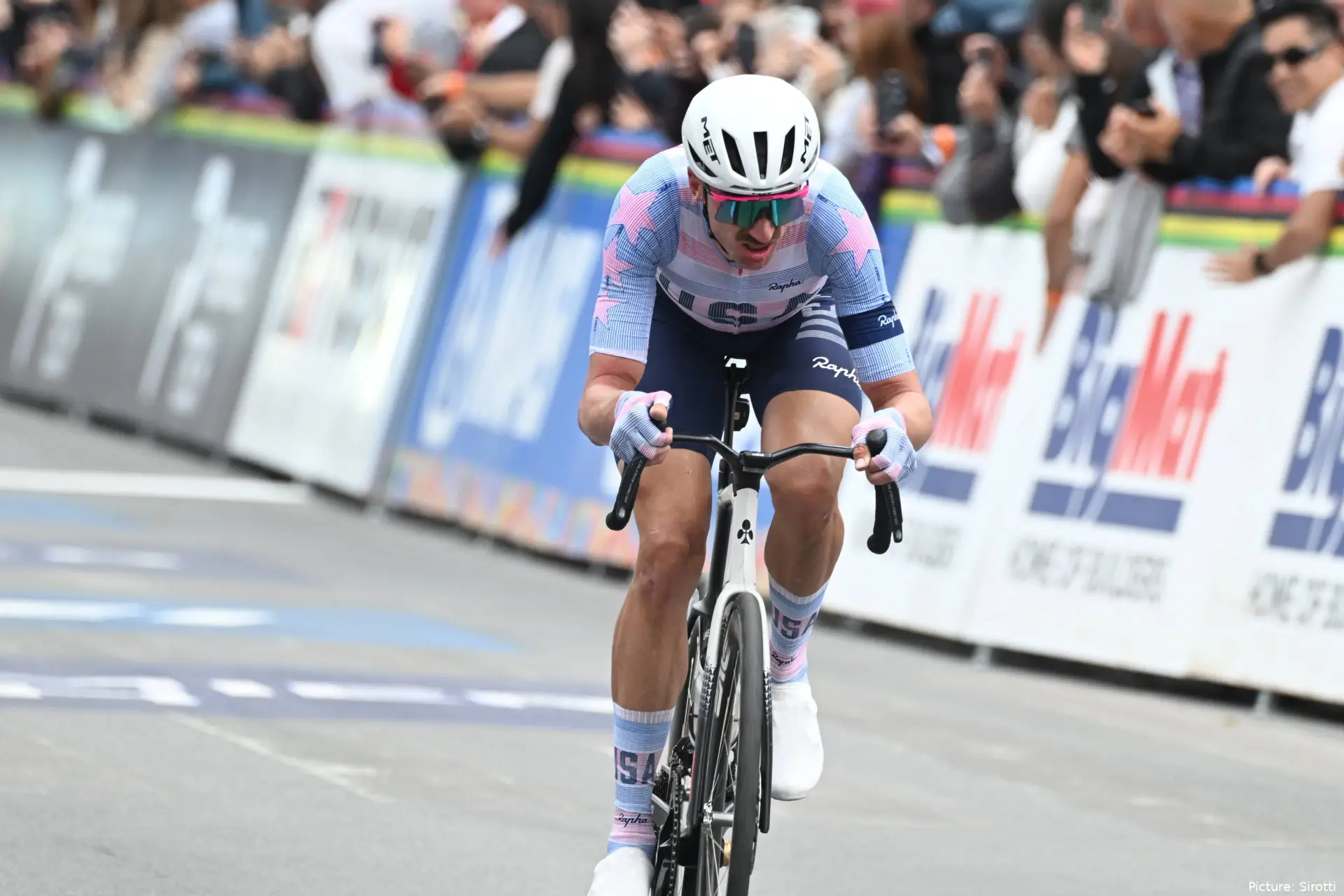
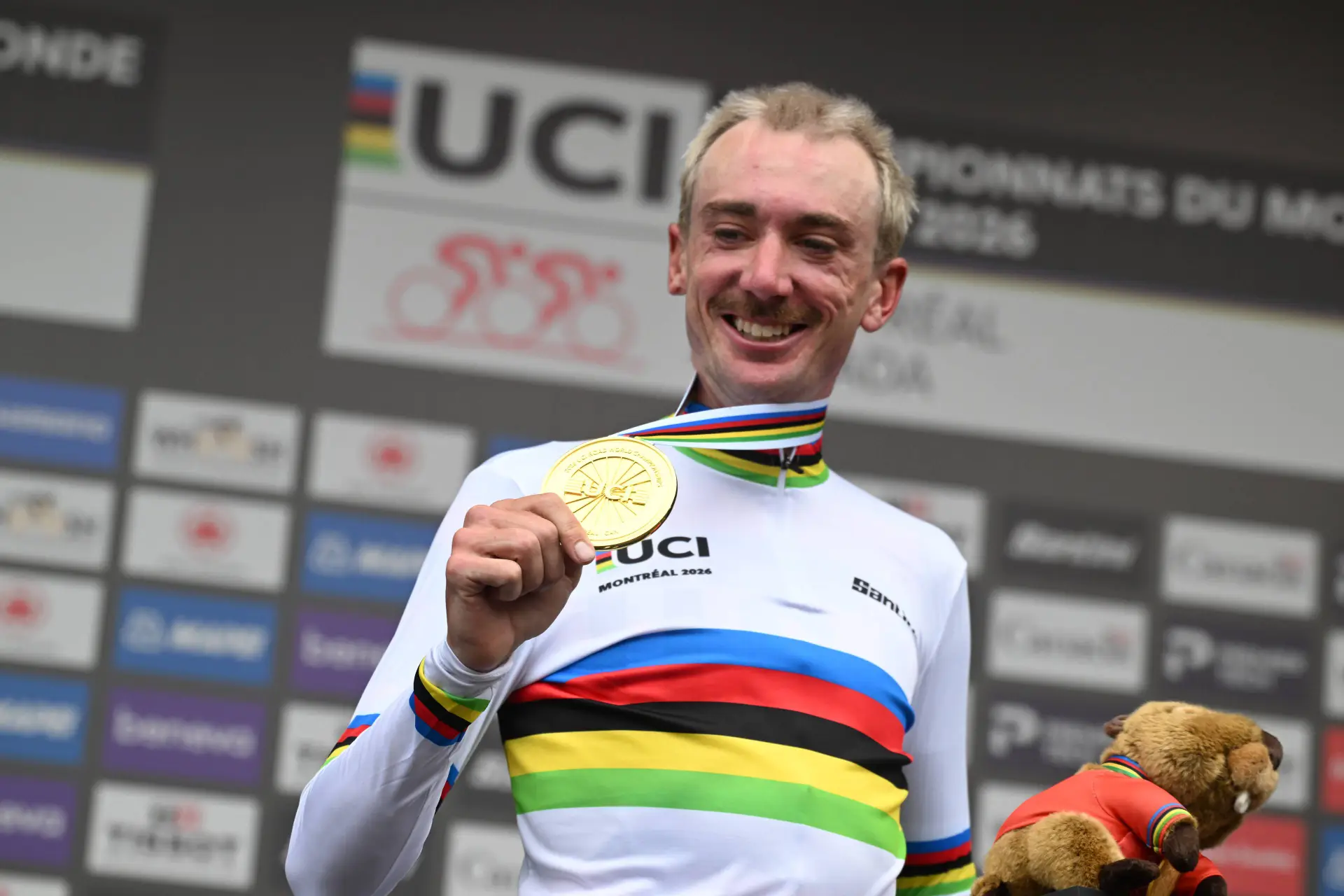
Brandon McNulty has taken a career-changing victory at the Montréal World Championships. But how did the American rider succeed in this tactical hit? On the CyclingUpToDate Podcast, Rúben Silva and Gavin Quinn have discussed the race.
"It was the kind of race that you don't see often, where everyone is just taken to the limits for an extended amount of time," Rúben Silva said, praising the action that has taken place this Sunday afternoon in Montréal.
"And it's a circuit that I thought was going to be more selective, but it ended up just being perfect. It's a circuit that just allowed for the powers between these riders to - They could all play their cards in their own different ways. But in the end, they could perform the same when it came to the entire circuit".
The race opened up with over 100 kilometers to go on the Montréal circuit, where classics specialists and climbers alike had the chance to make the difference. One dozen riders battled for the medals in the final kilometers - although many more fought for a top result during the furiously fast hilly race.
"I don't think that in a race of this level, of this caliber, that I've ever seen a race where so many times I was so convinced like that it's over. I thought the so many times, and then they just come back... Riders you don't expect just disappear out of the picture, out of nowhere. All of this for the world championships and I just cannot help but to be so happy that I've had a race like this".
"It was exactly what I guess many people wanted or hoped that it would be in Pogacar's absence," Gavin Quinn argued. "It wasn't a stalemate. It wasn't favourites looking at each other. It was fortune favours the brave and we saw attacks kicking off from 100 kilometers to go".
How did so many teams miss Mathieu van der Poel attack?
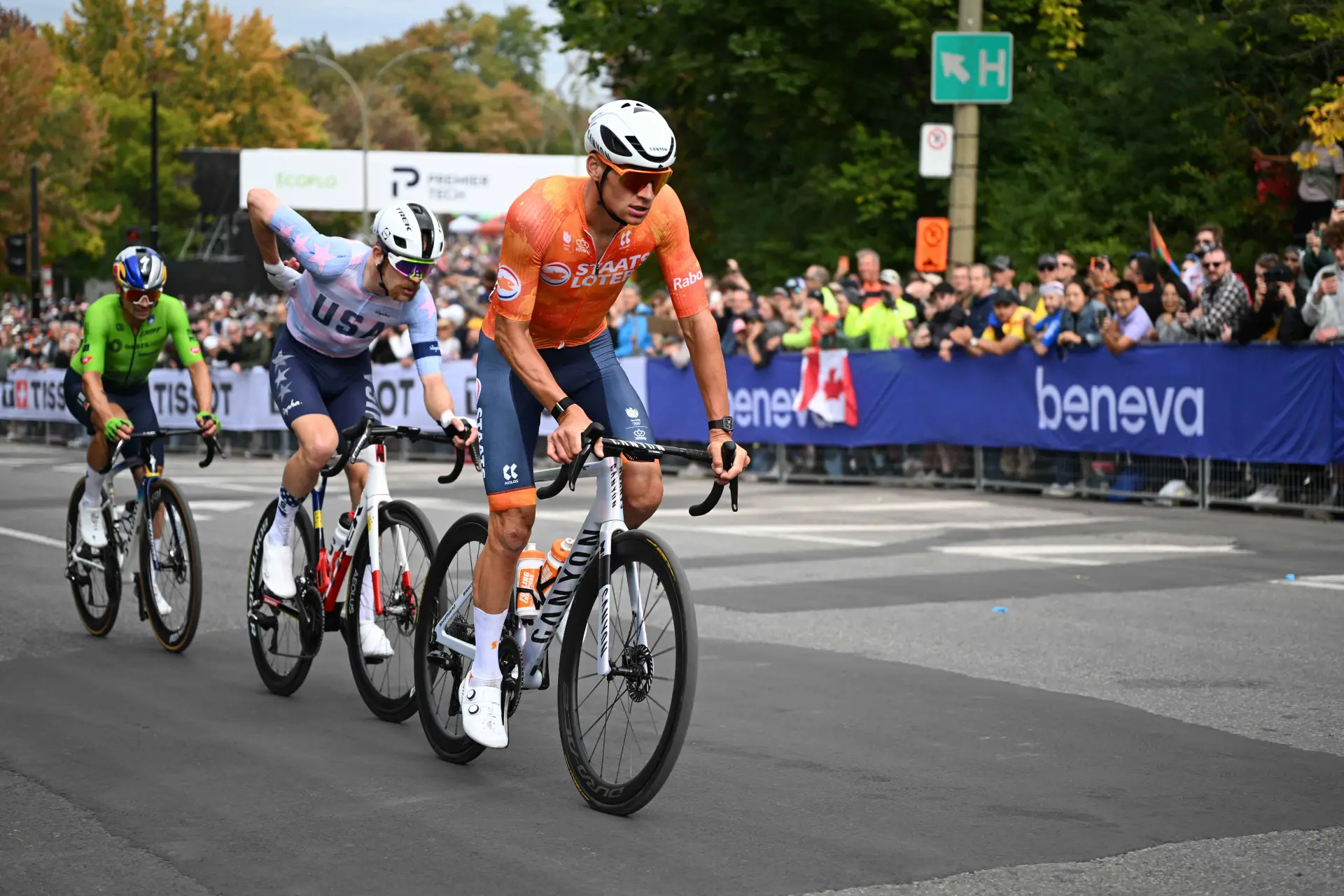
Mathieu van der Poel, Wout Van Aert, Quinn Simmons, Primoz Roglic, Oscar Onley and Anthon Charmig formed a strong first group that threatened to ride away with the victory and the medals. The attack didn't take anyone by surprise, but it was incredibly hard to follow.
"There was a lot of riders, there was a lot of chaos. And this was almost just an attack that was telegraphed beforehand because there's no race radios on this course," Silva pointed out. "We saw Ashlyn Berry won the under-23 race also. If evidence was necessary, you sort of learned that yeah, you can attack early and you can succeed here".
The outcome of the under-23 and elite men's races was similar, with an American rider winning with a solo move.
"I was surprised at how many riders and how many teams were not represented in this attack, because they just knew it was coming. There's no France. There's no Italy - the team that we spoke of so much as the ultimate wild cards, they were in the back the whole time. How did this happen?"
The group defined the race's dynamics, with Italy having to burn their riders to chase on; whilst Paul Seixas and Isaac del Toro spent bullets behind to try and control the dangerous attack.
"The crucial thing of this whole move, apart from van der Poel and van Aert kind of making the attacks, is Quinn Simmons," Quinn added.
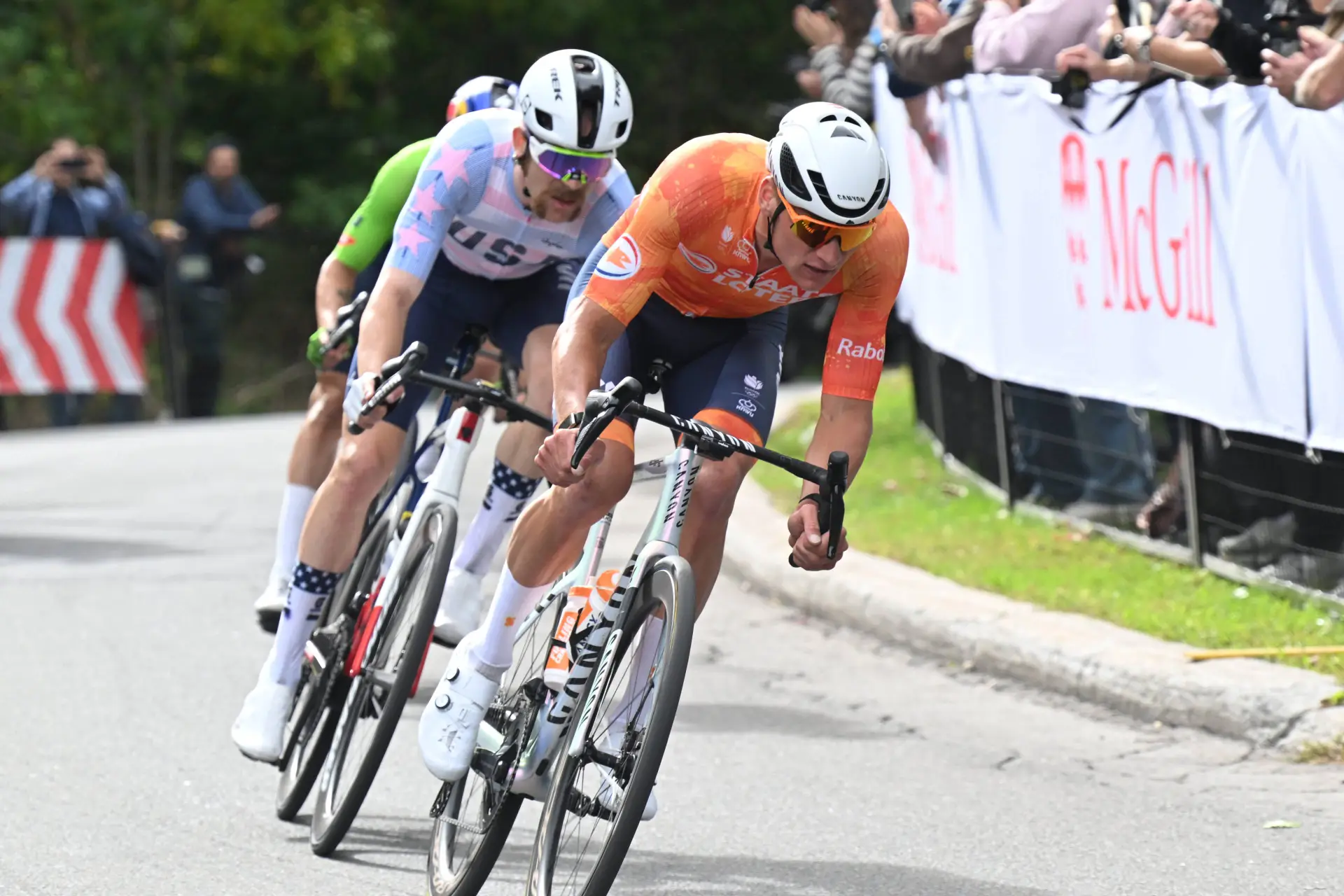
"Quinn Simmons sets the stage and he makes it. And you can see in that kind of period with about 87 to about 60 kilometres to go, he gives it all. Like when we see like Mathieu van der Poel throwing the hammer down, Quinn Simmons is fighting his bike to stay there. Because that becomes pretty important behind with your other leaders in Jorgensen and McNulty".
Simmons' presence up front allowed both Brandon McNulty and Matteo Jorgenson to sit in the wheels in the chasing group. This was ultimately key to the outcome of the race, as McNulty was able to better save his legs towards the decisive attack.
"That's why the Italians are working, because Isaac Del Toro can't do it all himself. Every time he takes a pull, he's got Matteo Jorgenson or Brandon McNulty behind him. He's not going to come through, and he's not going to help. And we'll get to that a little bit further, I guess, where it becomes much more important for USA".

Mathieu van der Poel in action at the 2026 Montreal World Championships
Brandon McNulty's winning attack
The van der Poel group was caught, and almost every time was down to one rider up front. In the USA's case,, there were still three. "And yeah, so you just have a complete reset of the race with about 35 kilometres to go with all of the big favourites suddenly now together".
Silva applauded the tactics from the American team, who not only had the legs to execute it, but also the right race instinct: "Let me just give a very quick praise to the Americans because I assumed that this was a tactic that could be used. We talked about the American team. I wrote about the American team extensively because I could see this coming".
"I thought it could happen with the Italians, I thought it could potentially happen with the British... But I thought the Americans were really the danger to me because each and every one of them, super versatile and not only great climbers for this kind of distance, just riders that can ride really well on the flat".
"And the attack of Brandon McNulty wasn't on a climb. 32 kilometres to go. He just set off on a flat road," he pointed out. "None of the riders behind, the big favourites, are going to just willing fully put themselves in the wind and be like 'okay, I'll close this down'. They'll burn themselves for their rivals for no reason. McNulty knew this".
The gap to McNulty grew to about a minute very quickly, and by then, the race appeared sealed. But how was that possible? "Even at Emirates, and even in the American team, it felt like he was somewhat underrated by his rivals there because at Emirates he's almost always a domestique," Silva believes.
"He's a great rider and he's an insane time trialist as well. How can we forget about that? He's literally one of the best time trialists in the world. The same way you don't let Evenepoel go on a course like this, you don't let a McNulty go in a course like this because this is what you get".
The American rider soloed to the biggest victory of his career as a result. "You have a rider that can climb, he can go by himself, very good on the flat roads. That's what you need to win this race. You don't need the big name".
Read also
McNulty wins on timing and opportunity
Quinn was specially keen on the timing of McNulty's attack, at a moment when the race had finally calmed down slightly. "The timing of the attack is outstanding. The terrain, of course, is perfect. Like slightly uphill, but not really uphill and move across a wide road and then let the rest of them look at each other".
"McNulty attacked at the time in which everybody had already exhausted themselves at least for like, they needed a period of recovery or they wanted a period where the onus wasn't on them to do the work or do the chasing. You got to capitalize on the kind of relief of bringing in van der Poel".
Tom Pidcock and Giulio Ciccone moved up front on the final big climb of the day and came within sight of McNulty. But as soon as others latched in the wheel, the pace stopped once again.
"I think this gap could have been brought back if there were collaboration. But these guys know of it. They know of it. It's their responsibility to be in the position of McNulty," Silva repeated. "That's how you win the race. You don't win the race by being in group two in a circuit like this".
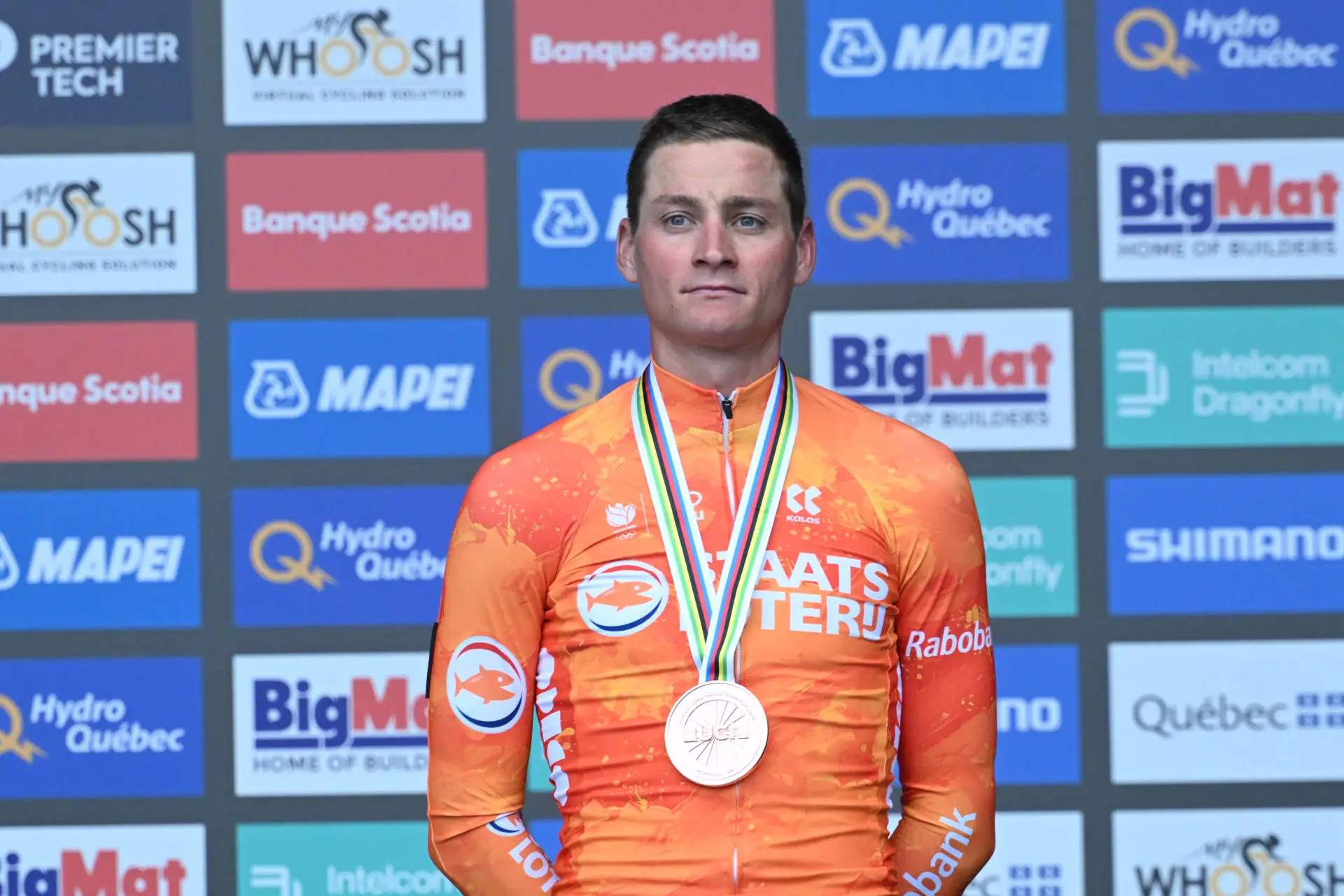
In the end McNulty won, with a small gap over the chasing group in which Michael Matthews and Mathieu van der Poel rode to the podium. But Silva interpreted the tactics in the finale as logical.
"I'm not going to criticize these riders because you are not on their shoes and you don't have race radios. At this point in the race, it's Schrodinger's McNulty almost. He might be 15 seconds away or he might be a minute away. You don't really know because you don't see him".
Rúben SilvaEditor-in-Chief
A founding contributor to CyclingUpToDate since its launch in January 2022, Ruben Silva has played a central role in shaping the site’s editorial direction and long-term growth. Before joining the project, he built his experience through independent blogging at Echelons Hub and by producing race previews for Ciclismo Internacional, developing a strong analytical voice rooted in daily engagement with professional cycling.
Beyond editorial work, he has been closely involved in the expansion and coordination of CyclingUpToDate’s wider network, helping establish and support sister platforms across multiple languages. This includes ongoing collaboration with CiclismoAlDia (Spanish), CiclismoAtual (Portuguese), WielrennenUpToDate (Dutch), and RadsportAktuell (German), contributing to a shared editorial vision and consistent international coverage.
He also helps oversee editorial governance across the network, setting standards for accuracy and consistency and coordinating updates or corrections when needed.
Originally from the Porto metropolitan area in Portugal, he holds a bachelor’s degree in Geography. His path into cycling journalism was shaped not through formal media training, but through independent reporting, community engagement, and sustained on-the-ground involvement in the sport.
Over the course of his career, he has conducted approximately 100 interviews across road cycling and cyclocross, ranging from one-to-one conversations and online formats to press conferences and on-site pre- and post-race coverage. His interviews include leading riders, team managers, and prominent figures within cycling media: Tadej Pogacar, Jonas Vingegaard, Mathieu van der Poel, Primoz Roglic, Wout van Aert, Joao Almeida and Tom Pidcock; managers like Patrick Lefevere and Joxean Matxin; and YouTube personality Bryan Kennedy (BKXC)...
Within 18 months of launch, he helped grow CyclingUpToDate’s English-language platform into one of the most-read cycling news websites, built entirely from the ground up. As both a professional journalist and lifelong cycling enthusiast, his focus remains on delivering accurate, timely, and well-contextualized coverage.
claps 4visitors 4
Just in

Popular news
Latest comments
- 3 Americans in the top 8.... impressiveSpike031128-09-2026
- 3 Americans in the top 8.... impressiveSpike031128-09-2026
- 3 Americans in the top 8.... impressiveSpike031128-09-2026
- 3 Americans in the top 8.... impressiveSpike031128-09-2026
- fair enough. I get that. still a lot of whining over nothing. the Italians and French burned through riders needlessly and left their stars alone. The Belgians just didn't have the legs.mij28-09-2026
- agree 100%. on a different thread I pointed out MVDP's first world in the UK. he bonked terribly. they need to chill out with this kid. he is 20 and is the 15th best rider in the entire world, finishing above GT/monument winners like Roglic, finishing ahead of monument/point jersey winners like Wout. it is going to be ok, and bonking in your first WC road race doesn't ruin one's career- ask Van Der Poel.mij28-09-2026
- Lance networth is 50 million. He still hasn't paid for the damages that he did to lots of people, forget cycling. Its not because he doped that people hate him, he is just malevolent person.abstractengineer28-09-2026
- not much to say , without Sexias they dont even have a representative in the finale. Just because he is a talent dont mean you treat him as experienced. I would blame the DS not not anticipating this, making sure that he is fueledabstractengineer28-09-2026
- No tactics at all, drop comeback attack multiple times is just stupidity especially when you feel bad. Just behave like Mathews or leave everything for a single huge attack.abstractengineer28-09-2026
- The difference between Del Toro and Pogi was never more evident that in this statement of complaint.abstractengineer28-09-2026
Loading
4 Comments