“We just wanted an American to win”: Matteo Jorgenson reveals the team plan behind McNulty’s Worlds triumph
Cycling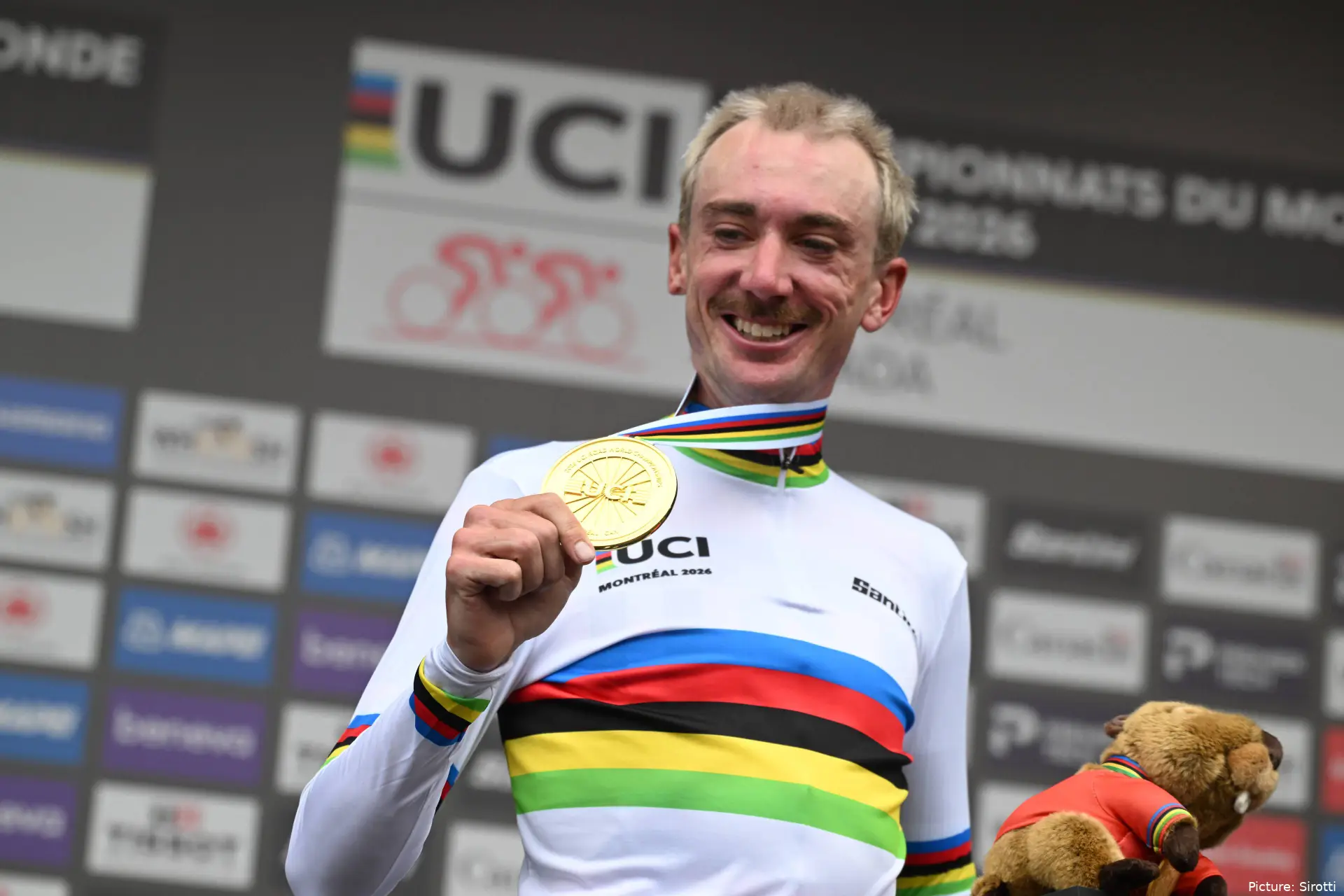
Matteo Jorgenson finished eighth at the 2026 World Championships in Montréal, but his result only tells part of the story of the American team's remarkable day. The Visma | Lease a Bike rider spent the closing stages using his own strength and position to disrupt the chase behind Brandon McNulty, helping create the conditions for his teammate to ride away with the rainbow jersey.
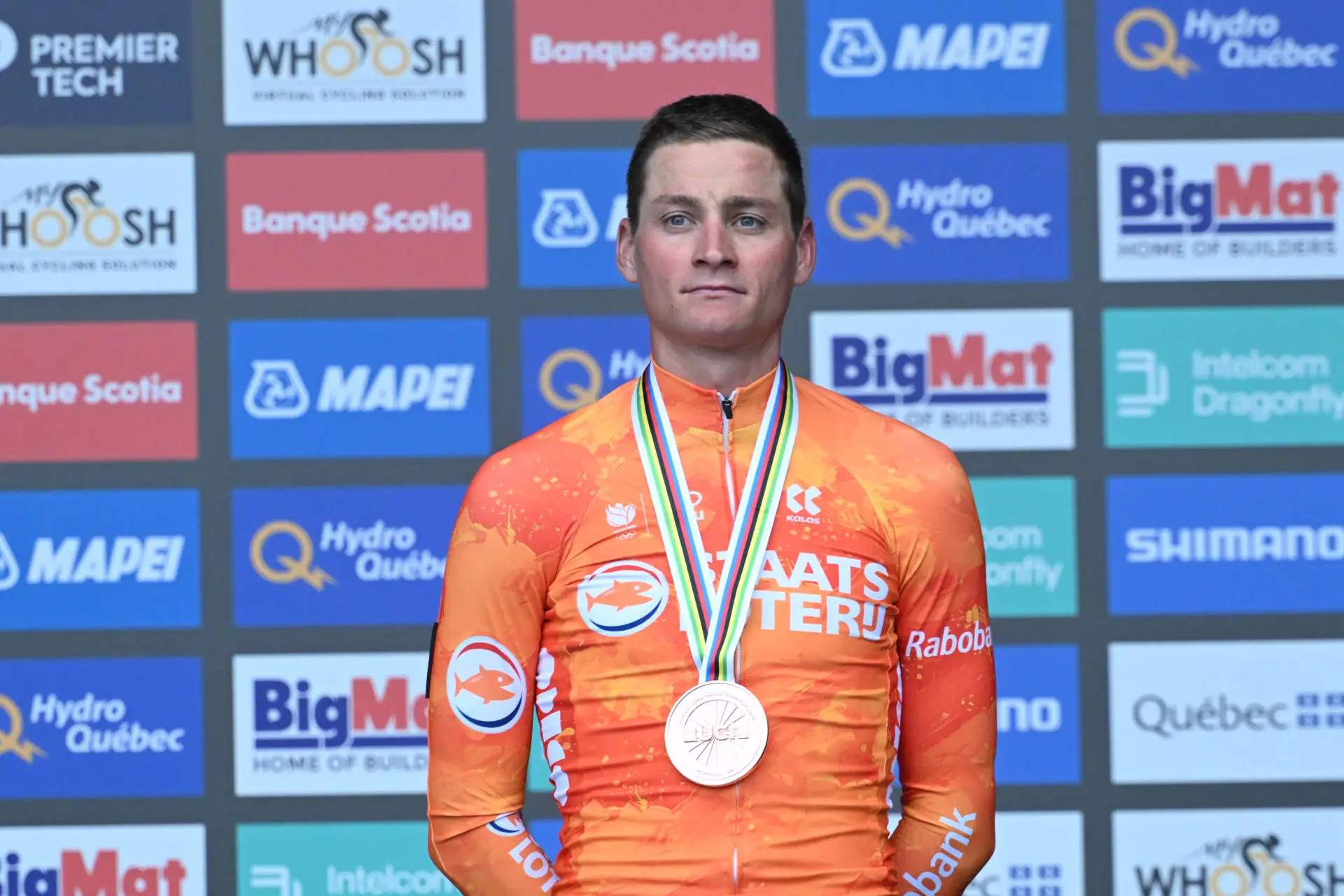
McNulty became the first American since 1993 to win the elite men's road world title, holding on for 13 seconds over Michael Matthews after his late solo attack. Jorgenson crossed the line eighth, but his contribution came well before the finish as the United States repeatedly used its numbers to force other nations to spend energy.
The Americans had entered the race with McNulty and Jorgenson as their principal cards, supported by Quinn Simmons and the rest of the selection. Rather than competing against one another for the best possible individual result, Jorgenson said the team had explicitly agreed to prioritize getting an American into the rainbow jersey.
“I'll accept that!” Jorgenson said when asked if he could be considered the MVP of the American team. “I think Brandon was probably the MVP, but Quinn and I did an amazing race. Really, we made a plan last night—we set our egos aside a little bit and decided, ‘Okay, we just want an American to win this race.’”

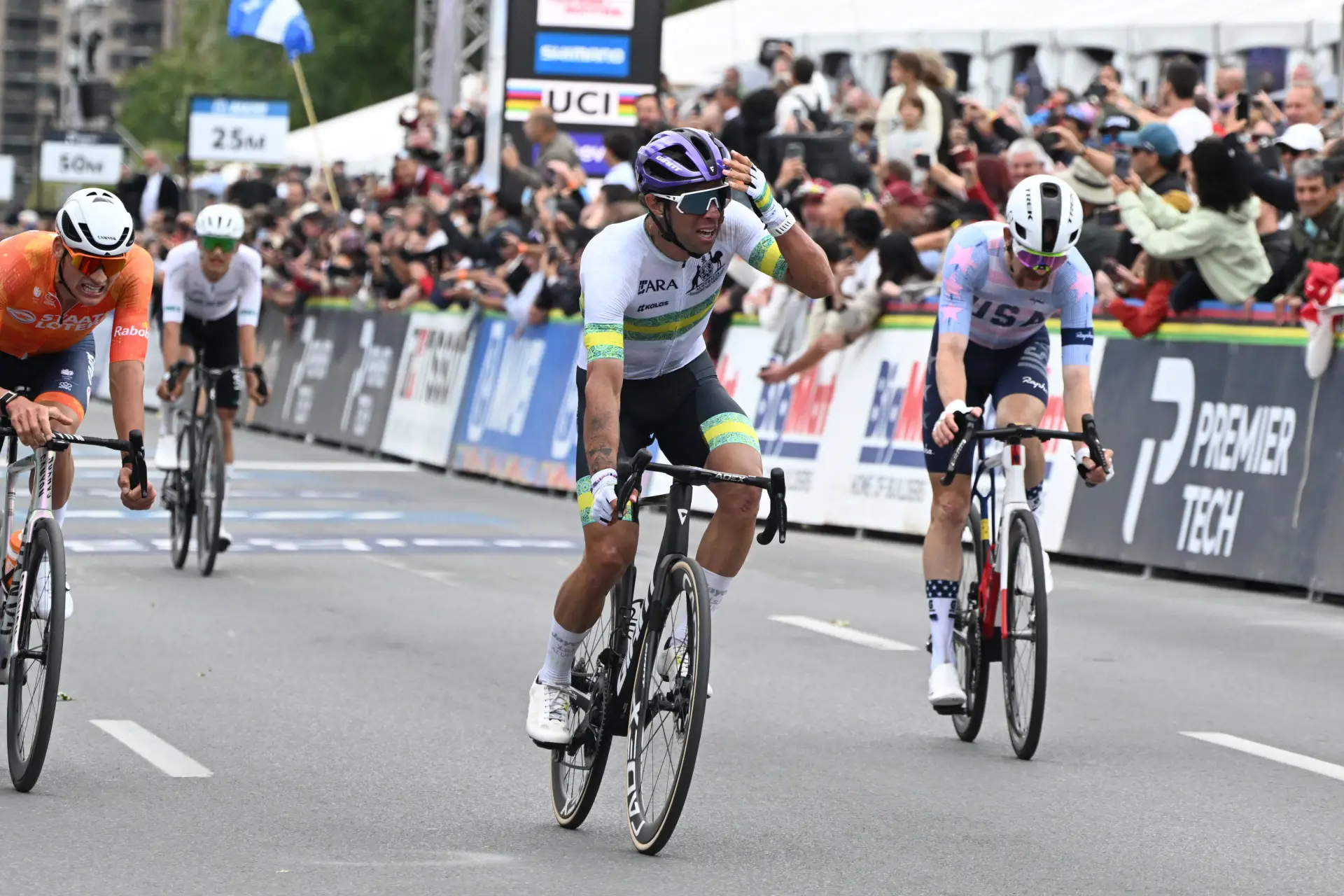
Matteo Jorgenson in action at the 2026 Montreal World Championships
Americans used their numbers to control the race
That approach became important once the race entered its decisive phase. Simmons followed the move containing Wout van Aert and Mathieu van der Poel, preventing the United States from having to chase the dangerous combination from behind. Jorgenson and McNulty could then conserve energy while riders from other nations were forced to respond to repeated attacks.
“I really think that we played the perfect race, with Quinn able to follow that move with Wout and van der Poel to neutralize it,” Jorgenson explained. “Then Brandon and I were able to take advantage of Seixas, Ayuso, and Del Toro, who spent a bunch of energy.”
The strategy became even clearer when the race came back together. With several of the strongest riders having already spent significant energy attacking or chasing, the Americans had achieved the situation they wanted: one of their riders could launch an attack while the other could disrupt the response.
“As soon as it all came back together, we could get one of us solo, which was the ultimate goal,” Jorgenson said.
McNulty was ultimately the rider who made that move, opening a gap from a reduced group that included Jorgenson, Tom Pidcock, Giulio Ciccone, Isaac Del Toro, Mathieu van der Poel and Michael Matthews. While the chase struggled to organize itself, Jorgenson remained an obstacle for those trying to bring his teammate back.
“From there, thankfully I had crazy legs and I was able to follow a bunch of moves and make some guys a little bit frustrated, which really helped,” he said.
Read also
Jorgenson calls it his proudest victory
For Jorgenson, the result was especially satisfying because of the preparation that went into the American team's strategy. “It might be my proudest victory,” Jorgenson said. “Right now it's easy to say that, but I really believe it. I spent a lot of time thinking about this—I wrote a bit of a document last week when I was training in Vermont to send to the guys with some analysis, which usually my trade team does for us, but this time I did it myself.”
The analysis was ultimately translated into a race in which the Americans consistently avoided taking unnecessary responsibility while making sure they were represented whenever the most important moves formed.
“I just think we made a great plan, and like I said, we were able to set our egos aside, which I think won us this race,” Jorgenson concluded. “I'm proud to be a part of this team today, it's really cool. So I'm just excited to go out tonight and have a nice party.”
Félix SernaCycling Journalist
Félix Serna is a writer at CyclingUpToDate and has been part of the team since 2025. He covers professional cycling across both the men’s and women’s calendars, with a focus on UCI rankings, race developments, and rider performance. His work includes interview-based reports, liveblogs, and tournament coverage designed to provide clear, accurate context throughout the season.
In his reporting, Félix regularly uses ProCyclingStats for results, statistics, and historical reference. He places strong emphasis on careful sourcing, editorial accuracy, and updating articles promptly when new, verified information becomes available. He holds a bachelor’s degree in International Studies.
claps 11visitors 10
Just in
Popular news
Latest comments
- He didn't even try to sprint all outvappaxbipmv18-10-2026
- Campenaerts looked like a rolling pumpkin with that all orange leaders skinsuit !frieders318-10-2026
- He can take his dumb a$$ politics somehwere else !frieders318-10-2026
- good to have her back. fingers crossed she‘ll be able to stay!Ketterechts17-10-2026
- A tenner and he wins the Tour next year, too 😂anonymouscyclist17-10-2026
- the answer is either stick to classics or GTs but not bothabstractengineer17-10-2026
- the exodus already stared with Ciccone. Already they were struggling with two sprinters, now there are three. Also Ganna will demand leadership. Gall is the most proven GC, Ayuso has the most potential. GC leadership for everybody will be impossible. Literally a UAE style mess without pogi.abstractengineer17-10-2026
- I raced as an amateur for 12 years, including six years on my country’s national road cycling team. I secured two national titles and competed in three World Championships plus more than 15 international stage races. At 23, we travelled to Italy for a training camp—or so I assumed. On a rest day, we watched a presentation about adopting a more “professional” training approach. It was crystal clear what “professional” meant. That moment first exposed me to this dilemma. After returning from Italy, I left cycling—at least at the competitive level I had known. Over the following two years, the whole team was caught doping. I hold that everyone is innocent until proven guilty. In my view, current stakeholders operate on a different scale, and the sums involved are vast. I am unsure whether any doping would ever be revealed. I try to stay positive and enjoy the show. My 2c.
 vannpelt17-10-2026
 - Fiver he wins 🤣
 leedorney17-10-2026
 - “…measures to reduce speeds.” Might as well shorten the race course to just 50km as well? ASO generates at minimum €300m a year and 30- 40% profit. Maybe stop being greedy and spend more of the profit to protect the riders instead.b3tlla17-10-2026
Loading
1 Comments