"You race to win, and that’s how you lose out on gold" - Mathieu van der Poel's tactics in Montréal explained
Cycling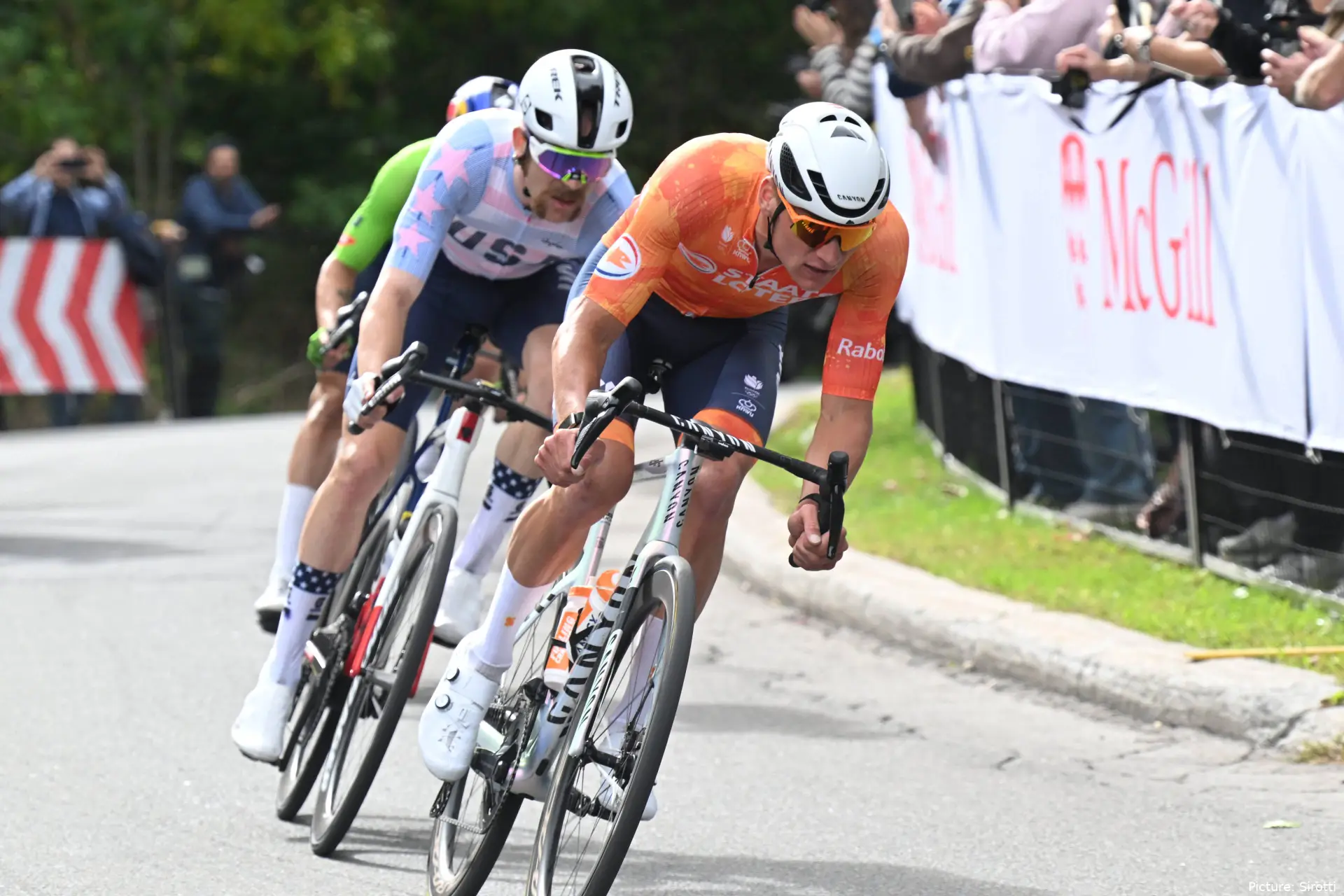
Mathieu van der Poel was one of the headliners going into the Montréal World Championships, and was the rider who spent the most time on the attack in the race. The leader of the Dutch team was the protagonist of several key moments of the race, and came away with a bronze medal.
The Alpecin-Premier Tech's form didn't come as a major surprise. But when comparing to other riders, it was certainly impressive.
"It was going really fast, and you could tell that everyone was slowly running out of steam. I certainly was. And then you know the final is coming up soon. Bruno [Armirail] isn't going to ride like that and then let the pace drop again," Bart Lemmen said to In de Leiderstrui.
The race opened up and as soon as the needle hit the 100 kilometer to go mark, the riders were already hitting their limits. Mathieu van der Poel attacked, joined by Wout Van Aert and Oscar Onley. Other riders bridged across later including Quinn Simmons, forming an incredibly strong group that would already threated to get away with the win.
"After just two laps, you could already tell it was pretty tough," the Visma rider, second man at the Dutch team, shared. "And I also think that, as a Dutch team, we actually had it under control the whole day. Mathieu then opened the final himself, and after that, it was over in a flash. Or rather, ‘over in a flash’—by then, the race was already pretty much decided.”

Mathieu van der Poel in action at the 2026 Montreal World Championships
At that moment van der Poel wouldn't require teammates any longer, whilst few others had. The presence of Simmons with the Alpecin rider was beneficial, as the American riders closed down attacks behind.
"That's really smart of Mathieu. He's the one setting the pace, because that way he stays in control. He's very good at that, but you still need to have the legs for it. Tactics are one thing, but on such a tough race, you really do need your legs."
Lemmen knew, by watching his teammate, that he was set for a big day on the bike:
"You know what he's like. In a way, you can tell by looking at him whether he’s struggling or not. And I don’t think he was. So then you know he’s capable of doing crazy things.”
Mathieu van der Poel the MVP in Montréal?
“Mathieu van der Poel rode an excellent race. The winner is always right in the end, and today that was Brandon McNulty and the Americans, thanks to their superb tactics," Dutch national coach Koos Moerenhout told Wielerflits.
The Netherlands can't be unhappy leaving the men's elite road race, with Mathieu van der Poel taking third place and a bronze medal - just like he had back in the 2024 Zurich World Championships.
"If you manage to seal the deal with that kind of approach, you’ve ridden a great race and secured a great victory. As it stands, you ride a great race and take bronze, but miss out on the win".
Moerenhout didn't have the cards to play that other strong teams such as Belgium, Italy and the United States had, but van der Poel exploded the race himself and triggered a big move. The plan was that, as he explains:
“It’s easy to analyze things in hindsight, and even at the moment he made his move, you think, ‘wow, that’s still a long way out.’ But the races earlier this week showed that chasing is difficult on this course and that a chase only succeeds if the chasers work together effectively".
"Van der Poel was also unlucky today that the Belgians weren't at their best and that some punchers managed to get back into contention towards the end. Things could easily have turned out differently today.”

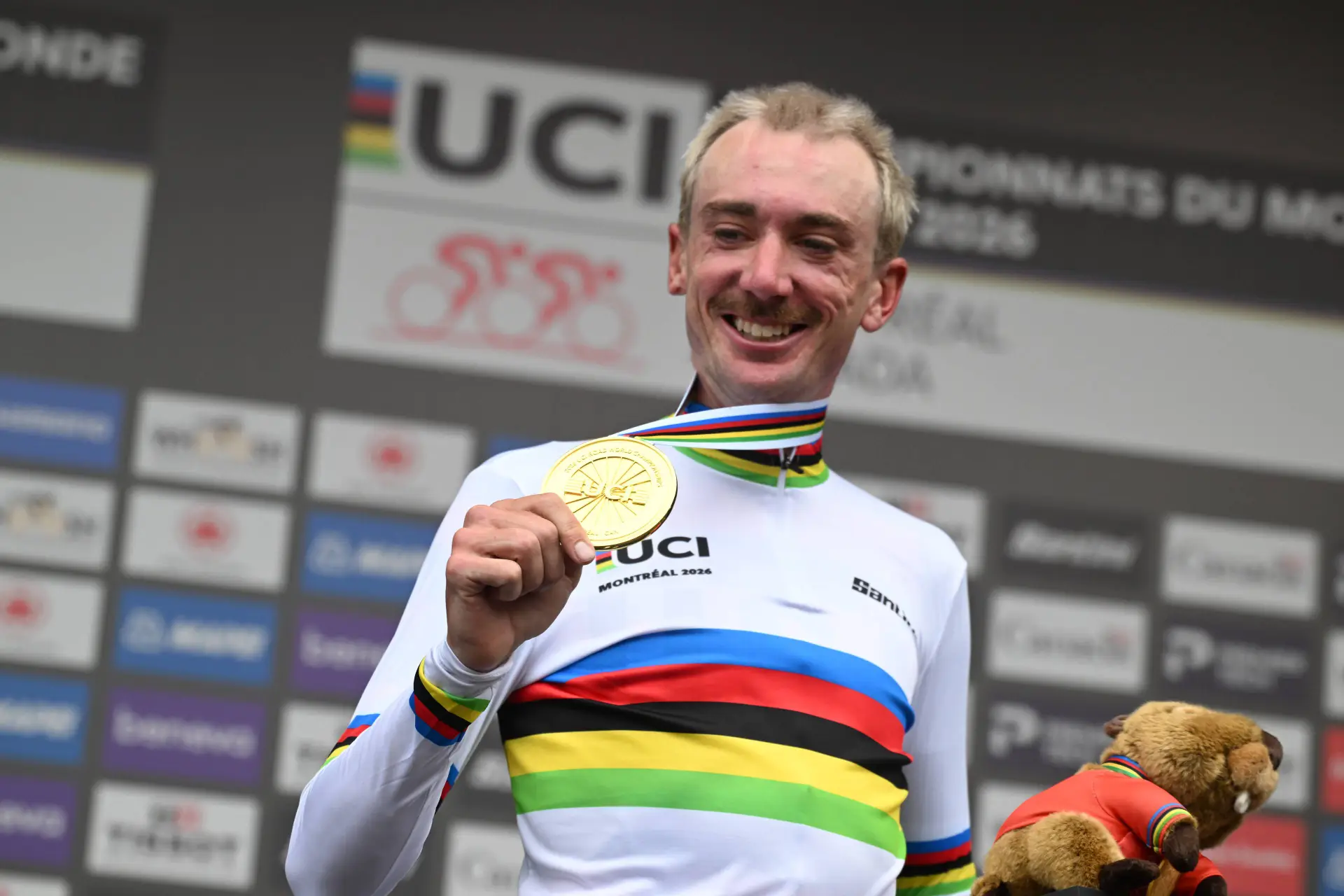
Michael Matthews, Brandon McNulty and Mathieu van der Poel on the podium of the 2026 Montreal World Championships
But the pace behind was also high and with riders such as Paul Seixas, Isaac del Toro, Tom Pidcock and Ben Healy pushing behind, the move was caught in the latter stages of the race. Van der Poel then, unlike the riders who had followed him on the earlier attack, survived within the best over the final two laps within a shot at victory.
“That’s when you start believing again in the team car, but not long after, the riders spread across the road and the chase stalled. It was an incredibly draining race, and almost everyone had been dropped at some point".
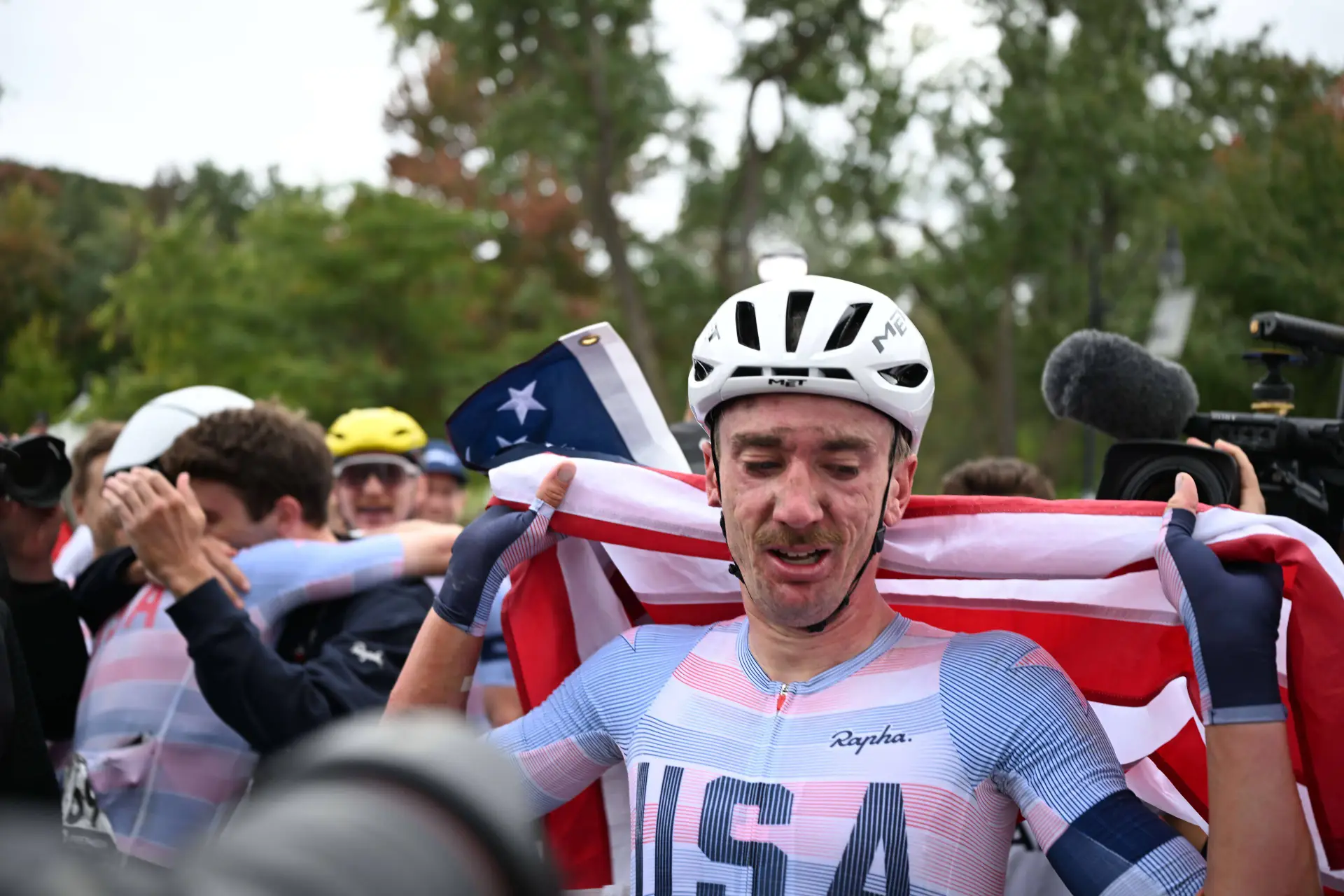
Catching Brandon McNulty was unlikely. Giulio Ciccone criticized the lack of work from Mathieu van der Poel in the final kilometers heading back to the finish line. The Dutchman was placing a bet on the race coming back. "At that stage, there wasn't much Mathieu could do other than take a gamble and hope it would all come back together.”
“He rode a magnificent race. I think you could call him the man of the race. He took the bronze, and in the end, he wasn't far off the win. McNulty chose the right tactical moment and rode very strongly.”
Read also
Dare to win, risk to lose
The group didn't come back to the front, and ended up fighting only for second place. But van der Poel's tactic had been rather successful, as he passed the final climb with the likes of Del Toro and Seixas who were spoken of as stronger on the climb to Mount Royal.
“Quite a few riders managed to get back into contention. Even Mads Pedersen, who had been dropped multiple times, kept riding and fighting his way back. If you wait until deep into the finale, that decisive punch on the climb becomes the deciding factor. Mathieu wanted to avoid that. He had already succeeded in wearing Del Toro and Seixas down earlier on.”
In the end a fight for second place, in which van der Poel was second. He did not work in the final kilometers and sprinted to the bronze medal, just behind Michael Matthews and the aforementioned McNulty.
“You race to win, and that’s how you lose out on gold. It’s a shame, because it was within reach. But he did win bronze, and that’s something we can be proud of. It shows the kind of championship rider he is," Moerenhout concluded.
Rúben SilvaEditor-in-Chief
A founding contributor to CyclingUpToDate since its launch in January 2022, Ruben Silva has played a central role in shaping the site’s editorial direction and long-term growth. Before joining the project, he built his experience through independent blogging at Echelons Hub and by producing race previews for Ciclismo Internacional, developing a strong analytical voice rooted in daily engagement with professional cycling.
Beyond editorial work, he has been closely involved in the expansion and coordination of CyclingUpToDate’s wider network, helping establish and support sister platforms across multiple languages. This includes ongoing collaboration with CiclismoAlDia (Spanish), CiclismoAtual (Portuguese), WielrennenUpToDate (Dutch), and RadsportAktuell (German), contributing to a shared editorial vision and consistent international coverage.
He also helps oversee editorial governance across the network, setting standards for accuracy and consistency and coordinating updates or corrections when needed.
Originally from the Porto metropolitan area in Portugal, he holds a bachelor’s degree in Geography. His path into cycling journalism was shaped not through formal media training, but through independent reporting, community engagement, and sustained on-the-ground involvement in the sport.
Over the course of his career, he has conducted approximately 100 interviews across road cycling and cyclocross, ranging from one-to-one conversations and online formats to press conferences and on-site pre- and post-race coverage. His interviews include leading riders, team managers, and prominent figures within cycling media: Tadej Pogacar, Jonas Vingegaard, Mathieu van der Poel, Primoz Roglic, Wout van Aert, Joao Almeida and Tom Pidcock; managers like Patrick Lefevere and Joxean Matxin; and YouTube personality Bryan Kennedy (BKXC)...
Within 18 months of launch, he helped grow CyclingUpToDate’s English-language platform into one of the most-read cycling news websites, built entirely from the ground up. As both a professional journalist and lifelong cycling enthusiast, his focus remains on delivering accurate, timely, and well-contextualized coverage.
claps 13visitors 3
Just in


Popular news

Latest comments
- writing about yourself in third person ... please, at least have someone else from your staff author these self-coverage articles!Ketterechts25-11-2026
- Don’t forget Yates’s podium at 2023 TdF!Lozza25-11-2026
- It was stage 14 to Morzine that Carlos Rodriguez won in 2023, not Puy de Dome. And Kwiato actually won the previous stage himself to Grand Colombier!Lozza25-11-2026
- Go Pogi!! 🐐❤️Lozza25-11-2026
- They didn’t have or need “extraordinary information”. All they needed was for a French judge to sign off on the night-time testing for it to go ahead.Lozza25-11-2026
- If the sponsors voted for Primoz then you get him, otherwise not.flyer25-11-2026
- It sure can feel or seem that way but I wonder if the same amount of prodigious performances (compared to the others) would occur if no one was ever doping at all.flyer25-11-2026
- Given the similarity of two articles (published on I think the same date), I'm reusing (copy-n-pasting) my post from the twin: I've always thought the last day of each of the grand tours was problematic mostly in that the GC is considered completed before the race starts when that is not really true. There is some tension, but not desirable tension. What saves the awkward practice is the race finish is legit for those who participate - so it's not wholly different from the other stages. That neutralizations usually make good sense demonstrates their necessity so if that has to be the way to go I agree that the design plan for the neutralization should be completed before the race starts. This years end stage in the Vuelta had one of the best first half's I've seen in that many of the riders looked to be thoroughly enjoying themselves making it a joy to watch. But I think it was slightly closer to the exception rather than the rule.flyer25-11-2026
- Even I often win without being there at all, not even breaking a sweat. Beat that!flyer25-11-2026
- It is not about rest and peaking again - 5 weeks is not enough for that. It is about recovery while maintaining form. 4 weeks is easier for that. With a Giro-Vuelta, the 12 week break is enough to rest and then peak again. Not for the Tour
 Rafionain-Glas25-11-2026
Loading
Write a comment