Big transfer brewing? Visma reportedly eye former Giro d’Italia winner as delayed Simon Yates replacement
CyclingTuesday, 07 April 2026 at 11:30

Team Visma | Lease a Bike’s unsettled start to 2026 is beginning to spill into the transfer market, with the Dutch team now reportedly exploring a move for a proven Grand Tour climber to plug a gap that has opened up behind the scenes.
According to cycling journalist Daniel Benson, the team have identified former Giro d’Italia winner Jai Hindley as a potential target as they look to reinforce their high mountain depth following a turbulent period of exits and disruption.
The need is not difficult to trace. The departure of Cian Uijtdebroeks, combined with the unexpected retirement of Simon Yates, removed two key climbing options in a short space of time, leaving Visma thinner than usual in terrain that has historically underpinned their Grand Tour success.
A gap Visma do not usually allow to exist
For a team built on control and depth, that double loss stands out. Visma’s rise has been defined by having multiple solutions in the mountains, not just a single leader, and the current situation represents a clear deviation from that model.
There is talent coming through. Davide Piganzoli and Jorgen Nordhagen are both viewed as long-term investments, but neither is yet at the level required to immediately step into a decisive Grand Tour support role. That leaves a short-term gap, and one that increasingly looks like it may need to be addressed externally.
Hindley fits that profile. A Giro d’Italia winner with a recent fourth place at La Vuelta, he represents exactly the type of rider who can operate both as a leader and as elite support in the high mountains.
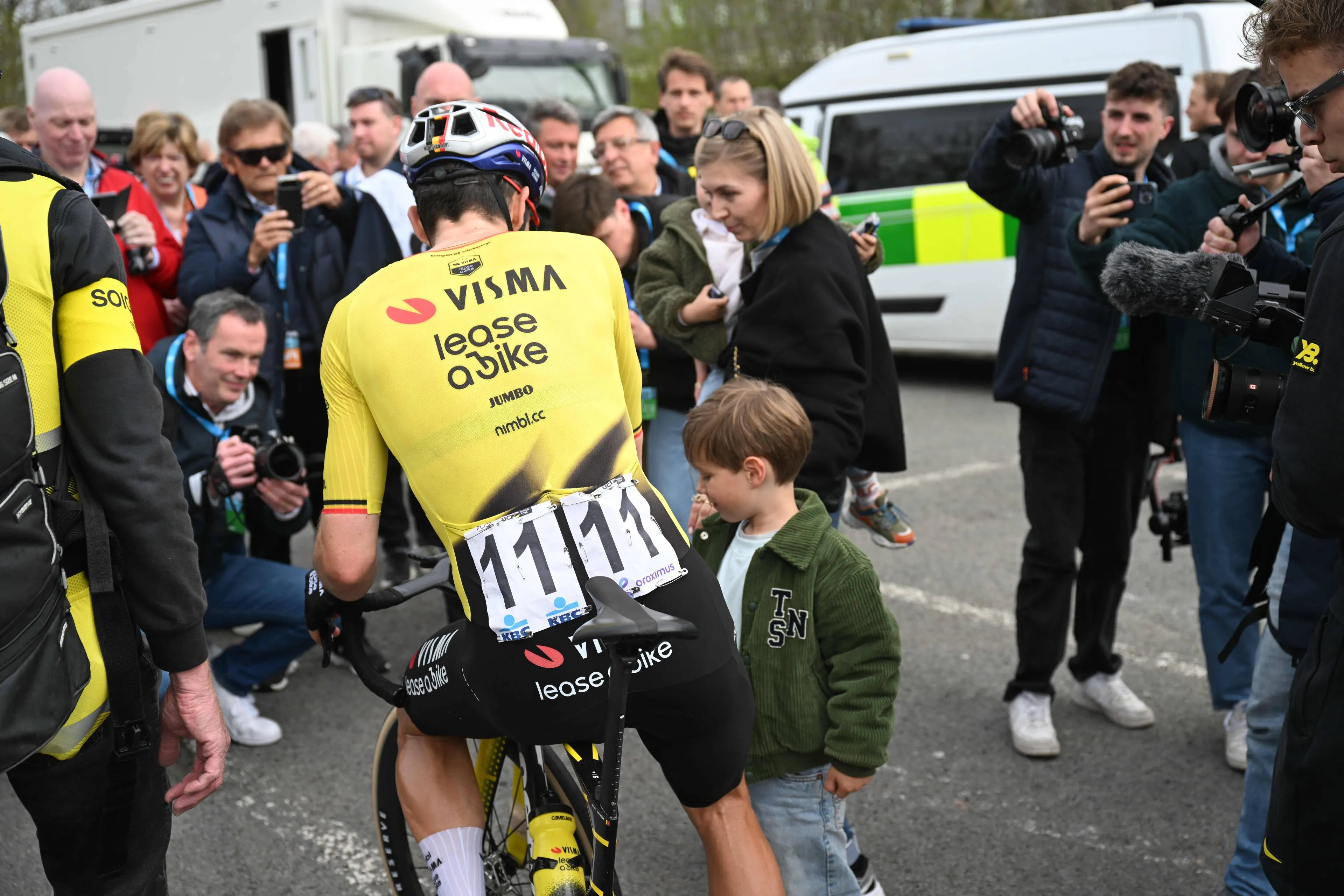
Opportunity meets limitation in the market
His situation at Red Bull - BORA - hansgrohe only adds to the intrigue. With Remco Evenepoel arriving and Primoz Roglic already established, the team’s leadership hierarchy has become crowded, raising questions about how much freedom Hindley will have to pursue his own ambitions. That potential squeeze, combined with an expiring contract, creates a scenario where a move could suit all parties.
Visma, however, are not operating with a blank cheque or unlimited space. Team boss Richard Plugge made that clear when speaking to Benson, stressing that the squad is already close to capacity. “We don’t have many spots left, and we have extended a lot of contracts,” Plugge explained. “We are looking at a few riders who could strengthen our team, but there are many teams in the same position as we are. It’s about five or six spots.”
Those comments underline a key tension. Visma may have a need, but they are not in a position to simply overhaul their roster mid-cycle.

Simon Yates won the Giro d'Italia in his only season with Visma
Development first, but door not closed
Plugge also reiterated the team’s long-standing philosophy of building rather than buying, pointing to the way many of their current stars developed within the system rather than arriving fully formed. “Everyone says we are one of the biggest teams because we have so many good riders, but they all came to us and improved within the team. That is what we are looking at: who is the next new guy?”
That approach would favour patience, particularly with prospects like Piganzoli and Nordhagen already in the pipeline. Yet Plugge stopped short of ruling out a major move if the right opportunity presents itself. “If a big opportunity comes along, like it did with Simon at the time, we will take it. We are always open to that.”
That caveat is where a rider like Hindley enters the picture. He is not just another option, but the type of market opportunity that aligns with Visma’s selective approach to recruitment.
A broader shift in tone around Visma
All of this sits within a wider context that feels notably different from previous seasons. Staff changes, including the departure of a long-time performance figure, combined with a significant rider turnover over the winter have contributed to a less stable opening to the year than the team has typically experienced.
In that light, the idea of Visma moving for an established Grand Tour climber is less surprising. It would represent a pragmatic response to a situation that has developed quickly rather than a departure from their long-term philosophy.
Whether they act on it is another question. Plugge’s comments make clear that any move would need to be the right one, not just an immediate fix. But with a gap in the mountains and a rider of Hindley’s calibre potentially available, the conditions for a significant transfer are beginning to align.
Read also

claps 1visitors 1
Just in


Popular news
Latest comments
- Some cycling journalists ("experts") are comparing Remco at 19 against Seixas at 19. Seixas is the professor for Remco when he was 19. No, these journalists are not normal? Seixas is currently the second best GC cyclist in the world and is seriously threatening Pogi for the Tour, but foolish journalists are comparing him to Remco at 19... LOL 🤣🤣🤣🤣Mou-Cro-HR07-04-2026
- And in other news, water is still wet.pidginbil07-04-2026
- I expect Seixas to destroy the competition today. He has to send a message to Pogi, that things have become serious. If DelToro manages to survive on a big climb today, Pogi will be watching Netflix again late into the night.Mou-Cro-HR07-04-2026
- It all depends what "riding smart" really means. Real champions, real professional cyclists, real sportsmen fight it out mano a mano. Pogi, MVDP and Remco understand that If everyone road like sissy Jonas or Froome, without balls, cycling woud be boring. It would be like watching dart throwing or chess. Be a fvcking man and win or lose, but take like a man... don't be a cry babyMou-Cro-HR07-04-2026
- maybe riding smart also equals going for the win.mij07-04-2026
- Would love this for him. RBBH is a little cramped now, and it'd be great to see him get some fresh chances, plus definitely help shore up the Visma mountain train.antipodeanpedalfan07-04-2026
- If they did that then the peloton would know who's boss. There is no longer a patron of the peloton. Or maybe there is one, and not one, several, because when Pogačar and Evenepoel break the rules, requiring disqualification, the UCI chickens away
 Rafionain-Glas07-04-2026
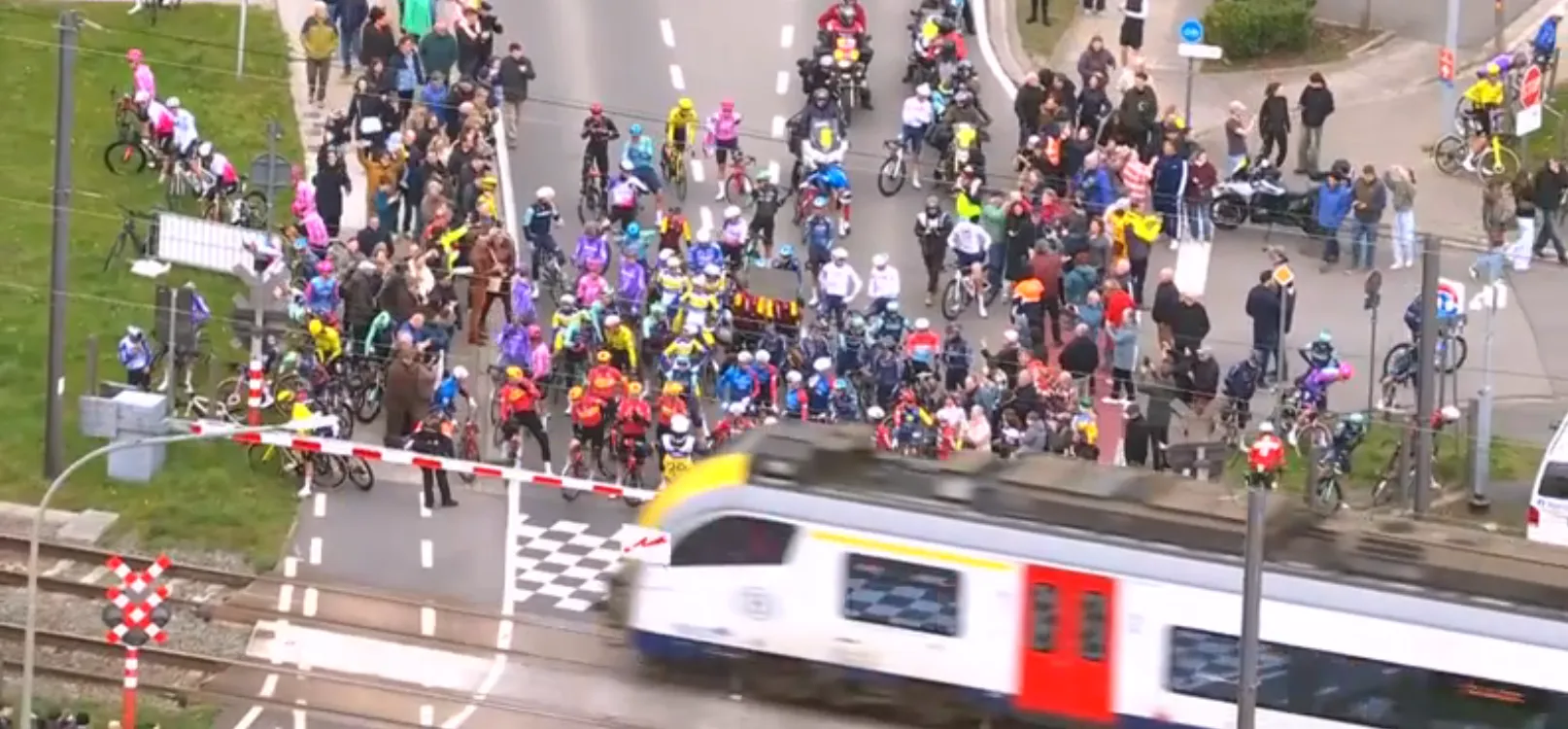
 - No. It says: It shall be strictly forbidden to cross level crossings when the barrier is down or closing, the warning signal ringing or flashing. Apart from risking the penalty for such an offence as provided by law, offending riders shall be sanctioned as provided in article 2.12.007; And 2.12.007 clearly states: Passing through a level crossing that is closed or in the process of closing (lights flashing and/or audible warnings) Rider: CHF 1,000 fine, 100 points from UCI rankings and elimination or disqualification and/or yellow cardaveragecyclist07-04-2026
- The rule states that you are "at risk of being disqualified" not "will be disqualified". The lights started fashing as they got there and the arms were still up. The car that went before them was the race organizer/UCI car.SYKOspaz07-04-2026
- How did I guess it was Naesen? This guy talks too muchRafionain-Glas07-04-2026
Loading

Cycling Transfers: The latest news and analysis from the Spring Classics 🛒 Pidcock in extension talks, a balancing act at Alpecin, a possible new chapter for Chapman, Plugge on Visma’s climbing needs and more dnlbenson.substack.com/p/cycling-tran…

2 Comments