"A situation like this could've been avoided" - CPA president is certain GPS tracking would've saved Finlay Tarling's life
Cycling
This year's August 14 has written another dark chapter in cycling's history. During the eighth stage of Volta a Portugal, Finlay Tarling crashed head-on into a van that entered the route, convinced that the race had passed already. That's when the young Brit chasing the head of the race appeared from behind a corner. Nearly two months later, CPA president Adam Hansen argues that this tragedy could've been prevented with just a single safety measure.
First, Hansen outlines how the safety was enforced at the race. The Volta a Portugal organizer used so-called "rolling closures," which means that only the currently relevant 20-30 kilometers for the race are being controlled by the police. Then, of course, motorbikes are also riding in front of the pack and larger groups, but it's hard to protect every single dropped rider like Tarling. Especially as it is not always easy to keep track of who's where on the road.
"Every group on the road has some type of motorbike in front for protecting them from cars in the situation when a car does come from a driveway or intersection," Hansen said on the Domestique Hotseat podcast. "And this rider was dropped and was by himself, and there was no police motorbike."
GPS tracking can make the difference
Following the tragic passing of Muriel Furrer at the 2024 World Championships in Zurich, the GPS tracking system has already been deployed at the Worlds in Kigali last year and again in Montréal last month, where (in-race) vehicles were tracked as well as riders.

CPA president Adam Hansen
And Hansen believes that precisely the GPS tracking system used in all races could complete the puzzle that is protecting everyone on the roads.
"Not only do they have the riders, they also have the police bikes and the cars and everything," he said. "If it had been the World Championships' tracking system, someone would have seen this. They would have seen that a rider is unsupported by a police motorbike and could have radioed to the race regulator, which is the person on the motorbike regulating the convoy, and when the cars can pass, send a motorbike back or forwards to protect the rider."
"So it made the point that we really need to get serious about these GPS trackers and get them implemented as soon as possible, because it could have avoided a situation like this."
Read also
Chaos at SafeR
As one of the leading governing bodies concerned with cycling safety alongside SafeR, CPA leads the investigation of every similar incident with the aim to improve upon errors leading up to the tragedy and to prevent a recurrence.
"When something like this happens, the CPA just goes manic, and everyone gets angry. And then the people that are not inside SafeR Cycling and the CPA, they put extra pressure on the members that are inside SafeR," he said. "And then in SafeR we try to get as much information as possible about why it happened and how to avoid it in the future. And this really showed the holes in these rolling closures."
Just this week, they have received enough materials to review at Tre Valli Varesine. At the Italian classic, not one but TWO critical errors occurred.
First, a delivery van entered the course just after the leading group had passed by with 20 kilometers to go. Fortunately, this seemed to have gone without any consequences.
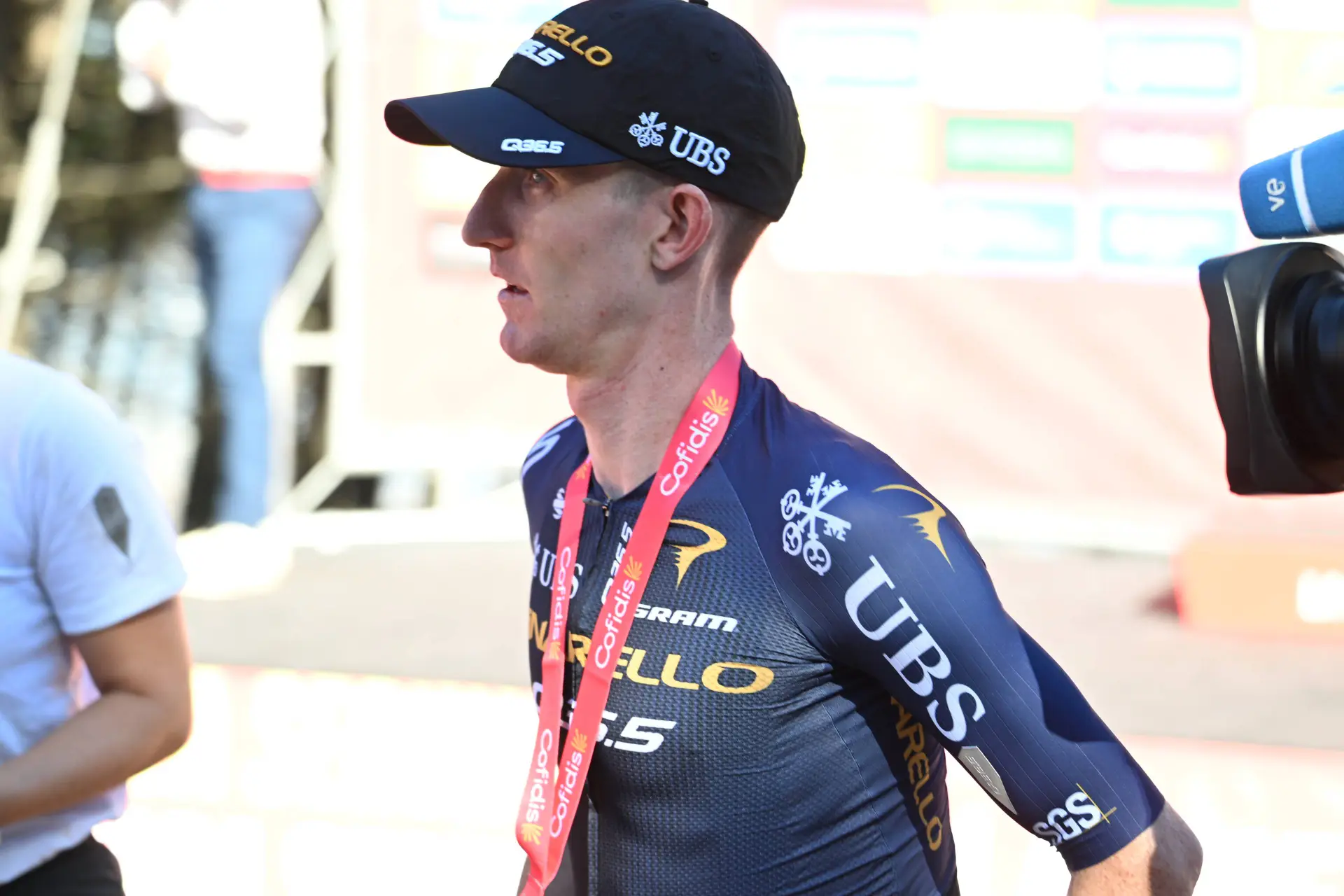
However, after the race had finished, it came out that a support police motorbike—the same one responsible for ensuring safety of the race—had crashed into two Pinarello Q36.5 riders, fortunately causing "only" scars and material damage.
Ondrej ZhasilCycling Journalist
Ondřej Zhasil is a cycling journalist at CyclingUpToDate and has been part of the team since 2023. He is based in Ostrava, the third-largest city in the Czech Republic, and covers professional cycling across the main UCI competitions, including the Tour de France, the Giro d’Italia, and La Vuelta a España. A key focus of his work is startlist analysis and pre-race coverage, where he examines team selections, rider line-ups, and tactical scenarios ahead of major events.
Alongside WorldTour coverage, Ondřej has developed specific expertise in junior cycling and in racing across East Asia, including competitions in China and Japan. He also maintains a broad working knowledge of other disciplines and levels, including cyclocross, while continuing to expand his understanding of mountain bike racing.
Ondřej holds a bachelor’s degree in Mathematics and Physics, which supports his analytical, data-driven approach to performance and race analysis. In his reporting, he regularly uses ProCyclingStats for results, statistics, and historical context. He places strong emphasis on careful sourcing, editorial accuracy, and updating articles promptly when new, verified information becomes available.
claps 0visitors 0
Just in
Popular news
Latest comments
- Now that all the top guys are here, Remco has to win this to prove Euro was not a fluke.abstractengineer10-10-2026
- great dudemij10-10-2026
- they gotta get this fixed. it is atrocious.mij10-10-2026
- this team is stackedmij10-10-2026
- I would not put Paul Seixas as a fave over Remco.mij10-10-2026
- Skelly will be next. If the leader is far above, its simple like Pogi and ALmeida/Del Toro. But we saw Skelly beat Ayuso in the TDF where Ayuso was leader.abstractengineer10-10-2026
- Yes man that would draw a crowdwrsty10-10-2026
- That is what is called "dreaming". "The victory was quite close" . minutes is not close for a GT. anything above 2 minutes is a comfortable victory, above 5 minutes a overwhelming victory and Remco did not even tryabstractengineer10-10-2026
- Remco wins!
 DareDevil10-10-2026
 - I wonder if this had anything to do with the controversial finish at the Euros and Ciccone's Instagram post which followed?Cooldude10-10-2026
Loading
1 Comments