Cycling might be best known for the Tour de France, but
there is far more to the sport than simply the yellow jersey. The professional
season is shaped around the three Grand Tours, the five historic Monuments,
modern classics such as Strade Bianche, and the UCI Road World Championships.
Together, they form the spine of men’s road cycling and define the achievements
that riders value most.
1. Tour de France
The Tour de France stands at the centre of that hierarchy.
It is widely regarded as the biggest event in cycling and is often described as
“the pinnacle of the UCI WorldTour and is the race every rider dreams of
winning.” Held every July, the race lasts three weeks and typically covers 21
stages looping across France and occasionally into neighbouring nations.
Created in 1903 by the sports newspaper L’Auto to boost flagging sales, the
Tour quickly captured public imagination and grew into what is often called the
largest annual sporting event in the world. Millions watch by the roadside or
on television each summer, following every sprint, mountain attack, and time
trial.
What makes the Tour unique is the combination of distance,
variety, and the symbolism of the yellow jersey. In fact, the yellow jersey is
one of the most iconic sights in all of sports.
Riders must conquer high mountain stages in the Alps and
Pyrenees, flat sprint days, and technical individual time trials across more
than 3,000 kilometres in the three weeks. Winning even a single stage can
define a rider’s career, while lifting the overall title places them among the
select few icons of the sport.
Only legends such as Eddy Merckx and Bernard Hinault have
managed to win the Tour five times, and even wearing the yellow jersey for just
one day carries prestige. And since 2022 the Tour de France Femmes has given
the women’s peloton its own multi-stage event on French roads, held each
summer.

Tadej Pogacar battles Jonas Vingegaard during the 2025 Tour de France
2. Giro d’Italia
The Giro d’Italia, held each May, is the second of the three
Grand Tours and the Tour’s closest rival in prestige. First ran in 1909 as a
circulation booster for Italy’s Gazzetta dello Sport, the Giro has maintained a
strong link to its origins: the race leader wears the maglia rosa, the pink
jersey, in tribute to the Gazzetta’s pink paper.
After the Tour, the Giro is generally seen as the next most
important stage race, and its winners join an honour roll of cycling’s greatest
talents. Some of them have completed the mythical double of winning both the
Giro and the Tour in the same season, most recently Tadej Pogacar in 2024.
The Giro’s identity is shaped by Italy’s dramatic landscapes
and unpredictable May weather. Its stages regularly climb into the Alps and
Dolomites, tackling giants such as Passo dello Stelvio or Monte Zoncolan, and
riders often face rain, snow, and cold at altitude.
These conditions create chaos and opportunity, the race is
known for dramatic swings in the overall standings, daring solo attacks, and
emotionally charged moments on snow-lined mountain roads. Just ask Simon Yates
and Isaac del Toro about the conclusion of the 2025 race!
Italian fans bring an added intensity, lining coastal
routes, ancient villages, and high passes. The women’s Giro d’Italia Donne
mirrors this role in the women’s sport, using many of the same climbs on a
shorter route.
Read also
3. Vuelta a España
The Vuelta a España rounds out the trio of Grand Tours. Held
from late August into mid-September, it was first run in 1935 and, after
sporadic early interruptions, has been raced annually since the 1950s. Inspired
by the success of the Tour and the Giro, the Vuelta gradually became one of the
sport’s three major three-week stage races. As the final Grand Tour of the
season, it often becomes a chance for riders to rescue their year with a big
result or to tune up for the World Championships in the weeks ahead.
The Vuelta is known for its extreme gradients and
late-summer heat. Organisers frequently design steep summit finishes, including
notorious climbs such as the brutal Angliru or Los Machucos. The overall leader
wears a red jersey rather than the yellow or pink seen in France and Italy,
giving the race a distinct visual identity.
The Spanish terrain forces aggressive racing: short, sharp
climbs and undulating roads create opportunities for bold moves, but riders
must survive the heat too. The Vuelta’s lower media profile compared to the
Tour and Giro also means it often produces surprise winners and unexpected
tactical battles. Since 2023, the women’s peloton has had its own multi-day
equivalent, La Vuelta Femenina, elevating women’s stage racing in Spain to
Grand Tour status.
4. The Monuments
Among cycling’s one-day races, the Monuments stand at the
top. The first each year is Milano-Sanremo, run in March. First contested in
1907, it is the longest major one-day race at roughly 300 kilometers and is
nicknamed “La Primavera” and “La Classicissima.”
For most of the race the peloton rides along the Ligurian
coast on relatively easy terrain, but after nearly 280 kilometres, the Cipressa
and Poggio climbs create a knife-edge finale. Puncheurs launch attacks in the
hope of breaking the sprinters, while sprinters cling on, hoping to deliver a
final burst on Via Roma.

Pogacar and Van der Poel battle at the 2025 edition of Paris Roubaix.
Tactics, timing, and endurance all converge in the last few
minutes. Victory here is career-defining, as Eddy Merckx’s seven wins attest. Van
der Poel’s showdown with Pogacar on the Poggio was one of the highlights of the
2025 season.
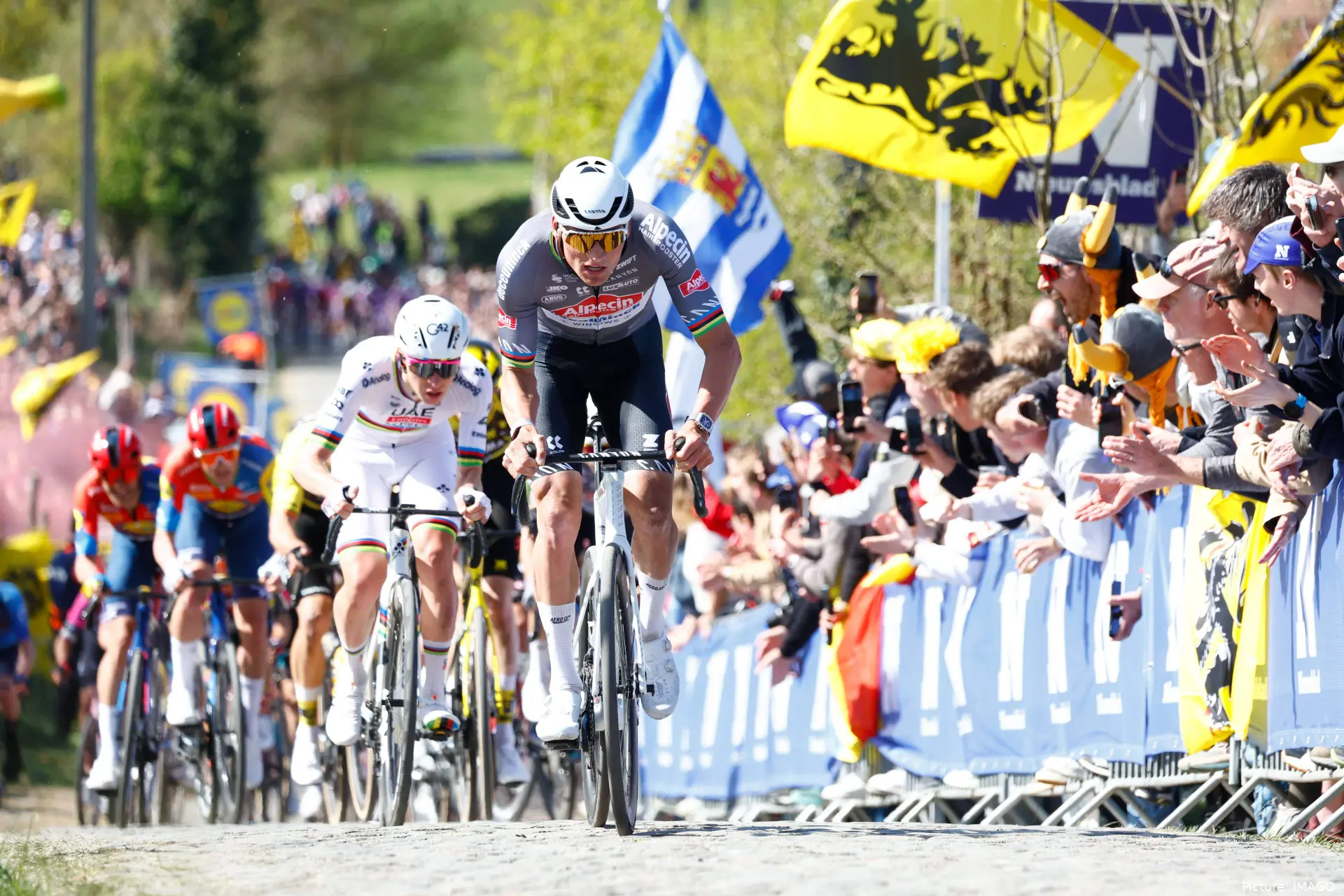
Next comes the Tour of Flanders, Belgium’s most beloved
race. First run in 1913 and held on the first Sunday of April, it stretches
over 270 kilometres through Flanders and centres on its famous short, steep
cobbled climbs known as hellingen.
The Oude Kwaremont, Paterberg, and Koppenberg are legendary
for their rough surfaces and punishing gradients. Constant climbing, narrow
roads, crosswinds, and high tension make the race an elimination contest as
riders are dropped one by one. The atmosphere is exceptional: thousands of
Belgian fans gather on the cobbled slopes, creating a carnival-like
environment. A win in Flanders elevates a rider into the region’s sporting
mythology.
A week later the peloton faces Paris–Roubaix, arguably the
hardest one-day race of all. First held in 1896, it is known as “The Hell of
the North” and “The Queen of the Classics.” Though it now starts in Compiègne
rather than Paris, the defining feature remains the trek across northern
France’s ancient cobbled farm roads.
Around 50 kilometres of pavé are spread across nearly 30
sectors, including the infamous Trouée d’Arenberg. These brutal stones shake
bikes and bodies to the limit. In dry weather dust clouds rise across the
fields; in wet weather the cobbles become treacherously slick. It is often said
that “Paris–Roubaix is not won, it is survived.”
Riders who reach the velodrome in Roubaix are usually coated
in mud or dust, their exhaustion etched into their faces. The winner’s trophy,
a mounted cobblestone, is among the most distinctive prizes in sport. Since
2021, Paris–Roubaix Femmes has allowed the women’s peloton to battle the pavé,
quickly becoming one of their most important races.
Liège–Bastogne–Liège, the oldest of the Monuments, follows
later in April. First run in 1892 and nicknamed “La Doyenne,” it traces a hilly
route through Belgium’s Ardennes region. Covering around 250 kilometres, the
race sends riders from Liège to Bastogne and back over a series of steep côtes.
Climbs such as the Côte de La Redoute and Côte de la
Roche-aux-Faucons are short but relentless, and the repeated efforts turn the
final hour into a grind for only the strongest. Grand Tour contenders often
excel here, making the race a unique crossover between climbers and one-day
specialists.
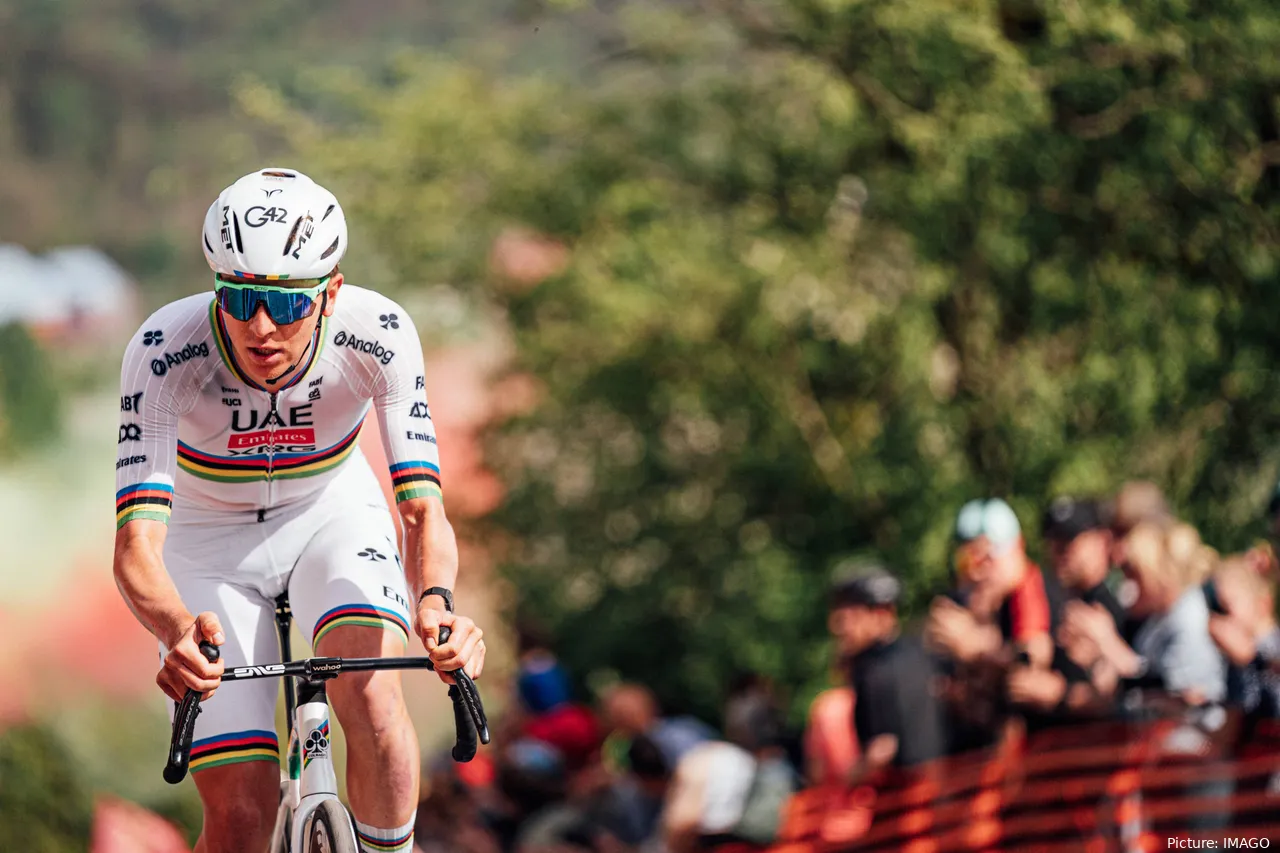
Tadej Pogacar climbing La Redoute en route to victory at the 2025 Liège-Bastogne-Liège
The outcome is typically shaped by attacks in the last 50
kilometres, leading to selective small-group finishes. Winning “La Doyenne”
aligns a rider with history, echoing multiple victories by greats like Eddy
Merckx, as well as Pogacar and Evenepoel in recent years.
Il Lombardia closes the Monument season in autumn. First
raced in 1905 and known as, “the Race of the Falling Leaves,” it takes place in
late September or early October. The course winds through the Lombardy region,
often around Lake Como, on a hilly route suited to climbers.
The Madonna del Ghisallo, which passes a chapel revered by
cyclists, is a signature ascent, and the mix of long climbs and technical
descents creates a demanding test, especially late in the season when fatigue
is high. Il Lombardia often produces dramatic solo victories, and for Italian
riders in particular it carries immense pride. As of 2025 it remains the only
Monument without a women’s equivalent.
Read also
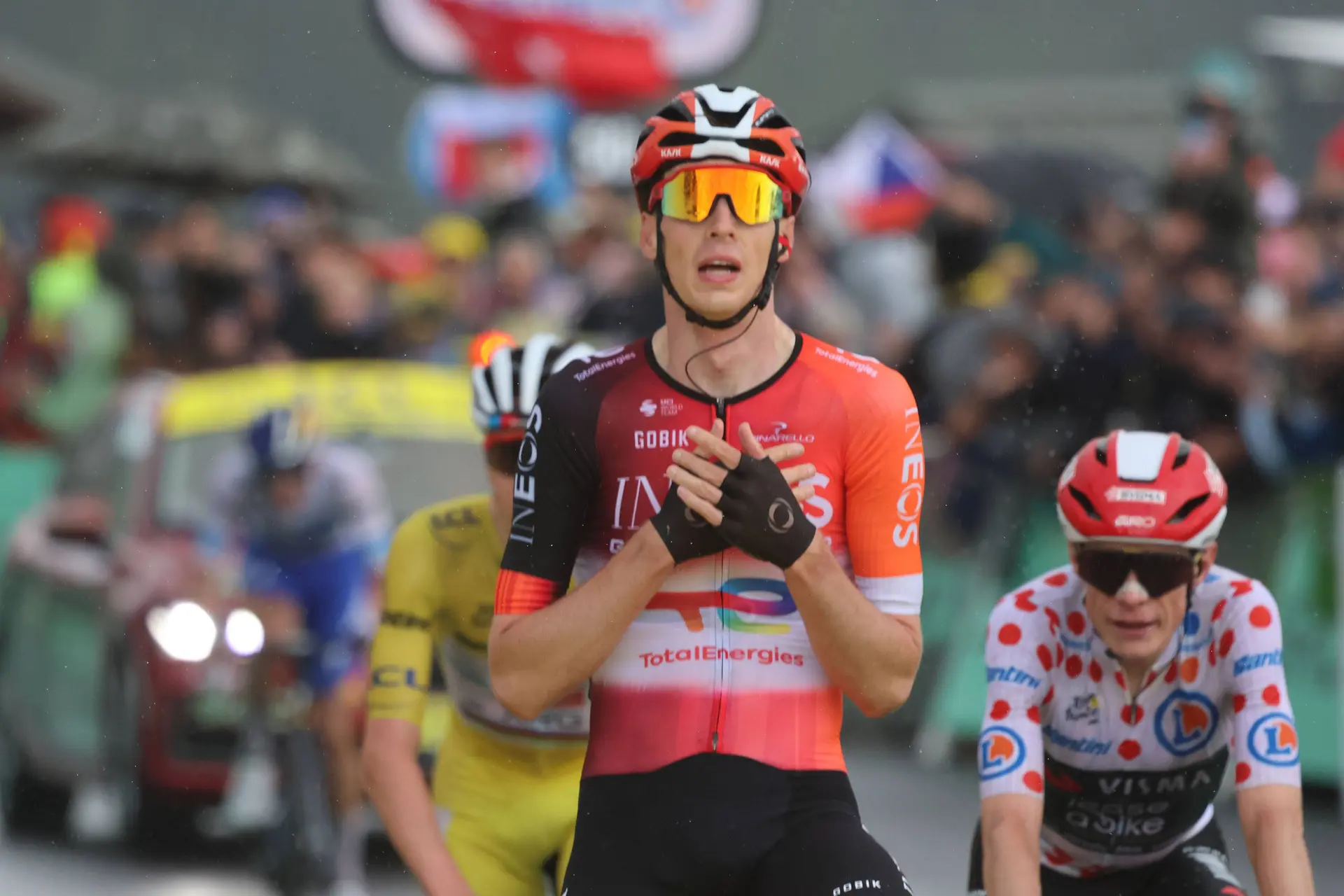
Strade Bianche, though not officially a Monument, has become
one of cycling’s most admired one-day races, and an unofficial sixth monument.
Created in 2007 in Tuscany and held in early March, it is defined by the strade
bianche, white gravel roads that make up around a third of the race.
The gravel sectors, rolling hills, and constant surface
changes make for unpredictable and selective racing. It starts and finishes in
Siena, with a spectacular finale up narrow cobbled streets into the Piazza del
Campo. The race has quickly gained prestige thanks to its beauty and
difficulty.
Multiple-time winners such as Fabian Cancellara and Tadej
Pogacar have praised it, and French rider Thibaut Pinot even called it “the
sixth Monument.” Many fans now argue there is no longer any debate that Strade
Bianche is cycling’s sixth Monument reflecting how cherished it has become.
5. The World Championships
The UCI Road World Championships complete the picture.
Unlike ´´commercial races, the Worlds are contested by national teams rather than
trade teams and award the second most prestigious jersey in cycling: the
rainbow jersey. These are often different with a varying amount of riders per team, no
Held annually, usually in late September or sometimes
August, the Championships rotate countries each year, creating varied courses.
Some editions favour climbers with hilly circuits, others sprinters on flatter
loops.

Tadej Pogacar successfully defended his world champion title in Rwanda in 2025. @Sirotti
The winner wears the white jersey with rainbow stripes for a
full year and retains rainbow trim for life, and the race normally lasts six to
seven hours over multiple laps, with tactics reshaped by national alliances.
From the three-week intensity of the Grand Tours to the
cobbles of Roubaix, the coastal drama of Milano-Sanremo, the hills of Liège,
the gravel of Tuscany, and the coveted rainbow jersey, these races form the
heart of professional cycling. They are the events that riders plan their
seasons around, the milestones that define careers, and the spectacles that fans
return to year after year. So yes, whilst the race for yellow in July is the
most famous part of cycling, there is so much more to this sport than the Tour
de France.
*Data on the 2023 'super' World Championships in Scotland. Source: UCI
| Live hours watched | 200 million |
| European TV viewers | 80 million |
| Top3 countries | France, Italy, UK |
| Live broadcast hours | 250 |
| Channels that broadcast the event | 93 |
| Countries that broadcast the event | 130 |
| Accredited media | 700 |
| Media outlets | 151 |
| Nations | 132 |
| Athletes | 8000 |
| Spectators | 1 million |
| Volunteers | 4000 |
Frequently Asked Questions:
What are the five 'Monuments' of cycling?
The five Monuments are Milano-Sanremo, the Tour of Flanders, Paris-Roubaix, Liège-Bastogne-Liège, and Il Lombardia. They are considered the oldest, hardest, and most prestigious one-day races in the sport.
Is Strade Bianche considered a Monument?
Officially, no. While often called the "sixth Monument" due to its prestige and difficulty, the UCI and traditional cycling history only recognize the five original races established before World War I.
Which is the biggest cycling race in the world?
The Tour de France is the largest and most prestigious cycling race, attracting the highest viewership and most elite competitive field of the season.
What is the 'Triple Crown' of cycling?
The Triple Crown is achieved by winning the Giro d’Italia, the Tour de France, and the World Championship Road Race in a single season—a feat famously accomplished by Tadej Pogačar in 2024.
How many Grand Tours are there?
There are three Grand Tours: the Giro d’Italia (May), the Tour de France (July), and the Vuelta a España (August/September). Each lasts 21 days.

Fin MajorCycling Journalist
Fin Major is a UK-based writer at CyclingUpToDate and has been part of the team since 2024. He is the site’s main writer for FAQs and evergreen explainers and has written around 2,000 pieces for the platform. Alongside this work, he focuses on in-depth analysis and covers the biggest races on the calendar, including the Tour de France, the Giro d’Italia, and La Vuelta a España, providing clear context around performance trends, tactics, and key storylines.
In his reporting, Fin uses reputable data sources such as ProCyclingStats for results, statistics, and historical context. He places strong emphasis on careful sourcing, editorial accuracy, and updating articles promptly when new, verified information becomes available. Outside of writing, Fin is an active cyclist, which supports his practical understanding of the sport and its demands.
claps 7visitors 4
Just in

Popular news
Latest comments
- I watched Il Lombardia today... :) What a loser Remco is!MajorPayne10-10-2026
- Couldn’t agree more, @RidesHills. CyclingUpToDate endeavours to ban him, but he continues to create new accounts. He was banned from CyclingNews. Whilst I used to argue against his negativity, I’ve simply lost interest. He is so utterly boring. I was initially worried he'd bully other fans, but nobody's having it. Most of us simply pay him no mind, anymore. At this point, everybody just scrolls right past him. He is quite a coward though, I’ll tell you that. His toxic comments on this site are nothing compared to what he is able to post on Twitter.anonymouscyclist10-10-2026
- C’mon, don’t follow in Horner’s footsteps. At least he had the courage to post HIS prediction ahead, I didn’t see many others disagreeing or claiming it was ridiculous.Mistermaumau10-10-2026
- @SLO: Your ridiculously rude language about riders makes it really hard to read your consistently condescending comments. "BS losers," how is it ok to talk about people like that? Also, you truly sound like you do not understand that this is a team sport, where del Toro rides for his leader and therefore doesn't follow his attacks. We can all agree that we are watching a once in a generation (really, a once in a century) rider in Pogačar, and that's great, but come on, you don't have to be a jerk when it comes to other riders. It's clear that I prefer to praise the positive in what I see, mostly because I am in awe of what these humans can do (including the ones who don't win), but your negativity about anyone but your idol is just so very very exhausting.RidesHills10-10-2026
- Huh??? You’ve obviously forgotten all the contrary you’ve been trying to sell us the last weeks. Shall I dig some out for you?Mistermaumau10-10-2026
- Doesn’t sound like it from his post-race interview. That old record you’re still playing is starting to jump a bit too often.Mistermaumau10-10-2026
- Sorry but who is this guy? If HE doesn’t know that « much » about Seixas by now, I’m recalibrating my opinion of his finish line questioning. As for PS, the most amazing thing about him so far is not what he’s won or almost won at this age, although that’s already phenomenal, it’s how consistent, numerous and long this seasons’ results have been. I don’t think there’s ever been a 19/20 year old quite as developed. Of course, you can’t expect development at this level to go backwards in time but it’s amazing to witness a rider you assume won’t be able to keep things up forever prove you wrong.Mistermaumau10-10-2026
- I agree, it was a good feeling to end the season this way... and only hope the knee injury held Del Toro back. Some how I have a feeling it wasn't just that... I wish my feelings are wrong.PogiSloFans10-10-2026
- Seixas is an amazing rider. Remco disappointed. Del Toro should rather have withdrawn if he had an injury linked to over-training. Anyway, a satisfying end to the season.Hills3310-10-2026
- History books won't care who had good legs or bad legs, or who did or didn't get laid last night; what the history books say is that Del Toro and Remco are two losers, while Seixas is a Monument winner at the age of 20. Let's not forget who was the only one that could follow Pogi in Strade Bianche. Paul Seixas, not Del Toro. Ad acta!!!PogiSloFans10-10-2026
Loading
Write a comment