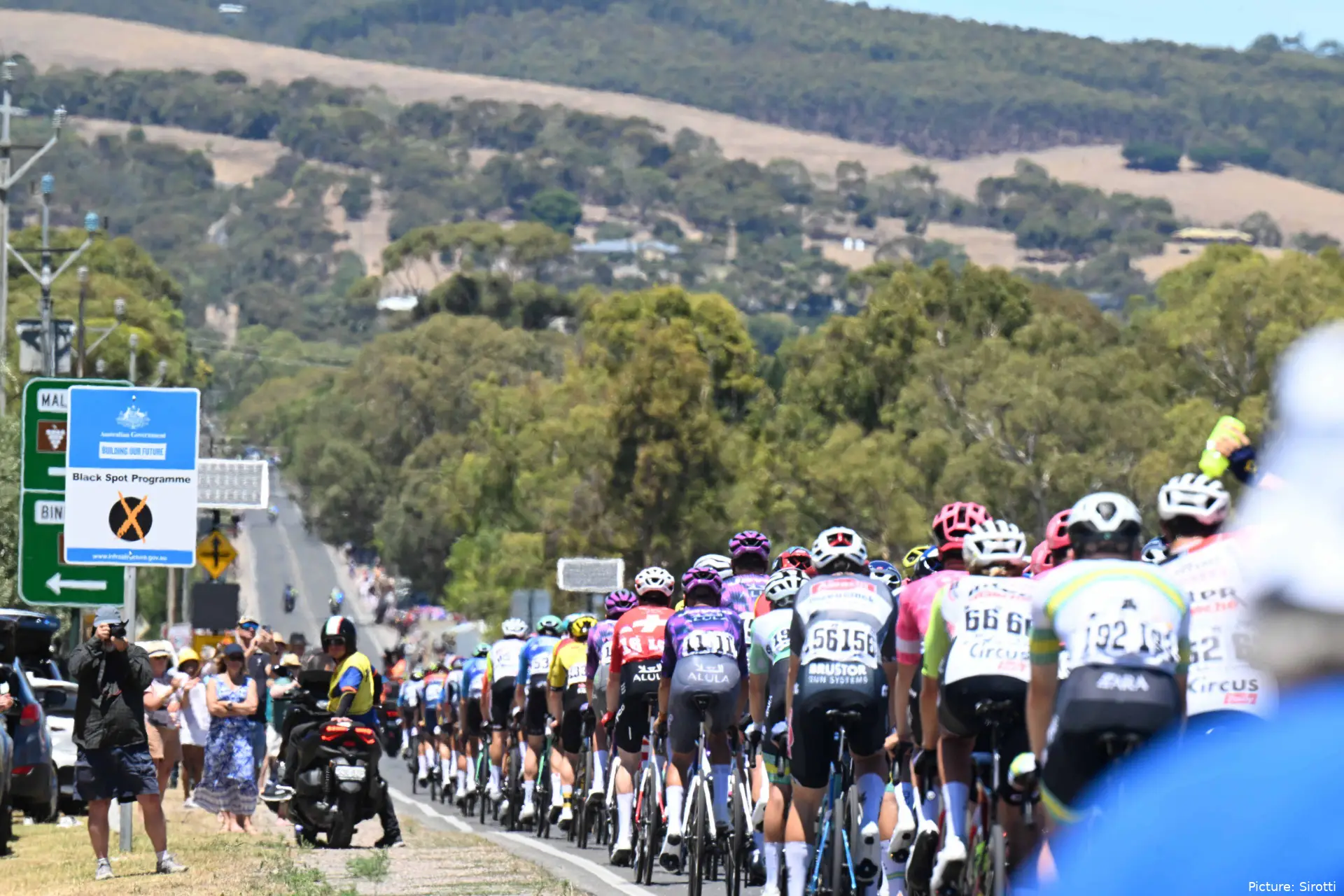
Jonas Vingegaard’s first Giro d’Italia start has changed the tone of the early-season cycling conversation. What looked like an intriguing May race now feels like the first major test of whether the Dane can reshape the Grand Tour year.
The 2026 Giro began in Bulgaria on May 8 and will finish in Rome on May 31, giving Vingegaard a three-week route to a Grand Tour he is taking on for the first time. The course is roughly 3500km (2150 miles) in distance and involves approximately 49,000 metres of climbing, with Vingegaard, Egan Bernal, Giulio Pellizzari and Sepp Kuss among the headline names. For a rider who has already won the Tour de France twice and the Vuelta a España once, this debut already has the air of unfinished business, despite being technically yet to start it.
Why The Giro Changes The Early Picture
Vingegaard’s Giro entry immediately frames this season’s narrative. If he wins in Rome, he would join the small group of riders to have won all three Grand Tours and set up a possible Giro-Tour double attempt.
That explains why the early expectations feel so strong. While Paul Magnier took the opener in Burgas, Vingegaard finished safely in the pack and avoided the late crash chaos. For general-classification riders, that was already a small success. A flat opening day can ruin a campaign before the mountains arrive.
There’s also a psychological layer. The Giro d’Italia 2026 startlist highlighted how the race still contains a varied field of GC riders, sprinters and stage hunters, even with some expected rivals missing. Vingegaard may be the favourite, but he still has to manage a race full of teams with different goals.
Form And Route Pressure
Vingegaard’s debut carries weight because his recent form fits the route. He won Paris-Nice and the Volta a Catalunya this spring, showing the climbing level and recovery rhythm needed for a hard Giro. The route offers five summit finishes, a long flat time trial and several awkward transition days where positioning can be as valuable as pure watts.
Stage 2 underlined that point before the race had even reached Italy. Vingegaard himself warned there would be ‘a big fight’ on the road to Veliko Tarnovo, where late climbs and technical roads promised a more complicated finale than the sprint stage to Burgas. That is where contenders can lose time through hesitation rather than weakness.
For Vingegaard, the ideal first week is controlled rather than spectacular. He doesn’t need to attack at every opportunity, because the harder mountain stages will offer clearer chances to create gaps. The question is whether he can keep the race calm enough for his timetable.
Betting Interest Follows The Bigger Narrative
Vingegaard’s presence also gives the Giro a clearer narrative for fans who follow odds and futures markets. Cycling betting may remain more niche than football or basketball, but Grand Tours are still easy for casual bettors to understand, with the main markets usually centered on overall winner, stage winners, jersey competitions and head-to-head matchups.
For Alberta-based fans comparing wider betting and gaming options, using a quality review site like SportsbookReview.com can add tonnes of useful context, enabling you to compare the best sportsbooks and online casinos in Alberta. The page ranks different operators by its review scores, their bonus information, plus payout notes and banking features, so readers can see how platforms differ. It pays to think about where cycling betting could sit within a broader online-gaming account and what else you’ll have at your disposal.
That kind of checking is reminiscent of the way cycling itself is analysed: it’s not merely a question of being the most talented or decorated rider; things like team depth, weather and potential illnesses all feed into how you handle three weeks of pressure.
Rivals Still Have Routes Into The Race
The temptation is to treat the 2026 Giro as Vingegaard versus misfortune. That would be too simple. Bernal’s pedigree, Pellizzari’s home attention, Yates’ climbing strength and Kuss’ support role all give the race different pressure points, especially if Visma tries to delay taking pink.
A separate Stage 2 preview showed why early expectations can change quickly. Technical finishes and cobbled sections, short uphill drags and sharp corners can make a stage look modest on paper while forcing the GC riders to burn energy.
The time trial could also shape tactics. A flat 42km test favours controlled power, but it can expose riders who arrive under-recovered after a hard opening block. If Vingegaard gains time there, rivals may need to attack earlier in the mountains. If the gaps remain small, the Giro’s final week becomes far less predictable.
Rome Is Already Framing July
Expectations are forming early, even before the race reaches its decisive climbs. Vingegaard has arrived with the route suitability and recent winning form to make him the clear reference point. The Giro, though, has a habit of turning a clear reference point into a moving target. If he controls that uncertainty, Rome could become the start of an even bigger summer.
Rúben SilvaEditor-in-Chief
A founding contributor to CyclingUpToDate since its launch in January 2022, Ruben Silva has played a central role in shaping the site’s editorial direction and long-term growth. Before joining the project, he built his experience through independent blogging at Echelons Hub and by producing race previews for Ciclismo Internacional, developing a strong analytical voice rooted in daily engagement with professional cycling.
Beyond editorial work, he has been closely involved in the expansion and coordination of CyclingUpToDate’s wider network, helping establish and support sister platforms across multiple languages. This includes ongoing collaboration with CiclismoAlDia (Spanish), CiclismoAtual (Portuguese), WielrennenUpToDate (Dutch), and RadsportAktuell (German), contributing to a shared editorial vision and consistent international coverage.
He also helps oversee editorial governance across the network, setting standards for accuracy and consistency and coordinating updates or corrections when needed.
Originally from the Porto metropolitan area in Portugal, he holds a bachelor’s degree in Geography. His path into cycling journalism was shaped not through formal media training, but through independent reporting, community engagement, and sustained on-the-ground involvement in the sport.
Over the course of his career, he has conducted approximately 100 interviews across road cycling and cyclocross, ranging from one-to-one conversations and online formats to press conferences and on-site pre- and post-race coverage. His interviews include leading riders, team managers, and prominent figures within cycling media: Tadej Pogacar, Jonas Vingegaard, Mathieu van der Poel, Primoz Roglic, Wout van Aert, Joao Almeida and Tom Pidcock; managers like Patrick Lefevere and Joxean Matxin; and YouTube personality Bryan Kennedy (BKXC)...
Within 18 months of launch, he helped grow CyclingUpToDate’s English-language platform into one of the most-read cycling news websites, built entirely from the ground up. As both a professional journalist and lifelong cycling enthusiast, his focus remains on delivering accurate, timely, and well-contextualized coverage.
claps 0visitors 0
Just in

Popular news
Latest comments
- Derp! Yes, many sportsmen across the world dope if they get the chance and think they will never get caught... BUT !!!... The biggest doping scandal in the history of sports comes from THE UNITED STATES OF AMERICA!!! AD ACTA!!!PogiSloFans19-11-2026
- seriously? ruben silva citing what he said himself in his own podcast on his own cycling 'journalism' website?Ketterechts19-11-2026
- I guess the best cyclist in the world, Tadej Pogačar-Pogi will not be attending the audience with the Pope. There are more reasons for that: 1) We the Slovenians are mostly catholic, but we're the least religious slavic people in Europe. Atheism is becoming bigger every year. 2) Child sexual abuse (pedophilia) by Catholic priests and other members of religious orders has been documented across many countries (also in Slovenia), alongside systemic failures by Church authorities to report or address the misconduct. Public inquiries, investigative journalism, and legal proceedings have brought widespread attention to both the abuse and institutional cover-ups. Shame on them. 3) Why go to an event where the main protagonists believe in an imaginary man in the sky. Well, actually they don't believe, they're just lying to us because it's nice to have power over the people. The biggest lie in the history of mankind is that there is a god. Please, stop insulting our intelligence.PogiSloFans19-11-2026
- Derp! So, this is a perfect example of the Association fallacy. Thing is, no prominent American cyclist has been implicated in a doping scandal in this last generation. And Lemond's generation was before the generation you mention ...which was pretty much all doping. If you wanted to make a more valid association, it would be with the generation, not with the nationality.acem8219-11-2026
- Don’t worry. After 75, you’ll start getting faster again every year. ;-)averagecyclist19-11-2026
- Oh, we have a lot of proof... most American cyclists are dopers: Lance Armstrong...Tyler Hamilton...Floyd Landis...George Hincapie...Levi Tom Danielson... David Zabriskie... PS: You want more? I still have many of them up my sleave... Capish?PogiSloFans19-11-2026
- Hey frieders13, your comments are stupid!PogiSloFans19-11-2026
- You're right, i know him since he was a junior....holgersson-nils19-11-2026
- your commemts make this site boring!frieders319-11-2026
- LA Doper was doped to the gills so of course he could recover like he did. Bruyneel fed that guy !frieders319-11-2026
Loading