“There will be a big fight” - Jonas Vingegaard expects Giro d’Italia battle to ignite on Stage 2
Cycling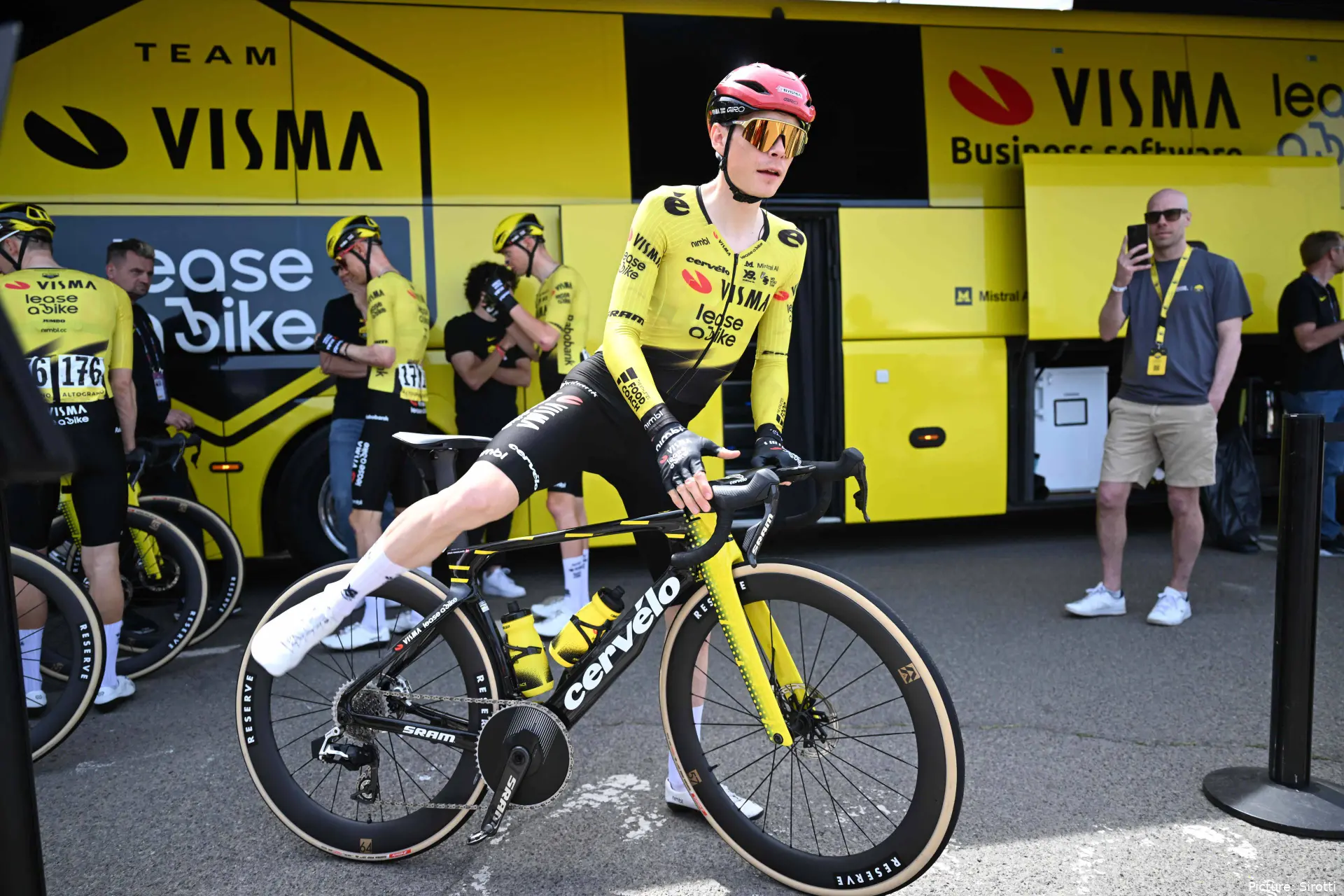
After safely navigating the chaotic opening stage of the 2026 Giro d’Italia, Jonas Vingegaard expects a much more nervous and unpredictable day to await on Stage 2 as the race heads inland toward Veliko Tarnovo.
The Team Visma | Lease a Bike leader spent most of Friday’s opening stage staying deep inside the peloton while the sprint teams fought for control ahead of the crash-marred finale in Burgas, where Paul Magnier ultimately sprinted to victory and the first Maglia Rosa of this year’s race.
Speaking ahead of Stage 2 in conversation with Cycling Pro Net, Vingegaard described the opener as one of the calmest racing days he has experienced despite the dramatic crash in the finale. “Yeah, it was in general quite a quiet stage,” Vingegaard explained. “Easy, nothing special to write home about. It was one of the most easy, most calm stages I’ve ever tried, and it was big roads.”
The Dane also confirmed Visma’s decision to stay away from the sprint chaos had been entirely deliberate. “So we also decided just to sit in the back, and there was no risk with that,” Vingegaard said.

“You need to be up there”
That approach is unlikely to be possible on Saturday. While Stage 2 is not expected to trigger a full GC showdown, the 221-kilometre route to Veliko Tarnovo features a much more complicated finale than the straightforward sprint stage which opened the Giro.
Several late climbs, repeated uphill sections and technical roads inside the closing kilometres are expected to create a far more aggressive fight for positioning, with puncheurs, attackers and GC riders all likely to battle for control approaching the finish.
“Well, for sure you have to be up there in the front,” Vingegaard said. “You have to be ready for it because there will be a big fight. It’s definitely a hard climb in the end. So yeah, you need to be up there and be ready for it.”
The finale also includes cobbled sections and short uphill drags which could create splits if the pace becomes aggressive enough late in the stage.

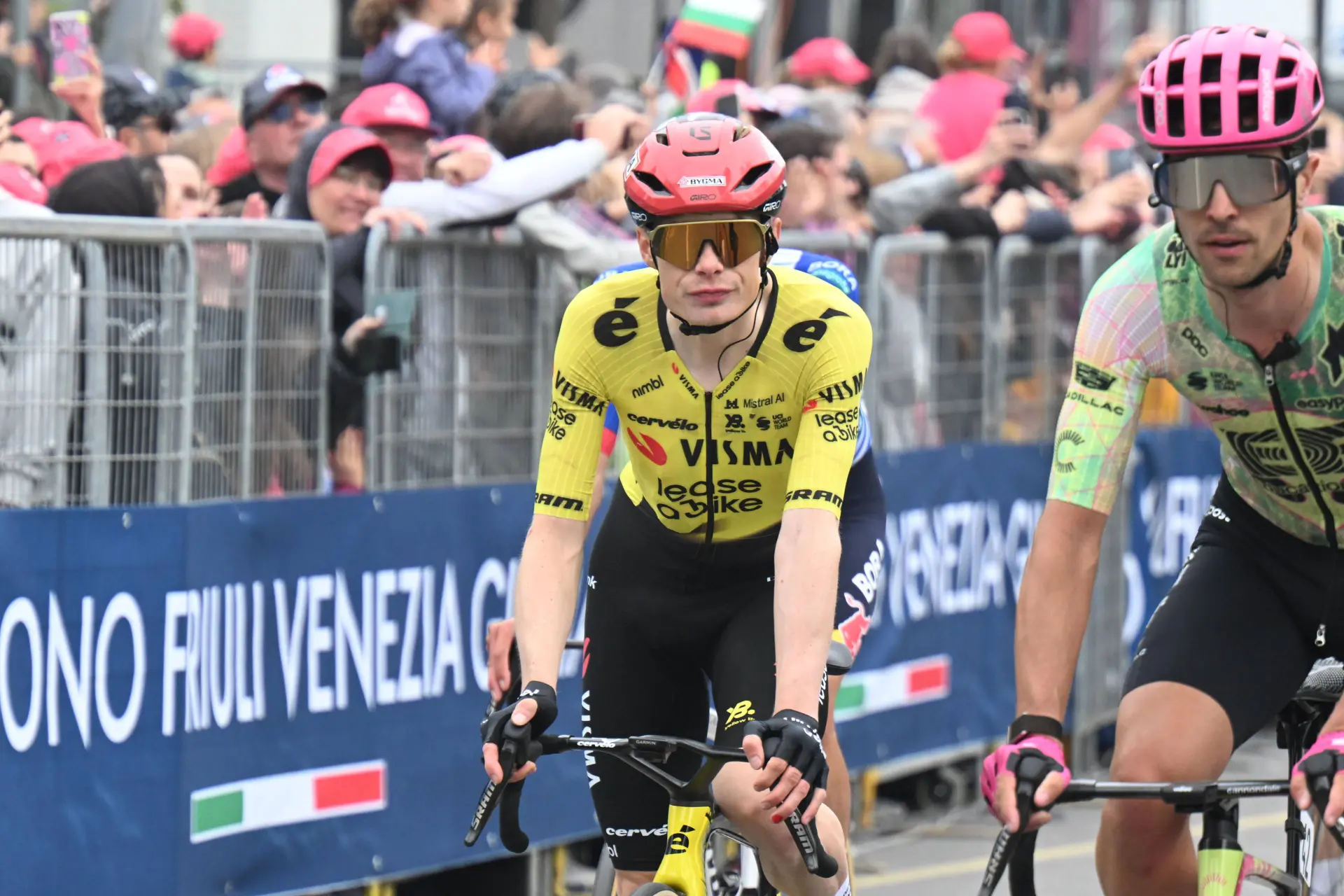
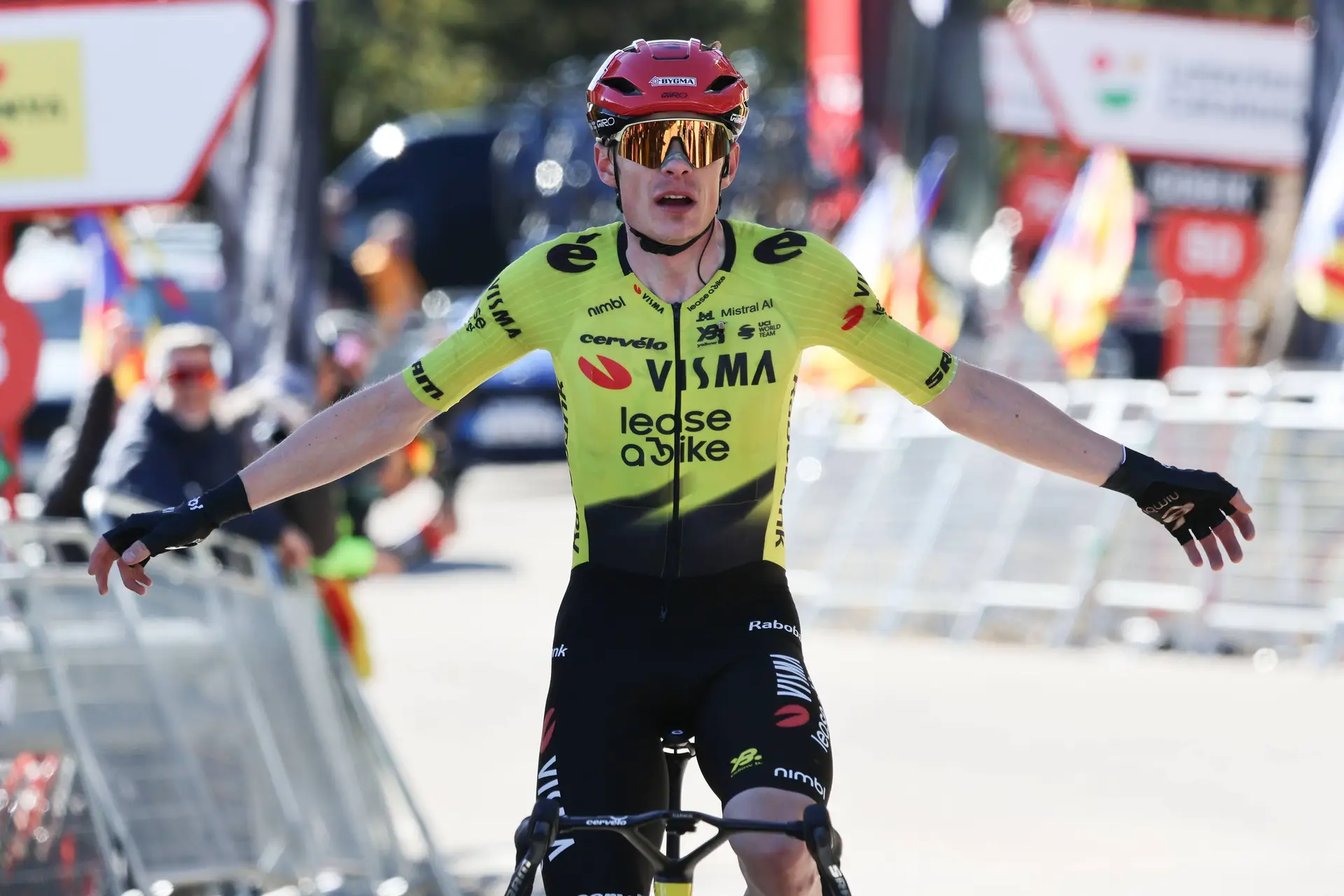
Jonas Vingegaard crosses the line on stage 1 of the 2026 Giro d'Italia
Vingegaard expects unpredictable finale
Although pure climbers are unlikely to launch major attacks this early in the Giro, Vingegaard suggested the unpredictable nature of the finale leaves the stage wide open tactically.
“I think it can be everything basically,” he explained. “It can be a breakaway going. It can be a reduced bunch sprint or somebody trying to go on the second last climb. But yeah, I guess only time will tell.”
After the chaos of Stage 1, Saturday’s second stage now appears set to offer the first genuinely unpredictable finale of the 2026 Giro d’Italia, with the GC teams likely to become far more visible near the front of the peloton than they were in Burgas.

Kieran WoodDeputy Editor-in-Chief
Kieran Wood is a sports journalist based in Wales and has been active in journalism since 2022. He regularly contributes to DartsNews.com and CyclingUpToDate.com, where he covers professional cycling and darts. In cycling, his work includes liveblogs from major races, including the Tour de France, the Giro d’Italia, and La Vuelta a España, alongside race reports and analysis. He has also conducted interviews with professional riders.
His reporting spans the full racing calendar, from one-day classics to stage races, with a focus on accurate, real-time coverage and clear contextual analysis. For statistics, results, and historical context, he regularly uses resources such as ProCyclingStats. To support reporting on rider activity and training context where relevant, he also references Strava.
In his work, Kieran places strong emphasis on careful sourcing, editorial accuracy, and updating articles as new, verified information becomes available.
claps 0visitors 0
Just in

Popular news
Latest comments
- I hope visma does find some sponsors cause right now visma is a shitshow and a sinking ship. Very worriying seeing they cant compete with other teams for the best guys and even riders, coaches and staff leave mid contract, doesnt seem good for visma now.. No way to keep up with lidl and rbh for them and no point thinking about UAE even who obv is nr 1..miguel20-10-2026
- What news he is training again and???? It is his jobpaultryan200220-10-2026
- Can’t wait! Go Pogi! ❤️Lozza20-10-2026
- Strada BianchiLozza20-10-2026
- What races would you like to see Pog ride next year?Hills3320-10-2026
- What great news for the team and how great for Sivakov to ride for a French phenom. He showed his loyalties to the Slovenian phenom (see worlds '24), and I'm sure his colleagues at UAE are congratulating him on a great move. Sivakov is a great rider, and moves like these are going to even out the playing field and make for more tactical races in the future, I hope. Yes yes, riders launch earlier than in the past, but it's a team sport, and the teams really do matter a lot.RidesHills20-10-2026
- Mind’s gone blank, SB?Jumpyjohn20-10-2026
- I do not understand where you find all this energy to comment everythings where we talk about Pogi, you have to do a collection You should learn about this last sentence of your comment tbhLaYaute20-10-2026
- Don’t agree with your redemption conclusion. It can just as well be disappointment from his side. We are systematically biased by the traditional use of the word, a recap of the use of redeem will remind you of the versatility redemption offers.Jumpyjohn20-10-2026
- Good news. I guess that means Seixas stays put after all? Must have missed an episode. Will be very curious to see how PS2’s performance evolves.Jumpyjohn20-10-2026
Loading
Write a comment