Tour de Suisse 2026 GC & stage 5 preview, stages, favourites & predictions - Tadej Pogacar the man to beat on queen stage
Cycling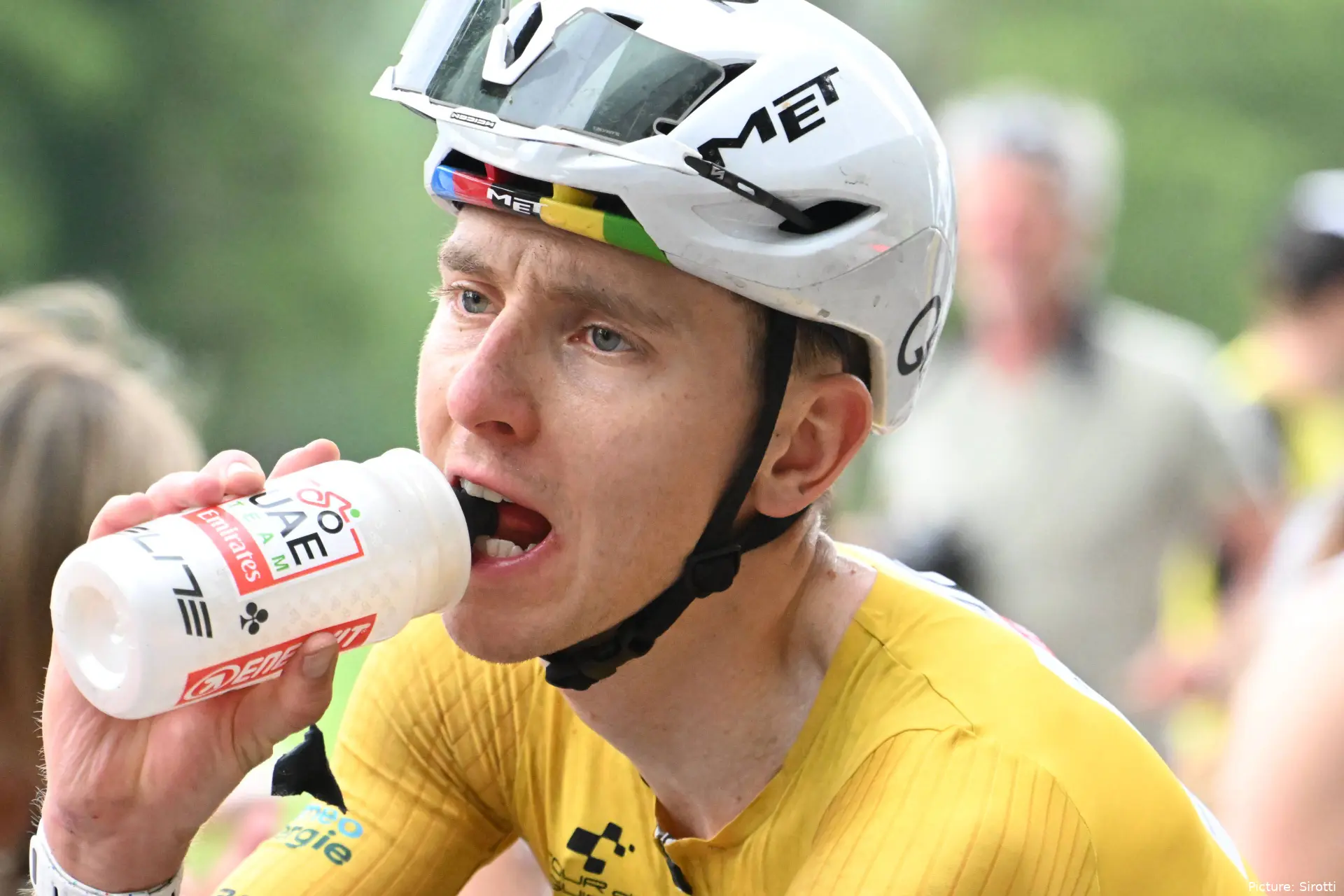
The 2026 Tour de Suisse will take place from the 17th to the 21st of June this year, a special edition in which the race has been thinned down from eight to five race days. Tadej Pogacar headlines the final pre-Tour de France World Tour event, which every year brings a luxurious startlist. We preview the race and look at its stages.
The race was created back in 1933 and was first won by Max Bulla. The race has had winners such as Gino Bartali, Eddy Merckx, Roger de Vlaeminck, Sean Kelly and Lance Armstrong throughout it's almost century-long history.
More recently, the likes of Fabian Cancellara, Rui Costa, Egan Bernal, Richard Carapaz, Geraint Thomas, Mattias Skjelmose, and Adam Yates have become winners. In 2025, it was João Almeida who took the overall win after a set of dominant performances on the mountain stages.
Stages 2026 Tour de Suisse - Start and finish time CET
| Stage | Day | Date | Start Time | Finish time |
| Stage 1 | 17 June | Wednesday | 14:20 | 17:45 |
| Stage 2 | 18 June | Thursday | 14:10 | 17:45 |
| Stage 3 | 19 June | Friday | 13:50 | 17:45 |
| Stage 4 | 20 June | Saturday | 15:05 | 17:30 |
| Stage 5 | 21 June | Sunday | 13:34 | 17:30 |
Read also
Preview Tour de Suisse 2026 Stage 5
The Tour de France will conclude this Sunday, June 21th, on high mountain terrain. The final day of competition is shaping up to be the queen stage of the race, with over 4,000 meters of accumulated elevation gain and a relentless course. The ascent of the Col de la Croix begins even before kilometer zero, marking an extremely demanding start, followed by a long descent towards Aigle.
A constant series of climbs and descents with little respite.
In the men's category, the circuit is completed in three laps, multiplying the effort required of a group of favorites led by Tadej Pogacar.
Primoz Roglic, with Lenny Martinez, Richard Carapaz, and Romain Grégoire as the main threats, along with Antonio Tiberi, Mikel Landa, Aleksandr Vlasov, and Matthew Riccitello. A decisive day that will define the general classification of the Tour of Switzerland 2026.
Prediction Tour de Suisse 2026 stage 5:
*** Tadej Pogacar
** Primoz Roglic, Lenny Martinez, Richard Carapaz
* Antonio Tiberi, Romain Grégoire, Mikel Landa, Aleksandr Vlasov, Matthew Riccitello
Pick : Tadej Pogacar
Profile stage 5: Villars-sur-Ollon - Villars-sur-Ollon

Stage 5: Villars-sur-Ollon - Villars-sur-Ollon, 151.9 kilometers
The queen stage of the race is the only mountainous stage of the year. There will be several important stages for the overall classification, but in another unusual move, the only mountain stage is a circuit.
The riders begin the stage in Villars-sur-Ollon, where they will also finish a few hours later. Right away, they climb the Col de la Croix for the first time, 3.9 kilometers at 8.8%, where the breakaway is expected to go.
Then the riders ascend the entire Col de la Croix on two separate occasions. The climb is a total of 19 kilometers at 7%, it is a grizzly mountain challenge, especially when tackled twice... The climbs end with 93.5 and 42.5 kilometers to go, respectively.
It wouldn't come as a surprise to see the main attacks on the day come in the second climb - if this is Tadej Pogacar's doing, as Tour de France training. That is because the riders then descend 1300 meters in altitude before reaching the final climb.
Which is once again the Col de la Croix, but this time around, only climbed until Villars-sur-Ollon, so this will be 9.6 kilometers long at 8%, the most difficult part of the climb. There will be 4500 meters of climbing in 151 kilometers.
Previous previews
Preview Tour de Suisse 2026 overall classification
At the end of the day, this is Tadej Pogacar's race to lose, no-one will put that into question. The World Champion is in Switzerland this year to prepare his Tour, a decision that makes sense as the route is easier and the competition is also more modest. A few explosive stages, an individual time trial and a proper mountain stage make for a diverse race where he can test his form. In Romandie, his W/Kg was not impressive, but he will have lost that classics weight since, meaning he should be quite stronger I would say.
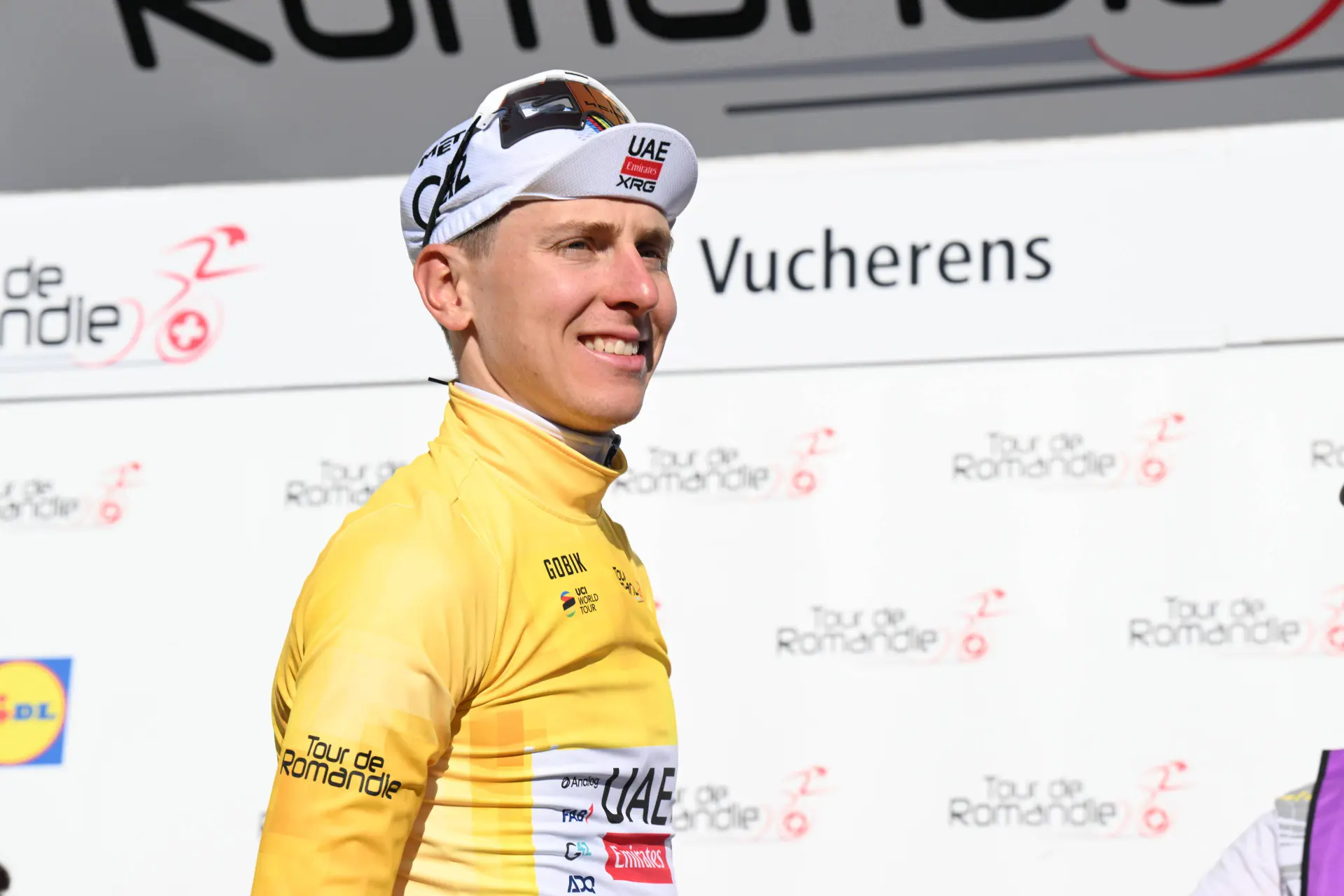
Pogacar does not have much to prove, but an overall title would add another prestigious achievement to his palmarès, which he does want. He is the absolute man to beat, and should already go into the queen stage in yellow.
His competition revolves around two teams mainly. One is BORA, led by Primoz Roglic who also has in Suisse the one main World Tour stage-race still lacking from his palmarès. Unfortunately, he faces a challenger he may not be able to beat. But for second place, the opening days and the time trial are pretty ideal for him - whilst in the high mountains he might be able to defend himself against the main rivals. He is also backed by an in-form Aleksandr Vlasov.
The other is Bahrain - Victorious, home to Lenny Martínez who has been on a dashing season and is climbing at an incredible level, Antonio Tiberi who is a more consistent rider but in the time trial can make way towards a potential podium; both backed up by the Giro's revelation Afonso Eulálio.
Aside from them the GC battle should also include Ilan van Wilder who topped Pogacar at last year's time trial worlds, and Movistar duo Enric Mas and Nairo Quintana who also has the chance to roll back the years in a race that will suit him.
Van der Poel in the hills
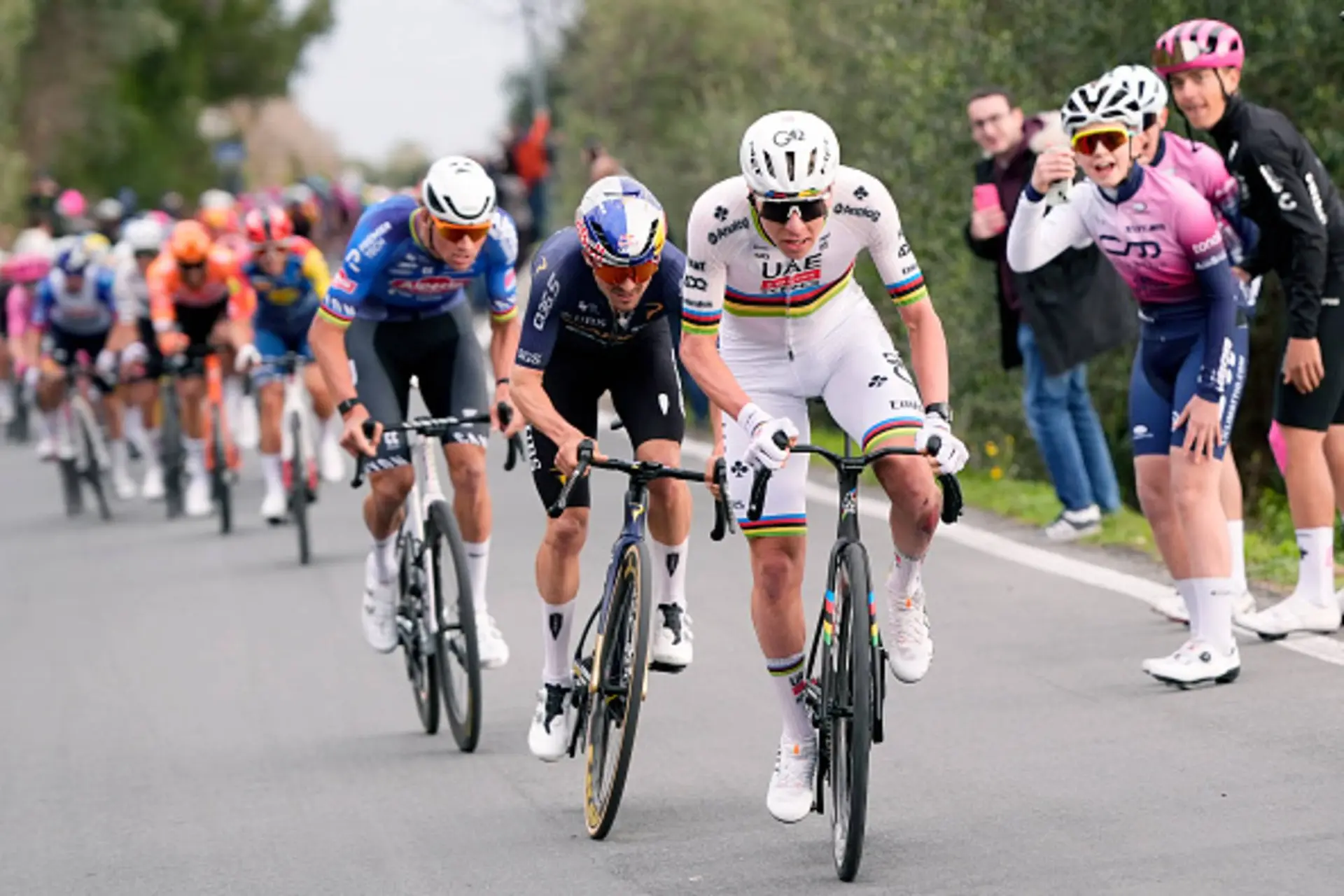
If it weren't for Pogacar, this would actually be a race headlined by the classics riders. The stage design, resembling the Ardennes classics on several separate days, makes this the favoured approach for the puncheurs and classics specialists towards the Tour. Looking at the startlist this becomes very evident, as Mathieu van der Poel is a clear example of a rider who favoured Switzerland to build towards his Tour. He can challenge Pogacar on a few stages, which will be very interesting to watch.
Tom Pidcock, who has had a stellar spring and was also to be a contender to challenge Pogacar and the Dutchman - but illness has forced the British rider to skip the race. Puncheurs such as Romain Grégoire, Thibau Nys, Mauro Schmid and Axel Laurance are some of the most explosive in the entire peloton and actually provide the World Champion with a very difficult challenge on the opening days of the race.
Despite not featuring a route that favours the sprinters, there is one opportunity - perhaps two, depending on how it's raced. But of course, these are for the fast men who can climb... But they are present. Matthew Brennan, Tobias Lund Andresen, Kaden Groves, Magnus Cort Nierlsen, Corbin Strong, Michael Matthews, Arnaud de Lie and Alberto Dainese make for a sprinter field that is much superior to what we've seen in Auvergne.
The likes of Alec Segaert and Rémi Cavagna should also make it interesting in the race's time trial, lacking the world-class names that would ordinarily be superior to Tadej Pogacar on the individual effort.
Prediction Tour de Suisse 2026 overall classification:
*** Tadej Pogacar
** Lenny Martínez, Antonio Tiberi, Primoz Roglic
* Aleksandr Vlasov, Ilan van Wilder, Richard Carapaz, Enric Mas, Brandon McNulty
Pick: Tadej Pogacar
Preview Tour de Suisse 2026 stage 1
Tadej Pogacar - The UAE man is the one to beat, because the climb's average is of 11%... He can make the difference to everyone here, including van der Poel because weight will have a meaningful influence. He should be near his best form, however there are occasions where he is not as sharp on his first race day back so he might not have the decisive legs. But when you look at his support, he will enter the climb well positioned and has Jhonatan Narváez, Brandon McNulty and Tim Wellens all capable of launching him on the climb.
Mathieu van der Poel - The Alpecin rider was in peak form at this time last year, so he might actually be showing up very well and sharp to the race. But even if he is at his best, following Pogacar on a climb like this is going to be a hellish mission.
This is an important day for the overall classification - not crucial, but important. Pogacar is on a league of his own, but the remainder of the GC contenders can have gaps between each other. Lenny Martínez could do damage here, even fight for the win if Pogacar is not on a super day - it's a stage very similar to the one he won at Paris-Nice. Primoz Roglic and Richard Carapaz will also be well adapted, but I would say most of the riders will be on a similar level.
If there was no Pogacar here, you could realistically think we'd be looking at an Ardennes classic. It is a world-class puncheur field here. But Pogacar might be unbeatable due to the men he's got to lead him out. Behind him and van der Poel, there are so many top puncheurs.
You've got the very experienced classics specialists such as Julian Alaphilippe; those who can defend themselves and sprint very well such as Mathew Brennan, Magnus Cort Nielsen and Corbin Strong; the young Frenchmen such as Romain Grégoire, Axel Laurance, Paul Lapeira and Jordan Labrosse...
Thibau Nys is likely still lacking form but if he weren't, he'd be perfect for such a finale. Then you've got Finn Fisher-Black off an Auvergne where his form was on point; and also Mauro Schmid who has been one of the rider who scored the most UCI points this year through this exact kind of race - and will be racing in the home country's national champion colours. Mathias Vacek, Andrea Bagioli, Sergio Higuita and Clément Champoussin are other men to keep in mind.
Prediction Tour de Suisse 2026 stage 1:
*** Tadej Pogacar
** Mathieu van der Poel, Lenny Martínez, Romain Grégoire
* Paul Lapeira, Jordan Labrosse, Finn Fisher-Black, Julian Alaphilippe, Mauro Schmid, Primoz Roglic, Richard Carapaz
Pick: Tadej Pogacar
How: Solo win
Profile stage 1: Sondrio - Sondrio

Stage 1: Sondrio - Sondrio, 142.9 kilometers
The race begins in the city of Sondrio, with the opening stage taking place fully outside of Swiss territory. The race, in fact, begins in Italy, and the riders will have a hilly day where the puncheurs and climbers will set their first differences.
The first 55 kilometers of the stage are flat, but then, in the middle of the Alps, the organizers have designed a route for the puncheurs, with plenty of short but sharp climbs to be tackled. The first of which is right away 2.8 kilometers at 10%.
The riders go through some climbs, but it will be a slow build-up towards the finish. With 16 kilometers to go, the riders tackle a climb that is 1.4 kilometers at 9%, followed by a very fast descent into an intermediate sprint.
With almost no break, then comes the final climb to Bordighi, which is 1.1 kilometers at 11.5%. This climb will decide the stage, ending with a mere 5 kilometers to go. Most of the way to the finish is through a very fast and also slightly technical descent, before the final 1.5 kilometers flatten out as the riders enter the finishing city.
Preview Tour de Suisse 2026 stage 2
Two stages for the puncheurs but it does not seem like it will happen. Tadej Pogacar took the first day by storm, taking a long-range solo win, and questions on his form aren't viable anymore. This finale perhaps does not have a climb as hard, but in the first a hard pace will see most puncheurs burned out, whilst he would have no difficulty dropping his other rivals in the second in such case. It's hard not to see him win solo again, if that is what he wants.
Ultimately, I expect to see the same names I expected to see today who didn't get the chance. It does seem like the climbers will be favoured here and Richard Carapaz was the only one who truly performed. Someone like Lenny Martínez will have a new opportunity, but will need to respond appropriately this time around.
The puncheurs just have to hope for an easy first climb to then have a chance at keeping up with Pogacar. Mathieu van der Poel's chances are not overly bright, because the first effort might be too long and today he simply did not have the climbing legs that he needed. In case of a conservative race others such as Mathias Vacek, Mauro Schmid, Andrea Bagioli or Romain Grégoire have good chances of staying up there in front. Other GC men and classics specialists should be mixed up around there.
Prediction Tour de Suisse 2026 stage 2:
*** Tadej Pogacar
** Richard Carapaz, Lenny Martínez, Romain Grégoire
* Mathieu van der Poel, Michael Matthews, Corbin Strong, Mathias Vacek, Mauro Schmid, Andrea Bagioli, Paul Double, Brandon McNulty, Jhonatan Narváez
Pick: Tadej Pogacar
How: Attack on the final climb.
Profile stage 2: Locarno - Locarno

Stage 2: Locarno - Locarno, 157.7 kilometers
Stage 2 takes place in the Italian-speaking part of Switzerland; this time around, actually in Switzerland itself. But that doesn't make things any easier, as it is another day designed for the puncheurs - or because of Tadej Pogacar's presence, there isn't much distinction between who fights for the win.
The stage has a difficult climb close to its start, averaging 6.3% for over 5 kilometers, in which the breakaway should go up the road. Most of the day is then flat and should be calm, before a final set of climbs that is not overly difficult from the previous day.
The first ascent is to Fanghi, with 3.5 kilometers at 7%, ending with 14 kilometers to go. The decisive attacks may indeed come here, as it's the longest of the two climbs, and the descent off of it is very short but very steep and technical.
The riders are dropped off at the literal base of the final ascent to Orselina, which is 1.4 kilometers long at 8.5%. It ends with 9 kilometers to go, with another short but very technical descent taking the riders down to the center of Locarno, where the stage will finish.
Preview Tour de Suisse 2026 Stage 3
Stage 3 of the Tour de Suisse looks tailor-made for the sprinters. However, before they can think about a bunch sprint, they will first have to survive a demanding opening section packed with climbs that dominate the first two-thirds of the stage. From there, the route eases considerably, with around 55 kilometres of largely flat roads leading into the finish.
With that in mind, Matthew Brennan and Kaden Groves emerge as the standout favourites for the stage victory. If both riders make it over the climbs and arrive in the front group, it would be no surprise to see one of them take the win.
Movistar Team could also have a card to play in the form of Orluis Aular. The Venezuelan has repeatedly shown his ability to survive tough terrain and remain competitive in reduced bunch sprints. It would make sense for the Spanish squad to raise the pace in the hilly section in an attempt to distance some of the faster pure sprinters before the finale.
Other riders to watch include Michael Matthews, Alberto Dainese, Luke Lamperti, Marijn van den Berg, Finn Fisher-Black, Casper van Uden, Magnus Cort Nielsen, Jhonatan Narváez and Andrea Bagioli, all of whom possess the qualities to contend for victory should the race prove selective enough.
Prediction Tour de Suisse 2026 stage 3:
*** Matthew Brennan, Kaden Groves
** Orluis Aular, Michael Matthews,
* Alberto Dainese, Luke Lamperti, Marijn van den Berg, Finn Fisher-Black, Casper van Uden, Magnus Cort Nielsen, Jhonatan Narváez, Andrea Bagioli
Pick: Matthew Brennan
How: Regular bunch sprint.
Profile stage 3: Bad Ragaz - Bad Ragaz

Stage 3: Bad Ragaz - Bad Ragaz, 157.6 kilometers
Stage 3 is perhaps the easiest of the race and the only one where a sprint is somewhat possible. However, in no way is it a flat stage. It features a very unusual profile, in fact, starting with a 2-kilometer climb at 10% literally from kilometer 0.
This means a strong breakaway will go up the road. Even if it does not happen there, it will happen on the first of the first-category climbs, which is almost 9 kilometers long at 7%. A second tough climb that has 8% for over 4 kilometers ends with 95 kilometers to go.
For the sprinters that are in the race, the stage then becomes more favourable. There is a plateau section still before the riders come down again to the altitude of Bad Ragaz. The final 58 kilometers are flat, which allows for an organized chase to still take place.
The finale is not technical in any way; it is slightly uphill, and it is realistic to believe a bunch sprint could possibly happen here.
Preview Tour de Suisse 2026 Stage 4
The stage win will be fought between the UAE men and Mathias Vacek most likely. Tadej Pogacar is the strongest on the bike, but this TT is pan-flat, and raw watts will matter quite a lot. When it comes to this the Slovenian should gain time on his competition, perhaps even win the stage as the race lacks the top specialists; but he certainly does not have an easy task at hand.
Mathias Vacek flew on the first stages and I definitely think the Czech rider has a shot at beating the UAE riders here. By UAE riders I mean Pogacar but perhaps just as possibly Brandon McNulty, who is more of a specialist in this effort. But Vacek is a heavyweight, and he is a someone who usually rides very well against the clock with a strong position.
I think the fight for the win will be there whilst riders such as Alec Segaert, Ilan van Wilder, Primoz Roglic and Felix Grossschartner will be amongst those that will be the closest.
When it comes to the GC fight I think Vacek will definitely come very close to Richard Carapaz, perhaps even overtake him and Andrea Bagioli to ascend into second place.
McNulty, van Wilder, Roglic and Tobias Foss will benefit from this long flat effort whilst a few classics riders who don't spend much time on this bike will end up losing out.
Prediction Tour de Suisse 2026 stage 4:
*** Mathias Vacek, Tadej Pogacar
** Brandon McNulty, Alec Segaert
* Primoz Roglic, Ilan van Wilder, Felix Grossschartner, Tobias Foss, Antonio Tiberi
Pick: Mathias Vacek
Profile Stage 4 (ITT): Aarburg - Aarburg

Stage 4 (ITT): Aarburg - Aarburg, 23.6 kilometers
The race's individual time trial takes place in Aarburg, with a route that is 23.6 kilometers in length and is virtually pan-flat. Unlike most time trials nowadays, there is no climbing to be tackled amidst the effort, whilst the route is also not technical, allowing the specialists to use their abilities to their best.
Rúben SilvaEditor-in-Chief
A founding contributor to CyclingUpToDate since its launch in January 2022, Ruben Silva has played a central role in shaping the site’s editorial direction and long-term growth. Before joining the project, he built his experience through independent blogging at Echelons Hub and by producing race previews for Ciclismo Internacional, developing a strong analytical voice rooted in daily engagement with professional cycling.
Beyond editorial work, he has been closely involved in the expansion and coordination of CyclingUpToDate’s wider network, helping establish and support sister platforms across multiple languages. This includes ongoing collaboration with CiclismoAlDia (Spanish), CiclismoAtual (Portuguese), WielrennenUpToDate (Dutch), and RadsportAktuell (German), contributing to a shared editorial vision and consistent international coverage.
He also helps oversee editorial governance across the network, setting standards for accuracy and consistency and coordinating updates or corrections when needed.
Originally from the Porto metropolitan area in Portugal, he holds a bachelor’s degree in Geography. His path into cycling journalism was shaped not through formal media training, but through independent reporting, community engagement, and sustained on-the-ground involvement in the sport.
Over the course of his career, he has conducted approximately 100 interviews across road cycling and cyclocross, ranging from one-to-one conversations and online formats to press conferences and on-site pre- and post-race coverage. His interviews include leading riders, team managers, and prominent figures within cycling media: Tadej Pogacar, Jonas Vingegaard, Mathieu van der Poel, Primoz Roglic, Wout van Aert, Joao Almeida and Tom Pidcock; managers like Patrick Lefevere and Joxean Matxin; and YouTube personality Bryan Kennedy (BKXC)...
Within 18 months of launch, he helped grow CyclingUpToDate’s English-language platform into one of the most-read cycling news websites, built entirely from the ground up. As both a professional journalist and lifelong cycling enthusiast, his focus remains on delivering accurate, timely, and well-contextualized coverage.
claps 23visitors 8
Just in

Popular news
Latest comments
- Some speculation and opinion. Had Tadej not crashed out of the Vuelta he would have been less fresh and I'm not sure he would have beaten Seixas in this race. Maybe he would have been able to contest the race in a sprint and maybe not. Believe me when I say I keep up with many of Tadej's climbing feats and records and I understand how great he is but the Paul we just saw at Il Lombardia was not that far behind Tadej.awp13-10-2026
- Firstly, someone who says parenting is babysitting is delusional and shouldn't be taken seriously. Secondly, with pro athletes it is not the same as a normal worker. They are being rewarded for doing something for which they have a talent which doesn't actually help people (besides inspiration). It's quite a different dynamic
 Rafionain-Glas12-10-2026
 - only way for him to effectively learn to microdose is to go to uae. other than that there is no reason for him to go to uae.whkman12-10-2026
- that was a great win, and quite a surprise at the time. That was a loaded field, and he held of Valverde for the win. Still shocking that Valverde never won Lombardia. He seemed perfect for it. Mollema just went to work every day.mij12-10-2026
- I hope he races Volta a Majorca. We'll really be able to see if he can do one-day-races (but do they count?)Rafionain-Glas12-10-2026
- See, you can write a sensible comment without just slagging off everyone else! Well done!👏😆 🫣Lozza12-10-2026
- Seixas best chance is obviously UAE. They are the best team in history of the sport and they developed pogacar into the goat. They also developed Del Toro to be nr 2 in world. Seixas would become unstoppable at UAE. Lets see if Seixas stays at decathlon but if UAE comes knocking its impossible to say no. Barcelone and real madrid combined into one team, thats UAE in cycling it feels like..miguel12-10-2026
- I think he does or goes to whichever team gives him the scope to become the rider everyone thinks he'll be when Tadej stops.. that simpleslappers6612-10-2026
- I remember at one time he was mentioned in the same breath as Seixas. no more. Onley has a lot of work to do to be deserving of that.mij12-10-2026
- I hope he goes to Bahrain-Victorious to mentor JakobRafionain-Glas12-10-2026
Loading
30 Comments