“This is hands down the best performance of Almeida’s career” - Bruyneel and Martin dissect Stage 13 of the Vuelta
Cycling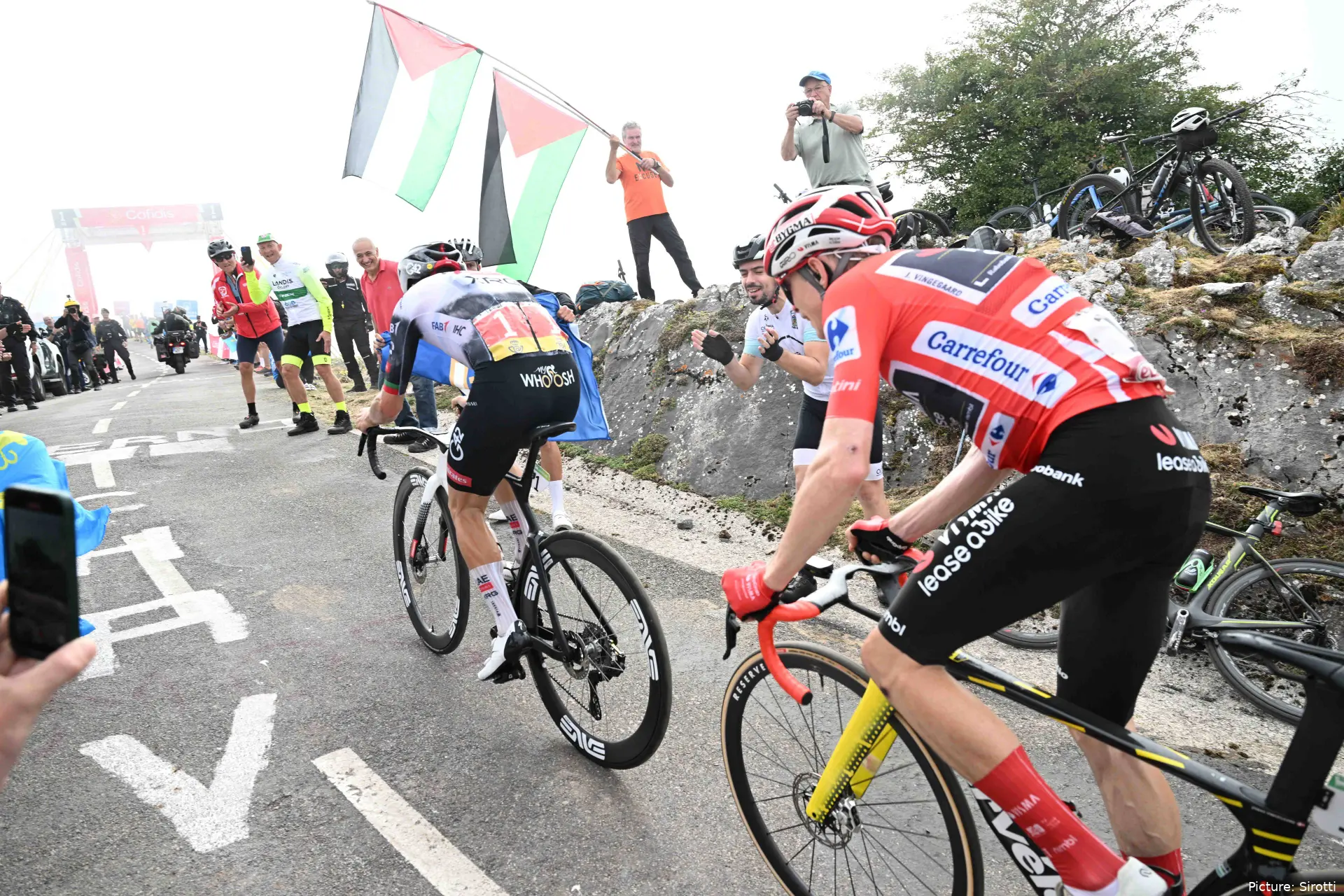
The Vuelta a España’s 13th stage to the legendary Alto de
l’Angliru was always expected to be decisive. Few climbs in professional
cycling carry its weight: 12.4 kilometers averaging nearly 10 percent, with the
infamous Cueña les Cabres ramp kicking to gradients above 23 percent. On Friday
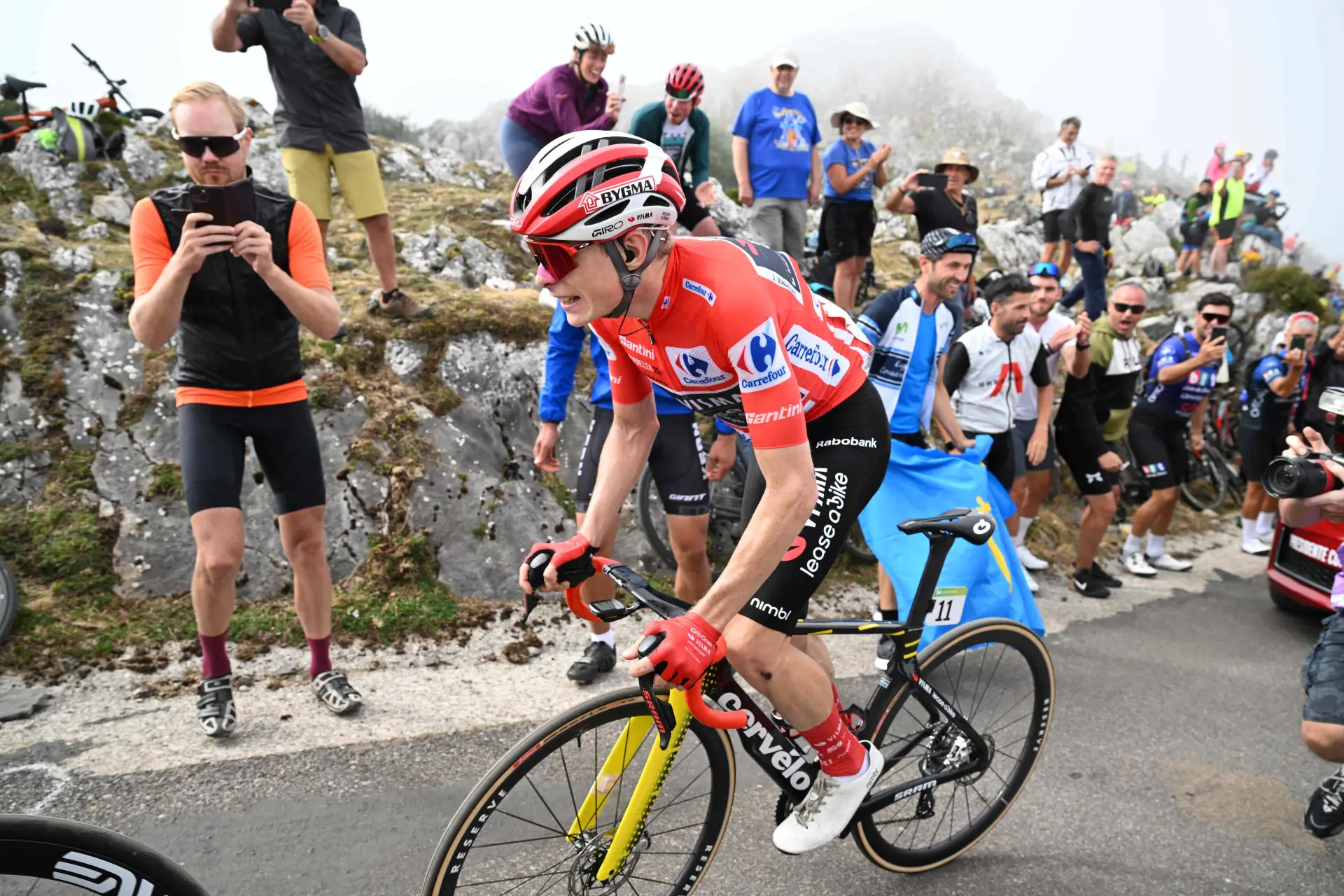
it delivered again, as João Almeida outlasted Jonas Vingegaard to take what
Johan Bruyneel called “the best performance of his career.” In short, it was
the day Almeida announced himself as more than just a world class climber, but
an elite GC racer.
On The Move podcast, Bruyneel and Spencer Martin broke down
every angle of the race, from Almeida’s landmark win, to the general
classification shake-up, to lingering questions about team dynamics and
off-road controversies. Their conversation framed not only what happened on
Angliru’s punishing slopes but what it means for the rest of this Vuelta. Let’s
dive in.
UAE control the stage
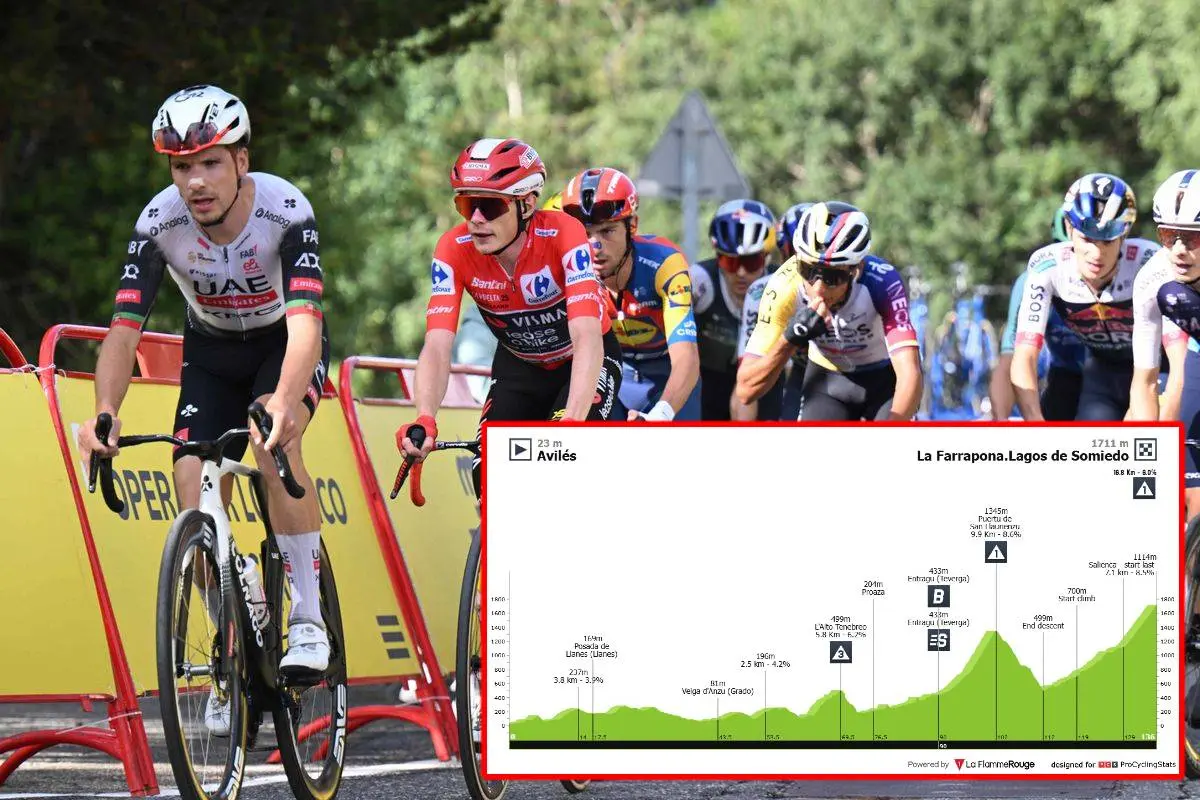
As Martin explained, TV coverage joined the action with 65
kilometers to go, but the shape of the race was already clear: a breakaway out
front with no real chance, UAE Team Emirates – XRG setting the pace behind.
“UAE hits the front, I believe, near the end of the second-to-last climb and
then they take it into the final climb,” he said. Domen Novak, Jay Vine, and
Felix Großschartner delivered textbook pacing, with the Austrian’s effort particularly
damaging. “Großschartner is on the front pushing so hard, he’s actually gapping
João Almeida, who’s in second wheel, and dropping Tom Pidcock.”
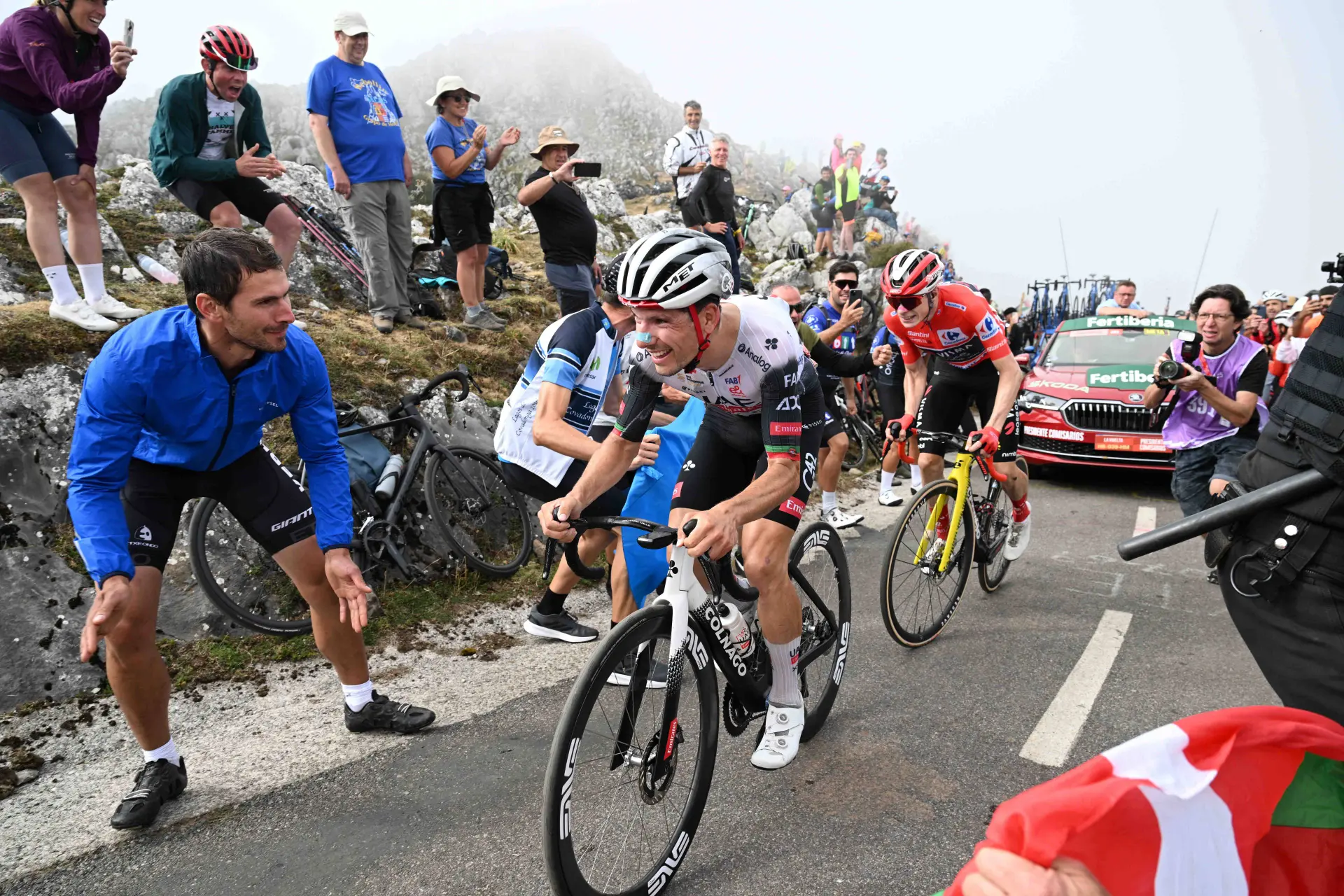
By the foot of the Angliru, the field had been whittled down
to Vingegaard, Almeida, Sepp Kuss, Jai Hindley, and Pidcock. Almeida then
assumed control, setting a fierce tempo that nobody else could match. “He never
looked back, never asked Vingegaard for anything, just kept pushing all the way
to the finish line,” Martin said.
Almeida breaks through
For Bruyneel, the ride marked a new level for the Portuguese
climber. “I think it’s the first time we see him in this Vuelta on such a high
level and really determined, riding his own tempo, not looking back. That was
impressive,” he said. The sheer metronomic pace surprised even the analysts,
who expected Almeida to crack after such a long pull. Instead, he not only
sustained it but crossed the line first, netting 10 bonus seconds. Vingegaard
finished alongside him, gaining six bonus seconds but losing four overall.
“This is hands down the best performance of Almeida’s
career,” Martin said. “Unbelievable.” He estimated Almeida produced around 6.3
watts per kilo for the decisive stretch, comparing it to Vingegaard’s Tour de
France numbers. “It shows Jonas is not nearly as strong as he was at the Tour,
where he was closer to 6.5 w/kg over the last 45 minutes.”

Almeida beat Vingegaard on the Angliru
The surprise was not Almeida’s strength alone but
Vingegaard’s lack of a decisive attack. Bruyneel admitted he expected more. “I
was expecting an attack from Jonas. I think he himself was expecting a stage
win today,” he said. The Dane has called the Angliru one of the climbs that
revealed his potential back in 2020, when he worked for Roglič. Yet on this
occasion, he could not produce a knockout.
“It’s difficult to read Jonas’ style,” Bruyneel continued.
“He was on the limit, but not to the point of getting dropped. He just didn’t
have anything left to accelerate.” At 500 meters to go, when the twisting road
funnels into a narrow chute, the expectation was for Vingegaard to sprint past.
Instead, he struggled even to hold Almeida’s wheel. “If Jonas could have, he
would have passed,” Bruyneel said. “He didn’t even have that.”
Martin suggested Vingegaard looked rattled at the finish,
standing apart from other riders who joked and mingled in the tent. “The guy we
saw today did not,” he said, “and he looked a little rattled.”
Still, Bruyneel refused to frame it as collapse. “I don’t
know if you can call it cracked,” he countered. “Jonas can’t permit himself a
bad day, but neither can Almeida. Those two are the strongest climbers, and
it’s good the race is still open.”
After the result, an intriguing stat emerged: no rider
wearing the leader’s red jersey has ever won on the Angliru’s slopes. Across
more than two decades, some of the sport’s biggest names have tried and failed
to break the curse. Abraham Olano in 1999, Chris Horner in 2013, Chris Froome
in 2017, Primoz Roglic in 2020, Sepp Kuss in 2023, and now Vingegaard in 2025, all
fell short despite starting the day in red. Even when close, like Horner’s
second place or Froome’s third, the mountain has denied them victory.
The podium picture
Behind the top two, the standings tightened. Hindley rode
strongly to finish 28 seconds back, while Kuss lost 30 and Pidcock 1:16.
Almeida’s victory trimmed his overall deficit to Vingegaard to 46 seconds.
Hindley moved up to fourth, just 52 seconds off the podium, where Pidcock still
held on to third despite suffering.
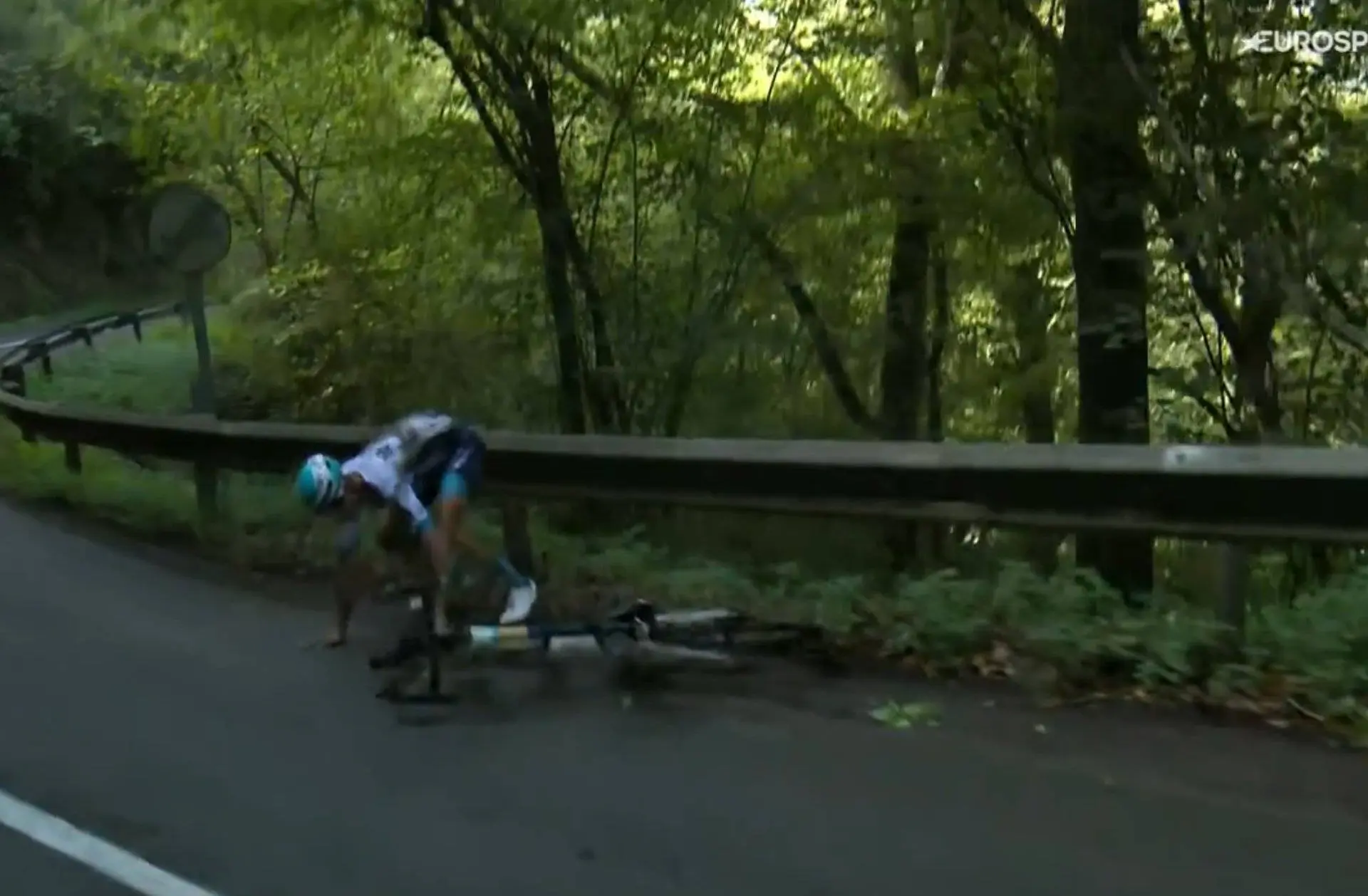
Bruyneel described Pidcock’s ride as a mixed result. “A tiny
disappointment. We’re discovering him, and he’s discovering himself in this
terrain. Nearly two weeks into the race, he’s never done GC before. It wasn’t a
great day, but he managed to limit his losses and still hold third place.”
Martin contextualized Pidcock’s effort historically.
“Pidcock was the 13th fastest time ever up the Angliru. That’s not a bad ride.”
The day also affirmed Hindley’s resurgence. If his
trajectory continues, Pidcock’s third place could come under serious pressure
in the final week.
The stage confirmed the Angliru’s reputation as the ultimate
filter. “There are four Grand Tour winners in this race: Vingegaard, Hindley,
Kuss, Bernal,” Martin said. “Three of those four finished top four on the
stage. It shows the cream rising now.”
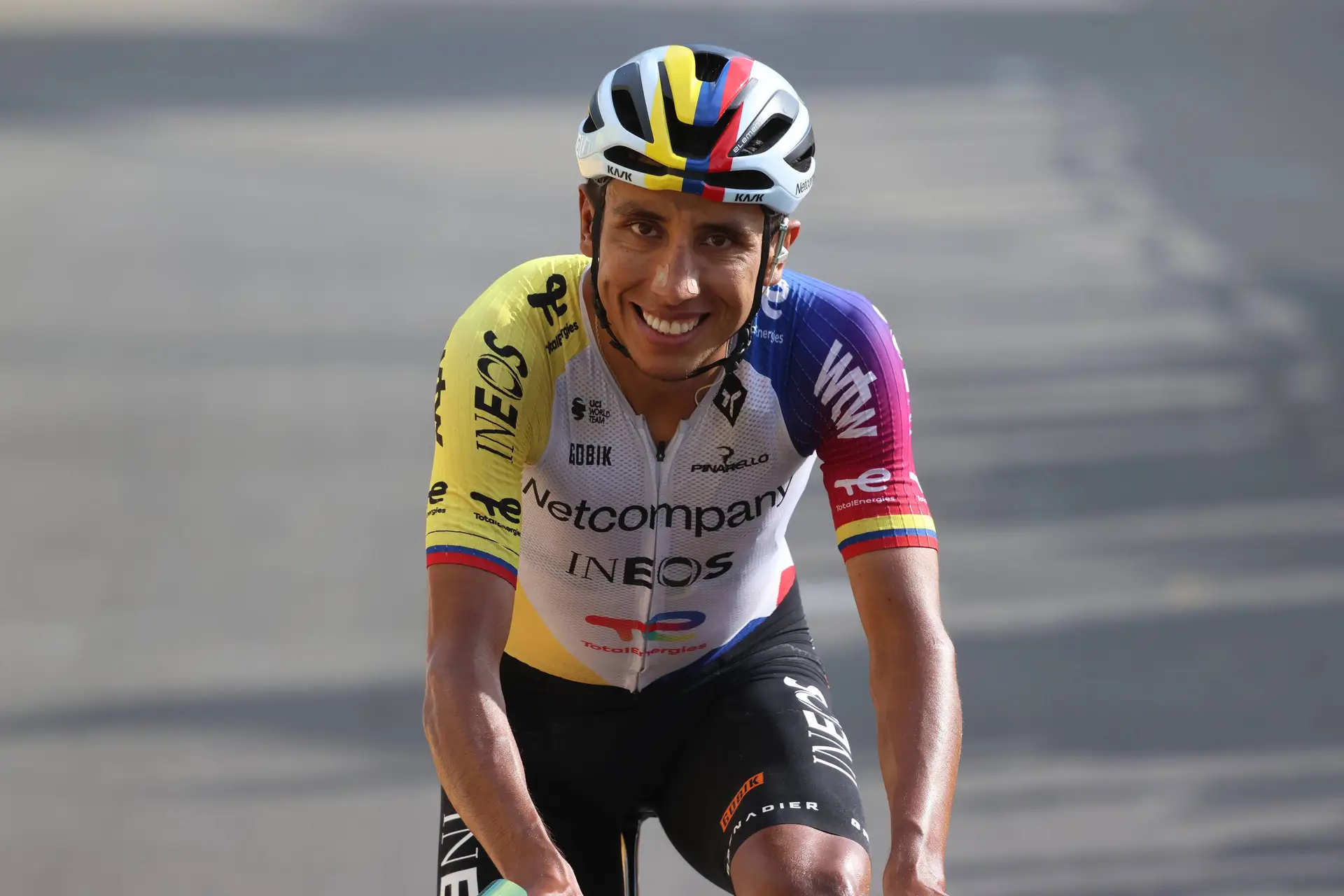
For Egan Bernal, however, the story was less encouraging, as he faded in the second half of the
climb, echoing patterns from the Giro. “This might be what it’s a bit of a
repeat from the Giro,” Bruyneel said, noting the Colombian’s struggles to
sustain form deep into three-week races.

Bernal struggled on the Angliru
Protests overshadow the breakaway
The stage also featured off-road disruption, with protesters
blocking the course and halting the breakaway. Organisers quickly cleared the
road, but the peloton was never stopped, leaving the escapees disadvantaged.
Martin was blunt, “Race radio had said protests would be treated like train
crossings, neutralize all groups, but they didn’t do that. You have to keep the
course clean.”
Bruyneel agreed: “If you apply the rules, you would have had
to stop the peloton too. They’ve said protests would be treated like a railway
crossing, but here they didn’t do that.”
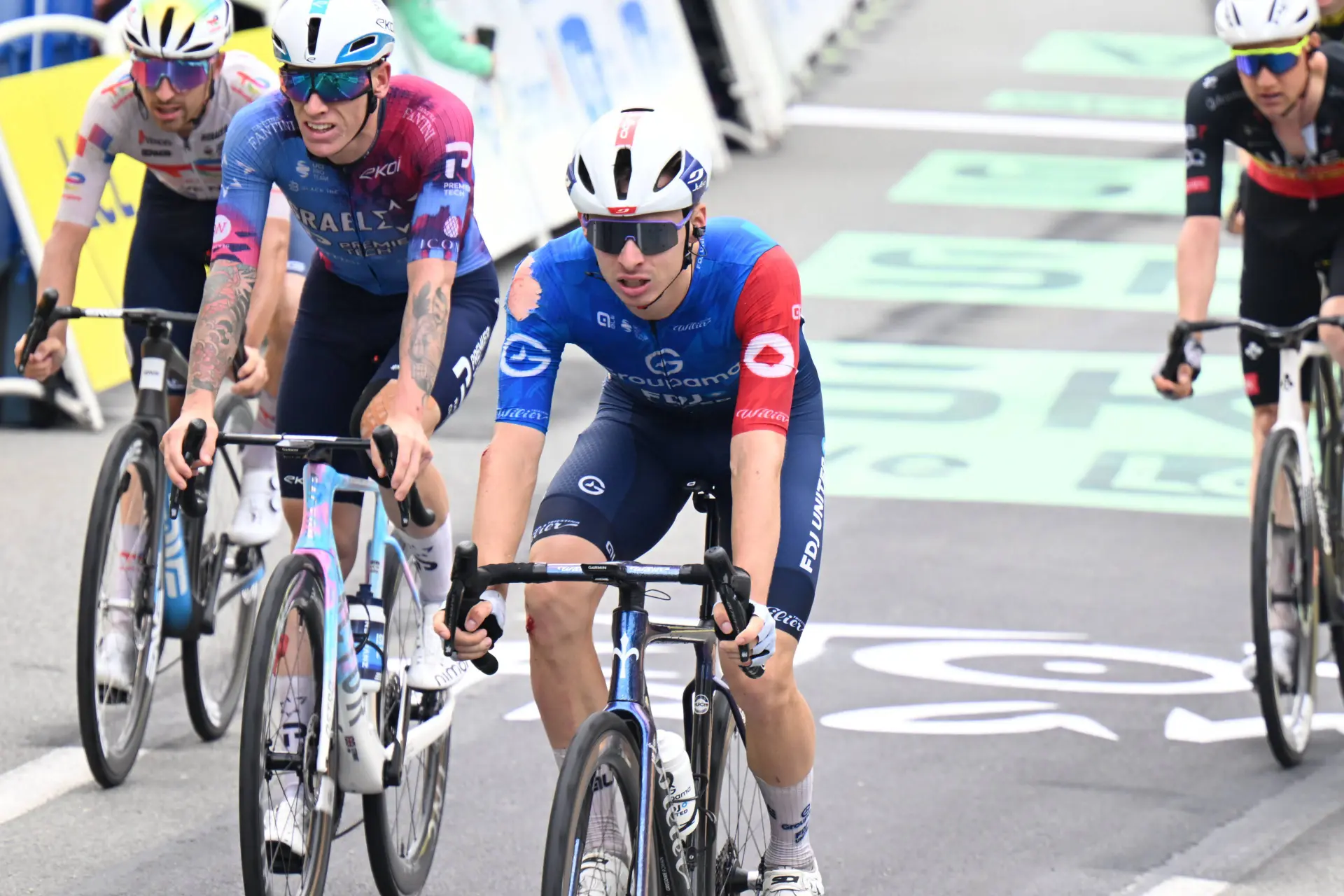
The incident linked into broader pressure around Israel - Premier
Tech’s participation. “There is more and more pressure on Israel - Premier Tech
to leave the race from riders and directors,” Bruyneel said, pointing to a
public message from Israel’s prime minister praising the team. “That tweet, I
think, is the end of their participation in this Vuelta.” Martin added:
“Anytime Netanyahu is tweeting about you, it’s not good.”
Beyond GC, the fight for other classifications carried on.
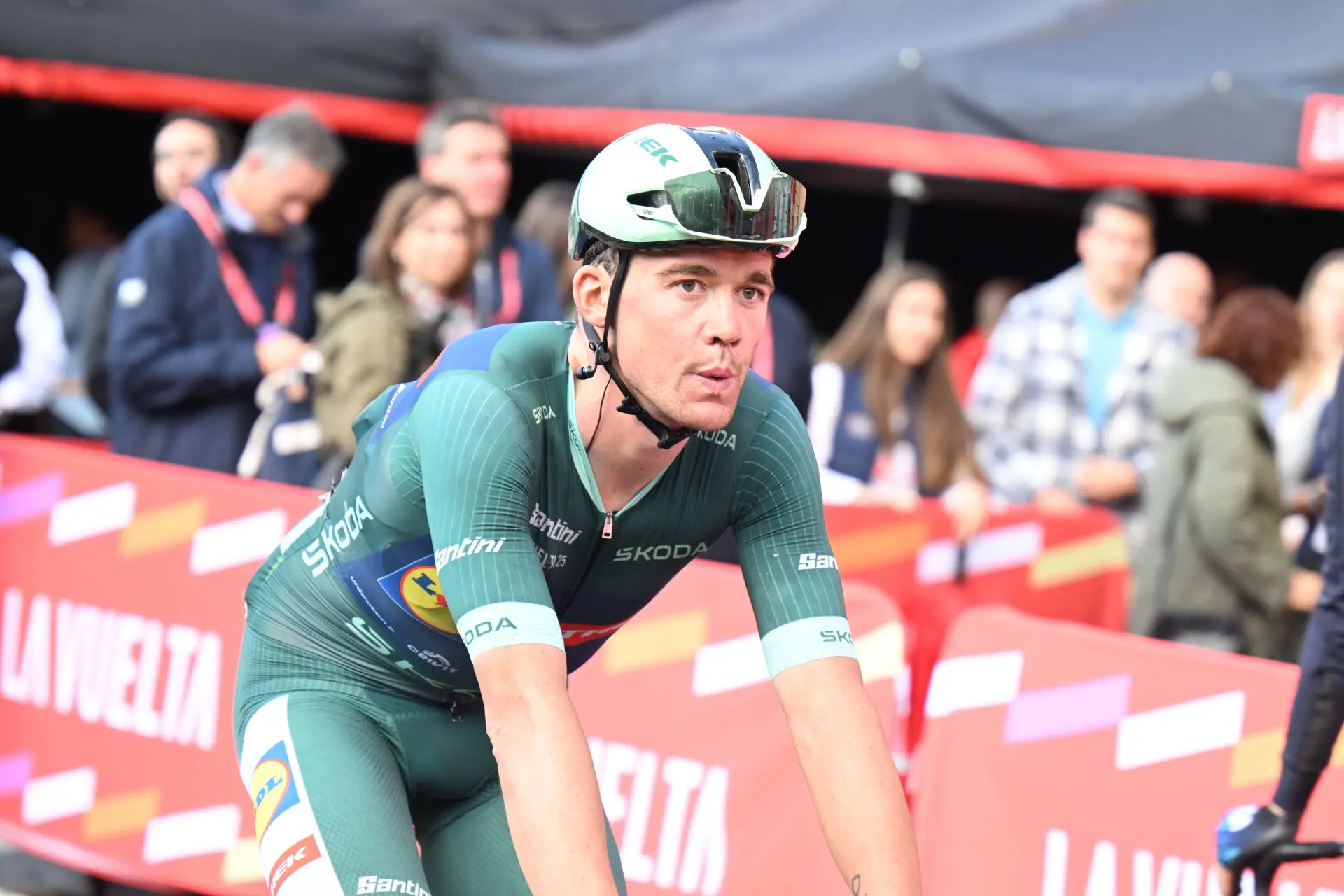
Mads Pedersen continued to build a commanding lead in the points jersey by
mopping up intermediate sprints. “Now he’s leading 192 to Vingegaard’s 122,”
Martin said. “It looks amazingly good for Pedersen, he could win the points
jersey in both Grand Tours he’s done this year.”
The white jersey duel between Pellizzari and Matthew
Riccitello also took a turn. “Pellizzari managed the climb really well and even
took time on Riccitello in the last 500 meters,” Bruyneel said. For Riccitello,
moving into seventh overall softened the blow.
Looking ahead to Stage 14
Attention quickly shifted to the next day: 136 kilometers
with over 4,000 meters of climbing. The finale includes a two-part ascent, ten
kilometers of rolling power slopes, followed by seven kilometers at nearly nine
percent.
“I think it’s going to be a GC day,” Martin said. “Short,
brutal, and a more interesting stage than today. I’m going back to Almeida as
my pick.”
Bruyneel leaned on Vingegaard’s steadiness. “I’ll go with
Jonas to win. He’s still the three-week specialist, and he’s solid, whereas
Almeida has been known in the past to have ups and downs.”
Both entertained long-shot scenarios. Bruyneel suggested
Movistar’s Javier Romo as a breakaway candidate, while Martin speculated that
Juan Ayuso might once again defy team instructions. “It makes no sense
whatsoever, he should not be in the breakaway tomorrow,” Martin said, “but as
we saw today, I don’t think he cares that much about what the team says.”
A race far from over
If Stage 13 was supposed to seal the Vuelta for Vingegaard,
it failed. Instead, Almeida elevated himself into genuine contention, while
Hindley and Pidcock kept the podium contest alive. The red jersey remains on
Vingegaard’s shoulders, but the aura of inevitability is gone.
As Bruyneel concluded: “I would say this Vuelta is not won
yet for Jonas. He definitely cannot permit himself a bad day. The same goes for
Almeida. Those two are the strongest climbers.”

Fin MajorCycling Journalist
Fin Major is a UK-based writer at CyclingUpToDate and has been part of the team since 2024. He is the site’s main writer for FAQs and evergreen explainers and has written around 2,000 pieces for the platform. Alongside this work, he focuses on in-depth analysis and covers the biggest races on the calendar, including the Tour de France, the Giro d’Italia, and La Vuelta a España, providing clear context around performance trends, tactics, and key storylines.
In his reporting, Fin uses reputable data sources such as ProCyclingStats for results, statistics, and historical context. He places strong emphasis on careful sourcing, editorial accuracy, and updating articles promptly when new, verified information becomes available. Outside of writing, Fin is an active cyclist, which supports his practical understanding of the sport and its demands.
claps 2visitors 2
Just in
Popular news
Latest comments
- You’re probably right but I have seen age do weird things to the most unexpected people, though you never know if and it’s rare that it’s age alone but every experience happens along the age timescale so it all synchronises.Jumpyjohn08-10-2026
- Bravo Primož, my compatriot!!!PogiSloFans08-10-2026
- Easy on the Yanks comment NO need. Hinault pulled some BS on Lemond!! So yeah shhhh. Hinault has 2 TDF Thanks to The Yank Lemond!! Factsalex2908-10-2026
- Hinault is dreaming? Seixas is to young and doesn't have the legs or power that Del Toro has. HELL Lemond was held back from beating Hinault! Facts!alex2908-10-2026
- Bernal won the Tour because his attack stuck after Thomas’s was reeled in, and then they ended the stage due to the landslide - a deserved win, but contingent on many things. He won the Giro with quality and skill. And then, like so often happens for the cruelest of reasons, his injuries left him an incomplete version of his former self. He’s had a great career, what a great GC rider (8 of his 23 wins are GC, including 2 grand tours and 2 of the 7 major GC races), but already was struggling after COVID. I wish him the best, and if he retires, he should retire with pride for a career well done!RidesHills07-10-2026
- Roglič? In an interview he’ll continue to be hilariously dry about his goals, emphasize that he’s still having fun, and keep churning along until he doesn’t want to do this anymore. “Ah, you know, 100 wins would be nice, but eh - it’s just a number. I have fun, you know?” I can almost hear him saying those words. He’s not heading for low rank races to get the wins, he continues to race the major races (and I suspect would have won the Vuelta again were it not for that awful accident and that disgusting purple leg right before racing began).RidesHills07-10-2026
- BTW the list of classics you gave from PCS is participation, not winning
 Rafionain-Glas07-10-2026
 - Yes, though we saw that last week already.Jumpyjohn07-10-2026
- Or that riders get out in time.Jumpyjohn07-10-2026
- Hope he doesn’t stick with it just for that, would hate to see him exhibiting any has been footballer behaviour.Jumpyjohn07-10-2026
Loading
Write a comment