“The team trusted me even before Simon Yates retired” – Visma’s new Italian climbing force no quick fix for Yates-sized Giro gap
Cycling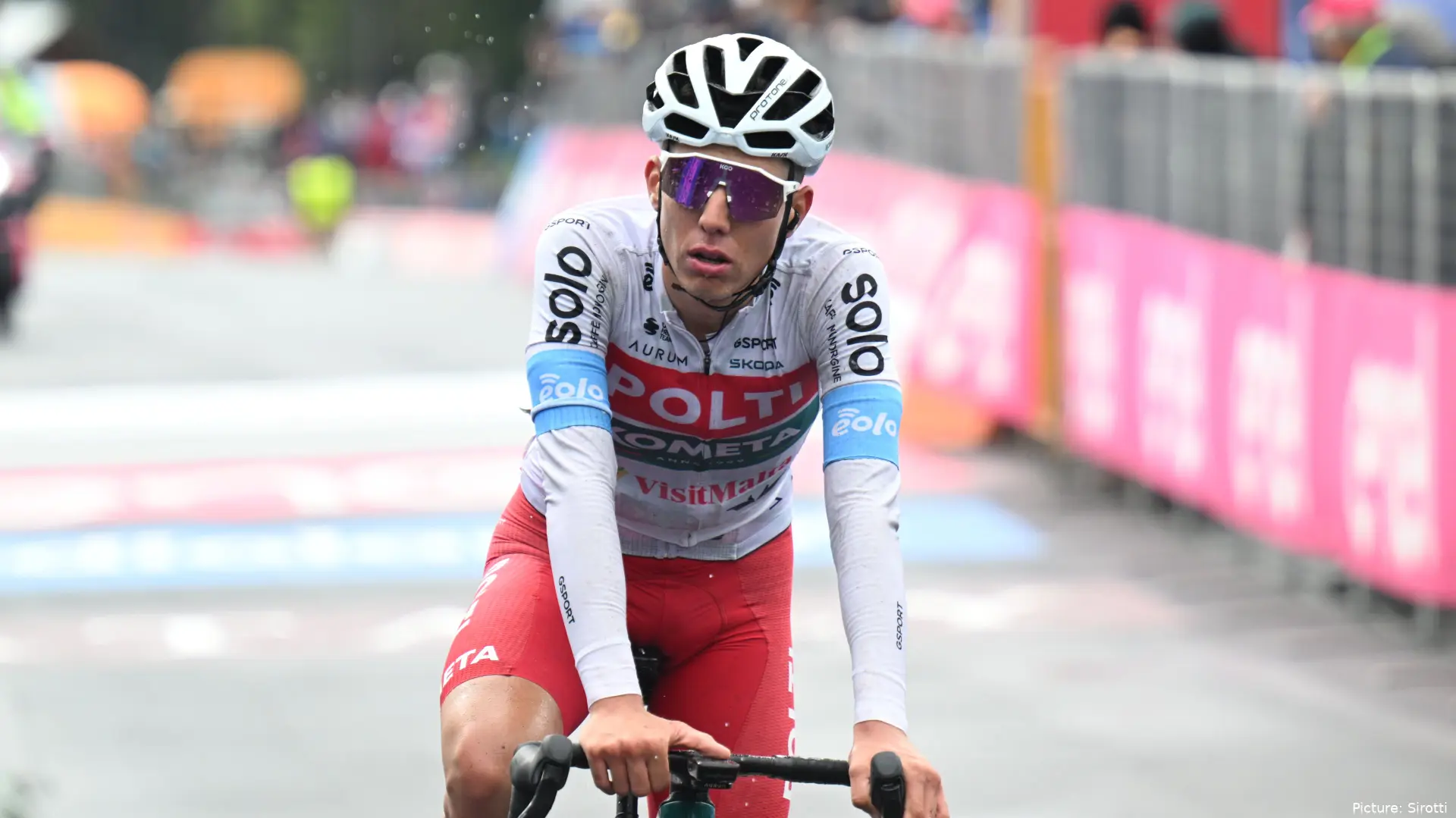
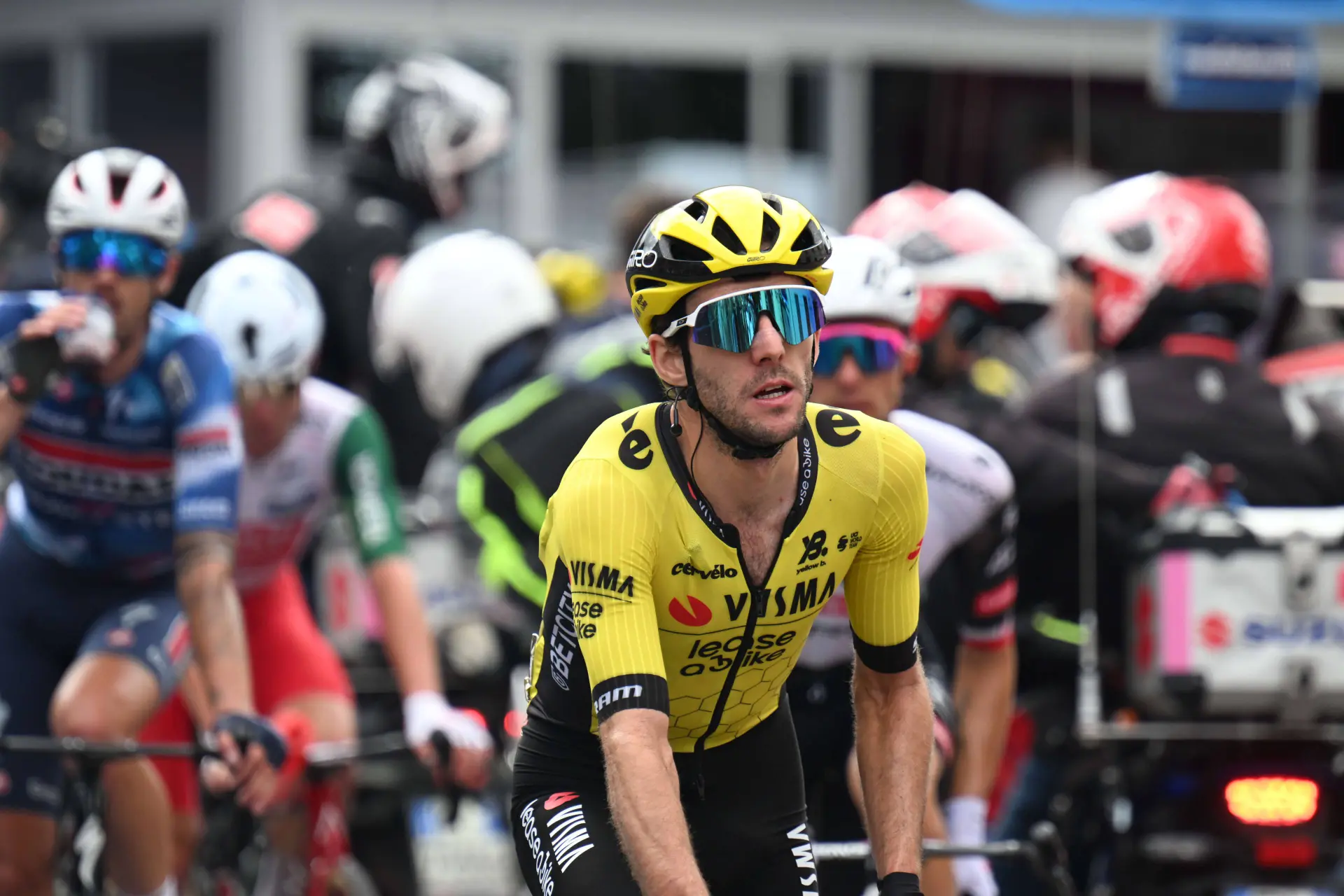
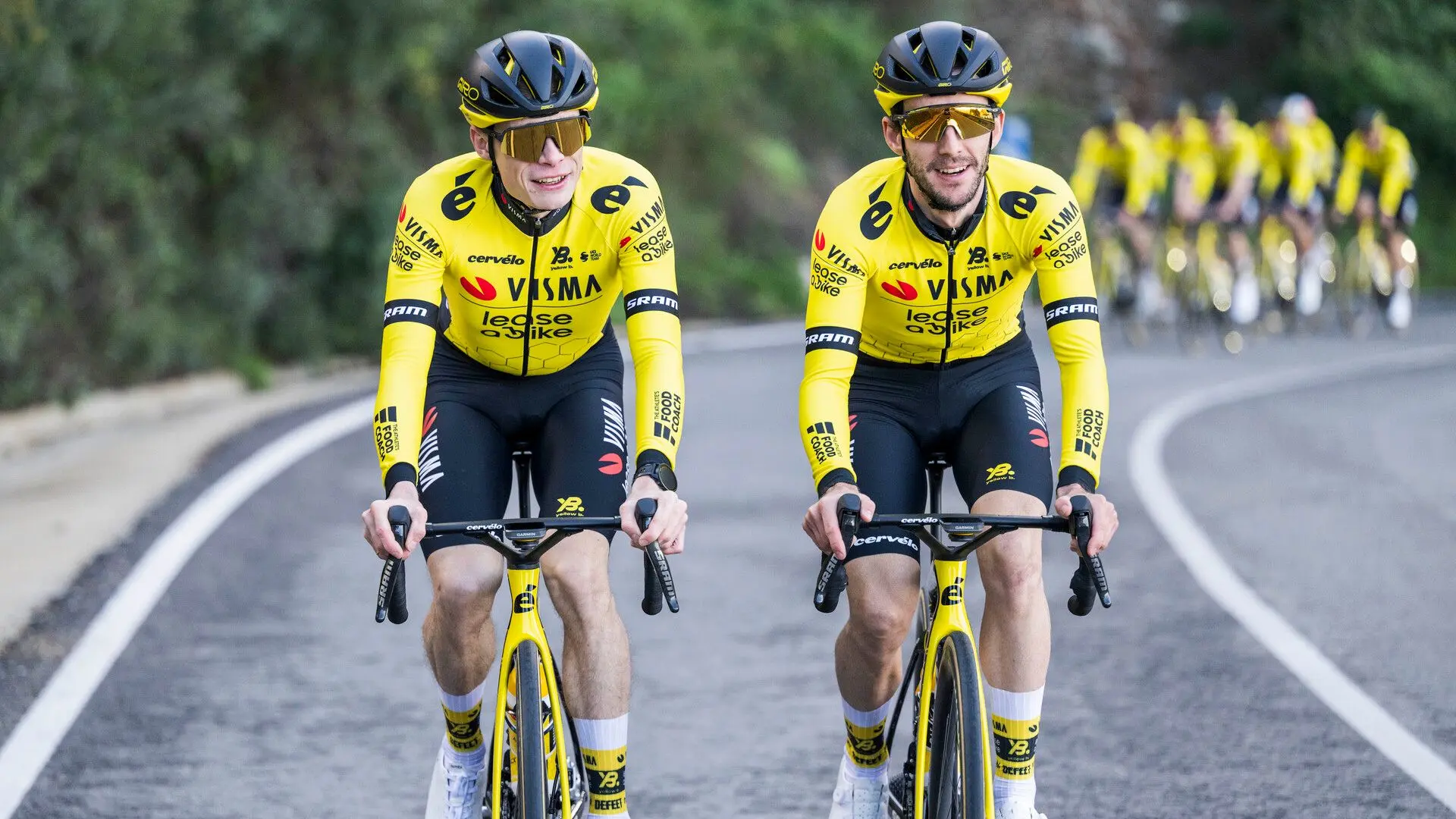
When Simon Yates’ sudden retirement left a Giro winner-sized hole inside Team Visma | Lease a Bike’s Grand Tour plans, many outside the team assumed the pressure would immediately shift onto the shoulders of the squad’s newest climbing recruit, Davide Piganzoli.
Inside the team, however, things looked very different.
“The team trusted me even before Simon Yates retired,” Piganzoli explained in conversation with Bici.Pro. “They told me I was already an important rider for them and that I would have my space.”
That distinction matters. Because Piganzoli is not being rushed into anything. He is not being positioned as a solution. He is being integrated into a system that already had a clear place for him long before Yates stepped away from the sport.
And that place is alongside Jonas Vingegaard at the Giro d’Italia.
Built for this environment, not overwhelmed by it
Piganzoli’s first months at Visma have not been what he expected. Not because they have been harder, but because they have been calmer.
“From what I’ve seen so far, there is really very little stress here. You train well, but the right amount,” he said. “If one day it rains, nothing happens. You do some rollers and recover the next day. I honestly did not expect that. That is the thing that struck me the most.”
For a rider coming from a smaller team, the assumption was that a WorldTour superpower would be rigid, intense and uncompromising. Instead, he has found flexibility, dialogue and trust. “It is not just about getting on the bike,” he added. “There is nutrition, gym work, equipment, tactics. Everything is looked at, but without obsessive pressure.”
That environment is part of why he feels ready for what comes next.
Learning how Vingegaard works before the Giro
Piganzoli’s calendar has him riding Volta a Catalunya with Vingegaard before the Giro. That is no accident. “I will race Catalunya with Jonas and try to understand how he works, how the team works around him,” he explained. “I will go to the Giro with the goal of helping him as much as possible.”
And that responsibility is something he wears with pride.
“If I think that last year I was the leader in a much smaller team, and now a big team asks me to do a very important job for a great captain, I understand that maybe I am worth something and I am on the right path.”
A team atmosphere he did not expect
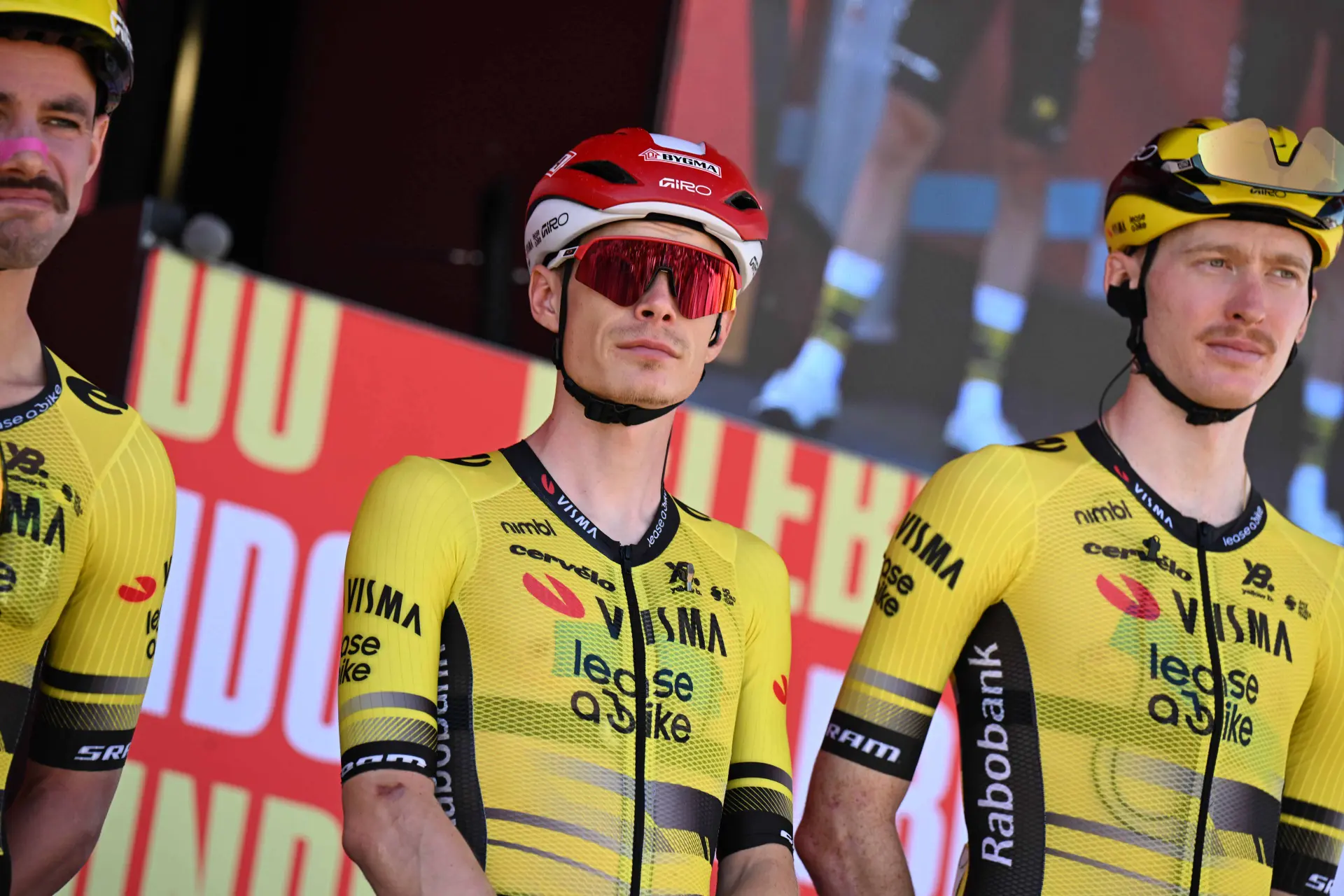
What surprised Piganzoli even more than the training structure was the human side of the team. “I did not expect these champions to be so sociable,” he admitted. “They always have a joke ready. And when they see you a bit on the side, they bring you into the group.”
He recalled one moment during a six-hour training ride that perfectly captured the atmosphere. “Victor Campenaerts even changed the route so we could stop at a bar where they make the best biscuits in the world. I still have the image of all of us taking over the place with the bikes, sitting calmly with the staff.”
It is a small detail, but it explains a lot about why new riders settle quickly inside this team.
Yates’ absence changes little for Piganzoli
While the outside narrative links his opportunity directly to Yates’ departure, Piganzoli himself is clear that the plan was already in place. “Simon is not someone you replace overnight,” he said. “But the team trusted me even before he stopped. They told me I was an important rider for them.”
The Giro was already part of his programme. His role was already defined. The trust was already there.
The only thing that has changed is how visible that role now appears from the outside.
Motivation rather than pressure
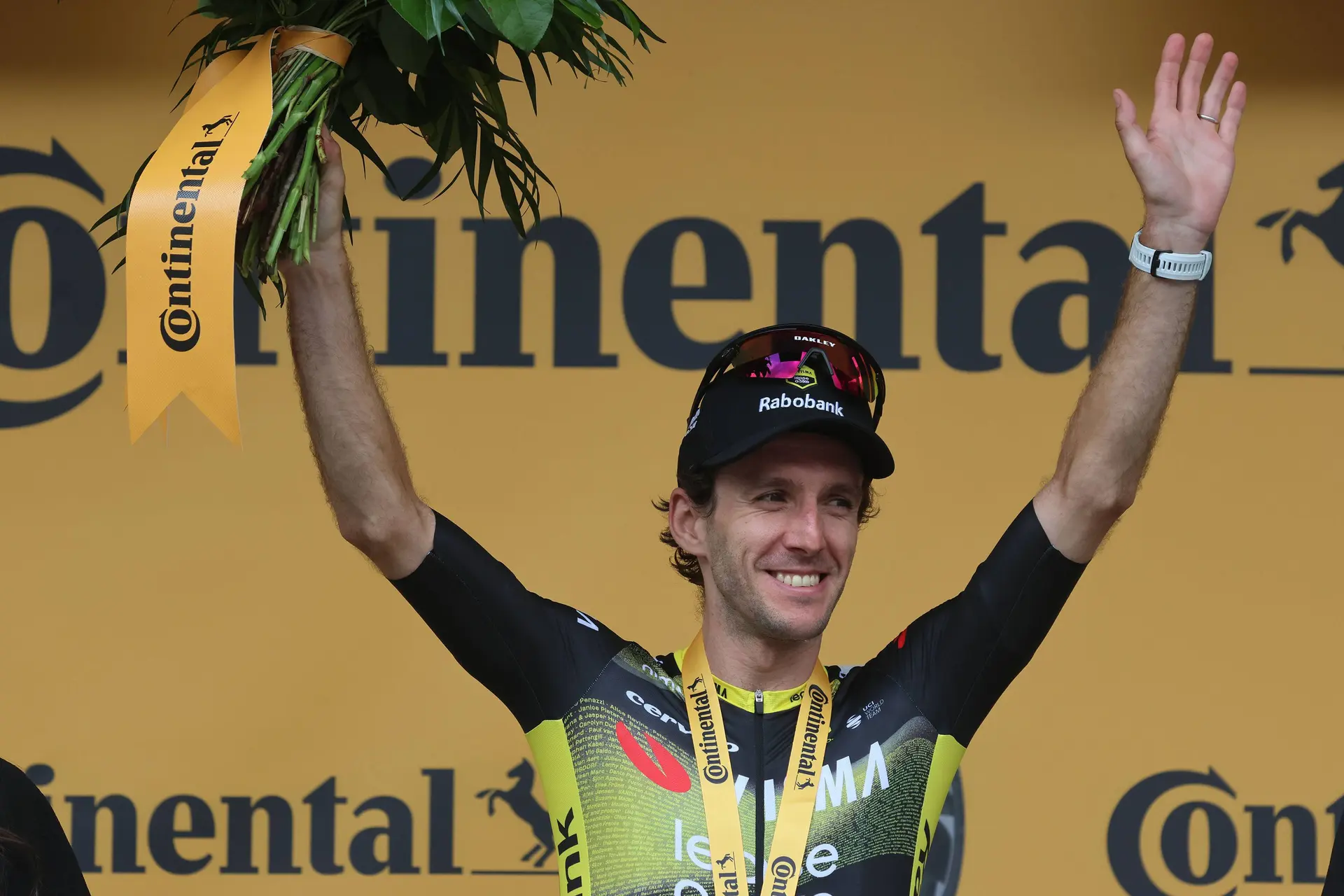
For Piganzoli, being asked to work for Vingegaard is not pressure. It is validation.
“This gives me motivation and the desire to work. To see riders like Vingegaard, Van Aert, and Jorgenson speaking to you during training, treating you like part of the group, it is something I am really proud of.”
He is not trying to fill Yates’ shoes. He is trying to prove that Visma were right to believe in him long before those shoes became vacant.
And that is why he may prove to be far more important to Vingegaard’s Giro ambitions than many realise.
Kieran WoodDeputy Editor-in-Chief
Kieran Wood is a sports journalist based in Wales and has been active in journalism since 2022. He regularly contributes to DartsNews.com and CyclingUpToDate.com, where he covers professional cycling and darts. In cycling, his work includes liveblogs from major races, including the Tour de France, the Giro d’Italia, and La Vuelta a España, alongside race reports and analysis. He has also conducted interviews with professional riders.
His reporting spans the full racing calendar, from one-day classics to stage races, with a focus on accurate, real-time coverage and clear contextual analysis. For statistics, results, and historical context, he regularly uses resources such as ProCyclingStats. To support reporting on rider activity and training context where relevant, he also references Strava.
In his work, Kieran places strong emphasis on careful sourcing, editorial accuracy, and updating articles as new, verified information becomes available.
claps 2visitors 2
Just in
Popular news
Latest comments
- Being the best rider left in the race is pretty much the only way to win in any edition, surely? Seems reductive to say "they only won because the entire peloton wasn't as absolutely stacked as it could've been" - you can only beat who is in front of you.wrsty08-10-2026
- I’m sorry but generally the coverage on your site is first class but this incident highlights something I just don’t get with cycling journalism. This accident should never have been allowed to happen, it comes uncomfortably close to the Finlay Tarling tragedy and two other incidents took place within days of this. I checked all of the cycling websites and you all put out basically the same story. Pidcock gave journalists the perfect opening to blow this sky high, what has the UCI got to say? What is Adam Hansen doing? What do the organisers say? Nothing, you all trot out the same easy quotes taken from Pidcocks interview after the race but do nothing to follow it up. I see it time and time again, journalists taking the easy way out but being outraged when it happens again as it surely will. Riders can’t do this but journalists should be independent and should be able to raise these uncomfortable questions but cyclinguptodate and every other on line publication prefer to take the easy way out. That’s the real tragedy here.Paul53108-10-2026
- Happy to help :-)Mistermaumau08-10-2026
- Well, ok but, it’s also a structural, team, budgeting, direction and all sorts of other issueMistermaumau08-10-2026
- I wouldn’t call it an analogy but maybe his criticism is a little unfair. On the other hand, the fact Cicco made a public affair out of it despite having received all the explanations and proof makes me feel he now deserves being criticised for not accepting there is nothing to discuss.Mistermaumau08-10-2026
- Much as I like him (one of my favourites), I do want to attract a little attention to the coincidence of his recent performances in the current context. Not the first time a rider improves noticeably when there’s a job interview to prepare. In the same lighthearted humour of his, i hope the UCI will let him wear it at home as the rules quite strictly state you can only wear it during participation in the discipline you won in, and we all know how capable they are of interpreting rule interpretation ;-) Also, if it’s going to be retirement (please not), I wouldn’t call that an agreement as somebody will probably feel they didn’t get what they wanted.Mistermaumau08-10-2026
- Agreed. There used to be a team willing to pay though. I take all these figures (that vary enormously according to who is publishing) with handfuls of salt. We don’t know how salaries are treated (especially between a UK employer and Andorran resident), we don’t know how numbers are derived and from where, if deductions have been taken into consideration, etc. but if he returns to Colombia, he’s going to need quite a bit in protection money.Mistermaumau08-10-2026
- And another one gone, another one gone, another one bites the dust. Ah gonna get you too…Mistermaumau08-10-2026
- Top marks RidesHills. A great post that sums up exactly Egan Bernals situation.Cyclingsbestfan08-10-2026
- Thanks for pointing out that typo. Now ammended.Prorodsandstuff08-10-2026
Loading
Write a comment