“Nys and De Vlaeminck were great, but Mathieu van der Poel is a special case” - Dutchman’s eighth rainbow jersey settles G.O.A.T debate for good, says former world champion
Cyclocross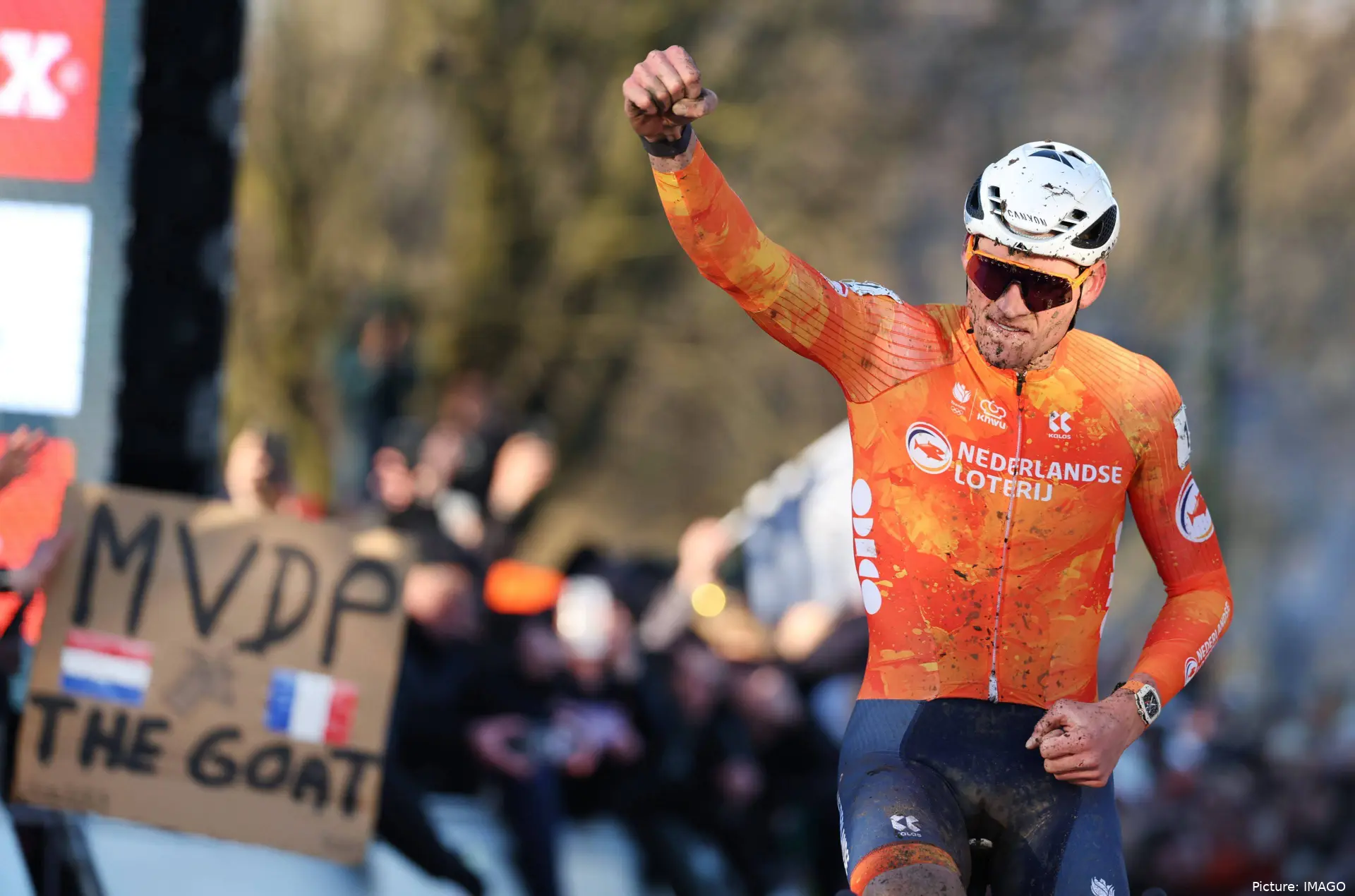
When someone who has worked with Eric De Vlaeminck and raced directly against Sven Nys says the hierarchy of cyclocross has changed, it carries weight.
Former world champion Bart Wellens did not hedge. He did not qualify. Watching the elite men’s race at the 2026 UCI Cyclocross World Championships from his sofa, he reached a conclusion he admits he previously resisted. “Mathieu van der Poel is the best cyclocross rider ever, I am really sure of that now,” he writes in his column for Het Nieuwsblad.
Wellens had long argued that eras should not be compared. Hulst changed that for him. “In the past I used to say you should not compare eras, but now I have changed my mind. The way he dominates cyclocross, the way he combines it with the road. There is very little doubt possible: he is the best cyclocross rider ever.”
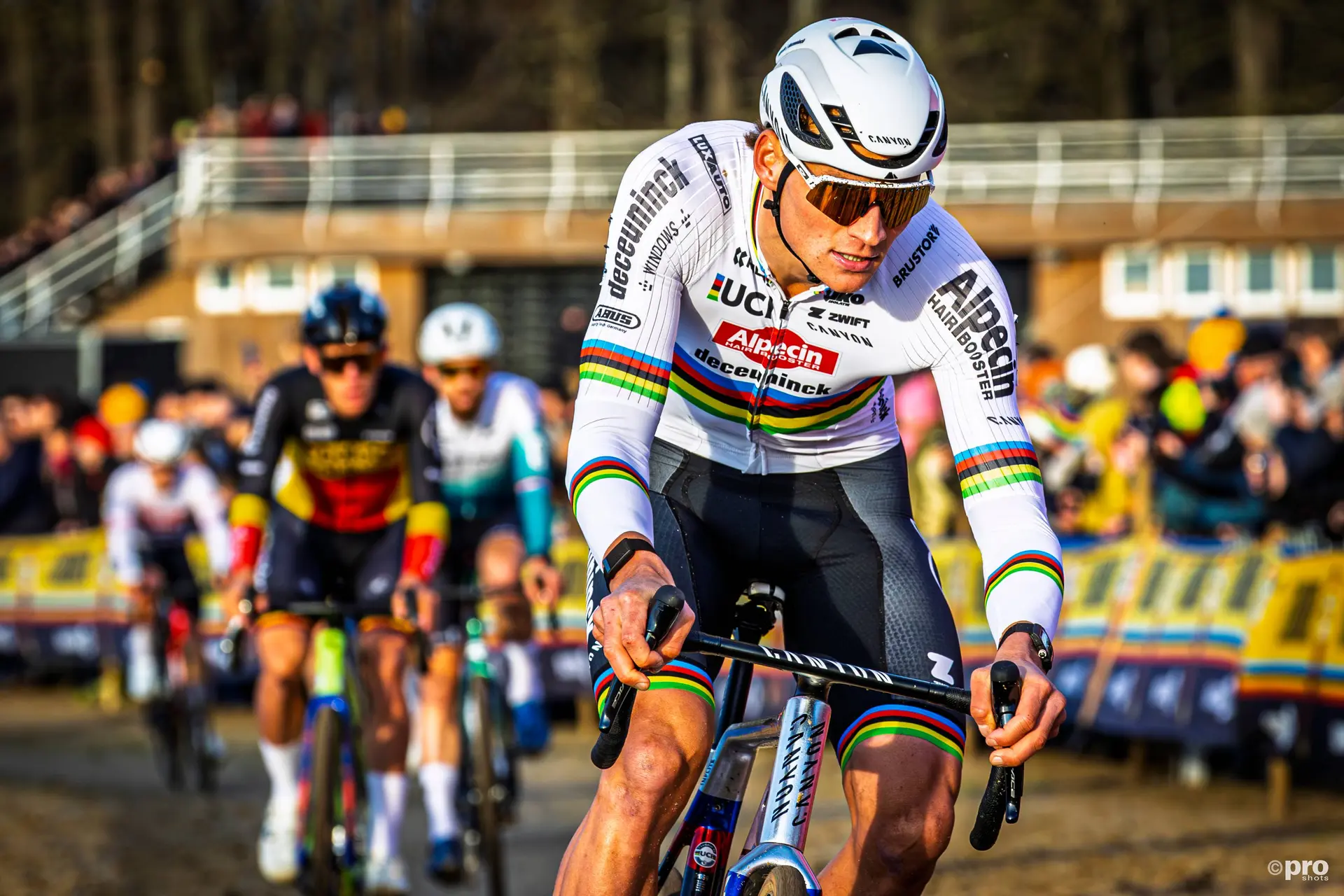
This was not nostalgia talking. It was a technical reading of what he had just watched in the rain and mud of Hulst. “With the rain that arrived, it became even more of a real cyclocross. The way Mathieu rode, that approached perfection. The way he takes the corners, the way he handled that steep climb. With the exception of the last lap, he rode it all the way to the top every time. Chapeau.”
Wellens knows what perfection in cyclocross looks like. And he was clear that what Van der Poel showed on that course belonged in a different category to anything he had seen before, even in the eras of De Vlaeminck and Nys.
“I had Eric De Vlaeminck as a coach and learned an enormous amount from him, I raced against Sven Nys. But Mathieu… That is still something different, and with that I do not take anything away from the careers of Nys or De Vlaeminck. They too were very great gentlemen, but Mathieu is a special case.”
Read also
Where the race was really decided
Hulst was not a power circuit. It was awkward, off camber, rutted and constantly asking for line choice and commitment. As the rain arrived, it became a course where hesitation cost metres instantly.
That is where Wellens felt Van der Poel separated himself from the rest. “With the rain that arrived, it became even more of a real cyclocross.”
Through the off-cambers, the steep run-up, and the technical descents, Van der Poel rode sections others survived. Each lap, small gains in the same places accumulated into a decisive gap that never came back.
Behind him, Tibor Del Grosso and Thibau Nys were left racing for the remaining medals on a circuit that rewarded absolute precision more than raw force.
And it is here that Wellens turned his attention sharply towards Nys.
“This was a World Championship, you have to choose that heavier profile”
Wellens did not hide his view on the Belgian’s equipment choice. “I do have something to say about Thibau’s tyre choice. If you see that you are the only one choosing that profile, then I think you have to change. The tubular Thibau rode on is, in my own eyes, a women’s tubular. Men have too much power to ride on that.”
As the rain fell and the descents became treacherous, Wellens felt the consequences were visible every lap. “Technically Thibau is among the very best and yet he lost ten to fifteen metres on every descent. And especially when it started to rain, it was over for him.”
For Wellens, this was a detail that should have been corrected even during the race. “If your main competitors start with a heavier profile, then you must change, even if that is in the penultimate lap. A bike change might have cost him twenty metres, with this profile he lost more than a hundred metres.”
He rejected the idea that such marginal calls are overplayed in cyclocross. “I hear people say this is not Formula 1. Wrong, it is becoming more and more Formula 1 where details such as tubulars or the rain make the difference.”
In Wellens’ reading, this was not simply a race won by Van der Poel. It was a race where the smallest technical decisions behind him decided who could realistically challenge. “Standing to the left or right of Mathieu on the podium, that is still different.”
A rider from another category
Wellens also addressed the broader question of Van der Poel’s place in the sport’s calendar and whether he might one day step away from winters entirely. “A winter without Mathieu? I would understand him. The stress, the cold… On the other hand, his cyclocross activities have never had a negative impact on his spring. His heart lies with cyclocross.”
It is this combination, domination in mud and dominance on the road, that ultimately convinced Wellens to abandon his reluctance to compare eras.
Hulst, in the rain, on a course that punished anything less than perfect control, provided the final evidence he needed.
For someone who has lived through the De Vlaeminck years and the Nys era, that is not a throwaway statement.

Kieran WoodDeputy Editor-in-Chief
Kieran Wood is a sports journalist based in Wales and has been active in journalism since 2022. He regularly contributes to DartsNews.com and CyclingUpToDate.com, where he covers professional cycling and darts. In cycling, his work includes liveblogs from major races, including the Tour de France, the Giro d’Italia, and La Vuelta a España, alongside race reports and analysis. He has also conducted interviews with professional riders.
His reporting spans the full racing calendar, from one-day classics to stage races, with a focus on accurate, real-time coverage and clear contextual analysis. For statistics, results, and historical context, he regularly uses resources such as ProCyclingStats. To support reporting on rider activity and training context where relevant, he also references Strava.
In his work, Kieran places strong emphasis on careful sourcing, editorial accuracy, and updating articles as new, verified information becomes available.
claps 4visitors 4
Just in

Popular news
Latest comments
- He didn't even try to sprint all outvappaxbipmv18-10-2026
- Campenaerts looked like a rolling pumpkin with that all orange leaders skinsuit !frieders318-10-2026
- He can take his dumb a$$ politics somehwere else !frieders318-10-2026
- good to have her back. fingers crossed she‘ll be able to stay!Ketterechts17-10-2026
- A tenner and he wins the Tour next year, too 😂anonymouscyclist17-10-2026
- the answer is either stick to classics or GTs but not bothabstractengineer17-10-2026
- the exodus already stared with Ciccone. Already they were struggling with two sprinters, now there are three. Also Ganna will demand leadership. Gall is the most proven GC, Ayuso has the most potential. GC leadership for everybody will be impossible. Literally a UAE style mess without pogi.abstractengineer17-10-2026
- I raced as an amateur for 12 years, including six years on my country’s national road cycling team. I secured two national titles and competed in three World Championships plus more than 15 international stage races. At 23, we travelled to Italy for a training camp—or so I assumed. On a rest day, we watched a presentation about adopting a more “professional” training approach. It was crystal clear what “professional” meant. That moment first exposed me to this dilemma. After returning from Italy, I left cycling—at least at the competitive level I had known. Over the following two years, the whole team was caught doping. I hold that everyone is innocent until proven guilty. In my view, current stakeholders operate on a different scale, and the sums involved are vast. I am unsure whether any doping would ever be revealed. I try to stay positive and enjoy the show. My 2c.
 vannpelt17-10-2026
 - Fiver he wins 🤣
 leedorney17-10-2026
 - “…measures to reduce speeds.” Might as well shorten the race course to just 50km as well? ASO generates at minimum €300m a year and 30- 40% profit. Maybe stop being greedy and spend more of the profit to protect the riders instead.b3tlla17-10-2026
Loading
Write a comment