DISCUSSION | Paris-Nice & Tirreno-Adriatico - Same mistakes every year, ski resorts, shortened stages and the money behind the decisions
Cycling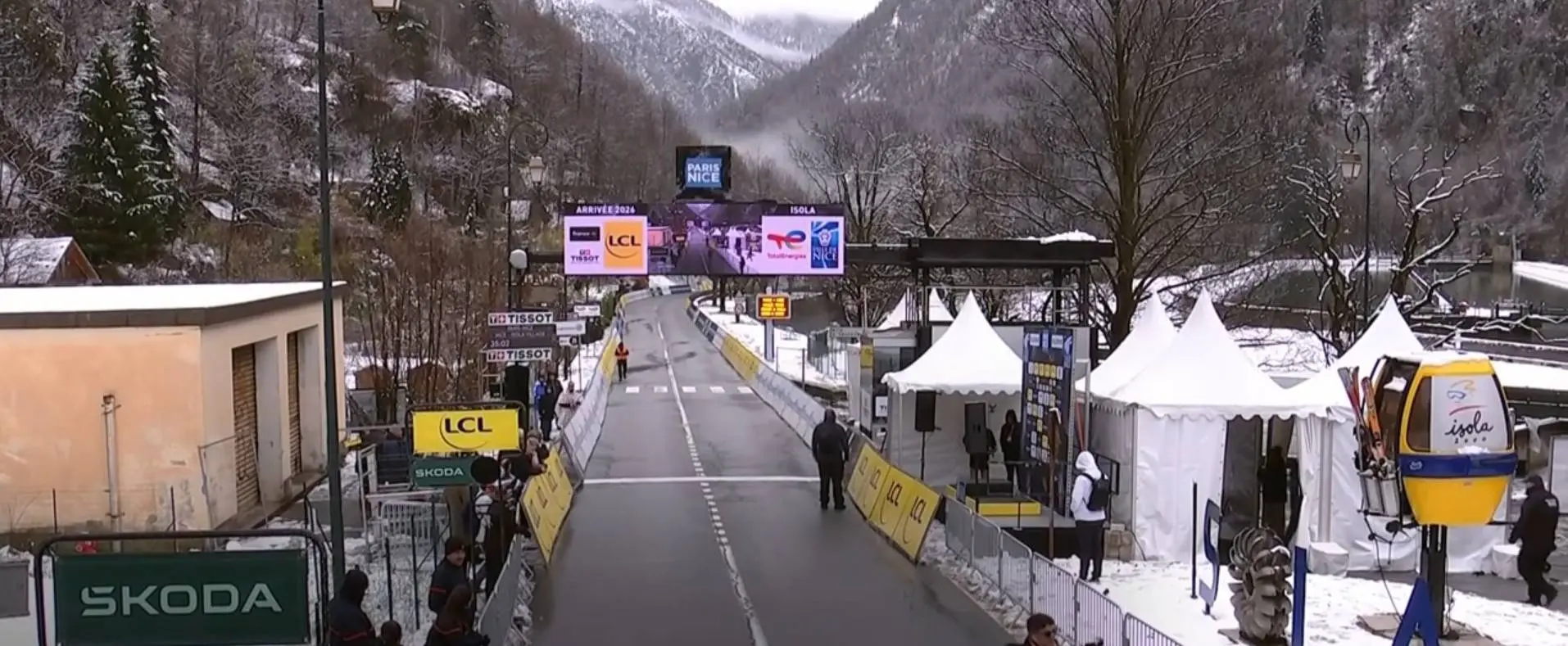
Extreme weather and decisive climbing action defined the latest stages of both Paris-Nice and Tirreno-Adriatico, with Dorian Godon sprinting to victory in a drastically shortened French stage while Isaac del Toro strengthened his grip on the Italian race with an impressive win on the steep finish to Camerino.
Paris-Nice delivered one of the most unusual days of the season, as stage 7 was reduced to only 47 kilometres after heavy snowfall and freezing temperatures forced organisers to cancel the planned summit finish to Auron.
Originally expected to be a key mountain stage, the route was first shortened and then cut again on the morning of the race, leaving the riders with a short, flat run to Isola under rain and near-winter conditions.
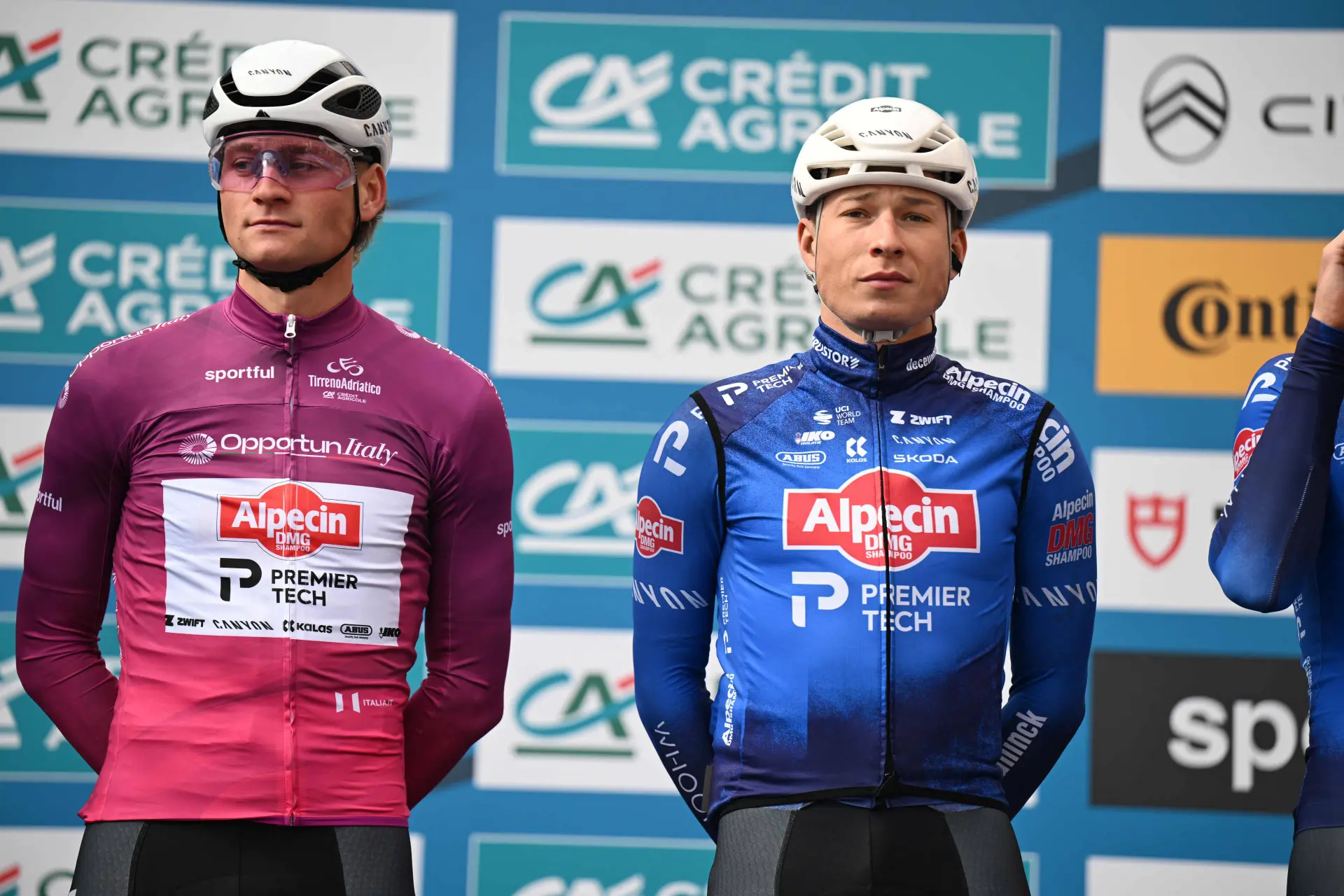
Despite the difficult weather, the stage went ahead, with Tim Marsman attacking early and forming the day’s only breakaway. The Alpecin-Premier Tech rider spent most of the stage alone in front but never gained enough advantage to seriously threaten the peloton, which kept the gap under control on the valley roads.
As the pace increased inside the final kilometres, the race began to split under the pressure of the cold conditions and the nervous fight for position. Nicolas Vinokourov attempted a late move inside the final ten kilometres but was quickly brought back, while crashes disrupted the finale, first involving Vito Braet with three kilometres to go and later Harold Tejada inside the safety zone.
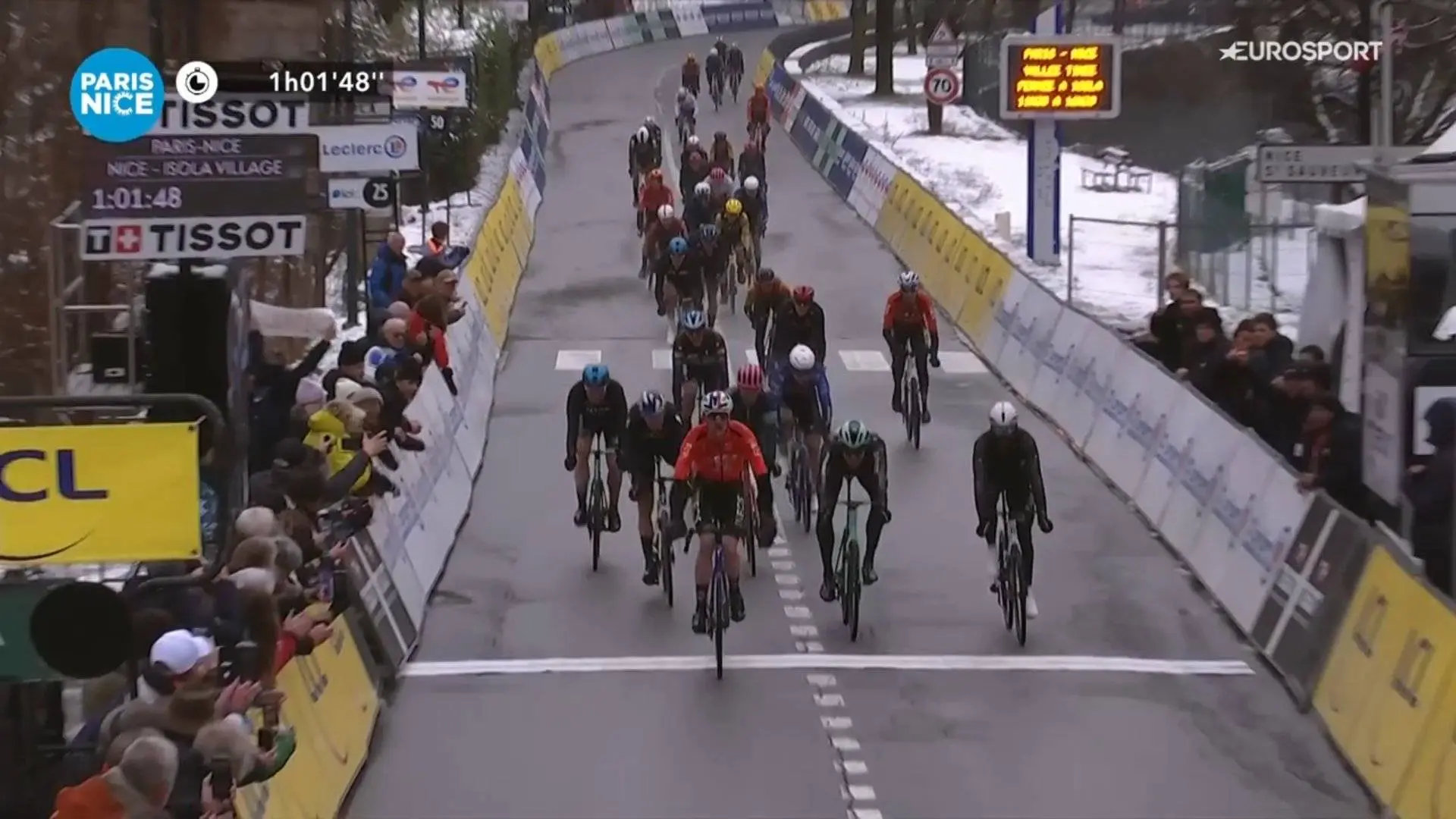
INEOS Grenadiers kept control at the front and organised the sprint perfectly, delivering French national champion Dorian Godon in ideal position. Godon finished the job with a powerful acceleration to take his first victory in INEOS colours, ahead of Biniam Girmay and Cees Bol, on a day where survival was as important as speed.
While Paris-Nice was defined by cold and chaos, Tirreno-Adriatico produced a very different spectacle, with stage 6 decided on the steep uphill finish in Camerino and the race leader Isaac del Toro once again proving to be the strongest climber in the field.
The stage started in San Severino Marche with a strong breakaway group including Gregor Mühlberger, Vincenzo Albanese, Clément Braz Afonso, Filippo Ganna, Walter Calzoni, Timo Kielich and Thomas Silva, giving the peloton a solid group to control throughout the day.
The riders tackled the demanding Sassoletto climb early in the stage, but the favourites remained calm and no serious attempts were made to put pressure on Del Toro at that point. The decisive action came later on the finishing circuit around Camerino, where the peloton had to complete four laps including the steep 3-kilometre ascent averaging almost nine percent that led to the finish line.
Up front, Braz Afonso and Mühlberger managed to break clear from the rest of the escape group and held a small advantage, but the peloton never allowed the gap to grow too large. Visma-Lease a Bike increased the pace after the penultimate climb, briefly splitting the group and isolating Del Toro, yet the move failed to develop when no other team committed to the attack and Wout van Aert was unable to continue the acceleration for Matteo Jorgenson.
The race came back together before the final ascent, with UAE Team Emirates – XRG taking control of the chase through Jan Christen, who helped bring back the last of the breakaway before the decisive climb.
Van Aert tried to anticipate with an attack just before the base of the climb, but the steep slopes quickly reshuffled the race. Ben Healy launched a strong move as the climb began, catching Van Aert and going clear alone, while Giulio Pellizzari attacked from the group behind. Del Toro initially stayed calm, allowing the gap to open before gradually closing it with a controlled effort.
Michael Storer also tried to force the pace, and Pellizzari attacked again on the short flat section between the steep ramps, briefly gaining ground while Uno-X took responsibility for the chase behind. The decisive moment came in the final kilometre, where the gradients increased sharply and Del Toro finally accelerated, closing the gap to Pellizzari and reeling in Healy at the same time.
Matteo Jorgenson launched the last attack on the final ramp, with Del Toro immediately following, and the two went head-to-head in the uphill sprint. The Mexican rider proved the strongest once again, powering to the stage win in the blue jersey, while Tobias Johannessen finished second and Jorgenson crossed the line in third.
With one race shaped by extreme weather and the other by pure climbing strength, both Paris-Nice and Tirreno-Adriatico delivered decisive moments, confirming Godon’s sprinting form in France and underlining Del Toro’s status as the dominant rider in Italy.
Carlos Silva (CiclismoAtual)
I still cannot understand the logic of the ASO, which year after year insists on placing stage finishes in ski resorts. Let’s be honest, we are in the middle of winter. If it is a ski resort, there should be snow, right? What is the probability of snowfall or severe weather conditions in those locations? High. Very high.
And the race history tells us that almost every year the ASO ends up improvising, shortening stages or changing routes at the last moment. Do they never learn?
And please do not come with the argument that they are worried about rider safety. That is simply not true. Just last Tuesday we saw the peloton ride more than 200 kilometres in terrible conditions, and the ASO did absolutely nothing.
There was no real concern for safety then. The reality is that the ASO forgets the human side of the sport and prioritises the financial side. That is the only truth and the only thing that drives their decisions. Money.
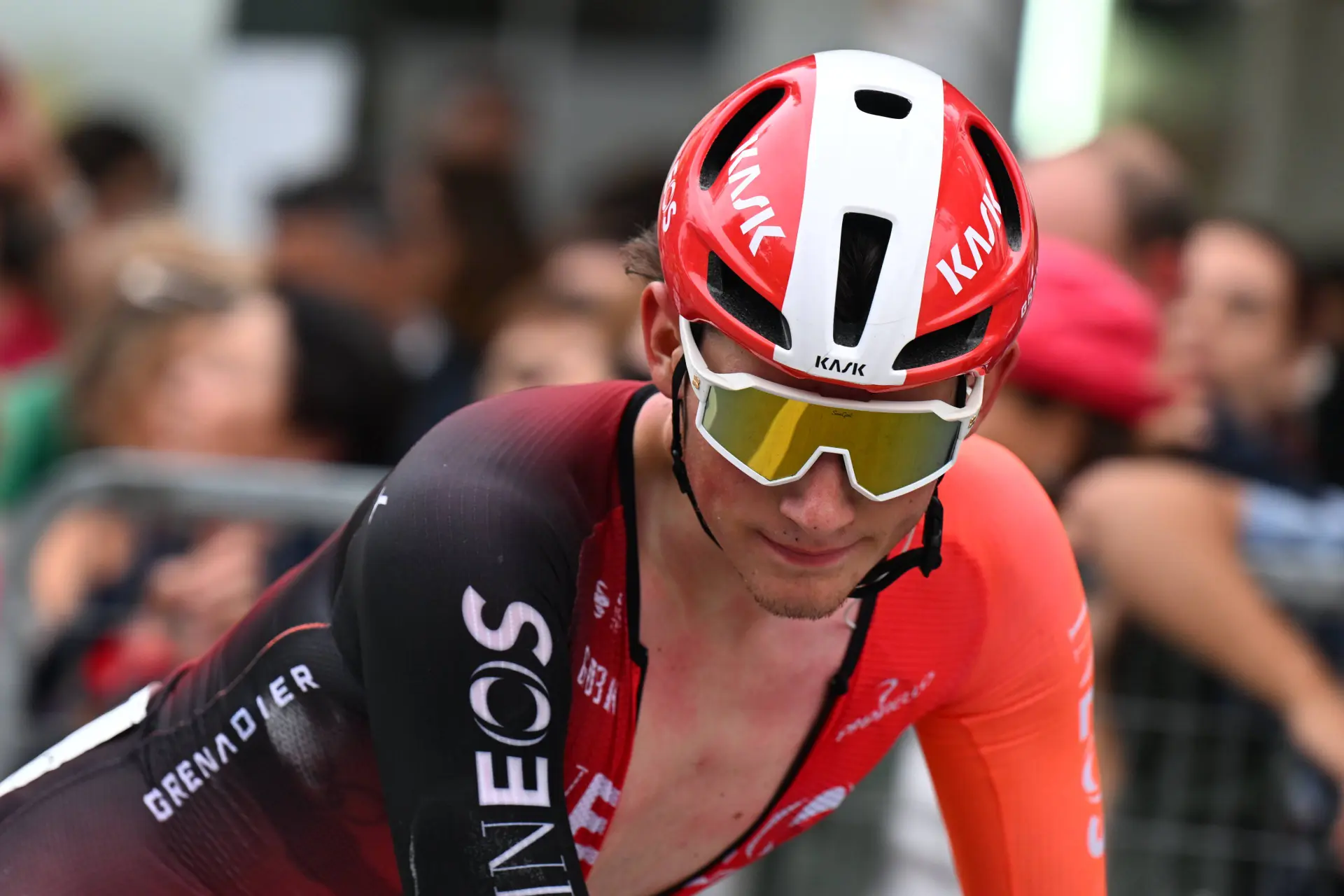
Congratulations to INEOS for Dorian Godon’s victory. They executed a perfect lead-out and Godon only had to finish the job. It was a textbook team performance and a well-deserved win.
In Italy, we had a breakaway that animated most of the day and was only caught inside the final ten kilometres. It felt like nobody really had the legs to attack the race from distance.
Visma tried to make the race harder and even managed to isolate Del Toro, but Red Bull still has a problem called Roglic. The Slovenian is one rider less for the team at the moment. He does not work and seems to want to race for himself, when Giulio Pellizzari clearly needed support.
I like Primoz, but he needs to be humble and put himself at the service of the team. He has to accept that his time at the top of the hierarchy is being challenged by a new generation of young talents.
Pellizzari tried twice to go clear, but Isaac del Toro never reacted impulsively and always responded with control and confidence.
When Del Toro and Jorgenson caught Pellizzari inside the final kilometre, it was clear that the fight for the win would be between the UAE and Visma riders. The victory went to the UAE rider, and deservedly so. He showed he was the strongest and also the smartest. Chapeau.
Jorge Borreguero (CiclismoAldia)
The two stages showcased very different facets of cycling on the same day.
On Stage 7 of Paris–Nice, the race was entirely dictated by the weather. The drastic shortening of the route to just 47 kilometres transformed what was supposed to be a key mountain stage into a short, controlled effort, more akin to a long prologue than a truly decisive stage.
In this context, Jonas Vingegaard’s team managed the situation very intelligently: a steady pace, no risks taken, and the neutralisation of the day’s only serious breakaway.
Dorian Godon’s victory in the final sprint was almost a consequence of the stage’s reduced script: a logical but somewhat anticlimactic conclusion to a day that, under normal circumstances, would have produced significant time gaps.
In contrast, the queen stage of the Tirreno–Adriatico was exactly the opposite: attacking, long and selective. From a long way out, it was an aggressive race, with moves from top-level riders such as Wout van Aert and Mathieu van der Poel, and a breakaway that forced the peloton to work hard.
In this demanding scenario, Isaac del Toro emerged with immense authority, not only withstanding all the attacks in Camerino but also proving to be the strongest at the decisive moment.
His victory is doubly significant: he wins the queen stage and all but seals the overall classification, confirming that his lead was not circumstantial but the result of genuine superiority in the mountains.
Ruben Silva (CyclingUpToDate)
Paris-Nice was a stage that well, you just knew it was coming. I'm surprised we got a race out of it, as the riders looked pretty strongly towards a stage cancellation; but since the organizers knew from the start this could happen they were prepared with plans B and C.
I've argued the race should instead look to have a summit finish on the Massif Central, and not have these on the Alpes Maritimes. Almost every year the traditional mountain stage is either cut or cancelled altogether, which leads me to believe the reason why they keep returning is financial.Anyhow that is just speculation.
The stage was cut twice but we got a 1-hour sprint stage out of it. Nothing very exciting from it but it's racing nonetheless so I can't complain. I don't think that even in very simple and non-technical roads the finale should've been held in the spot it was, the snow was very heavy on the sides of the road and it doesn't take two brain cells to understand the roads were very dangerous.
Without a neutralization, crashes were inevitable, luckily they were not too bad. Whilst we did not see the French flag, it was a feel good day for INEOS and Dorian Godon who got their win, which they had worked hard to get previously in the week and also here with a perfect leadout that delivered him perfectly to the line.
At Tirreno-Adriatico there could be a lot to analyze from the stage, but the truth is that's not the case, because despite having three consecutive stages designed for long-range attacks, in none of them did the race favourites actually do that - very few riders tried, but either no all-in attacks or they simply weren't riders able to contest the victory.
A missed opportunity, with an expected outcome. Isaac del Toro non ironically has said on several days he either did not feel right or the race did not go as he wanted - I do not know why.
It's his words and we have no reason to doubt them but the truth he was as strong as it was predicted, he was the strongest climber in the race by far, and aside from the stage 4 mishap where he timed his sprint wrong and lost the race lead, he looked in control of the race the entire time.
So I rather ignore Del Toro's comments of a lesser day. No, he was good, he is in peak form and dominated the race. Here he even looked to play with the competition a bit, as he did not look to cover the wheel of Giulio Pellizzari when he attacked twice.
Kudos to the Italian, who understood the assignment and attacked from early on in the final climb to try and win the GC, not just the stage. Del Toro played with the competition, delaying his response to attacks, freewheeling before the final kilometer for someone to take over.
He knew what he was doing and when you're the strongest you don't really need tactics to win when no-one makes the race tactical from the distance. He is the deserved winner and is ready for Milano-Sanremo obviously, there his challenge isn't the climbing itself but the positioning into Cipressa.
And you, what did you think of the Paris-Nice and Tirreno-Adriatico races? Give us your opinion and join the discussion.
Carlos Silva is a writer for CyclingUpToDate.com, where he contributes race reports, interviews, analysis pieces, and live coverage of the international cycling calendar. Holding a degree in Sports from the Jean Piaget Institute, he combines academic knowledge of performance, training, and competition with hands-on journalism experience in professional cycling.
Throughout his career, Carlos has conducted interviews with leading figures in the sport, including Alberto Contador, Joaquim Rodríguez, Óscar Pereiro, João Almeida, Isaac del Toro, Derek Gee, John Degenkolb and Geraint Thomas. These conversations reflect direct engagement with Grand Tour winners, Classics specialists, and emerging talents.
He has provided on-site coverage at major events ranging from the Vuelta a España to the Tour de France, alongside stage races such as Vuelta a Andalucía, Volta ao Algarve, Volta a Portugal and O Gran Camiño. Covering the mythical climbs of the Giro d'Italia remains one of his professional ambitions.
Carlos is responsible for liveblog coverage of all major WorldTour races and beyond, including the Tour de France, Giro d'Italia and Vuelta a España. His reporting integrates verified data from ProCyclingStats to ensure statistical accuracy, contextual depth, and analytical precision.
A lifelong cycling enthusiast, he approaches storytelling across written, photographic, and video formats with a focus on credibility, tactical insight, and informed race interpretation.
claps 0visitors 0
Just in
Popular news
Latest comments
- ““Pogacar is something I have never seen before" - World Tour veteran puts Slovenian above Froome, Contador and Wiggins” - Uhh? I can feel a Popes in the woods and bears in silly hats moment coming on!Lozza26-10-2026
- Not sure what to do with these guys. Most of the articles here have random sentences and are chock full of "AI slop".Occam26-10-2026
- what does this mean? "whilst in 2014 he crashed ahead of the spring in Harrogate - a day for the sprinters. " love what you're trying to do, but this stuff is pretty unreadable sometimes.Occam26-10-2026
- It’s not as if he races every race! Also, the developing riders are unlikely to be in the team with him anyway.Lozza26-10-2026
- OK, stop all the BS below!!! Don't you guys have anything better to do than to get on Pogi's case (injury)? The only thing I read from your comments was: blah blah blah ... and BLAH !!! Y'all remember one thing: Next year... 2027 ... Pogi - Baby Hulk will "smash" everyone!!! Remco will have nonstop excuses... Jonas is going to once again say to Skjelmose : "I'm doing my best numbers ever but Pogačar just rides away. What else can I do???" ... Everyone else will fight for second place. Pogi doesn't give a sh** about what podcasters and different cycling sites are saying or "barfing up" senseless words of foolishness and ignorance about him. He will chew up everyone and spit him out. Ad acta!!!PogiSloFans26-10-2026
- Concussion is being recognised as having a life-long impact on many athletes, with effects on the brain and links to mental health and cognitive decline being investigated. It can't be dismissed as being in the past (and obviously isn't a joke, though I realise you didn't mean it that way).Hills3326-10-2026
- Arrieta I think has more potential than Frigo and Balderstone. Ramírez is one who can become a GC rider, Fabries is more of a diesel climber. He only really does well in MTTs. When you add Molano and Sivakov, it seems a transfer loss overall. However, comparing the transfer season of a stacked team like UAE to lower teams isn't fair anyway. Riders tend to diffuse outwards anyway
 Rafionain-Glas26-10-2026
 - There's quite a large range of time where van der Poel is less likely to race than not, possibly a month. The Worlds sit in that window. So it seems that its more likely than not that he'll not race.Rafionain-Glas26-10-2026
- Maybe ruben silva still dont get it but visma is broke they aint signing anyone. They desperately need tier one climberse but all they can buy is fabio jakobsen..Typing is on the wall there to say the least...:(miguel26-10-2026
- I didn't say Tadej should ride it. I'm stating HE wanted to ride it and as a matter of fact had to be talked out of it. The other accidents mentioned in this headline were so much worse.mij26-10-2026
Loading
Write a comment