“The road racing scene in the UK is in deep trouble” – TNT price hike rubs salt in the wound of ITV exit for British cycling fans
Cycling
For over two decades, ITV’s coverage of the Tour de France
brought the world’s biggest bike race into millions of British homes. On
Sunday, that era ended. The broadcaster signed off from its final Tour with a
moving tribute, full of memories, gratitude, and emotion. The finality of it
left many fans asking what the future holds, not only for television coverage,
but for British cycling itself.
Since 2002, ITV had been the home of the Tour de France on
free-to-air TV. Before that, Channel 4 carried the race from 1985 onwards. That
meant four decades of free access to the world’s greatest cycling event for
British audiences. For many fans, July has always sounded the same: the
signature opening music, the voices of seasoned commentators, and the blur of
yellow on sunlit roads in France.
That access is now gone. And with it, a big part of the
sport’s visibility.
The implications are as clear as they are expensive. When
Eurosport transitioned to TNT Sports earlier this year, it marked the beginning
of a pricing overhaul. What once cost fans £6.99 per month now demands £30.99.
Just one day after ITV’s farewell broadcast, TNT confirmed another price hike, this
time to £33.99. For cycling fans who don’t follow football or rugby, the cost
of watching their favourite sport has ballooned to over £400 a year.
As Peter Kennaugh, former Team Sky rider, put it during
ITV’s farewell montage, “It’s quite heartbreaking that it won’t be, you know,
free to air anymore.”
For casual viewers, ITV’s free coverage offered the chance
to stumble across the Tour, to be drawn in by the spectacle without needing a
subscription. But with the race moving fully behind a paywall, it’s harder for
the sport to attract new fans. “I don’t really see how it grows from behind a
paywall,” Matt Rendell said. “People aren’t going to be sort of glimpsing it
out of the corner of their eyes.”
Beyond the monetary impact, ITV’s departure is cultural. For
many in the cycling community, viewers and broadcasters alike, ITV was more
than just a channel. It was a community, a tradition, and a shared language
spoken every summer. “This is my first year with the ITV family,” said Alex
Dwsett in the farewell video, “and also my last year with the ITV family.”
Others echoed the same feeling: “My highlight has just been the friendships
I’ve made along the way.”
In its final broadcast, ITV reflected on the evolution of
the sport. “It’s hard to overstate the impact that the Tour de France success
of those Sky years, and before that Cavendish for HTC-Columbia, had on the
British racing scene,” commentator Ned Boulting said. Mark Cavendish’s rise,
along with Geraint Thomas and Bradley Wiggins, shifted cycling into the British
mainstream. “There was a period of time where [Cavendish] was the British
sports star in any sport.”
Now, with Cavendish retired and Thomas likely to follow
soon, the next generation faces a much more challenging landscape. Boulting
pointed out, “The road racing scene in the UK is in deep trouble. The number of
races and the number of athletes signing up is dwindling.” Without regular
coverage, the pipeline from grassroots to professional racing weakens even
more.
“At a grassroots level, it’s really interesting because
there are so many amazing volunteers and clubs in the UK,” David Millar noted. “But
the amount of events in the UK is not what it was 10 to 15 years ago. That’s
actually declined.” That loss in visibility and participation could have a
lasting effect. British cycling success once fed off its visibility; now the
opposite may happen.
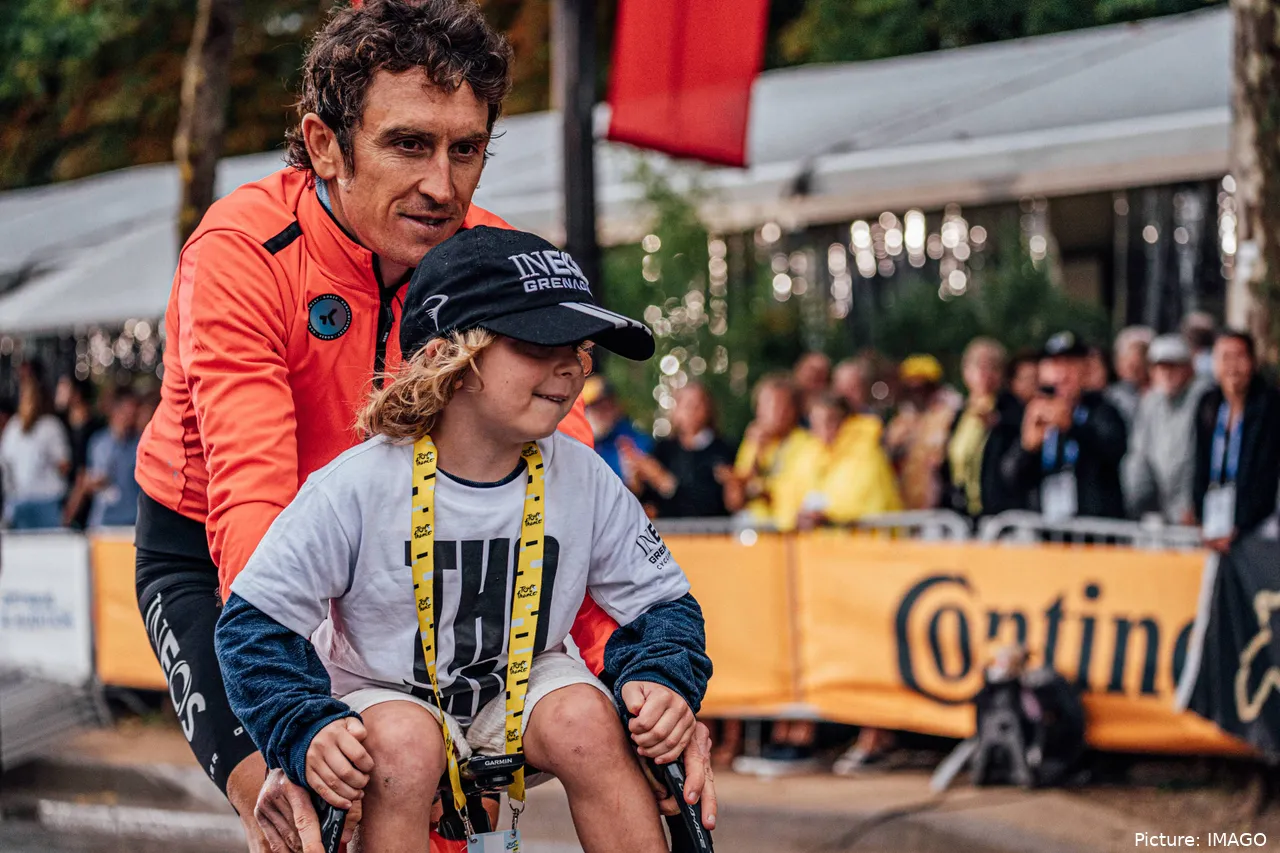
British legend Geraint Thomas waved goodbye to the Tour on Sunday
The commentary team spoke with pride about the quality and
integrity of their work. “I think there’s been a commitment to journalism, a
commitment to saying what needs to be said for our own integrity, whether it’s
going to be liked or not.” The production built a reputation for knowledge not
just of the race, but of the culture in France too. Even when the sport was
under clouds of suspicion or scandal, the ITV team stuck to a high standard.
The broadcast, and Boulting, signed off with a simple truth:
“The Tour will of course continue as it always has. But for everyone here who
brought it to you for free for 25 years on ITV, it was never just about the
race. It was about the experience.” And that experience was deeply British in
its tone and passion.
ITV’s exit marks more than the end of a contract, as it
severs a connection between British audiences and one of sport’s most poetic
epics. The Tour de France is not going anywhere, but the way it is experienced
by millions in the UK has changed, perhaps for good. “We look back not with
sadness, but with fondness and immense pride.”
The question now is whether a sport that once thrived in the
public eye can continue to grow behind a paywall. For a generation of fans, ITV
was the Tour de France. It wasn’t just about coverage. It was a companion to
the summer, and as one commentator put it, “a burst of laughter between the
climbs.”
The road continues. But the view has changed.

Fin MajorCycling Journalist
Fin Major is a UK-based writer at CyclingUpToDate and has been part of the team since 2024. He is the site’s main writer for FAQs and evergreen explainers and has written around 2,000 pieces for the platform. Alongside this work, he focuses on in-depth analysis and covers the biggest races on the calendar, including the Tour de France, the Giro d’Italia, and La Vuelta a España, providing clear context around performance trends, tactics, and key storylines.
In his reporting, Fin uses reputable data sources such as ProCyclingStats for results, statistics, and historical context. He places strong emphasis on careful sourcing, editorial accuracy, and updating articles promptly when new, verified information becomes available. Outside of writing, Fin is an active cyclist, which supports his practical understanding of the sport and its demands.
claps 104visitors 46
Just in
Popular news
Latest comments
- The article makes it sound like a great thing and something to be applauded. The reality is is gives the Americans another 6 years to fleece European cycling fans or force them to hunt around Europe with VPN’s for free feeds. Not something to be celebrated in my book. Before someone points out that coverage of this depth costs money, yes, I agree but not £30+ per month a fee I will wager will gradually increase now this deal has been cemented.Paul53119-10-2026
- Great. Thrilled. (Satire) Oh, how I miss the days of GCN. Still wear my GCN hoodie with pride.anonymouscyclist19-10-2026
- You could also look at it another way. How many riders have had better or more consistent results since the Tour?Jumpyjohn19-10-2026
- Whilst I love Tadej (and Remco, who deserves to be mentioned here, too), @JumpyJohn makes a valid point, and he isn’t wrong @MajorPayne. It is a fact that today’s official broadcasters of cycling struggle to keep our attention once the likes of Tadej (or Remco) attacks at ~80km or so. In the 142nd issue of Rouleur, Ned Boulting reflects on the often stressful paradox of commentating on a race that is effectively over before the broadcast window even hits its stride. In this edition, he centres on Remco’s 1hr solo at the Challenge Mallorca this year, and captures the panic and dread shared by the commentators when a dominant rider kills off the racing tension early. I recommend you read it, it’s a fascinating insight into the world of commentary, and the true viewing figures of today’s cycling. I must add here, I love Tadej and Remco, but I would be lying if my heart rate wasn’t higher when watching the World Championships this year. And I’m sure Rob Hatch would say something akin regarding his commentary!anonymouscyclist19-10-2026
- The shattered women’s marathon record was clean and highly surprising and then a few months later the athlete was very positive in another test for something not taken by mistake when recording far less impressive results. Sounds to me like the problem is still the age old one, detection is often way behind. Just like with crime, it’s not because you can’t catch the criminals that you aren’t aware of the crime.Jumpyjohn19-10-2026
- Listen, you have a point but on the other hand in cycling, once some of the riders go solo and build a minute’s gap, there’s hardly any action left to watch. Cycling is definitely not for today’s generations of accelerated viewing. Other people find skydiving or chess exciting but you can’t force everyone to feel the same.Jumpyjohn19-10-2026
- That’s a funny one. Yeah obviously he’s more aero than some but most of the aero effect at elite level is the bike. Now you have me starting to feel sorry for the guy behind him when he pulls a groupetto.Jumpyjohn19-10-2026
- Knew a World Tour promotion was coming for Ben this season. Thrilled for him, and can't wait to see what he can do at this level. Another one to watch at the TTs.anonymouscyclist19-10-2026
- It honestly breaks my heart to see this. I had a feeling this might happen over the last few years, but I kept praying it wouldn't, and that Joey would find his niche, especially back racing alongside his brother. After growing up racing alongside PH-MAS, the Pidcock brothers have always felt like one of our own, as we’ve watched them grow from Club level all the way up to PC and WT. I wish Joey nothing but the best of luck in whatever he does next, but selfishly… I do wish for him to move into the role of Q36.5 team staff.anonymouscyclist19-10-2026
- Predictable, sure! But boring??? OMG! Was Mike Tyson predictable and boring in his prime? Air Jordan? Schumacher or Senna? OMG!!!MajorPayne19-10-2026
Loading
4 Comments