"The issue of ketones is more problematic than ever": Clean cycling group slams UCI over ketone inaction
Cycling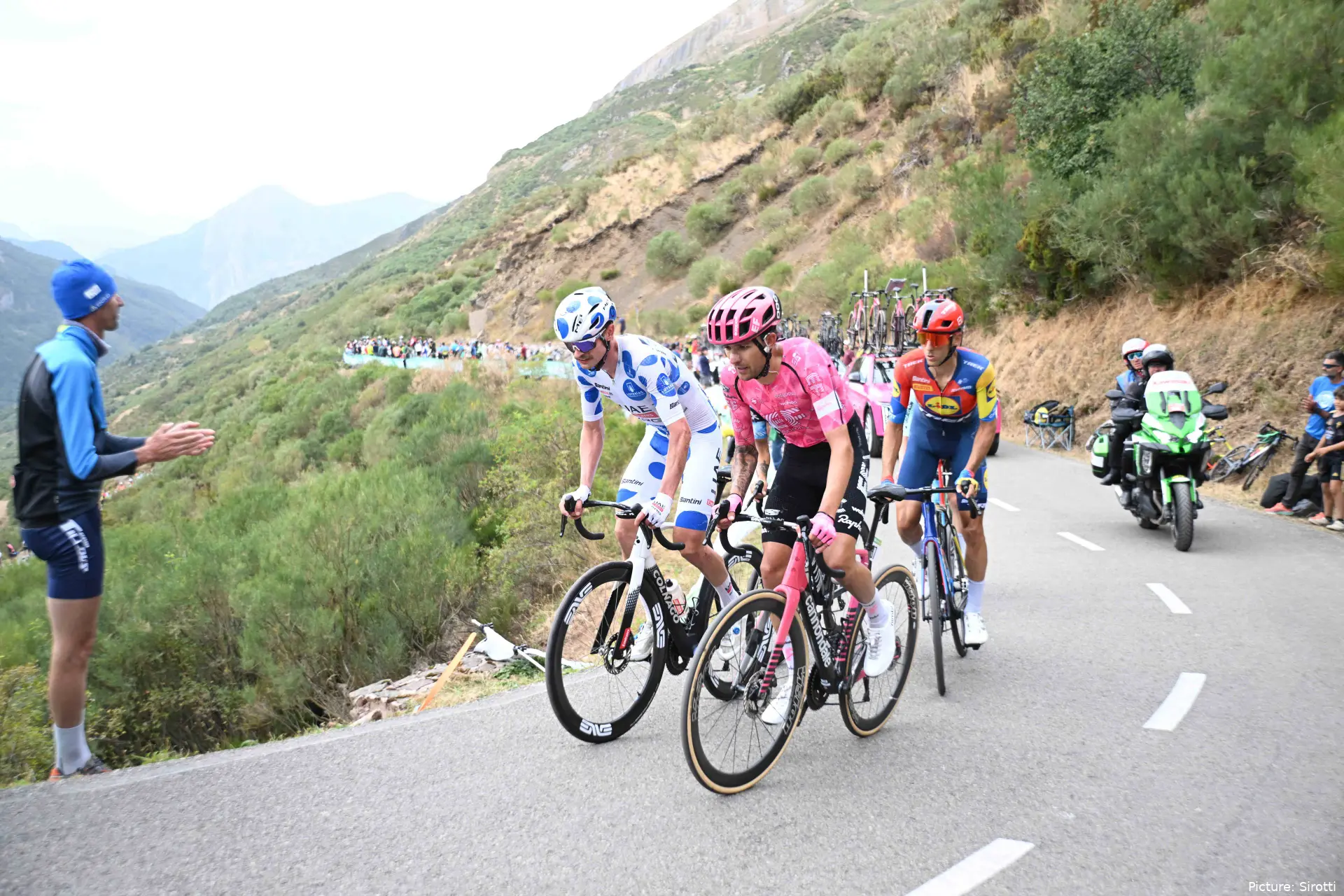
Professional cycling finds itself in the middle of one of its most debated controversies: the widespread use of ketone supplements. The “clean-cycling” group Mouvement Pour un Cyclisme Crédible (MPCC) has publicly criticised Union Cycliste Internationale (UCI) for failing to resolve the ketone issue, leaving the peloton in a prolonged limbo.
A recent statement from the MPCC warned that the UCI’s long wait for results from commissioned studies has become “embarrassing,” and urged a firm stance: either approving use or banning it outright. According to MPCC, the UCI’s impact assessment that had been announced months ago could be delayed until the end of 2025, a timeframe they consider unacceptable given the implications for athlete health and sport credibility.
Despite mounting pressure, the UCI has not imposed a ban, but as of October 2025 it formally advised against the use of ketone supplementation.
What are ketones, and why are they contentious?
Ketones, often marketed as the fourth macronutrient, are said to provide an alternative fuel source for body and brain, sparing glycogen stores and offering endurance and recovery advantages. They can be achieved through physiological ketosis (fasting or zero-carb diets) or by ingesting exogenous ketone esters or salts. Claims range from improved endurance and late-race explosivity to faster recovery and enhanced mental focus.

Cycling’s embrace of ketones accelerated after several top teams began publicly associating with major supplement brands, such as Visma Lease a Bike and Soudal - Quick-Step. According to insiders, in events such as the last Tour de France, up to 75 % of the peloton may have used ketones. Because ketone supplements remain legal (not on the WADA banned list), teams and riders are left to decide individually whether to use them.
Within the MPCC, tension is rising. Their bulletin argues that the UCI must resolve the uncertainty. “The issue of ketones is more problematic than ever. Either the UCI is certain that the use of ketones is acceptable and must make this known… or it is not, and must state loud and clear that the institution does not recommend their use, or even that it prohibits it.”
A booming market beyond cycling
Meanwhile, the ketone supplement industry has exploded beyond professional cycling. Marketing campaigns target not only athletes but also everyday people, promoting ketones as “mental boosters,” “fuel for endurance,” and “performance enhancers.”
Even if the UCI rules them out, authorities will face enforcement challenges: ketones are widely available as nutritional supplements, not forbidden substances, which makes detection much more difficult. The debate, thus, touches on deeper issues: how to handle performance-enhancing supplements legally available to all, without undermining fairness, health, and credibility.
Read also


Félix SernaCycling Journalist
Félix Serna is a writer at CyclingUpToDate and has been part of the team since 2025. He covers professional cycling across both the men’s and women’s calendars, with a focus on UCI rankings, race developments, and rider performance. His work includes interview-based reports, liveblogs, and tournament coverage designed to provide clear, accurate context throughout the season.
In his reporting, Félix regularly uses ProCyclingStats for results, statistics, and historical reference. He places strong emphasis on careful sourcing, editorial accuracy, and updating articles promptly when new, verified information becomes available. He holds a bachelor’s degree in International Studies.
claps 1visitors 1
Just in


Popular news

Latest comments
- A shame to see him retire, I really liked him as a rider. His dignified tribute along with Matej Mohorovic to Gino Mader after his death was class and will always live in my memory. Enjoy your retirement.GregT11-10-2026
- A shame to see him retire, I really liked him as a rider. His dignified tribute along with Matej Mohorovic to Gino Mader after his death was class and will always live in my memory. Enjoy your retirement.GregT11-10-2026
- I thought Seixas had hit the end of the road from a fatigue standpoint, after the WC meltdown - and he still finished ok. This was impressive and an amazing return.mij11-10-2026
- totally, eating crow for breakfast this morning. after the world championships I thought we were looking at a late season fade from fatigue. way to go Paul!mij11-10-2026
- Well if UAE the best team in history comes knocking their the only team in the world who can get Seixas. Seixas will become unbeatable and incredible there. Lets see if he stays at decathlon or goes to UAE.miguel11-10-2026
- Pogi would have won the Vuelta at around 10 min. But it would have been boring for fools like you. Capish?PogiSloFans11-10-2026
- Rather than me describing the technology at length on here, If you google. Line-scan cameras. They are also sometimes called Slit-Scan cameras. Either search will fill you in. You can read all about how they. work. Enjoy! Just to be clear the cyclist is saying he wants to see exactly where the digital finish line is in relation to the actual physical finish. At this point we only have the word of the authority that the digital line corresponds to the exact starting edge of the physical finish line. That seems like a reasonable request to me.Prorodsandstuff11-10-2026
- 100% @Jumpyjohn, good point well raised.anonymouscyclist11-10-2026
- The media keep stirring the soup.. or spitting in it
 leedorney11-10-2026
 - Yes, he has won many races... second class races. He isn't the real deal... Seixas is the real deal. Capish?PogiSloFans11-10-2026
Loading
Write a comment