"He will not pedal from 80 kilometers to the finish" - Analysts on the tactics of Mathieu van der Poel and Alpecin for the Omloop
Cycling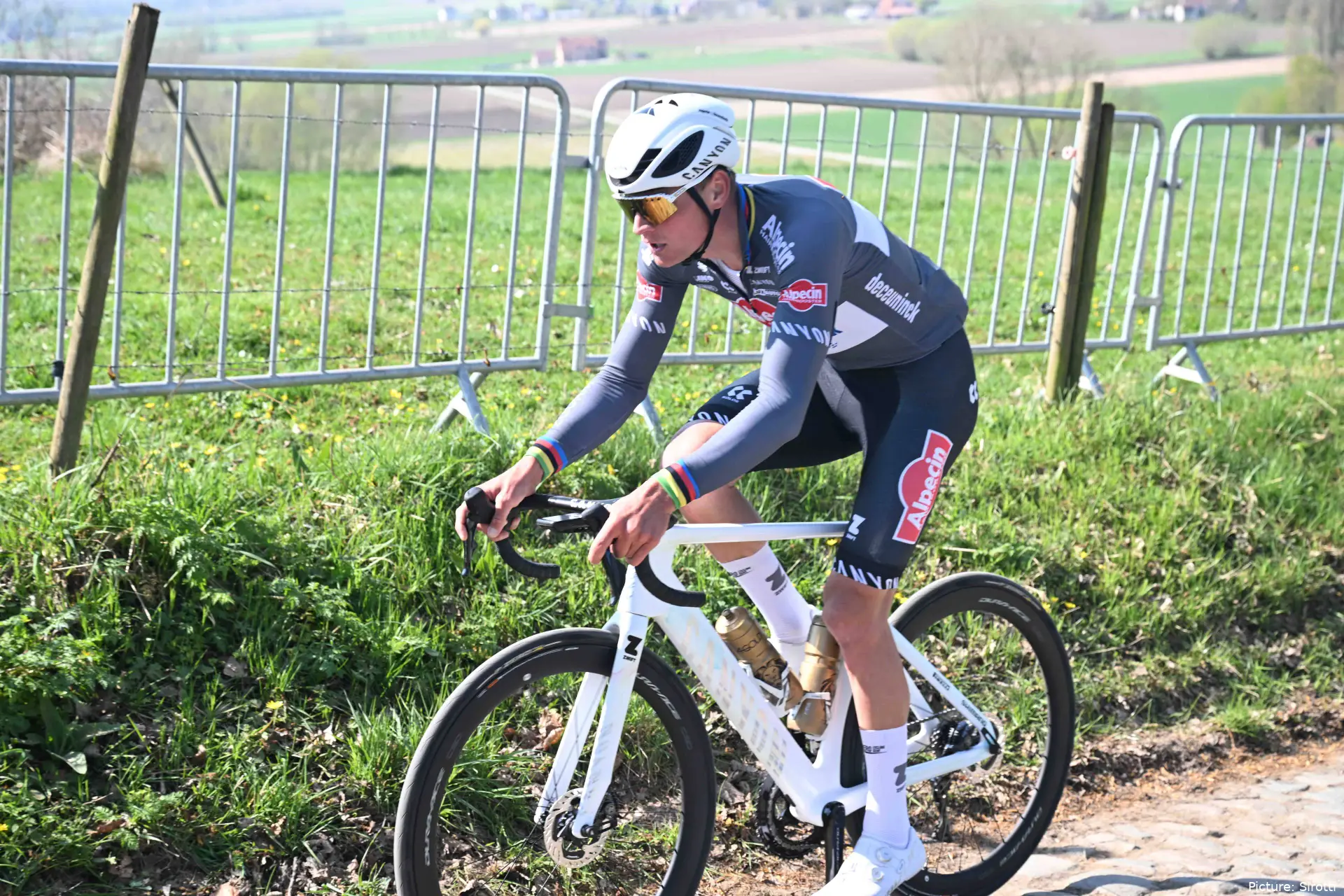
The new Classics season gets underway in Belgium with the ever-unpredictable Omloop Het Nieuwsblad, a race that traditionally opens the calendar of the major Northern events and, over the decades, has established itself as the first true test of form for specialists in cobbles and wind-exposed terrain. This Saturday, all eyes will be on Mathieu van der Poel, who has chosen this Classic to launch his road campaign.
Omloop is far more than just another February race. Its twisting route, marked by short, explosive climbs such as the Bosberg and long, open roads towards Ninove, demands a rare blend of power and tactical awareness.
Long-range attack?
Unlike other Classics where the cobbles alone dictate the outcome, positioning in the peloton and the ability to react to crosswinds can prove decisive here. The recent history of the race shows that both long-range attacks and reduced bunch sprints have determined the winner, reinforcing its unpredictable nature.
According to analysts from Sporza, José De Cauwer e Christoph Vandegoor, a long solo from Van der Poel should not necessarily be expected - "He will not pedal from 80 kilometers to the finish" - Instead, the forecast points towards in the peloton.
Vandegoor captured that idea with an interesting comparison: "It’s a flawed comparison, but I’m hoping for something similar to his first crossing in Namur. He wasn’t dominant there either, but he won. On that miserable concrete section after the Bosberg, you’re going to get a different kind of race."

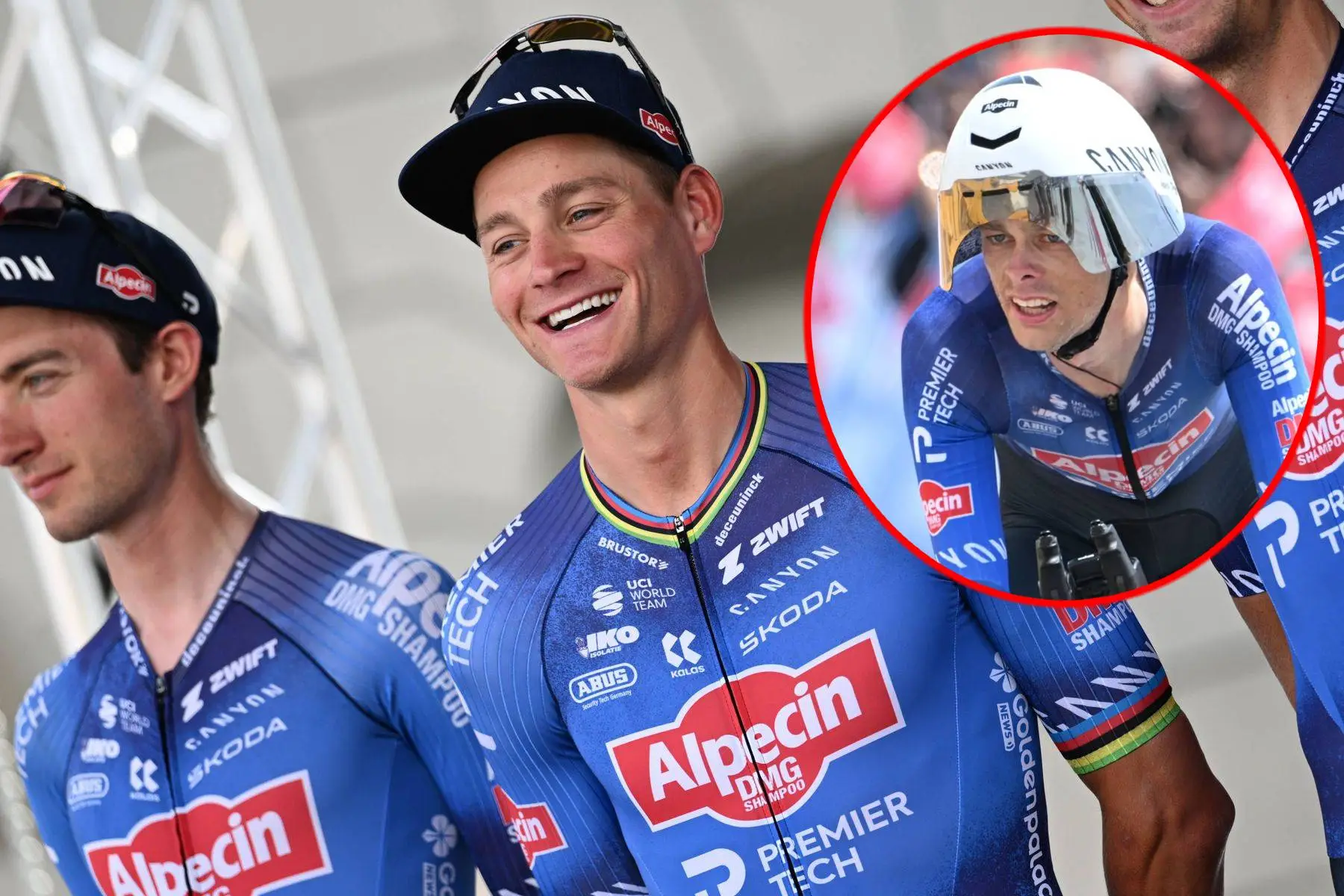
Jasper Philipsen could be an important card to play for Alpecin - Premier Tech
The reference to the concrete section after the Bosberg is telling. That stretch, often exposed to crosswinds, can split the group and trigger intense chases. The open road towards Ninove is well known for creating echelons. It is precisely in this kind of scenario that Van der Poel can make the difference, not only with a attack, but also through his ability to impose tempo and control dangerous moves.
"Because with him you have a great engine who can bring a group back into the race in the wind." The quote underlines the Dutchman’s versatility. He is not just an explosive attacker, but also a powerful engine capable of driving the front of the group and reshaping the race in favour of his team’s interests. That makes him dangerous both offensively and in race management. His presence alone changes the dynamic of the peloton, increases the vigilance of his rivals and raises the tactical tension.
At the same time, that central role turns him into the primary marked man. "There may also be more in store from him." Inevitably, he is the reference point. Every acceleration will be closely followed, every move analysed with suspicion.
A weapon called Philipsen
There is another factor to consider, highlighted by José De Cauwer. "He can also take a gamble, because he has Philipsen on the team" The presence of Jasper Philipsen adds a decisive tactical dimension. With one of the fastest finishers in the peloton as an alternative card to play, Van der Poel can approach the race more patiently. He can anticipate moves, harden the race or simply wait for a reduced group in which Philipsen can finish the job.
That partnership places Alpecin - Premier Tech in a privileged position at the start. The Belgian squad has already shown in previous seasons that it knows how to operate on multiple fronts, alternating between pure aggression and strategic control. "Personally, I expect a lot from him. Philipsen always needs a few races to get up to speed, and he’s already got those in his legs."
One thing seems clear about Omloop Het Nieuwsblad. "Mathieu is not going to throw a wrench into the works", said Vandegoor. The metaphor suggests restraint and clarity, two qualities that can be just as valuable as raw power in a race that, year after year, launches the Classics season with maximum intensity.


Carlos Silva is a writer for CyclingUpToDate.com, where he contributes race reports, interviews, analysis pieces, and live coverage of the international cycling calendar. Holding a degree in Sports from the Jean Piaget Institute, he combines academic knowledge of performance, training, and competition with hands-on journalism experience in professional cycling.
Throughout his career, Carlos has conducted interviews with leading figures in the sport, including Alberto Contador, Joaquim Rodríguez, Óscar Pereiro, João Almeida, Isaac del Toro, Derek Gee, John Degenkolb and Geraint Thomas. These conversations reflect direct engagement with Grand Tour winners, Classics specialists, and emerging talents.
He has provided on-site coverage at major events ranging from the Vuelta a España to the Tour de France, alongside stage races such as Vuelta a Andalucía, Volta ao Algarve, Volta a Portugal and O Gran Camiño. Covering the mythical climbs of the Giro d'Italia remains one of his professional ambitions.
Carlos is responsible for liveblog coverage of all major WorldTour races and beyond, including the Tour de France, Giro d'Italia and Vuelta a España. His reporting integrates verified data from ProCyclingStats to ensure statistical accuracy, contextual depth, and analytical precision.
A lifelong cycling enthusiast, he approaches storytelling across written, photographic, and video formats with a focus on credibility, tactical insight, and informed race interpretation.
claps 7visitors 7
Just in
Popular news
Latest comments
- Take your beliefs and politics elsewhere. This is about the love of the sport of cycling.JoeyC19-11-2026
- Derp! Yes, many sportsmen across the world dope if they get the chance and think they will never get caught... BUT !!!... The biggest doping scandal in the history of sports comes from THE UNITED STATES OF AMERICA!!! AD ACTA!!!PogiSloFans19-11-2026
- seriously? ruben silva citing what he said himself in his own podcast on his own cycling 'journalism' website?Ketterechts19-11-2026
- I guess the best cyclist in the world, Tadej Pogačar-Pogi will not be attending the audience with the Pope. There are more reasons for that: 1) We the Slovenians are mostly catholic, but we're the least religious slavic people in Europe. Atheism is becoming bigger every year. 2) Child sexual abuse (pedophilia) by Catholic priests and other members of religious orders has been documented across many countries (also in Slovenia), alongside systemic failures by Church authorities to report or address the misconduct. Public inquiries, investigative journalism, and legal proceedings have brought widespread attention to both the abuse and institutional cover-ups. Shame on them. 3) Why go to an event where the main protagonists believe in an imaginary man in the sky. Well, actually they don't believe, they're just lying to us because it's nice to have power over the people. The biggest lie in the history of mankind is that there is a god. Please, stop insulting our intelligence.PogiSloFans19-11-2026
- Derp! So, this is a perfect example of the Association fallacy. Thing is, no prominent American cyclist has been implicated in a doping scandal in this last generation. And Lemond's generation was before the generation you mention ...which was pretty much all doping. If you wanted to make a more valid association, it would be with the generation, not with the nationality.acem8219-11-2026
- Don’t worry. After 75, you’ll start getting faster again every year. ;-)averagecyclist19-11-2026
- Oh, we have a lot of proof... most American cyclists are dopers: Lance Armstrong...Tyler Hamilton...Floyd Landis...George Hincapie...Levi Tom Danielson... David Zabriskie... PS: You want more? I still have many of them up my sleave... Capish?PogiSloFans19-11-2026
- Hey frieders13, your comments are stupid!PogiSloFans19-11-2026
- You're right, i know him since he was a junior....holgersson-nils19-11-2026
- your commemts make this site boring!frieders319-11-2026
Loading
17 Comments