"The day of reckoning" – Italian favourite Domenico Pozzovivo analyses the defining climbs of the 2026 Giro d'Italia
Cycling
The 2026 Giro d’Italia has been described by Vincenzo Nibali and others as a balanced edition rather than an excessively brutal one. But balance does not mean easy.
Inside the twenty-one stages sits a sequence of climbs that can reshape the race if they are approached with courage and the right tactical support. Few riders are better placed to dissect them than Domenico Pozzovivo, who recently dived into the route and profile of the Giro in conversation with Bici.Pro.
After twenty seasons in the WorldTour and a lifetime of reading gradients with forensic precision, the Italian offers a detailed and unfiltered assessment of where the Giro will break apart.
He identifies four climbs which in his view will define the race. They differ in altitude, length, positioning and tactical complexity, but together they form the spine of the 2026 route.
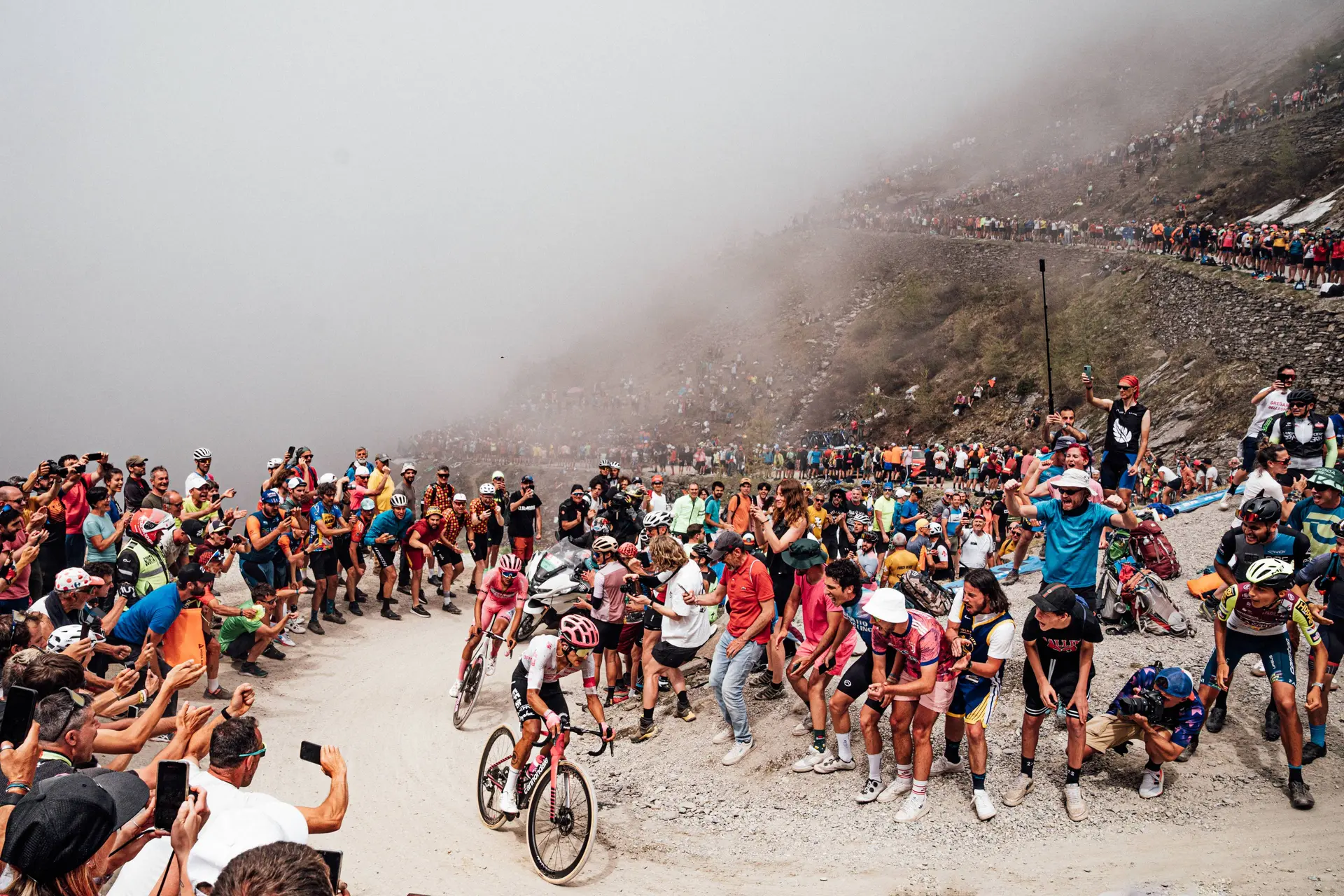
Passo Giau: Pozzovivo’s hardest climb of the entire Giro
When asked to name the most decisive ascent of the race, Pozzovivo goes straight to the Dolomites. “In my view the hardest climb, both for the stage and for the general classification, is the Giau” he says. He explains that its steepness, overall elevation gain and altitude place it above every other climb.
The Giau does not sit right before the finish, which might have made it less influential in past eras. But Pozzovivo argues that racing has changed.
“In the past I would have said the Giau is too far from the finish. In today’s cycling I am not so sure” he says. He believes long range attacks are now far more realistic, especially with team support.
He also highlights the tactical trap riders must avoid. Once over the Giau, the road continues to the Falzarego and from that side it is not selective. Anyone who attacks alone risks being caught if the group behind organises. “If the riders behind join forces, the one who attacks could find himself stuck” he warns.
And the Giau does not end at the summit. It will shape the final climb to Piani di Pezze. “Its gradients and its difficulty can influence the final climb of Piani di Pezze” he says, emphasising that the last ascent, while short, is steep enough to magnify the damage done earlier.

Pozzovivo won his sole Giro d'Italia stage back in 2012
Blockhaus: a brutal climb that may produce a conservative race
Pozzovivo knows Blockhaus well and ranks it second in difficulty, but he believes the stage may not explode as fans expect.
“It remains an extremely demanding climb” he says. This year the climb begins slightly higher, avoiding the longer gentler approach used in the past. Those missing kilometres matter. “The five or six easier kilometres at the bottom are gone, and even though they are not hard they always count” he notes.
Despite this, he believes the stage could become a waiting game. “There are no big climbs before it and the risk, because it is such a long stage, is that the favourites control each other all the way to the finish” he says.
With the summit finish arriving as early as stage seven, Pozzovivo cannot see the overall contenders taking major risks. “I do not expect the big riders to fight for the jersey so early. The breakaway could win” he predicts.

Carì: the post rest day shock that can flip the Giro
Pozzovivo ranks the summit finish at Carì in Switzerland as the third climb of importance. It comes immediately after the rest day and he believes that timing alone makes it volatile.
“It is an explosive climb that comes after the rest day. It can really shake things up” he says. “Carì will be more decisive because compared with Pila it is much shorter. Pila is almost twenty kilometres, Carì is eight or nine.”
The road itself encourages aggressive racing. “The road is wide and regular in both cases, almost like something from the Tour de France” he says. But the shorter length of Carì means the pace will be higher and mistakes will be punished immediately.
He believes it could create significant gaps. “If they attack early you can make a big difference on gradients like those” he says.

Piancavallo: the final showdown
The last climb in Pozzovivo’s ranking is the final major summit finish of the Giro, the double ascent of Piancavallo. For him, everything about this stage screams tension. “This is the day of reckoning” he says.
The double ascent, with a flat section separating them, demands two very different efforts. “You have to attack it directly, especially on the second ascent” he explains.
The first ascent can be raced hard too, but only with support. “Between the first and second climbs there are twenty five kilometres of flat. You need a reference point there” he says.
If the climb is raced aggressively, the gaps could be decisive. “Because it comes at the end of the Giro it can make a big impact if tackled strongly” he says.
Memories and an extra climb to consider
Pozzovivo reflects fondly on both the Giau and Blockhaus. “On Blockhaus in 2022 I rode strongly and was satisfied with my performance” he recalls.
The Giau brings even older memories. “In 2012 we traded attacks with Michele Scarponi. The stage finished in Cortina. I went over the top in first place” he says.
Then he adds something unexpected. The toughest climb in pure numbers may not be any of the four headline ascents. “In terms of numbers the hardest climb of this Giro is Montagna Grande di Viggiano” he says.

Pozzovivo rode the Giro d'Italia 18 times in his iconic career
Closing thoughts
Pozzovivo’s analysis is detailed and precise. He ranks the decisive climbs as Giau, Blockhaus, Carì and Piancavallo, with Montagna Grande di Viggiano as an extra warning sign. Together they mark the moments where the Giro can fracture, where fatigue can overwhelm planning and where the strongest climbers can finally separate themselves.
If his reading is correct, the maglia rosa will not be decided by steady endurance but by timing, aggression and the courage to attack on the day of reckoning.
Kieran WoodDeputy Editor-in-Chief
Kieran Wood is a sports journalist based in Wales and has been active in journalism since 2022. He regularly contributes to DartsNews.com and CyclingUpToDate.com, where he covers professional cycling and darts. In cycling, his work includes liveblogs from major races, including the Tour de France, the Giro d’Italia, and La Vuelta a España, alongside race reports and analysis. He has also conducted interviews with professional riders.
His reporting spans the full racing calendar, from one-day classics to stage races, with a focus on accurate, real-time coverage and clear contextual analysis. For statistics, results, and historical context, he regularly uses resources such as ProCyclingStats. To support reporting on rider activity and training context where relevant, he also references Strava.
In his work, Kieran places strong emphasis on careful sourcing, editorial accuracy, and updating articles as new, verified information becomes available.
claps 0visitors 0
Just in

Popular news
Latest comments
- There was once a time when Lance was supremely popular and he used his artificial "It's Not About the Bike: My Journey Back to Life" persona to lead his mob in going after Greg. There was no one Lance did not abuse in protecting his phony hero image. Lance promoted himself as a divine megastar and he let down millions of cancer victims and gullible devotees who clung far too long to the charade. Lance is the epitome of a corrupt person and because of his power, many around him, including business enterprises, succumbed to the evil. All who got in Armstrong's way were mercilessly attacked by him and his minions. This remarkably continues today with a new generation. LeMond was a number one enemy and paid a huge price. Who do you think slandered who?Yepperoni03-11-2026
- You despise him because he calls out the truth....OK clown !frieders303-11-2026
- JV is really slighting himself with not doing the 1 dayers.. 🤷
 leedorney02-11-2026
- Watch the interview on youtube. I don't speak French. I do speak English and Spanish and you can hear it in his voice. Years ago LeMond had real personal problems I imagine in no small part because of Armstrong. then Armstrong goes round "full blast" re: LeMond having drinking and drug problems. The same way Andreu was expelled from mainstream cycling so was LeMond. On the positive side the clips of the ride and chatting with old teammates and was good. To seemed like a fun day and experience and good reason brush up his French.atom02-11-2026
- and another no-news article around the ‚2 tokyo jogging rounds‘ headline, this time spiced with some days old ‚news‘ that the LA and japan vacation trips come during or after the tdf route release. i am getting more and more annoyed by this time-stealing no-news crap. but who am i to complain? nobody forces me to come back for more ‚news‘ day after day …Ketterechts02-11-2026
- It would likely be a very steep section of 4.1 km, not changing the average gradient considerably, with the climb remaining 10.1 km at 11.8%. It would reach 20% on the gravel. It would start 1.6 km in, and finish with 4.2 km left to climb (before the short final descent)
 Rafionain-Glas02-11-2026
- Welcome to the off-season.
 santiagobenites02-11-2026
- guillaume martin in this list is quite a surprise as a gc rider.Ketterechts02-11-2026
- Who cares what Bruyneel thinks. He and his best mate Lance, the biggest fraud in the history of sport, have no place commenting on anything but how to lie and cheat!whit2pet02-11-2026
- Eeesh!Lozza02-11-2026
Loading
Write a comment