“He has improved enormously and is absolutely formidable” – Jasper Philipsen in no doubt over who will be his main sprint rival in 2026
Cycling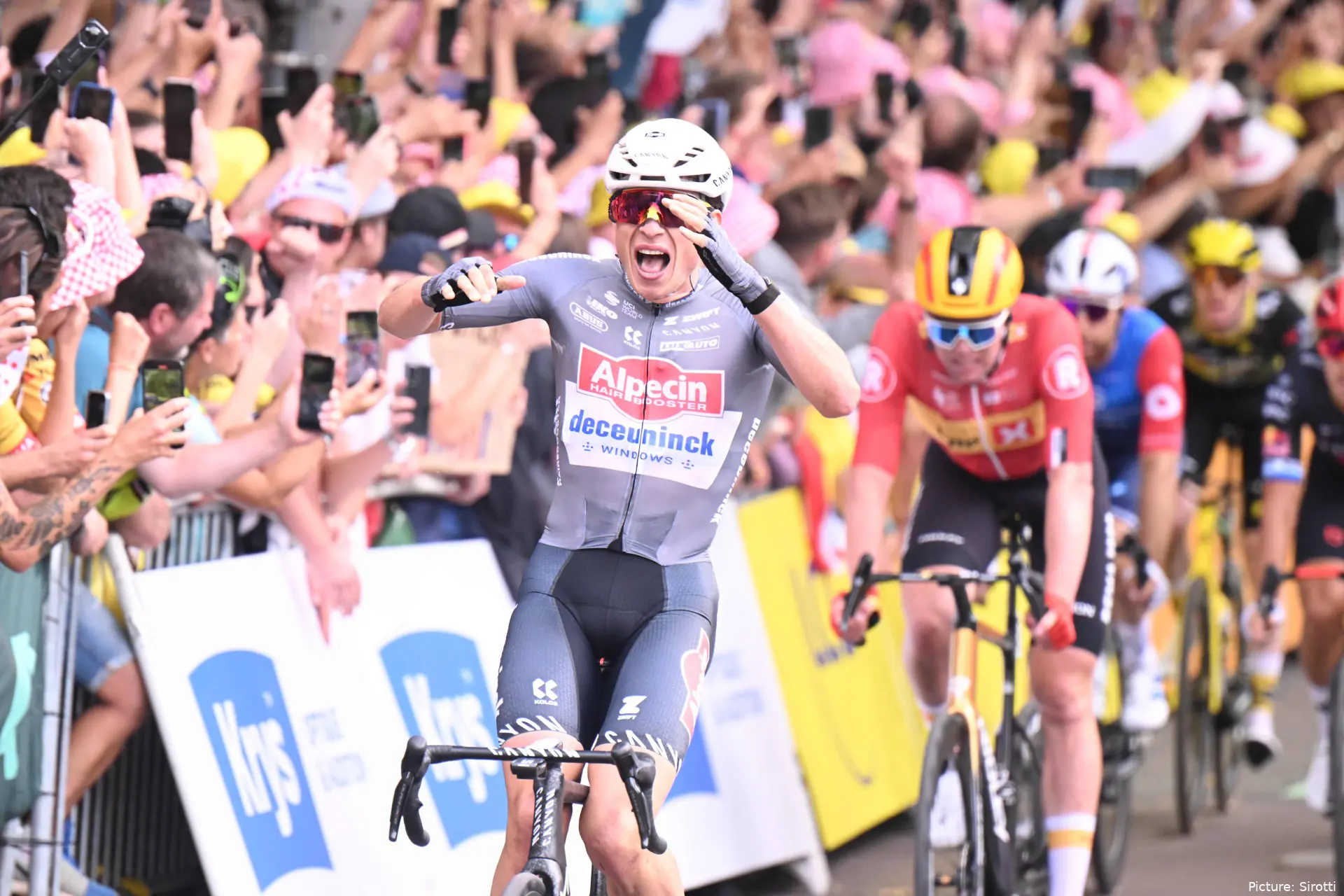
Jasper Philipsen is heading into 2026 with clarity over the rider he believes will define his sprint season: Jonathan Milan.
Speaking in conversation with La Gazzetta dello Sport, the Alpecin sprinter made no attempt to play down the scale of the challenge ahead, identifying the Italian as the benchmark he expects to be measured against next year.
Philipsen did not hide his admiration for Milan’s leap in performance since joining Lidl-Trek. “He has improved enormously and is absolutely a formidable rival, especially because he is two years younger than me,” he said.
While the two have crossed paths for several seasons, Philipsen suggested the Milan of 2025 was a different rider entirely. “Maybe he didn’t quite hit his stride during his years at Bahrain, but since he joined Lidl-Trek his level has gone up, and that’s good for our rivalry.”
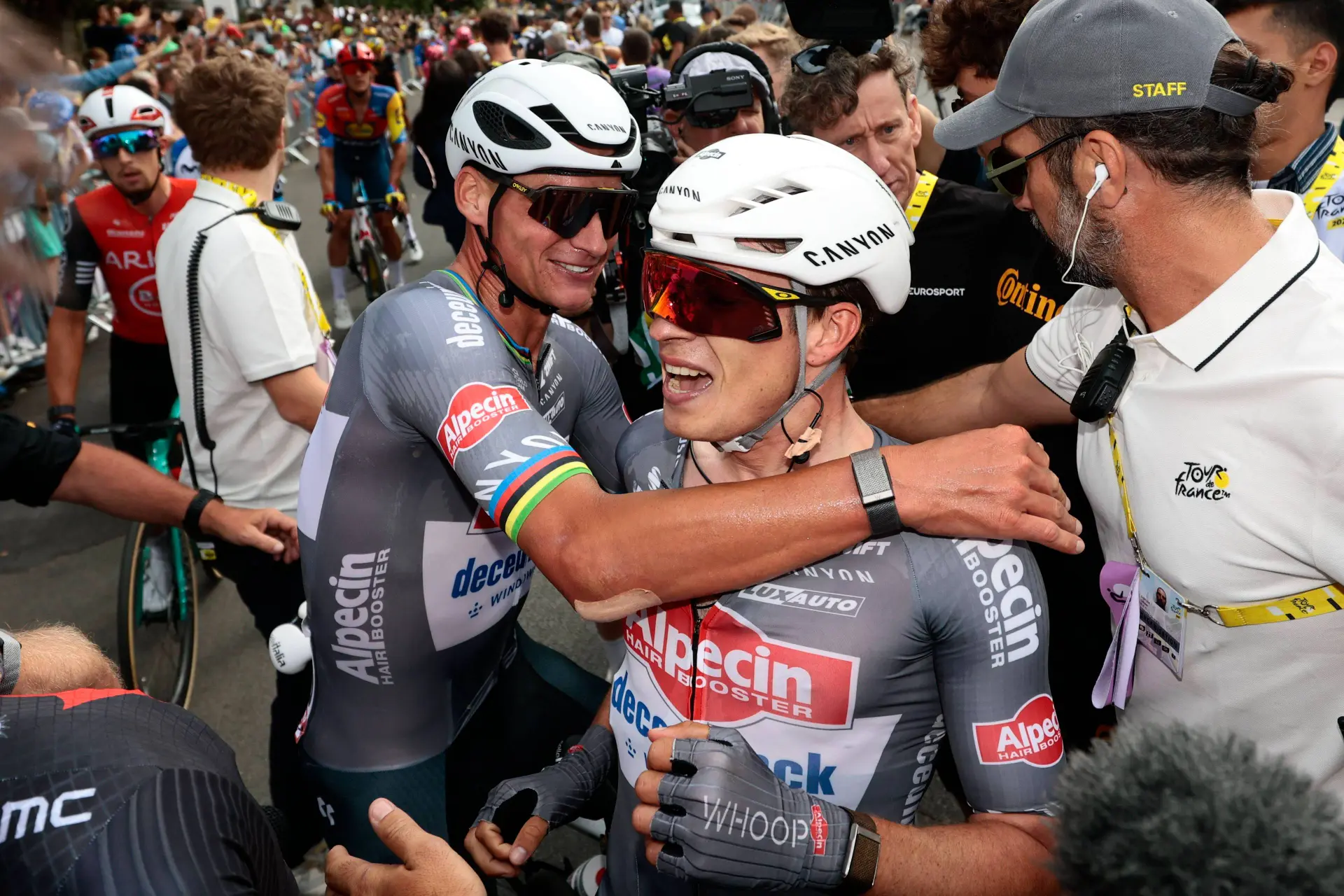
Philipsen sets the bar high for 2026
The Belgian is approaching the new campaign with a sense of unfinished business after his 2025 season was disrupted first by a crash at Nokere Koerse and then by the heavy fall that forced him out of the Tour de France. Despite the setbacks, his ambitions remain unchanged.
“My plans will be more or less the same as last year,” he told Gazzetta. “I want to win the Monuments and then I also hope to do well at the Tour de France. And it wouldn’t be bad to win a couple of stages at the Giro…”
His Giro remark would mark a career first — Philipsen has never lined up at Italy’s Grand Tour — but he made clear that sprint targets alone won’t define his season. Balancing explosive bunch finishes with Monument preparation has always been his challenge, and he knows it.
“It’s important to find the right balance before each race,” he said. “If I had the time and the opportunity to concentrate 100% on the sprints, I’d definitely be among the top three.”
A rivalry set to shape the season
With Milan now performing at the highest level and riders like Tim Merlier also winning heavily, Philipsen knows the competition in 2026 will be fierce. But in assessing Milan’s transformation — particularly since joining Lidl-Trek — the Belgian made clear that the Italian is the rival he expects to define the sprint landscape next year.
For Philipsen, that rise in level is enough to set the tone for one of the key battles of the 2026 season: a head-to-head sprint rivalry built on mutual speed, contrasting styles, and Milan’s sudden emergence as one of the most powerful finishers in the world.

Kieran WoodDeputy Editor-in-Chief
Kieran Wood is a sports journalist based in Wales and has been active in journalism since 2022. He regularly contributes to DartsNews.com and CyclingUpToDate.com, where he covers professional cycling and darts. In cycling, his work includes liveblogs from major races, including the Tour de France, the Giro d’Italia, and La Vuelta a España, alongside race reports and analysis. He has also conducted interviews with professional riders.
His reporting spans the full racing calendar, from one-day classics to stage races, with a focus on accurate, real-time coverage and clear contextual analysis. For statistics, results, and historical context, he regularly uses resources such as ProCyclingStats. To support reporting on rider activity and training context where relevant, he also references Strava.
In his work, Kieran places strong emphasis on careful sourcing, editorial accuracy, and updating articles as new, verified information becomes available.
claps 5visitors 3
Just in
Popular news
Latest comments
- A shame to see him retire, I really liked him as a rider. His dignified tribute along with Matej Mohorovic to Gino Mader after his death was class and will always live in my memory. Enjoy your retirement.GregT11-10-2026
- A shame to see him retire, I really liked him as a rider. His dignified tribute along with Matej Mohorovic to Gino Mader after his death was class and will always live in my memory. Enjoy your retirement.GregT11-10-2026
- I thought Seixas had hit the end of the road from a fatigue standpoint, after the WC meltdown - and he still finished ok. This was impressive and an amazing return.mij11-10-2026
- totally, eating crow for breakfast this morning. after the world championships I thought we were looking at a late season fade from fatigue. way to go Paul!mij11-10-2026
- Well if UAE the best team in history comes knocking their the only team in the world who can get Seixas. Seixas will become unbeatable and incredible there. Lets see if he stays at decathlon or goes to UAE.miguel11-10-2026
- Pogi would have won the Vuelta at around 10 min. But it would have been boring for fools like you. Capish?PogiSloFans11-10-2026
- Rather than me describing the technology at length on here, If you google. Line-scan cameras. They are also sometimes called Slit-Scan cameras. Either search will fill you in. You can read all about how they. work. Enjoy! Just to be clear the cyclist is saying he wants to see exactly where the digital finish line is in relation to the actual physical finish. At this point we only have the word of the authority that the digital line corresponds to the exact starting edge of the physical finish line. That seems like a reasonable request to me.Prorodsandstuff11-10-2026
- 100% @Jumpyjohn, good point well raised.anonymouscyclist11-10-2026
- The media keep stirring the soup.. or spitting in it
 leedorney11-10-2026
 - Yes, he has won many races... second class races. He isn't the real deal... Seixas is the real deal. Capish?PogiSloFans11-10-2026
Loading
2 Comments