4 seconds per kilometer - How much time does Primoz Roglic need to take on Enric Mas to take La Vuelta lead at the time trial, and has he done it before?
CyclingWednesday, 09 September 2026 at 14:00
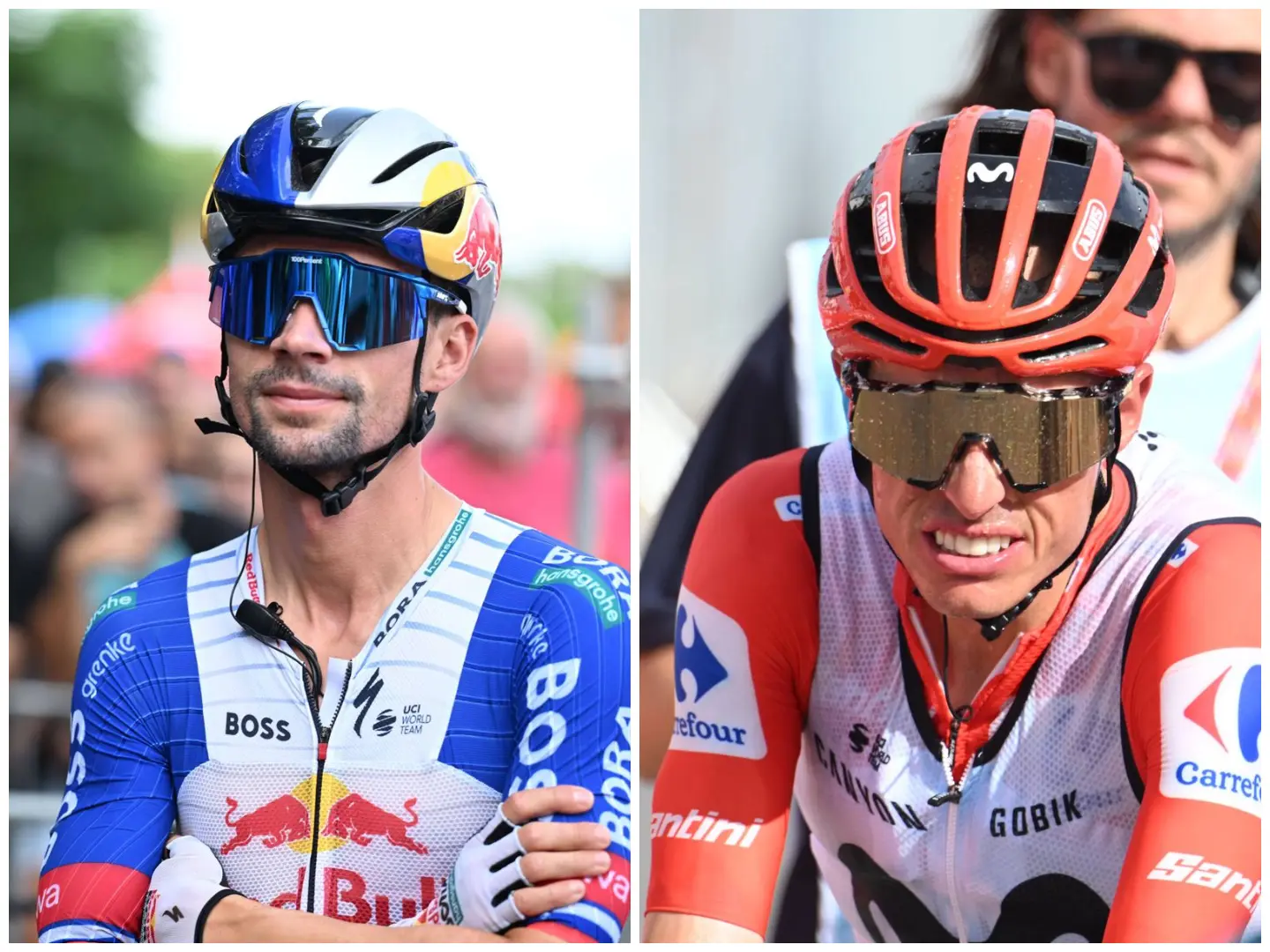
Stage 18 of the Vuelta a España will be a 32.1 kilometer time trial in Jerez de la Frontera which will be decisive for the outcome of the overall classification. Below, we analyze Enric Mas, Primoz Roglic and Felix Gall's past time trials against each other and estimate the time gaps that will be created - and what that will mean in the fight for the red jersey.
The Vuelta a España has become a three-way battle ever since the withdrawal of Tadej Pogacar, with three riders standing out above the rest in the mountains of the Spanish Grand Tour: Enric Mas, Primoz Roglic and Felix Gall. Three riders with very distinct abilities against the clock, they each have their own ambitions on the second time trial of the race.
So we have put the time trials of all three riders of the past three seasons - since 2024 - and calculated the time differences between each other, looking to gather conclusions and answer several questions, including the big one: Might Primoz Roglic be able to overtake Enric Mas in the overall classification?
Enric Mas versus Primoz Roglic
Out of all, this is the most important estimate of all. 2:10 minutes separate Enric Mas and Primoz Roglic, created in the several mountain stages that the riders have gone through already. Since 2024, the two have met against the clock on seven occasions. Some have had very dramatic time gaps such as the Peyragudes mountain time trial where the Slovenian was at the top of his game.
But more accurately, we must look at the flat time trials in which both riders were in contention for the overall classification of a certain race. The 2024 season proves to be quite important to look at, as both riders were in peak form during the Vuelta where they finished first and second. 1.91 and 2.56 were the seconds/kilometer won by Primoz Roglic on both time trials. The final one, placed on the final stage in Madrid and with 24 kilometers in length, saw Roglic win 1:03 minutes on Mas - about half of what he needs this Thursday.
At the 2025 Tour de France's opening time trial, Roglic won 1:38 minutes in 33 kilometers (almost the exact same distance and profile). A meaningful time gain, 2.56 per kilometer, but not the numbers that the Red Bull - BORA - hansgrohe rider needs.
Most recently there are two head-to head tests that are relevant. At the Tour de Suisse Roglic won 1:17 minutes in 23.7 kilometers, with a difference created of 3:24 seconds per kilometer. But Mas did not appear to have his best form at that time of year, which he does now. In the Vuelta's opening time trial, he only lost 11 seconds in 9.4 kilometers - just over a second per kilometer.
| Year | Race | Mas | Roglic | Distance | Gap | Seconds/kilometer |
| 2024 | Tour de France | 30 | 3 | 25.3 | 1:25 | 3.39 |
| 2024 | La Vuelta | 32 | 8 | 12 | 0:23 | 1.91 |
| 2024 | La Vuelta | 23 | 2 | 24.6 | 1:03 | 2.56 |
| 2025 | Tour de France | 37 | 12 | 33 | 1:38 | 2.96 |
| 2025 | Tour de France | 16 | 3 | 10.9 (MTT Peyragudes) | 1:38 | 8.99 |
| 2026 | Tour de Suisse | 55 | 12 | 23.7 | 1:17 | 3.24 |
| 2026 | Vuelta a España | 50 | 24 | 9.4 | 0:11 | 1.17 |
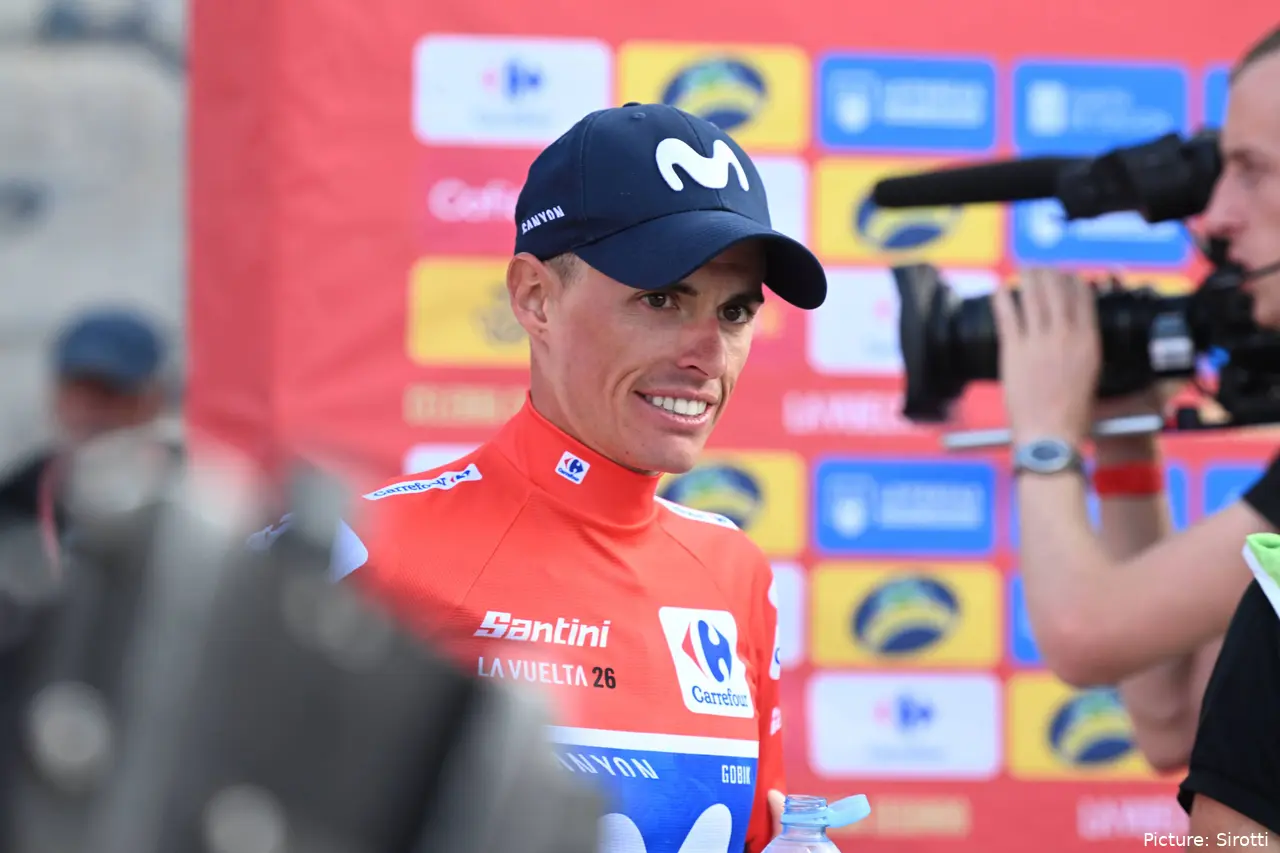
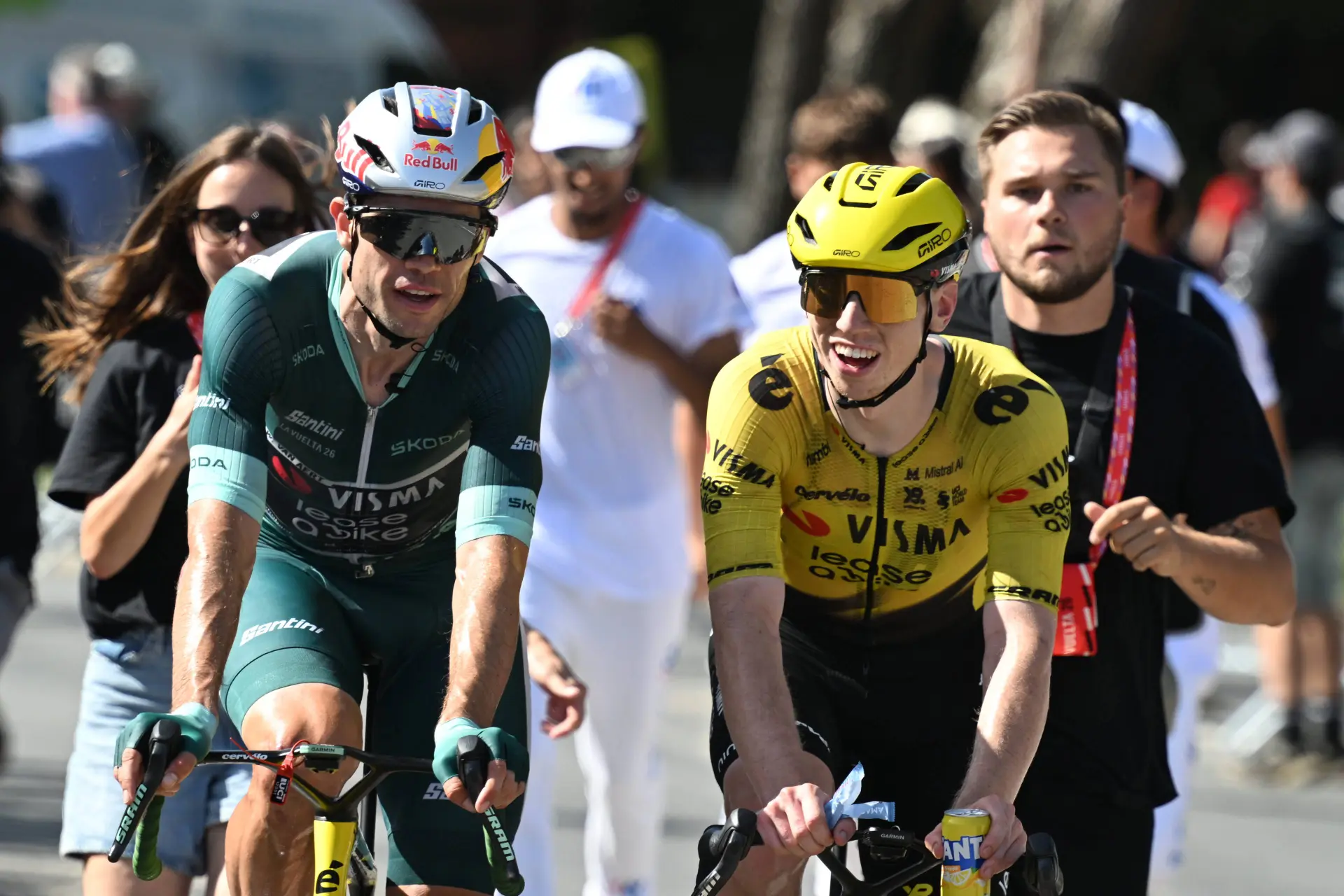
Enric Mas will look to save his red jersey at La Vuelta's time trial
Enric Mas versus Felix Gall
Felix Gall sits second in the overall classification however, 2:06 behind the Spaniard. But Gall on the other hand, is a rider who struggles against the clock. He is likely to have some difficulties in the time trial and lose time to both Mas and Roglic, but will look to limit losses.
In the head-to-head against Mas, the differences are not so high. The two have some comparisons with extremely high gaps, but they are not relevant for this analysis as one of the riders was not riding at his best. The recent one at the 2026 Giro is one example, although the numbers are significantly higher in other cases.
Accurate examples are those of the 2024 Vuelta's first time trial in which Mas won 15 seconds in 12 kilometers (1.25 seconds per kilometer) and the 2025 Tour where Mas won a mere 7 seconds in the flat 33-kilometer long time trial. If Gall were to only lose that time to Mas, he would still be well within contention to win the Vuelta a España in the final stage.
Mas won 13 seconds on Gall at La Vuelta's time trial in Monaco, leading to a 1.38 second/kilometer ratio, perhaps the one that is most accurate at the time being.
| Year | Race | Mas | Gall | Distance | Gap | Seconds/kilometer |
| 2024 | Tour de Suisse | 55 | 70 | 4.7 | - 0:02 | 0.42 |
| 2024 | Tour de Suisse | 12 | 14 | 15.7 | - 0:15 | 0.95 |
| 2024 | Tour de France | 30 | 50 | 25.3 | - 0:56 | 2.21 |
| 2024 | Tour de France | 25 | 103 | 33.7 | - 3:15 | 5.78 |
| 2024 | La Vuelta | 32 | 68 | 12 | - 0:15 | 1.25 |
| 2024 | La Vuelta | 23 | 125 | 24.6 | - 2:42 | 6.58 |
| 2025 | Tour de France | 37 | 39 | 33 | - 0:07 | 0.21 |
| 2025 | Tour de France | 16 | 10 | 10.9 (MTT Peyragudes) | 0:36 | 3.30 |
| 2026 | Giro d'Italia | 91 | 33 | 42 | 2:29 | 3.54 |
| 2026 | La Vuelta | 50 | 91 | 9.4 | - 0:13 | 1.38 |
Primoz Roglic versus Felix Gall
Unsurprisingly, the biggest differences are those between Primoz Roglic and Felix Gall. The Slovenian is a vastly stronger rider against the clock and the four seconds between the two will be meaningless in the 32-kilometer long challenge.
The early 2024 Vuelta time trial saw Roglic gain 38 seconds in 12 kilometers, totaling to 3:16 per kilometer. At the 2025 Tour the same scenario: 3.39 per kilometer as Roglic won 1.52 minutes in 33 kilometers (likely a similar gap to what we will see).
The stage 1 time trial in Monaco this August saw Roglic win 24 seconds in 9.4 kilometers, a 2.55 second/kilometer gained. These are extensive gaps, meaning that by the time stage 18 is finished, both riders should be quite apart.
| Year | Race | Roglic | Gall | Distance | Gap | Seconds/kilometer |
| 2024 | Itzulia Basque Country | 1 | 109 | 10 | 1:15 | 7.5 |
| 2024 | Tour de France | 3 | 50 | 25.3 | 2:22 | 5.61 |
| 2024 | La Vuelta | 8 | 68 | 12 | 0:38 | 3.16 |
| 2024 | La Vuelta | 2 | 125 | 24.6 | 3:38 | 8.86 |
| 2025 | Tour de France | 12 | 39 | 33 | 1:52 | 3.39 |
| 2025 | Tour de France | 3 | 10 | 10.9 (MTT Peyragudes) | 1:02 | 5.68 |
| 2026 | La Vuelta | 24 | 91 | 9.4 | 0:24 | 2.55 |
Read also
The Conclusion
From this we can obtain an easy conclusion which is that Primoz Roglic will certainly be the fastest of the three on the day, followed by an in-form Enric Mas and lastly Felix Gall who will want to limit the losses as much as possible so as to still have the overall win still in sight.
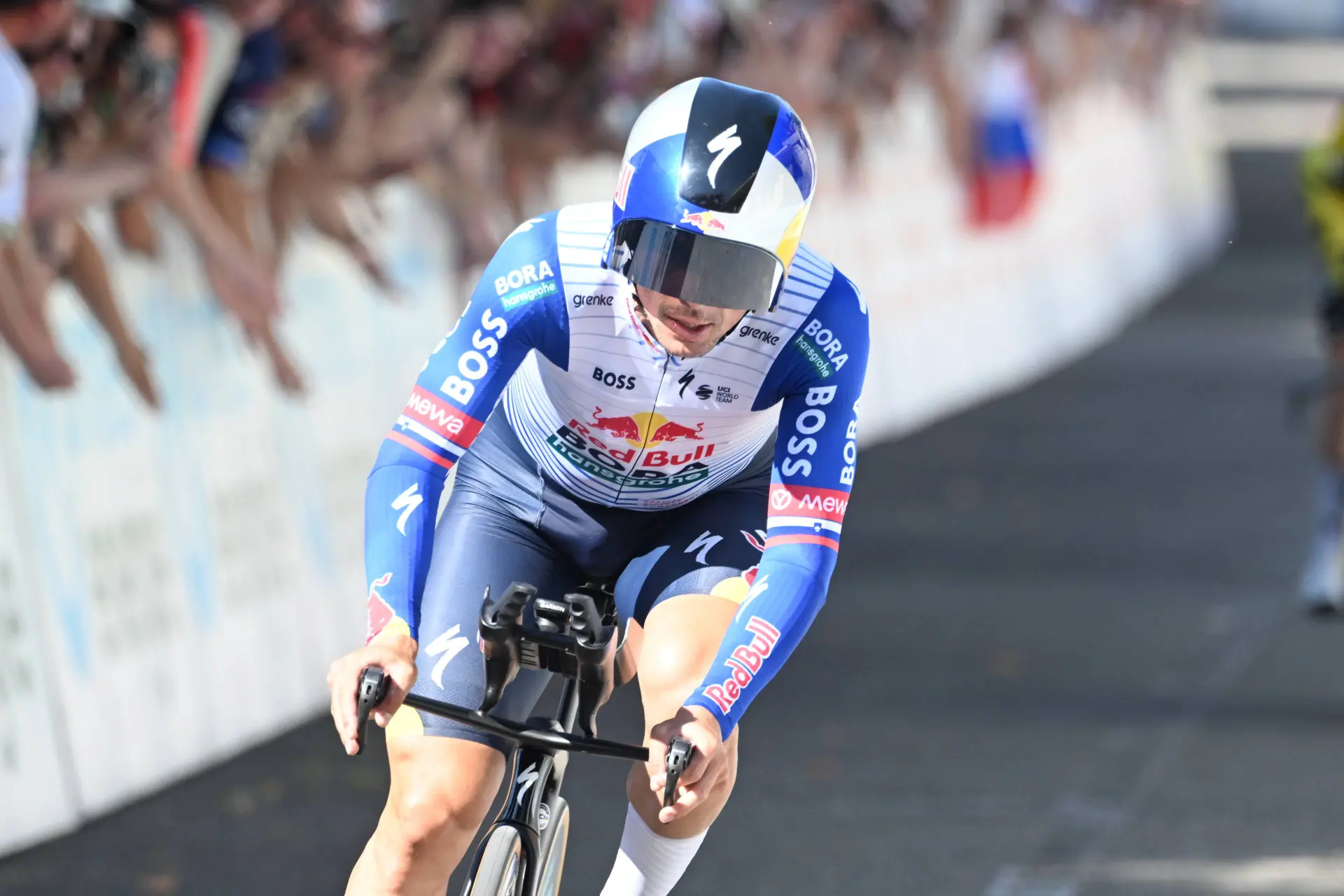
Primoz Roglic has to win just over 4 seconds per kilometer to eliminate the 2:10-minute deficit to Enric Mas in the 32-kilometer long time trial. Looking at the data, it seems very unlikely that the Slovenian will be able to achieve this, but that the time difference should be around the 2.5 mark. This would mean a time gain of around 1:20 minutes - significant, but not enough.
If Roglic gains time at the same pace he did on stage 1, he might only expect to gain 37 seconds. The 4 second/kilometer time gain he needs is not something he has achieved before under similar circumstances.
On the other hand, Roglic's second place chances should gain a major boost. In the flat time trials where both are in good form, the gap to Gall appears to be around the 3 second/kilometer mark. 1:40 minutes should be a reasonable gap to expect between the two.
Mas and Gall's gap in the meantime should grow in the time trial, but not by a long shot. In two of the three meaningful ITT's the difference was around 1.3 per kilometer, around 40 seconds.
However historically, the most accurate replica of this time trial is the 2025 Tour one and Gall lost a mere 7 seconds. If the Decathlon rider can replicate this performance, his chances of winning the race will not be over.
Rúben SilvaEditor-in-Chief
A founding contributor to CyclingUpToDate since its launch in January 2022, Ruben Silva has played a central role in shaping the site’s editorial direction and long-term growth. Before joining the project, he built his experience through independent blogging at Echelons Hub and by producing race previews for Ciclismo Internacional, developing a strong analytical voice rooted in daily engagement with professional cycling.
Beyond editorial work, he has been closely involved in the expansion and coordination of CyclingUpToDate’s wider network, helping establish and support sister platforms across multiple languages. This includes ongoing collaboration with CiclismoAlDia (Spanish), CiclismoAtual (Portuguese), WielrennenUpToDate (Dutch), and RadsportAktuell (German), contributing to a shared editorial vision and consistent international coverage.
He also helps oversee editorial governance across the network, setting standards for accuracy and consistency and coordinating updates or corrections when needed.
Originally from the Porto metropolitan area in Portugal, he holds a bachelor’s degree in Geography. His path into cycling journalism was shaped not through formal media training, but through independent reporting, community engagement, and sustained on-the-ground involvement in the sport.
Over the course of his career, he has conducted approximately 100 interviews across road cycling and cyclocross, ranging from one-to-one conversations and online formats to press conferences and on-site pre- and post-race coverage. His interviews include leading riders, team managers, and prominent figures within cycling media: Tadej Pogacar, Jonas Vingegaard, Mathieu van der Poel, Primoz Roglic, Wout van Aert, Joao Almeida and Tom Pidcock; managers like Patrick Lefevere and Joxean Matxin; and YouTube personality Bryan Kennedy (BKXC)...
Within 18 months of launch, he helped grow CyclingUpToDate’s English-language platform into one of the most-read cycling news websites, built entirely from the ground up. As both a professional journalist and lifelong cycling enthusiast, his focus remains on delivering accurate, timely, and well-contextualized coverage.
claps 5visitors 5
Just in
Popular news
Latest comments
- Probably not but he’s certainly in better shape now than on day 1, not far from keeping up all the time. Had one bad day. If Mas has one, it could go down to the line.Jumpyjohn09-09-2026
- Why 2024, 3rd in what, GC or TT?Jumpyjohn09-09-2026
- Mas was 3rd in 2024 Vuelta, don't forget about O'Connor.typurc09-09-2026
- As I said a few days ago, the prediction for stage 18 would be much better if it stated the predicted winner but also what happens with the GC
 Rafionain-Glas09-09-2026
 - Brilliant win! Maybe Giulio can do à la del Toro and dominate the Italian classics this seasonRafionain-Glas09-09-2026
- Try being an escape artist then, free yourself from the chains that bind you hereJumpyjohn09-09-2026
- Peak Roglic maybe. Roglic today very doubtful.mobk09-09-2026
- Roglic is the better time trialist, but taking more than two minutes on Mas over 32km? That would be one hell of a ride. I just don’t see it happening.TheSoigneur09-09-2026
- It's not AI... I'm an artist.PogiSloFans09-09-2026
- maybe if he wins every race left on the calendar offering UCI pointswrsty09-09-2026
Loading
5 Comments