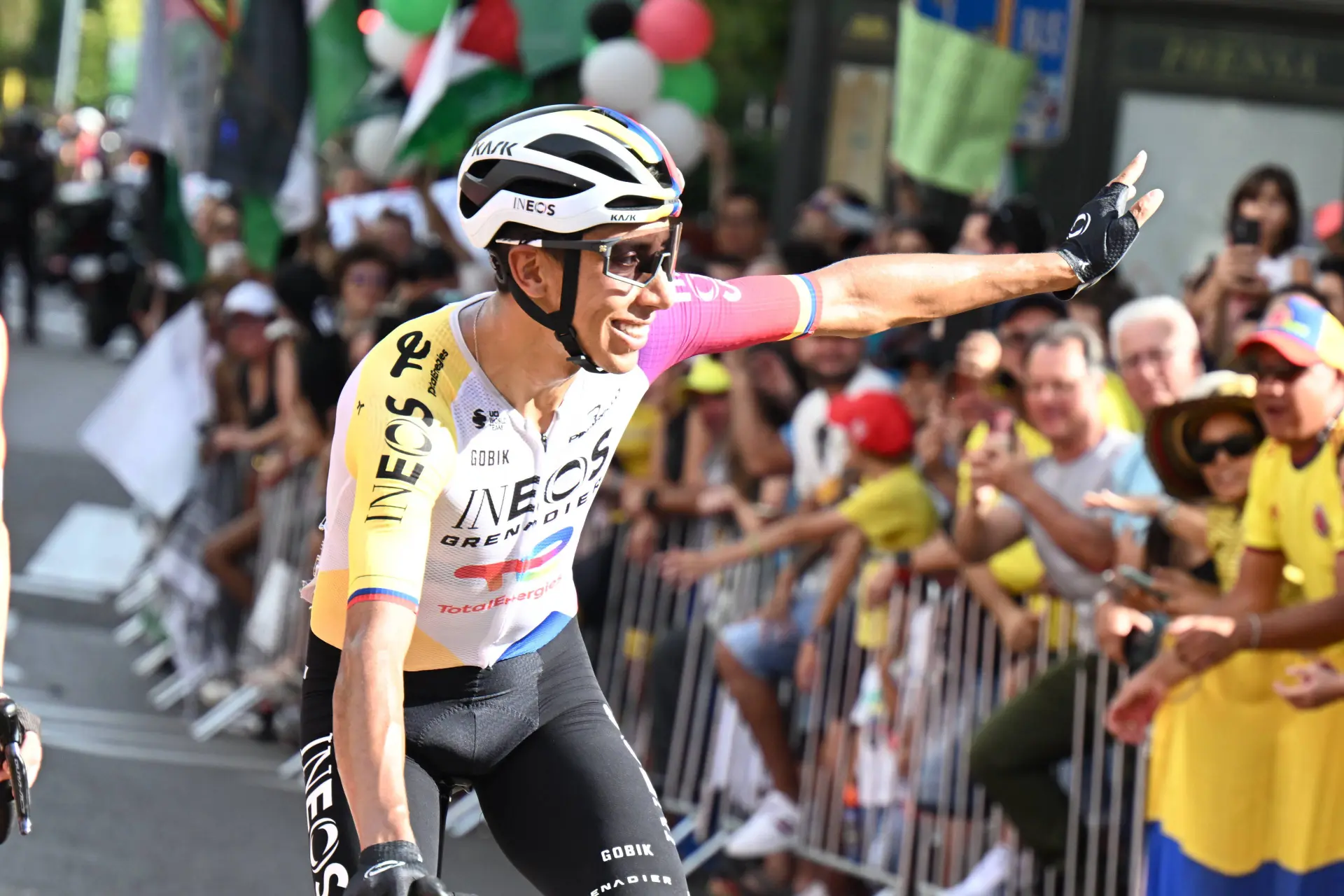
Stage 16 of the Vuelta a España should have been remembered
as the day Egan Bernal confirmed his long-awaited return to the top step of
WorldTour racing. The Colombian, who nearly lost his life in a training crash
three years ago, surged past Mikel Landa in the final metres and crossed what
became the finish line. It was his first win at a Grand Tour since 2021, a
milestone that seemed almost impossible at the lowest points of his recovery.
Instead, Bernal’s triumph unfolded in silence, without a
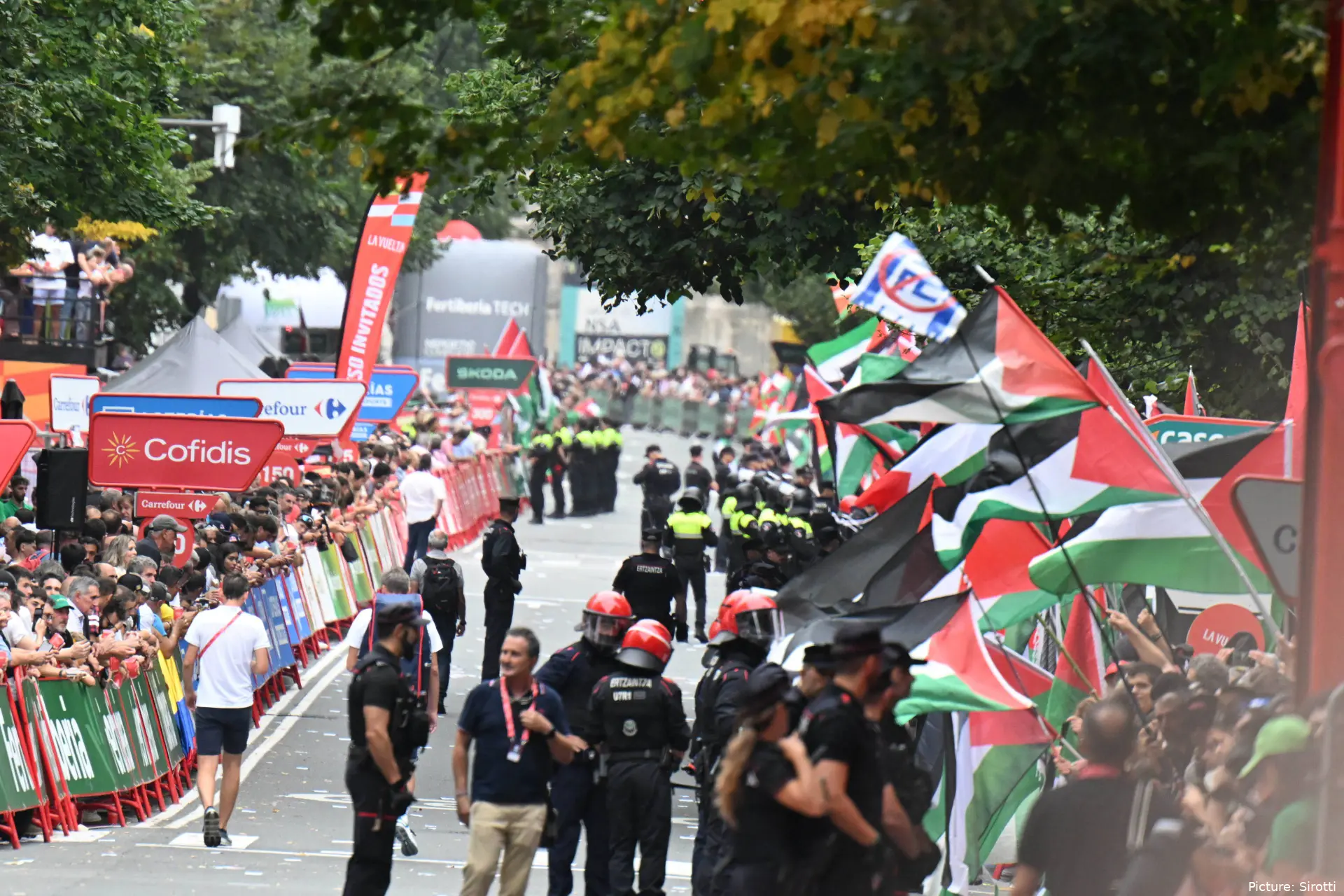
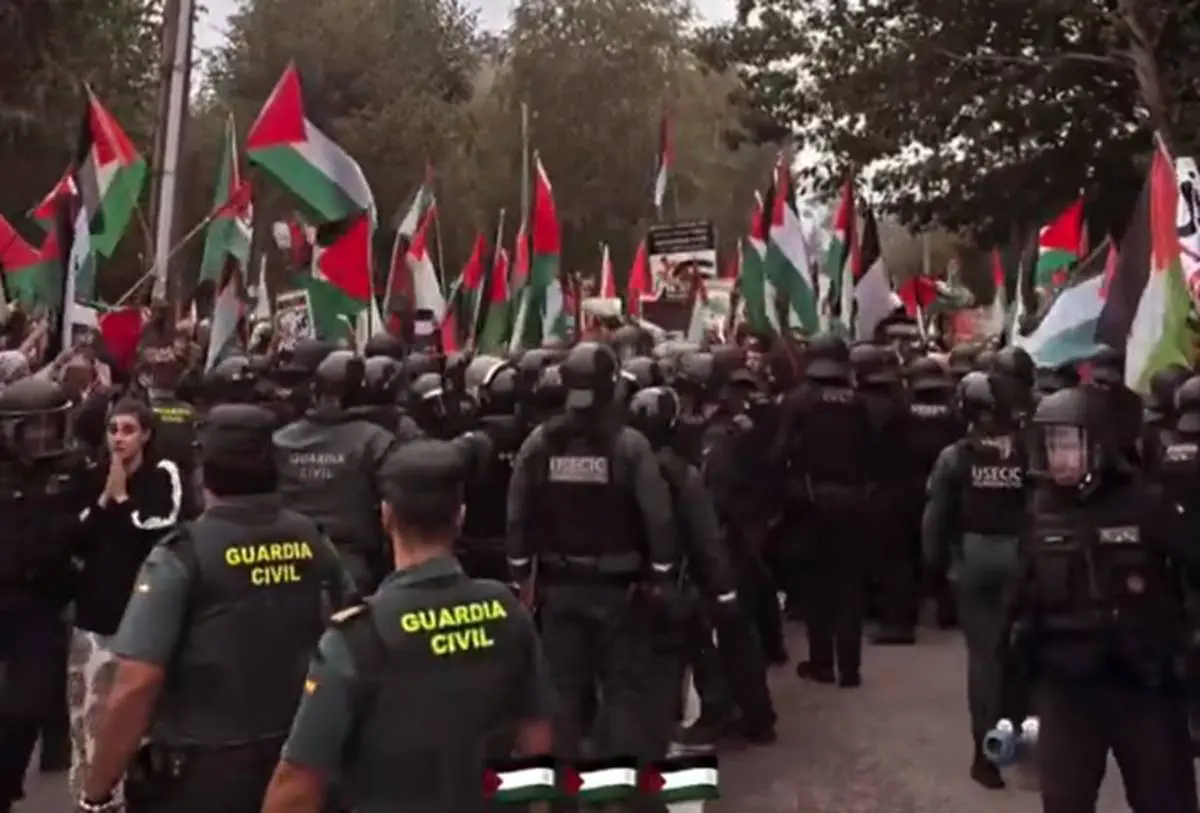
victory salute, podium ceremony, or the roar of a summit crowd. Pro-Palestinian
protesters blocked the final climb to Castro de Herville, forcing organizers to
cut the stage short eight kilometers from its intended finish. Whilst the protesters
need to have a platform to express their voice, and there are certainly more
important things in the world than cycling, it has now become a true question
of rider safety. The result of stage 16 was another day of disruption,
following the neutralisation of stage 11 in Bilbao, and a fresh round of
questions about whether this Vuelta can continue safely to Madrid.
“Listen, obviously it's great for Egan Bernal to win the
stage, right? After all the trouble this guy has had in the last years after
his horrible accident to win a stage. Of course, it's not the same feeling. You
know, there's no victory salute. He doesn't cross the finish line first where
all the people are. There's no podium. But it's a win,” Johan Bruyneel said on The
Move podcast.
Martin, his co-host, noted the same sense of anticlimax.
“Kind of a little bit of a wet blanket of a finish, Johan, with the protest,”
he said.
A victory without celebration
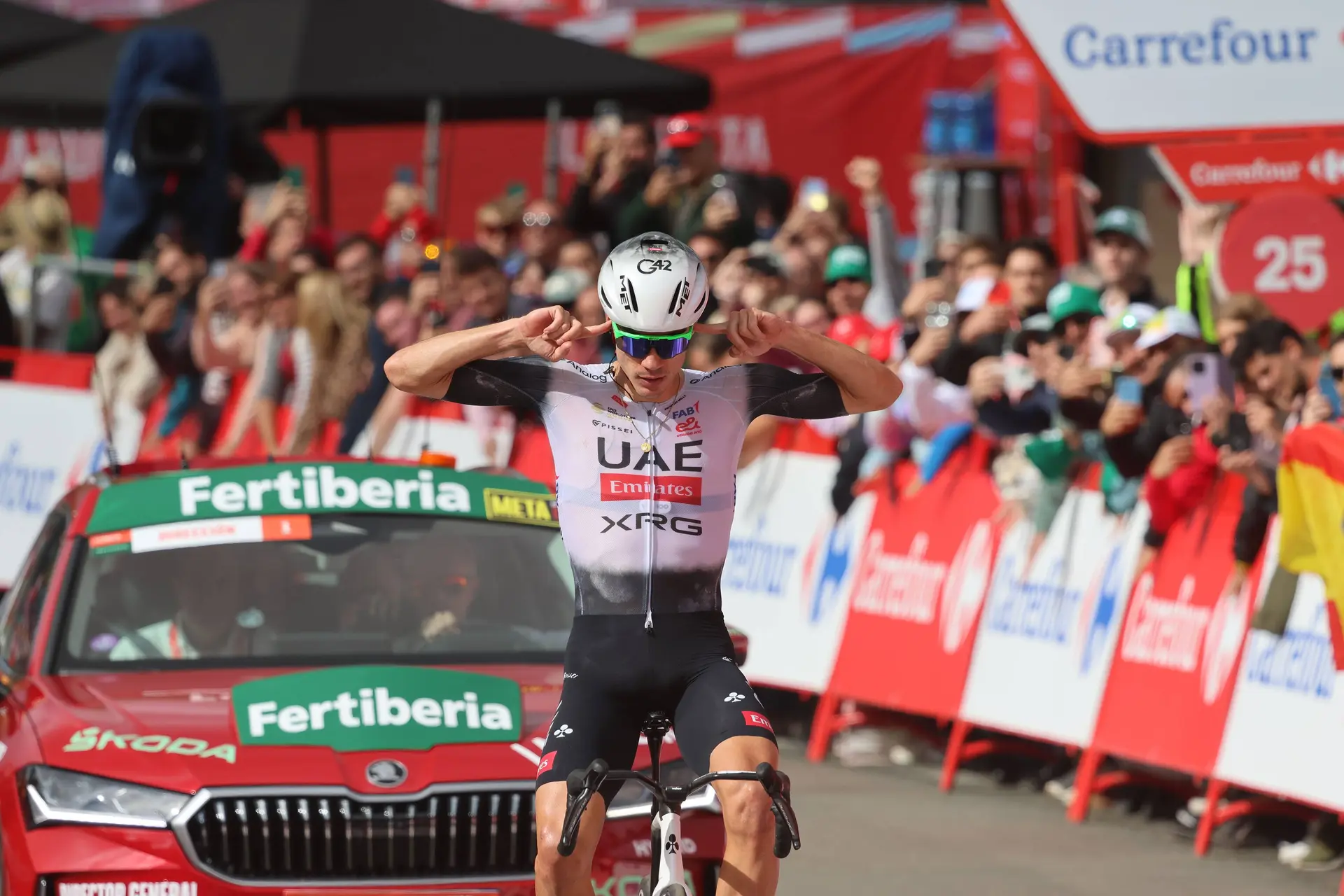
For Bernal, the win still mattered. “I mean, somebody had to
win and Egan Bernal won it. So, I'm really happy for him to have him win
again,” Bruyneel added. But the way it was achieved, sprinting to an improvised
banner at the bottom of a climb, left cycling fans unsatisfied.
Remember, Landa too was coming back from a back injury, one
he suffered on the first stage of the Giro this year. Both he and Bernal have
had to claw their way back from nasty injuries, and would have been hoping to
duel it out all the way to the finish line.
“There was a lot, a lot, a lot, and it was basically
impossible for the organization and even the extra police to keep it under
control. So I think they made a very wise decision to have the finish at the
bottom,” Bruyneel explained of the organizers’ call. “At first I was thinking
maybe they're going to take the times and again have no stage winner. This time
they did it differently.”

Egan Bernal won a disrupted Vuelta a Espana stage 16
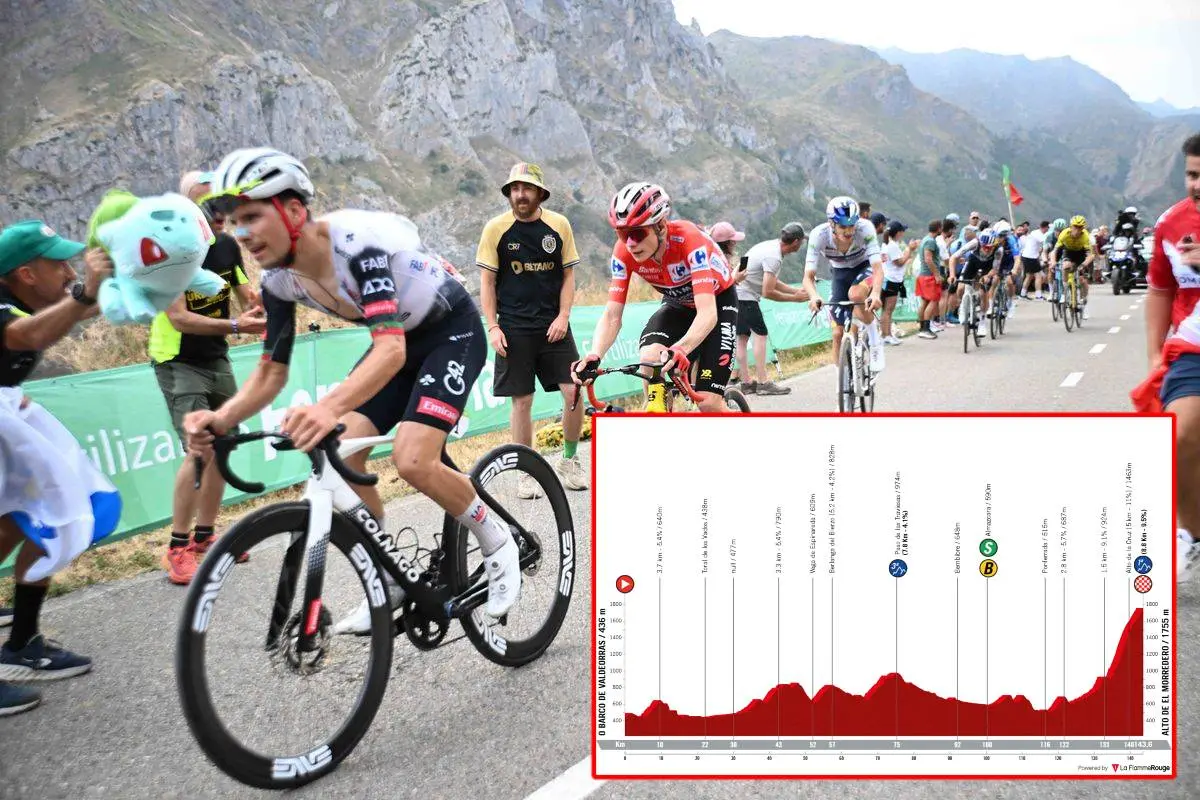
Bernal and Landa had distanced the breakaway on the
penultimate ramp, only to see the finale vanish. Riders hauled themselves over
17–18% gradients, fans packed the slopes, but there was no true summit. “The
riders were zigzagging over the road. It was 17–18%,” Bruyneel said of the
brutal penultimate climb that effectively decided the day.
Among those who impressed before the protest disruption were
Nico Denz, who nearly held his own against the climbers, and Groupama-FDJ’s
young talents. “Nico Denz almost won a mountain stage. Pretty impressive,”
Martin said. “The FDJ rider Brieuc Rolland… this is the second time I believe
he's come close. He got third back on stage 12 if you recall. Super impressive
ride from this guy. He's 22 years old.”
Bruyneel also highlighted another new name: “Also there's
this other rider on Groupama, Braz Afonso … today he was actually with Egan
Bernal and Mikel Landa until he had a puncture.”
Vingegaard steady in red
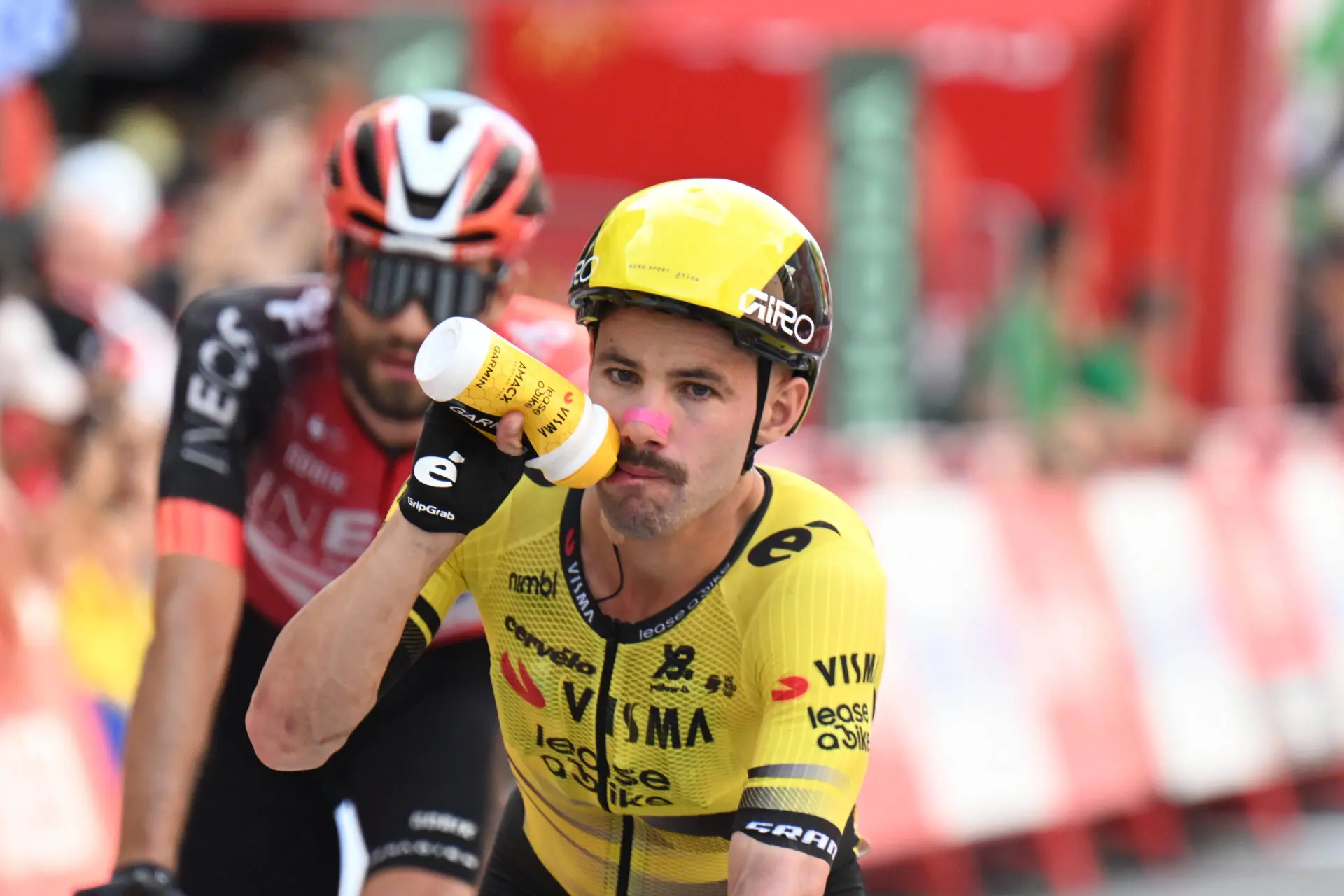
In the general classification, Jonas Vingegaard’s hold on
the red jersey continued, though even his day had drama. A mechanical forced
him onto a teammate’s bike in a repeat of a famous incident from the 2022 Tour
de France, although this time he and the team handled it more smoothly.
“Jonas Vingegaard has a problem with his bike, a flat or
mechanical. He takes one from a teammate just like the Tour de France in 2022.
Ben Tulett with an incredibly smooth dismount and then pushing Vingegaard… he
gets back in pretty well and then rides that bike to the finish line,” Martin
said.
“We've seen him do that again where he just doesn't seem to
care about riding someone else's bike and is able to do it well enough that
it's not a problem,” he added.
Despite the hiccup, the Dane remains in command with a total
time of 61:16:35. His closet challenge, Almeida, is hot on his heels and sits
just 48 seconds back. Tom Pidcock holds third at 2:38, Jai Hindley fourth at
3:10, and Giulio Pellizzari fifth at 4:21. Felix Gall, Matthew Riccitello, Sepp
Kuss, Torstein Træen, and Junior Lecerf round out the top ten.
Visma’s strength in depth continues to be a theme. Kuss has
climbed into eighth overall at 5:46, while Jorgenson is eleventh at 8:52. The
team’s control contrasts sharply with the mounting cracks in Almeida’s UAE
squad, but the Portuguese rider is still in with a chance of the red jersey.
UAE’s tactical puzzles
UAE once again left their leader isolated. “He didn't need
to be in there. They don't need another stage win. What they need to focus on
now is how to put the pressure on Jonas and on Visma,” Bruyneel said of Marc
Soler’s decision to join the break.

When will UAE entirely back Almeida?
“They're down to six riders,” he pointed out, after illness
and crashes reduced Almeida’s support. The Portuguese contender has been
repeatedly exposed in crunch moments. “From now on, nobody goes in the break.
We stay with our leader and we're there with him,” Bruyneel suggested.
“But Soler should always be in the group… He was in there
for the stage win,” he continued. “I'm still… I still don't know what's going
on. Why do they let these guys keep going in the breakaways?”
The repeated long-range attacks have left Almeida
vulnerable. “The breakaways have become a problem. They're affecting the life
of UAE,” Bruyneel concluded.
The protest problem
If tactical debates were once the focus, the protests have
shifted the entire conversation. Safety and security now dominate.
“Should the race be called off? If they can't provide a safe
course, should they just cancel it?” Martin asked. Bruyneel’s response was
blunt: “I mean, it's an option. It's an option. If the security of the riders
is in danger and you can't guarantee it, there's not that many options in my
opinion.”
“There was already a lot of police today and still they
couldn't keep it under control,” he added. “I'm just thinking that this
movement is going to get bigger and bigger.”
The possibility of more disruptions looms large. “Tomorrow
is another uphill finish. Same kind of area, same kind of roads like today. If
they couldn't control it today, what is going to stop the same people from
doing the same tomorrow?” Bruyneel asked.
Time trials may be even easier targets. “There's nothing
easier to disrupt than a time trial because the riders are sitting ducks out
there,” he warned.
Logistics, TV, and the fan experience
The abrupt relocation of the finish line created logistical
chaos. “It's two vehicles per team that are in the race and all the other
vehicles are on top. They couldn't make it down. I mean, it's a total mess,”
Bruyneel said.
Even the broadcast product suffered. “The problem with their
TV programming is they're turning the race on after everything's happened and
then the last part gets cancelled. So it's the worst possible TV product you
could have,” Martin said.
The underlying fragility of road cycling is now stark. “A
lot of pro cycling is dependent on communion between fans and riders. Like,
please don't storm the course because there's not really anything we can do to
stop you if you want to,” Martin observed.
Bruyneel looked ahead with a warning: “We're going to end up
doing circuit races in the future, Spencer. Something that's completely
controllable.”
What’s next?
The GC remains tight. Almeida still has a chance at red,
Hindley is within striking distance of the podium, and Pidcock continues to
ride his best Grand Tour of his career. Yet the racing feels increasingly
secondary to the uncertainty of whether stages can be run to their planned
conclusions.
“It just puts a damper on the race when they're like, ‘Well,
I don't know what would have happened today. We have no idea and we'll never
find out,’” Martin said.
Madrid still promises a grand finale, but as Bruyneel
reminded listeners, each successful protest emboldens the next. “Tomorrow is
another uphill finish… what is going to stop the same people from doing the
same tomorrow?”
For Bernal, Stage 16 was a long-awaited return to the
winner’s circle. For the race as a whole, it was another reminder that the 2025
Vuelta a España risks being defined less by its climbs than by the questions
swirling off the road.

Fin MajorCycling Journalist
Fin Major is a UK-based writer at CyclingUpToDate and has been part of the team since 2024. He is the site’s main writer for FAQs and evergreen explainers and has written around 2,000 pieces for the platform. Alongside this work, he focuses on in-depth analysis and covers the biggest races on the calendar, including the Tour de France, the Giro d’Italia, and La Vuelta a España, providing clear context around performance trends, tactics, and key storylines.
In his reporting, Fin uses reputable data sources such as ProCyclingStats for results, statistics, and historical context. He places strong emphasis on careful sourcing, editorial accuracy, and updating articles promptly when new, verified information becomes available. Outside of writing, Fin is an active cyclist, which supports his practical understanding of the sport and its demands.
claps 7visitors 2
Just in
Popular news
Latest comments
- Strade? Never saw him as a gravel rider that can handle it.mij18-10-2026
- It surprises me that anyone still believes any professional (or amateur!) sport is clean--much less wants it to be. The best you can hope for is a reasonably level playing field that doesn't expose young, ambitious athletes to health risks they don't understand. In that regard, World Tour cycling appears to do a better job than almost any sport with independent, random testing. There are certainly fewer mysterious midnight "heart attacks" these days. If you want to see what an uneven playing field looks like, show up to masters nationals. It is also certainly the case that no major pharmaceutical corporation has developed a multi-billion dollar miracle drug just to give it only to one or two anointed ectomorphs in a minor non-revenue sport. If you don't like that all sports run on PEDs these days and you can't be bothered to contribute as a tester, a federation official, or pharmaceutical representative, then just turn off the TV and play outside.
 MarkFour18-10-2026
 - Good grief, who proofreads this stuff? Errors abound.wrsty18-10-2026
- You can add weight to a bike and limit gears or make it single speed if you like. I doubt that would reduce crashes. It would just add another dymanique. All good and well, but It wont stop cars getting on to the course.Cyclingsbestfan18-10-2026
- Seixas is probably second best in the World on short climbs. But that hasn't translated as well to long climbs
 Rafionain-Glas18-10-2026
 - Idiotic fellaRafionain-Glas18-10-2026
- Nothing. Against Pogi nothingabstractengineer18-10-2026
- He didn't even try to sprint all outvappaxbipmv18-10-2026
- Campenaerts looked like a rolling pumpkin with that all orange leaders skinsuit !frieders318-10-2026
- He can take his dumb a$$ politics somehwere else !frieders318-10-2026
Loading
Write a comment