Preview Tour de la Provence 2026 - INEOS and Lidl-Trek fight for win with Montagne de Lure making its return
Cycling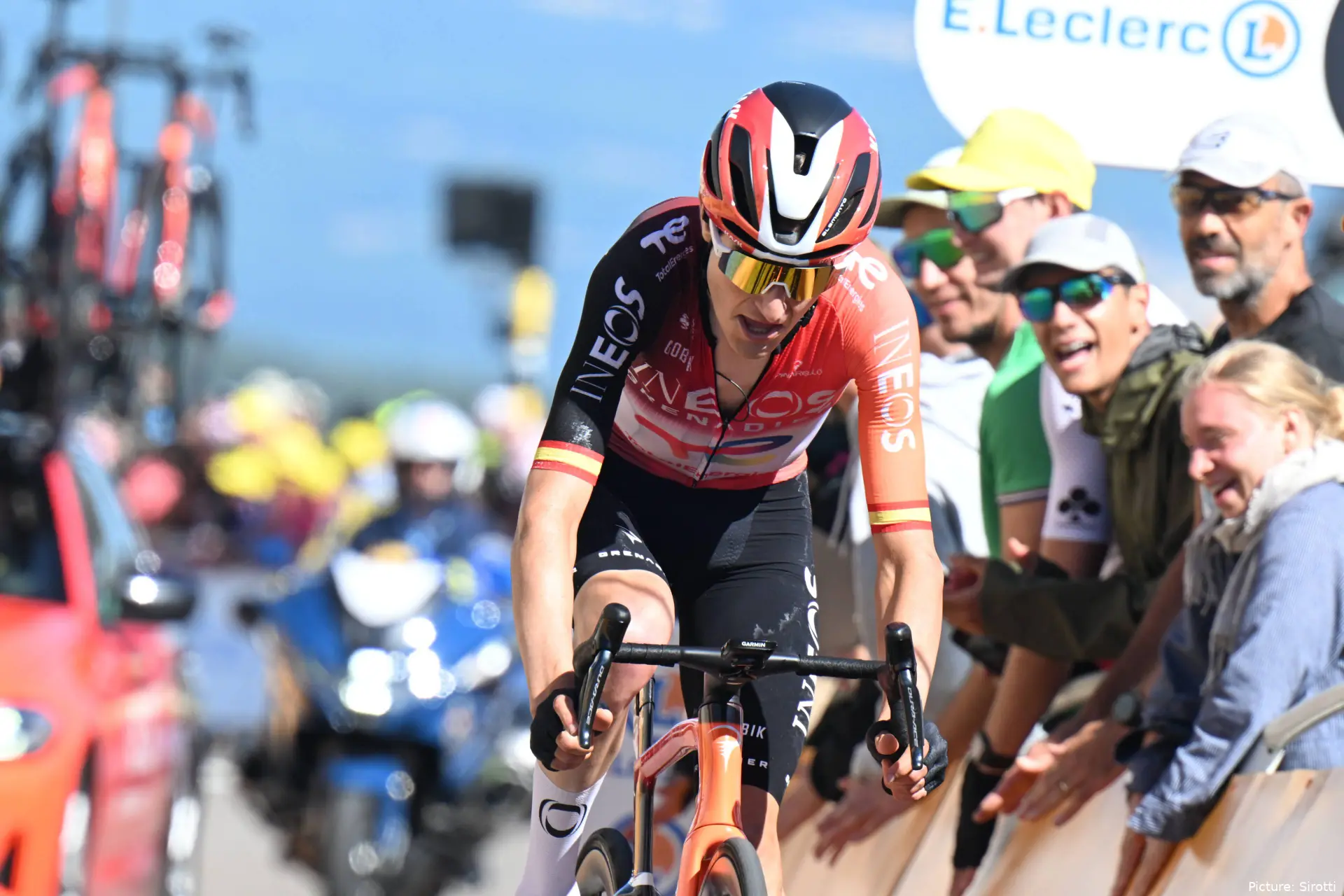
The 2026 Tour de la Provence will take place from the 13th to the 15th of February, giving continuation to the French stage-racing calendar and also returning to the mountains, where the race has in the past seen notable performances. We preview the race ahead.
The French race was first held in 2016 and its very first winner was one of France's most iconic figures: Thomas Voeckler. Rohan Dennis won the following edition, and the race surged into the spotlight back in 2020 when Nairo Quintana set an incredible climbing performance on Chalet Reynard - the toughest part of the climb to Mont Ventoux, the region's most reputable climb.
It is a race that changes its route quite often and hence, it allows different types of riders to battle for victory. After not being held in 2023, the race returned in 2024 and the two previous editions have been won by Lidl-Trek's Mads Pedersen. These weren't victories taken due to his sprinting power, but rather his ability to ride the hilly terrain, as last year he also beat Matej Mohoric.
Profile: Marseille - Saint-Victoret

Stage 1: Marseille - Saint-Victoret, 163 kilometers
The opening stage of the race takes place from Marseille to Saint-Victoret and it is a roller-coaster of a stage, lacking any big climb however presenting plenty of them throughout the day. 2400 meters of climbing in 163 kilometers, starting right from kilometer 0.
The riders take on plenty ascents, in which attacks may come at any time. The last notable of which comes with 30 kilometers to go, but most of the finale has a downhill trend which also makes it rather hard to put on an effective chase. All--in-all, a day that is designed to be hard to control and quite chaotic.
Profile: Forcalquier - Station de Lure

Stage 2: Forcalquier - Station de Lure, 175.5 kilometers
The queen stage of the race sees the riders return to the Station de Lure, the climb which hosted the race's most recent mountain stage back in its 2022 edition, where Nairo Quintana took the win. It is not as difficult as Chalet Reynard, but is a proper climbing tests, specially in mid-February when many riders are still working on their form.
The 175-kilometer long stage is not particularly hard, it features some small climbs but the efforts will mostly be guided towards the summit finish. The climb is 13.7 kilometers long at 6.4% and should make the race's key differences for the overall classification.
Profile: Rognac - Arles

Stage 3: Rognac - Arles, 205 kilometers
The final stage of the race finally provides a proper opportunity for the sprinters to have unmatched competition, although the day is anything but easy. The first third does feature some tough terrain where a strong group may go up the road, but the finale is fully flat into Arles, after 205 kilometers on the road.
Prediction Tour de la Provence 2026 overall classification:
*** Matthew Riccitello, Carlos Rodríguez
** Mathias Vacek, Neilson Powless
* Tao Geoghegan Hart, Aurélien Paret-Peintre, Guillaume Martin, Brandon Rivera, Wout Poels, Clément Champoussin
** Mathias Vacek, Neilson Powless
* Tao Geoghegan Hart, Aurélien Paret-Peintre, Guillaume Martin, Brandon Rivera, Wout Poels, Clément Champoussin
Pick: Matthew Riccitello
Original: Rúben Silva
Rúben SilvaEditor-in-Chief
A founding contributor to CyclingUpToDate since its launch in January 2022, Ruben Silva has played a central role in shaping the site’s editorial direction and long-term growth. Before joining the project, he built his experience through independent blogging at Echelons Hub and by producing race previews for Ciclismo Internacional, developing a strong analytical voice rooted in daily engagement with professional cycling.
Beyond editorial work, he has been closely involved in the expansion and coordination of CyclingUpToDate’s wider network, helping establish and support sister platforms across multiple languages. This includes ongoing collaboration with CiclismoAlDia (Spanish), CiclismoAtual (Portuguese), WielrennenUpToDate (Dutch), and RadsportAktuell (German), contributing to a shared editorial vision and consistent international coverage.
He also helps oversee editorial governance across the network, setting standards for accuracy and consistency and coordinating updates or corrections when needed.
Originally from the Porto metropolitan area in Portugal, he holds a bachelor’s degree in Geography. His path into cycling journalism was shaped not through formal media training, but through independent reporting, community engagement, and sustained on-the-ground involvement in the sport.
Over the course of his career, he has conducted approximately 100 interviews across road cycling and cyclocross, ranging from one-to-one conversations and online formats to press conferences and on-site pre- and post-race coverage. His interviews include leading riders, team managers, and prominent figures within cycling media: Tadej Pogacar, Jonas Vingegaard, Mathieu van der Poel, Primoz Roglic, Wout van Aert, Joao Almeida and Tom Pidcock; managers like Patrick Lefevere and Joxean Matxin; and YouTube personality Bryan Kennedy (BKXC)...
Within 18 months of launch, he helped grow CyclingUpToDate’s English-language platform into one of the most-read cycling news websites, built entirely from the ground up. As both a professional journalist and lifelong cycling enthusiast, his focus remains on delivering accurate, timely, and well-contextualized coverage.
claps 0visitors 0
Just in
Popular news
Latest comments
- > Sven Nys believes van der Poel-Van Aert factor is damaging cyclocross calendar Stop whining and just be better than him bro...averagecyclist14-10-2026
- “at some point those guys will turn their backs on OUR sport”? after dedicating so much of their lives to cyclocross and in mathieu’s case winning more world championships than anyone, it would seem to me like they’ve earned the right for it to be always be THEIR sport, too, even after they retire from it.OCexile14-10-2026
- It takes two to tango. Riders also have a say. Maybe they didn't see any opportunities on a stacked team such as Visma's? Who knows, but could be a multitude of reasons why deals fall through.Pogboom14-10-2026
- Eventually Pogi will get older and slower. Father Time will favor the young. The question is whether he can beat Pogi before Pogi decides to retire. You never know... Pogi may retire after winning paris-roubaix :)b3tlla14-10-2026
- i think he can continue to race for maybe another 2 years till he drops out of podium contention. With his TT and his follow the leader in the Mountains,he should not need too many teammates too.abstractengineer14-10-2026
- Aren't they still shopping around for a main sponsor for next year?wrsty14-10-2026
- How broke is visma now? wtf they cant even fight moviestar and decathlon for riders and lose both their mid targets based on their budget and they cant even get those? Crazy...:/miguel13-10-2026
- TT But he won by a minute so he could have cut down on some of it
 Rafionain-Glas13-10-2026
 - weight is measurable. power is measurable. So why didn't he prepare that way from the TDF if he wanted to beat Pogi and after Pogi wasn't going to be there, to win.abstractengineer13-10-2026
- I hope Thibau and Tibor don't do the sameRafionain-Glas13-10-2026
Loading
Write a comment