PRESS CONFERENCE | “Cycling is in a downward spiral” - Richard Plugge calls for urgent reform as Visma accept Simon Yates exit and chase bigger budget
Cycling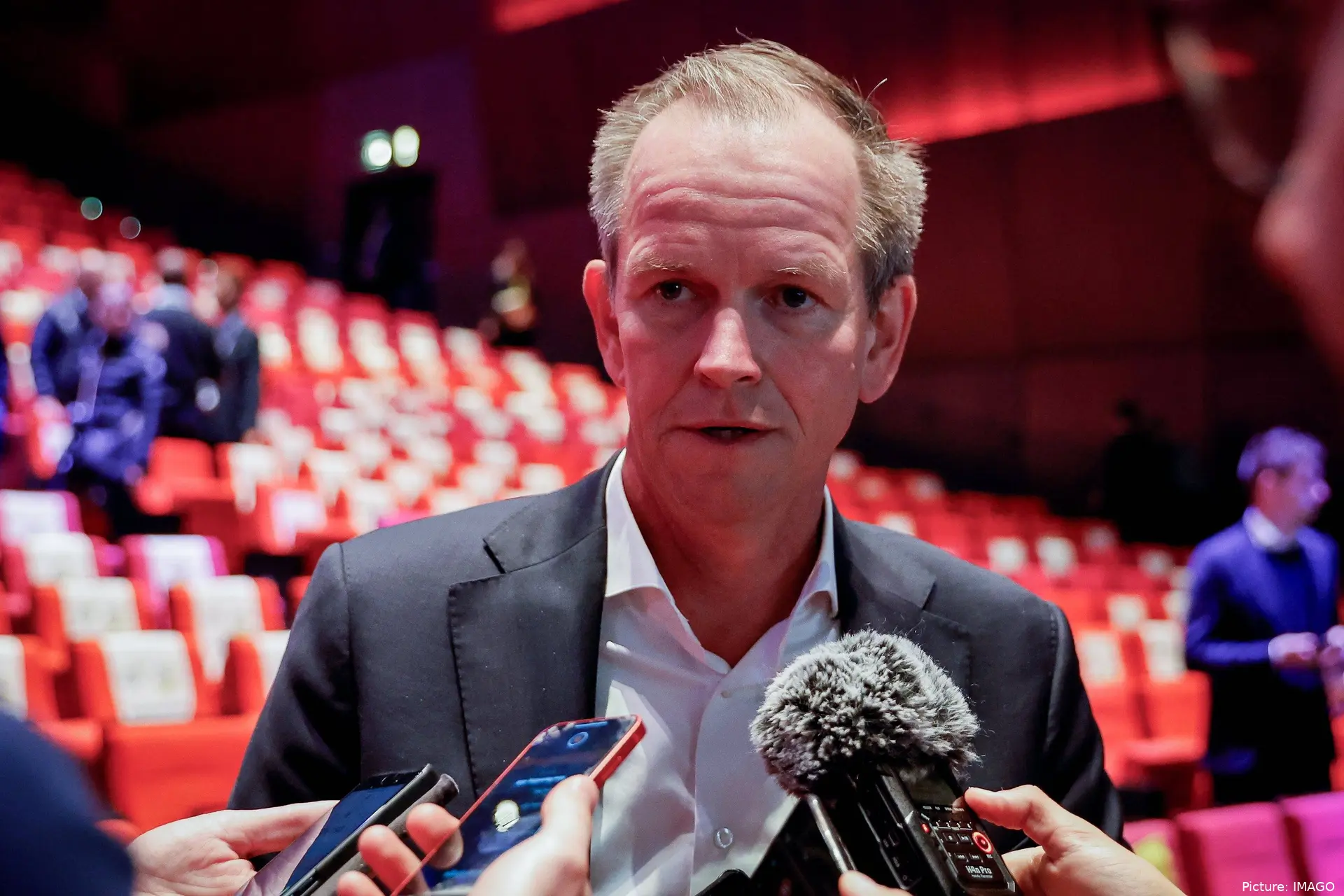
Team Visma | Lease a Bike arrived at media day, still processing Simon Yates' sudden retirement, and Richard Plugge made it clear there was no dramatic back and forth behind the scenes. If a rider calls and says he wants to leave, Plugge said, you accept it, even if the timing leaves you with a hole you cannot fix in January. CyclingUpToDate were present, and can bring you the press conference in full.
From there, the conversation widened quickly. Plugge returned to the same theme he has pushed in recent years: budgets are rising, salary levels are rising, and Visma have to remain within what he called “shooting range” of the richest organisations, even if their model is not to buy ready-made superstars from rivals.
He also pushed back hard on suggestions from the MPCC about painkiller use, dismissing the idea of a wider issue when asked. But he acknowledged the wider pressure that modern athletes feel, pointing to social media and the constant noise around public figures, while arguing that each retirement story is different and cannot be lumped together.
The biggest picture, though, was the business model. Plugge said cycling is heading the wrong way and that the urgency to change is growing, not just for teams but also for organisers. His message was blunt: if the sport wants to stay among the world’s top five, it needs reform, and quickly.
Full Richard Plugge Press Conference
If a rider calls you and says he wants to leave, there is nothing you can do?
If someone says, “I want to leave”, that’s his choice. It is what it is, and we have to accept it.
If someone says, “I want to leave”, that’s his choice. It is what it is, and we have to accept it.
You said he thought about it for a long time, but you didn’t really have discussions over the year. Is it a pity he didn’t involve the team earlier, because now you have a big problem you can’t solve?
Of course it would have been better if he had called us in September or something like that. But it was a good talk and it was a clear message.
Of course it would have been better if he had called us in September or something like that. But it was a good talk and it was a clear message.
You didn’t try to change his mind?
If someone calls you and says, “I want to leave”, then he has thought about it. And he did. We also know him as someone who thinks a lot about things and then comes with his own idea.
If someone calls you and says, “I want to leave”, then he has thought about it. And he did. We also know him as someone who thinks a lot about things and then comes with his own idea.
Last year you said it’s a good thing for cycling that more multinationals are stepping in and budgets are increasing. Has it been more challenging to sign the riders you wanted?
I think for a couple of years now we have been in a similar position. I’m happy we have a good scouting system and good people on board. Hopefully, next year we will be discussing how the new riders have performed, and that is what we have been doing for a couple of years already. Simon Yates, for example, is someone who came to us in a good way, and then performed like this. That is our way of working. Like Jonas said a couple of years ago, nobody knew Jonas.
I think for a couple of years now we have been in a similar position. I’m happy we have a good scouting system and good people on board. Hopefully, next year we will be discussing how the new riders have performed, and that is what we have been doing for a couple of years already. Simon Yates, for example, is someone who came to us in a good way, and then performed like this. That is our way of working. Like Jonas said a couple of years ago, nobody knew Jonas.
When you look at teams paying big money for riders, do you worry about keeping up with what is happening in cycling?
Of course you have to try to keep up. I always say we have to be in shooting range. But I believe we are good enough in our way of working that we can keep up in a different way, because we are not a team that brings in a very expensive rider from another team. We bring in riders who are not yet seen as big stars. Hopefully they can become big stars.
Of course you have to try to keep up. I always say we have to be in shooting range. But I believe we are good enough in our way of working that we can keep up in a different way, because we are not a team that brings in a very expensive rider from another team. We bring in riders who are not yet seen as big stars. Hopefully they can become big stars.
With salary levels rising, do you also look at your own stars and think, “Can I keep them satisfied?”
Of course. That’s why we need to keep up with some of these big budget teams. We have to at least be in shooting range. Staying number five or six in the budget ranking is something we have to do and ideally we want to be fourth or third. But yes, it is a lot of work.
Of course. That’s why we need to keep up with some of these big budget teams. We have to at least be in shooting range. Staying number five or six in the budget ranking is something we have to do and ideally we want to be fourth or third. But yes, it is a lot of work.
Big stars have spoken about pressure and burnout. How worrying is it that so many riders feel that pressure now?
There is a lot of pressure. Maybe burnout, like Jonas also said to us, that he was at a point of almost burning out. I don’t know if that is something we have a lot of, but we try to have an eye for it. We gave him the opportunity to go to the UAE camp. We were, I think, the first team to bring families to high altitude camps, seven or eight weeks, and bring them to the altitude camps. So we tried to look after that, and I think it works out. But the different names you mentioned are completely different cases. Simon Yates just wanted to retire. And Fem is a different case to Tom Dumoulin. Some riders retire because they feel they cannot do this life forever. But there are also many riders who can do this and enjoy it. If you still enjoy it, why would you stop?
There is a lot of pressure. Maybe burnout, like Jonas also said to us, that he was at a point of almost burning out. I don’t know if that is something we have a lot of, but we try to have an eye for it. We gave him the opportunity to go to the UAE camp. We were, I think, the first team to bring families to high altitude camps, seven or eight weeks, and bring them to the altitude camps. So we tried to look after that, and I think it works out. But the different names you mentioned are completely different cases. Simon Yates just wanted to retire. And Fem is a different case to Tom Dumoulin. Some riders retire because they feel they cannot do this life forever. But there are also many riders who can do this and enjoy it. If you still enjoy it, why would you stop?
Riders often complain there is no support post retirement. Teams don’t reach out. Is that something teams need to be more aware of, staying in contact and helping riders find what comes next?
Is it?
I don’t know. Ten years ago already we discussed this with riders: “Can we help you?” Some want to become a sports director and that is an opportunity. But we don’t have that for everyone. People also want to do something completely different and find their own way. It is like when you stop being a journalist, what do you do next? I think it is especially the job of the riders’ managers to help them with that and to think about what comes after their career, and whether they are prepared for life after cycling.
I don’t know. Ten years ago already we discussed this with riders: “Can we help you?” Some want to become a sports director and that is an opportunity. But we don’t have that for everyone. People also want to do something completely different and find their own way. It is like when you stop being a journalist, what do you do next? I think it is especially the job of the riders’ managers to help them with that and to think about what comes after their career, and whether they are prepared for life after cycling.
Is the job becoming more demanding compared to five years ago?
I don’t think so. I think top sport is demanding. If you are a cyclist, a swimmer, there is a lot of pressure. I just saw that Beckham video. That is a lot of pressure. Yes, there is a lot of pressure, but it is also about how you cope with it. It is not only for cyclists or football players, the pressure on people with social media and everyone having an opinion is something general. But it is more demanding for cyclists as well, yes.
I don’t think so. I think top sport is demanding. If you are a cyclist, a swimmer, there is a lot of pressure. I just saw that Beckham video. That is a lot of pressure. Yes, there is a lot of pressure, but it is also about how you cope with it. It is not only for cyclists or football players, the pressure on people with social media and everyone having an opinion is something general. But it is more demanding for cyclists as well, yes.
The MPCC released a statement in December saying there is an issue around painkillers and education around medication. Do you agree there is an issue?
No.
No.
So you don’t agree with the statement?
No. Not at all.
No. Not at all.
Do you think there is a gap to UAE Team Emirates in the classics and the Grand Tours?
I hope it is very small. And I think it is very small. I think we can work for everyone.
I hope it is very small. And I think it is very small. I think we can work for everyone.
In the press release you mentioned innovations. Can you tell us about them?
No. We will see during the year. We are always looking into innovations. We were the first to work on a kind of Moneyball system. We started with food, with data, and so on, and with a control room. You can imagine which area the next innovation will be in, but we are working on that with partners to see where we can make the next step. Hopefully somewhere in September we can discuss it and see what we brought to cycling again. We always want to become better every day, so we are always looking at how to close gaps, if there are any gaps, because we want to do things smarter than others.
No. We will see during the year. We are always looking into innovations. We were the first to work on a kind of Moneyball system. We started with food, with data, and so on, and with a control room. You can imagine which area the next innovation will be in, but we are working on that with partners to see where we can make the next step. Hopefully somewhere in September we can discuss it and see what we brought to cycling again. We always want to become better every day, so we are always looking at how to close gaps, if there are any gaps, because we want to do things smarter than others.
When you say you need to be “in shooting range”, does that mean the budget has to increase?
One hundred percent. For us, and I think for everyone.
One hundred percent. For us, and I think for everyone.
What possibilities are you exploring to increase the budget? More sponsors?
Yes, more sponsors. A better business model for cycling. More merchandise sales. More other income. And food is now taking off as a business. We are always discussing with our sponsors how we can grow and increase the budget, so we can keep, like I said, at least in shooting range of the top. We have to keep up.
Yes, more sponsors. A better business model for cycling. More merchandise sales. More other income. And food is now taking off as a business. We are always discussing with our sponsors how we can grow and increase the budget, so we can keep, like I said, at least in shooting range of the top. We have to keep up.
Can you ask more money from Visma when they are going to the stock market?
That is a discussion.
That is a discussion.
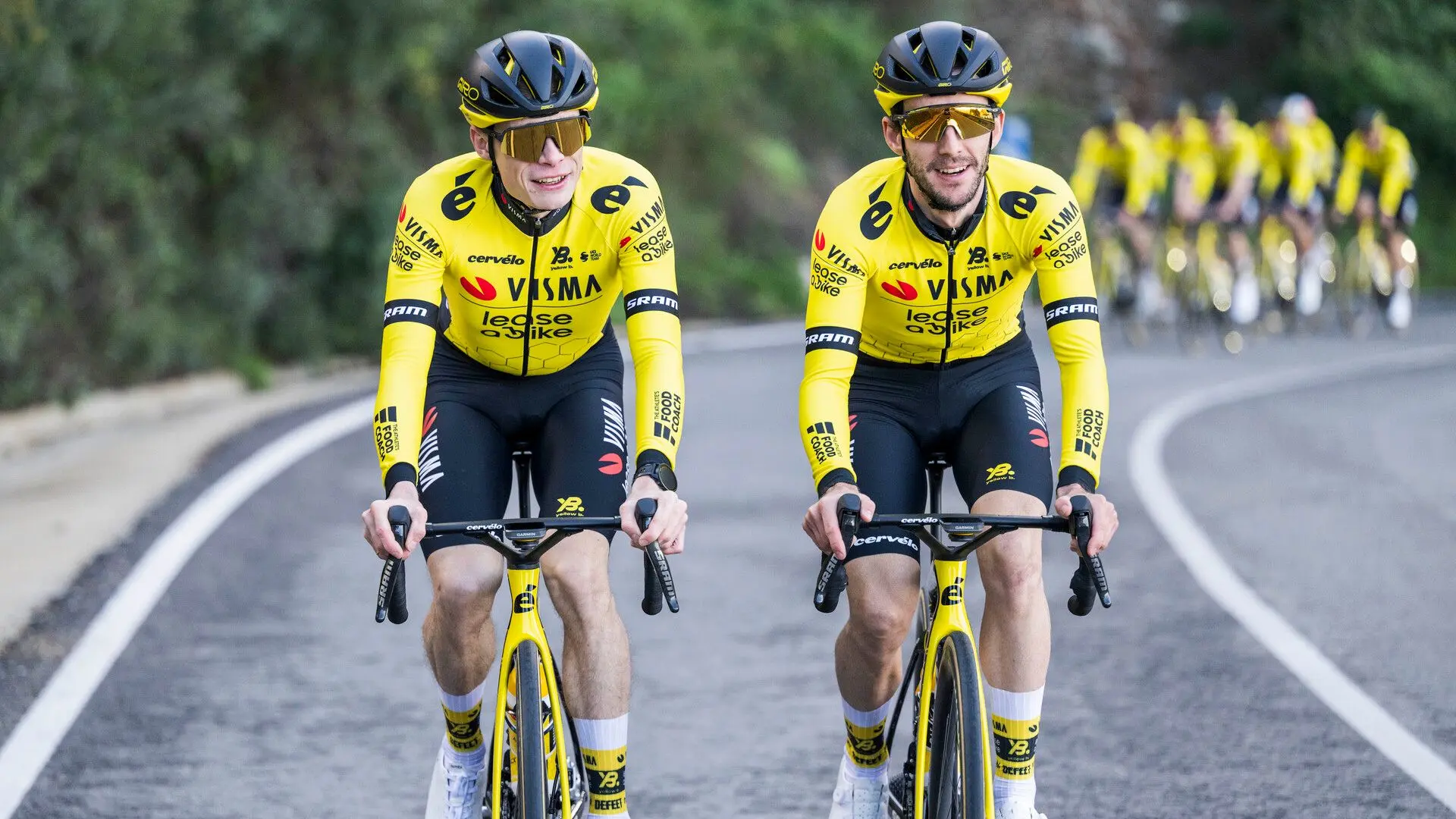
You’ve lost important riders. Why was this refresh necessary?
Like I said, we wanted to change. We wanted to refresh the team a bit. It was unfortunate that Olav and Tiesj were leaving the team, they had a good opportunity elsewhere, but with the others we wanted to change. We wanted a new group, the next wave in the team.
Like I said, we wanted to change. We wanted to refresh the team a bit. It was unfortunate that Olav and Tiesj were leaving the team, they had a good opportunity elsewhere, but with the others we wanted to change. We wanted a new group, the next wave in the team.
Why was that necessary?
Because we needed to refresh and bring a new level into the team, so we have the future already.
Because we needed to refresh and bring a new level into the team, so we have the future already.
Can you bring another rider into the base right now?
No, at the moment, no. Everyone has just started. There are not many riders on the market, especially not at the level you would need. So we deal with what we have, which is a very good group, and now it is up to the new guys to step up their game, maybe a little bit earlier than expected.
No, at the moment, no. Everyone has just started. There are not many riders on the market, especially not at the level you would need. So we deal with what we have, which is a very good group, and now it is up to the new guys to step up their game, maybe a little bit earlier than expected.
How painful is it to lose one of the few top Dutch riders still in the peloton? How important is it for a team like yours to have top Dutch riders?
With Rabobank we want to find the new Dutch riders. I’m Dutch and I’d like to see better Dutch riders coming into cycling, of course also in our team. Olav gets a big chance elsewhere, and then it becomes difficult, or impossible, to keep someone like that. I would like to see the next Dutch rider coming, but it’s not possible at this moment. There are some young riders in the Netherlands, but not enough. That’s my big worry, and that’s why we started the races and started working with our cycling class. First of all we want to win races, whatever the nationality. But yes, we are Dutch and we would like Dutch riders, we just need to develop them ourselves. There is a big task for the Dutch federation: finding the grassroots and getting young people to start cycling, both girls and boys. It is a bad signal if you go to the U23 level and you have team riders but no Dutch riders. That is really difficult. I had a meeting with the federation and there is a big task for them. We’d like to help, but they have to focus on how to get young riders on the bike.
With Rabobank we want to find the new Dutch riders. I’m Dutch and I’d like to see better Dutch riders coming into cycling, of course also in our team. Olav gets a big chance elsewhere, and then it becomes difficult, or impossible, to keep someone like that. I would like to see the next Dutch rider coming, but it’s not possible at this moment. There are some young riders in the Netherlands, but not enough. That’s my big worry, and that’s why we started the races and started working with our cycling class. First of all we want to win races, whatever the nationality. But yes, we are Dutch and we would like Dutch riders, we just need to develop them ourselves. There is a big task for the Dutch federation: finding the grassroots and getting young people to start cycling, both girls and boys. It is a bad signal if you go to the U23 level and you have team riders but no Dutch riders. That is really difficult. I had a meeting with the federation and there is a big task for them. We’d like to help, but they have to focus on how to get young riders on the bike.
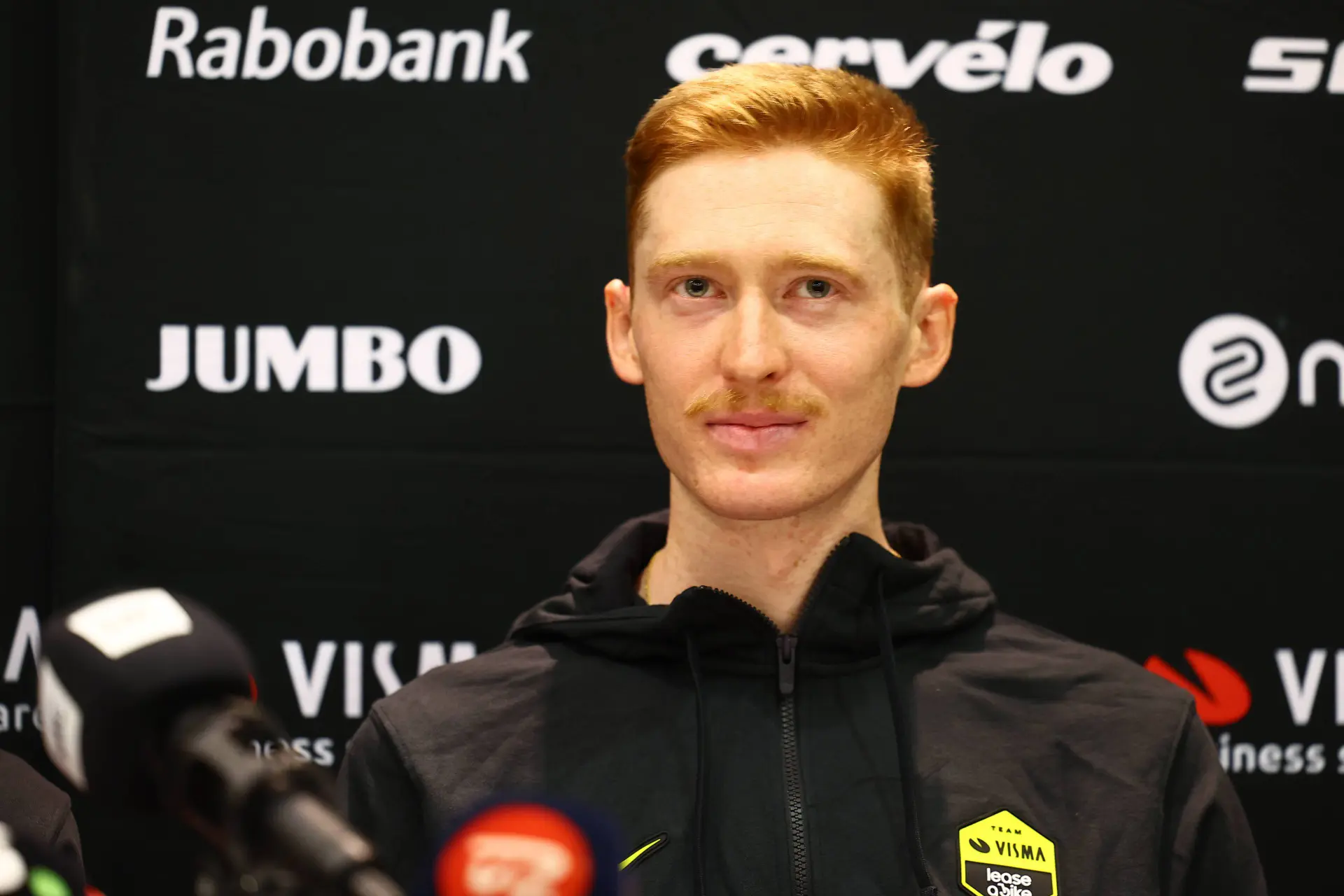
Is the Dutch situation very different from other European countries?
Belgium is different, everything is possible there. But honestly I don’t have a vision on other countries. I focus on the Netherlands, and in the Netherlands it is not okay. That’s why we started again with Rabobank and Ready to Race. That is why we started.
Belgium is different, everything is possible there. But honestly I don’t have a vision on other countries. I focus on the Netherlands, and in the Netherlands it is not okay. That’s why we started again with Rabobank and Ready to Race. That is why we started.
Norway produces a lot of talent. Can you learn from that?
Yes. The sports environment in Norway is way better than it is in the Netherlands for 15 and 16-year-olds. It’s about skiing, running, not only cycling. You can also switch sports and come to cycling later. Their sports environment is simply better.
Yes. The sports environment in Norway is way better than it is in the Netherlands for 15 and 16-year-olds. It’s about skiing, running, not only cycling. You can also switch sports and come to cycling later. Their sports environment is simply better.
You spoke about the business model of cycling. This debate has gone on forever with no practical consequences. What needs to be done to make cycling sustainable in 20 or 50 years?
In my opinion, it is not only teams. It is also organisers. And the UCI should look into it. Maybe it is better that we sit aside and discuss it one on one, because I think the rest knows pretty well what my opinion is, and I know your position as well. But yes, of course there are practical things you can do. It is up to the UCI to change the business model, maybe using examples like Formula 1. There are many examples that are better than what we have in cycling.
In my opinion, it is not only teams. It is also organisers. And the UCI should look into it. Maybe it is better that we sit aside and discuss it one on one, because I think the rest knows pretty well what my opinion is, and I know your position as well. But yes, of course there are practical things you can do. It is up to the UCI to change the business model, maybe using examples like Formula 1. There are many examples that are better than what we have in cycling.
In the Netherlands there are fewer races. Your sponsors need publicity. How do you see that evolution?
I think it is a bad evolution. It is a bad sign, and we should really think about it. How can we make it more attractive? The key question is how we make cycling more attractive so that fans are willing to pay. You need to make sure cycling stays one of the top five sports in the world. That’s the issue. Right now we are losing attention to other sports. We are fighting with each other inside cycling, while we should be fighting with football and other sports. That is how I look at it.
I think it is a bad evolution. It is a bad sign, and we should really think about it. How can we make it more attractive? The key question is how we make cycling more attractive so that fans are willing to pay. You need to make sure cycling stays one of the top five sports in the world. That’s the issue. Right now we are losing attention to other sports. We are fighting with each other inside cycling, while we should be fighting with football and other sports. That is how I look at it.
Finally, if riders and billionaires are now coming together with a new reform plan, why should this one work when so many previous plans failed?
Because cycling is in a downward spiral. Whether you like it or not, the urgency becomes bigger every day. Not only teams, but also organisers are getting in trouble. Even relatively big teams are getting in trouble. So you have to make sure cycling makes a big change.
Because cycling is in a downward spiral. Whether you like it or not, the urgency becomes bigger every day. Not only teams, but also organisers are getting in trouble. Even relatively big teams are getting in trouble. So you have to make sure cycling makes a big change.
Does everyone see that urgency?
More and more people see it.
More and more people see it.

Kieran WoodDeputy Editor-in-Chief
Kieran Wood is a sports journalist based in Wales and has been active in journalism since 2022. He regularly contributes to DartsNews.com and CyclingUpToDate.com, where he covers professional cycling and darts. In cycling, his work includes liveblogs from major races, including the Tour de France, the Giro d’Italia, and La Vuelta a España, alongside race reports and analysis. He has also conducted interviews with professional riders.
His reporting spans the full racing calendar, from one-day classics to stage races, with a focus on accurate, real-time coverage and clear contextual analysis. For statistics, results, and historical context, he regularly uses resources such as ProCyclingStats. To support reporting on rider activity and training context where relevant, he also references Strava.
In his work, Kieran places strong emphasis on careful sourcing, editorial accuracy, and updating articles as new, verified information becomes available.
claps 11visitors 11
Just in
Popular news

Latest comments
- It will absolutely change his tt position. Call me out if I'm wrong, when we start seeing him training on the tt bike, you will see.awp27-10-2026
- please , come on now! The Tour begins July 2, 2027!!! It is still 2026 !!!! Get a hobby or something.dave26-10-2026
- How is this relevant? Perhaps you are doing a Coleridge but not poetic
 Rafionain-Glas26-10-2026
 - Brilliantly putRafionain-Glas26-10-2026
- vingegaard will get humiliated. he might not even make the podium. he should retire, or accept being handed down the ranks.Ketterechts26-10-2026
- Bull crap...his C7 injury won't affect his TT position!frieders326-10-2026
- blah blah blah is all I see in your comment!frieders326-10-2026
- i thought they were cycling journalists. either they don‘t know the basics or they don‘t write their reports. either way suboptimal … it is not an american team anymore!Ketterechts26-10-2026
- Quiz, who said "When I watched the Worlds and the Euros, it made me miss racing of course, but I’d say that the older I get, the easier it becomes to stay away from racing and find other things I enjoy." Clue, not Elie Isabit in the doghouse now for supposing he can second guess MVDP, who has the added complication of women having a say these days in his circumstances, something Fien might have explained to him if he’d bothered asking, hope he doesn’t get a talking to for that. And speaking of that, I noticed he celebrated 10 years together in 2023 and yet in 2017 he was definitely with someone else, could get messy tonight. Bye for nowJumpyjohn26-10-2026
- Wout has the lifetime contract. I think he gets first shot no matter what.mij26-10-2026
Loading
4 Comments