PRESS CONFERENCE | “I spend zero energy thinking about that” - Matteo Jorgenson shrugs off rival teams talk as Visma reset and Ardennes plan take shape
Cycling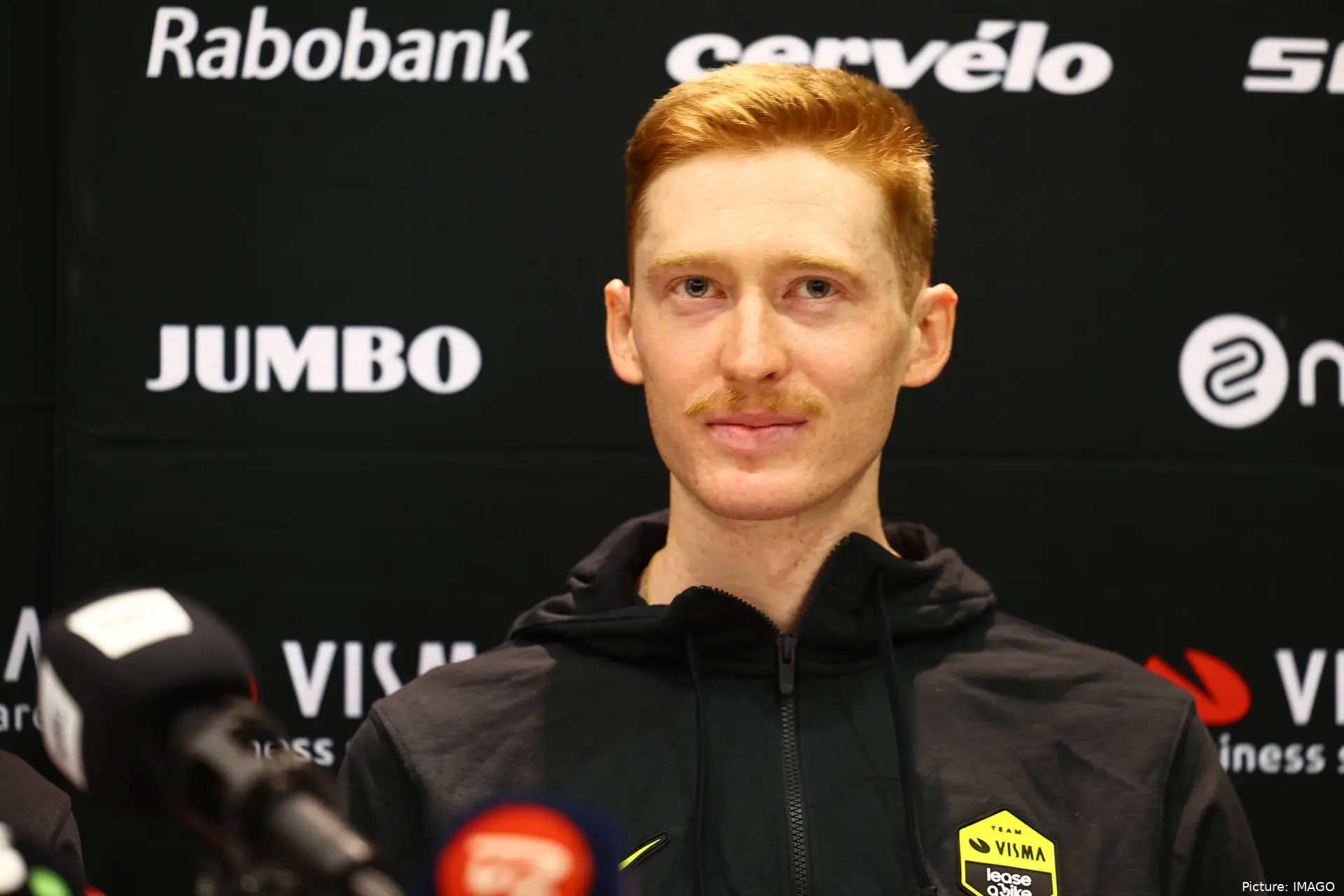
Matteo Jorgenson offered a wide-ranging set of answers during a January Team Visma | Lease a Bike media session, touching on everything from the team’s Tour de France priorities to his own spring reset and the dynamics of a squad that has brought in a wave of new faces. CyclingUpToDate were there to bring you every word.
With Jonas Vingegaard committed to a Giro d'Italia and Tour de France double, Jorgenson made clear the Tour mindset remains centred on GC, while stage chances for riders like himself and Wout van Aert are expected to come only if the race offers the right circumstances.
Away from the Tour, Jorgenson explained why he pushed for a different spring build, opting to prioritise the Italian block and the Ardennes rather than the cobbled classics. He pointed to Liège as a race he has watched obsessively and believes suits him, and he outlined how his season is shaped around altitude and timing, including Tirreno-Adriatico and a Tour de Suisse build rather than the Dauphiné.
The American also spoke at length about Simon Yates' unexpected retirement, describing the phone call that delivered the news and the team’s reaction now that riders have regrouped. He reflected on how little time the sport allows for celebration even after huge wins, and what he sees as the value of marking achievements in order to protect motivation over the long haul.
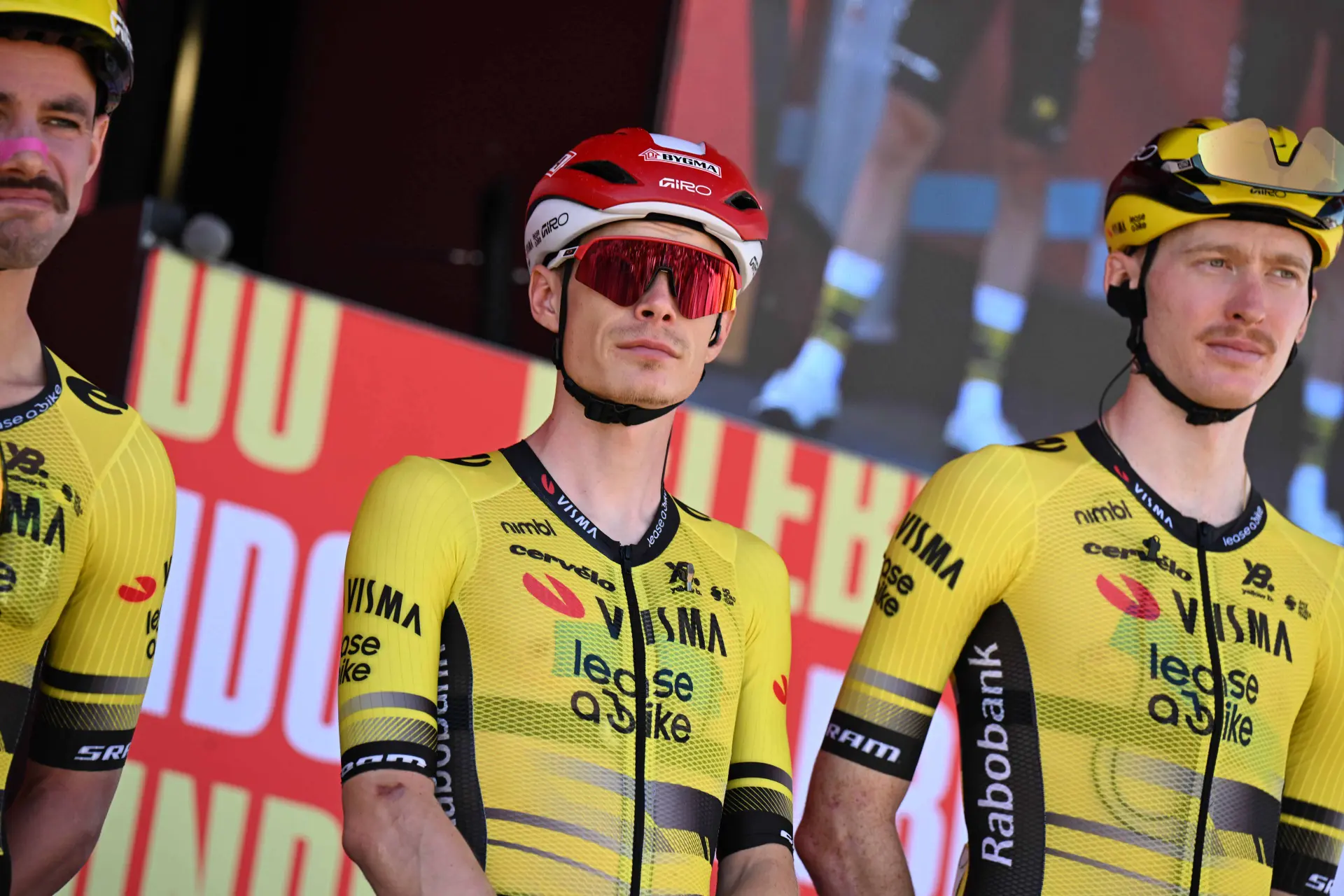
Full Matteo Jorgenson Press Conference
Looking at the Tour, you’re coming with different agendas this year. Do you hope to get your own chances at the Tour as well?
I think it’s no different than other years. I’ve always hoped to have an opportunity to go for a stage win, but the focus will be with Jonas and the GC for all of us.
I think it’s no different than other years. I’ve always hoped to have an opportunity to go for a stage win, but the focus will be with Jonas and the GC for all of us.
So you won’t be going hunting stages as a primary goal?
No. Like I said, I always hope for an opportunity to go for a stage, and that comes out of circumstance in the race if it comes up. If there’s a day that is free for me to go in the break, or for Wout to go in the break, then it can happen. But when we start the race, we don’t have that in mind. It’s all about Jonas.
No. Like I said, I always hope for an opportunity to go for a stage, and that comes out of circumstance in the race if it comes up. If there’s a day that is free for me to go in the break, or for Wout to go in the break, then it can happen. But when we start the race, we don’t have that in mind. It’s all about Jonas.
Your nutritionist mentioned the possibility of being under fuelled at the Tour because of the mental load. Is that something you felt?
It’s not something that I know much about. It’s for sure a stressful race, and I didn’t feel under fuelled last year, but it’s possible.
It’s not something that I know much about. It’s for sure a stressful race, and I didn’t feel under fuelled last year, but it’s possible.
What do you make of Jonas opting to race the Giro and the Tour with a new approach? What was your reaction to him making that choice?
I have a lot of confidence in him. Jonas is someone who gets a lot from winning races, and when he’s confident, he races really well. I saw that with Wout, but I also saw it in the past when he was winning the Tour. I really back his decision, because I’m hoping he can get his hands in the air a few times in the Giro, win some stages, and hopefully the overall, and then show up to the Tour with much less pressure and much more ease, and actually just joy. A lot of times, when you are at altitude the whole year and you are only thinking about the Tour, it can build a lot of stress.
I have a lot of confidence in him. Jonas is someone who gets a lot from winning races, and when he’s confident, he races really well. I saw that with Wout, but I also saw it in the past when he was winning the Tour. I really back his decision, because I’m hoping he can get his hands in the air a few times in the Giro, win some stages, and hopefully the overall, and then show up to the Tour with much less pressure and much more ease, and actually just joy. A lot of times, when you are at altitude the whole year and you are only thinking about the Tour, it can build a lot of stress.
It’s a massive change in your calendar as well. Why was this the moment to reset and switch away from the cobbled classics towards the Italian classics and the Ardennes?
Last year I watched the Ardennes and I really wanted to be there, and at that point in the spring I asked if I could do the spring differently the next year. Not going to the cobbled classics is because I really want to be good at the Ardennes, and to do that I want to go to altitude before then. That forces me to skip the cobbled classics, because I’ll be at altitude.
Last year I watched the Ardennes and I really wanted to be there, and at that point in the spring I asked if I could do the spring differently the next year. Not going to the cobbled classics is because I really want to be good at the Ardennes, and to do that I want to go to altitude before then. That forces me to skip the cobbled classics, because I’ll be at altitude.
With Jonas doing the Giro and the Tour, and no set GC leader for the Vuelta, is this a match made in heaven for you to lead the Vuelta?
I’m not planning on going to the Vuelta. I’m going to do the World Championships instead, and Lombardia afterwards.
I’m not planning on going to the Vuelta. I’m going to do the World Championships instead, and Lombardia afterwards.
In the first part of the season you’re only doing one stage race, Tirreno Adriatico. Is that a conscious choice, less stage races but more one day racing?
I think in the end it’ll be quite similar to what I’ve been doing, with just one stage race. In the past I only did one stage race before the Dauphiné, and I think it works well. Racing less and showing up to every race prepared is what works well for me.
I think in the end it’ll be quite similar to what I’ve been doing, with just one stage race. In the past I only did one stage race before the Dauphiné, and I think it works well. Racing less and showing up to every race prepared is what works well for me.
Is there a specific reason you’re doing Tour de Suisse instead of the Dauphiné this year?
The Ardennes classics are a little bit later, so I’m hoping to have a peak in form around then, which is later than the usual timing around March and Flanders. This year I’ll take a break after Liège, which is later, so I won’t be with the team for the first 10 days of their Sierra camp for the Tour. I’ll show up later, which delays everything. Suisse makes more sense with timing.
The Ardennes classics are a little bit later, so I’m hoping to have a peak in form around then, which is later than the usual timing around March and Flanders. This year I’ll take a break after Liège, which is later, so I won’t be with the team for the first 10 days of their Sierra camp for the Tour. I’ll show up later, which delays everything. Suisse makes more sense with timing.
How well do you know the new faces coming into the team like Bruno Armirail and Louis Barre, and what can they bring?
I think it’s important to get used to the new riders. Getting more French guys in the team is fun for me because it means I can practise my French more. Bruno is also a little bit less English speaking right now, at least he was in December, and I think he has already learned a lot since then. It’s nice being on the other side of it, because I was once an English speaking rider in a French team and I know what it’s like, so I can relate. In general, bringing in a lot of new riders means you have to get to know them, and it takes time. You spend a lot of time riding and at training camps together, so it happens naturally, but it does require intention. For my spring, I’ll be racing with a lot of new riders compared to the past years when it was a very similar group through the whole year. This year I’ll be with a lot of the Italian guys, and the new Filippo and Davide, and then in the Ardennes I’ll be with Louis and some other new riders. It’s a matter of training with them and talking to them.
I think it’s important to get used to the new riders. Getting more French guys in the team is fun for me because it means I can practise my French more. Bruno is also a little bit less English speaking right now, at least he was in December, and I think he has already learned a lot since then. It’s nice being on the other side of it, because I was once an English speaking rider in a French team and I know what it’s like, so I can relate. In general, bringing in a lot of new riders means you have to get to know them, and it takes time. You spend a lot of time riding and at training camps together, so it happens naturally, but it does require intention. For my spring, I’ll be racing with a lot of new riders compared to the past years when it was a very similar group through the whole year. This year I’ll be with a lot of the Italian guys, and the new Filippo and Davide, and then in the Ardennes I’ll be with Louis and some other new riders. It’s a matter of training with them and talking to them.
With the guys who left having important roles in the team, do you feel you need to step up a little bit to fill that void somehow?
That’s something I haven’t really thought about, but it’s true. It’s important for me this year to step up and be a leader in some cases, especially in the spring with so many new guys. Sometimes I’ll be the rider who has been on the team the longest in the races I do, apart from Edo, I’m not sure. It’ll be important to welcome everyone and make sure everyone is on the same page.
That’s something I haven’t really thought about, but it’s true. It’s important for me this year to step up and be a leader in some cases, especially in the spring with so many new guys. Sometimes I’ll be the rider who has been on the team the longest in the races I do, apart from Edo, I’m not sure. It’ll be important to welcome everyone and make sure everyone is on the same page.
You’ve talked about feeling refreshed with a different calendar. Does it feel like there’s a reset within the team too?
I think it is true that management sat down last fall and thought about what we can improve. I think they realised they want to listen to our desires a bit more this year. You can see it in the calendars, that riders were given more choice to pick parts of their own schedule, and they listened, especially in Jonas’ case. It was difficult for them to let go of the formula they had perfected for the Tour, because they know it works and they won the Tour twice with it. But Jonas asked many times if he could do something different and approach the Tour in a different way, and I honestly applaud them for it, because it’s not easy to give up something you know works.
I think it is true that management sat down last fall and thought about what we can improve. I think they realised they want to listen to our desires a bit more this year. You can see it in the calendars, that riders were given more choice to pick parts of their own schedule, and they listened, especially in Jonas’ case. It was difficult for them to let go of the formula they had perfected for the Tour, because they know it works and they won the Tour twice with it. But Jonas asked many times if he could do something different and approach the Tour in a different way, and I honestly applaud them for it, because it’s not easy to give up something you know works.
Is that rider input something that continues throughout the season, or is it fixed once the calendar is set?
When you make a calendar, they really try to stick with it. It’s not fair to anyone to change your mind, because there is so much planning that goes into it. It would never be my desire unless something happened, like injury or sickness. We’ve made a plan that makes sense and everyone believes in, so for me it’s not going to change much.
When you make a calendar, they really try to stick with it. It’s not fair to anyone to change your mind, because there is so much planning that goes into it. It would never be my desire unless something happened, like injury or sickness. We’ve made a plan that makes sense and everyone believes in, so for me it’s not going to change much.
Which Ardennes race suits you best?
Liège is a race I’ve watched a lot. I’ve done it a few times, but watching it the past couple of years, I’ve always wanted to be there. The longer climbs feel good for me and might suit me better than the Flemish ones.
Liège is a race I’ve watched a lot. I’ve done it a few times, but watching it the past couple of years, I’ve always wanted to be there. The longer climbs feel good for me and might suit me better than the Flemish ones.
Do you have to go before 36 kilometres to go, is that when everyone goes?
I can’t disclose that one.
I can’t disclose that one.
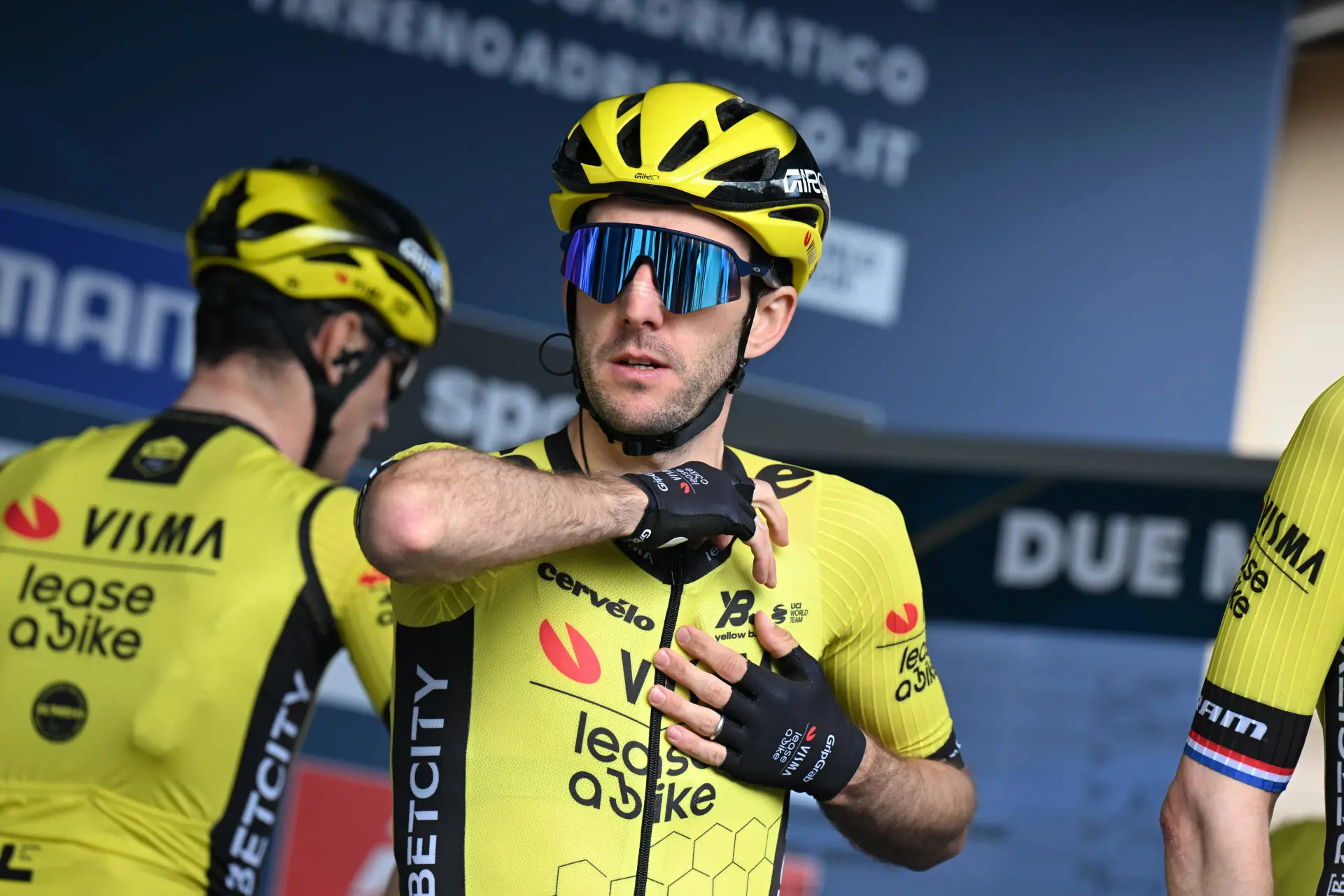
How were you notified about Simon Yates wanting to retire, and what was your response?
Grisha gave me a call a few nights ago and told me they had gotten word from Simon that he was retiring. My opinion in someone else’s life is not really something. I don’t judge people for the decisions they make. I came away with even more respect for him, because I know that decision wasn’t easy. I’m sure he has good reasons, and you only know someone’s experience when you’re the one living it. I applaud that he was willing to take a hard decision and be confident with it. I can’t do more than that.
Grisha gave me a call a few nights ago and told me they had gotten word from Simon that he was retiring. My opinion in someone else’s life is not really something. I don’t judge people for the decisions they make. I came away with even more respect for him, because I know that decision wasn’t easy. I’m sure he has good reasons, and you only know someone’s experience when you’re the one living it. I applaud that he was willing to take a hard decision and be confident with it. I can’t do more than that.
Now you’re gathered here for the first time since it happened, how have you been talking about it among yourselves?
It comes up on rides and when you come back together, because it just happened. It’s not like Simon was talking about it last year, at least not publicly or with us. Probably with the people he is close with, it was something he talked about, but he was very professional last year. He was always very present in all the races and training camps I was with him at. We talk about whether anyone was surprised, whether anyone got the feeling he was checked out, and none of us really can say that, because he was so professional and he was the full Simon Yates in every race he was at. Maybe even better than ever, he was very high level last year. You don’t know. I didn’t win the Giro and I don’t know what that experience is like, so I can’t judge him for it. All I saw was him winning the Giro and a few days later going to altitude and joining us preparing for the Tour. I just thought, wow, this guy is extremely dedicated. He didn’t really have any celebration. People imagine you win a Grand Tour and celebrate, but it’s not the reality of cycling. There’s always another race. I’m full of admiration.
It comes up on rides and when you come back together, because it just happened. It’s not like Simon was talking about it last year, at least not publicly or with us. Probably with the people he is close with, it was something he talked about, but he was very professional last year. He was always very present in all the races and training camps I was with him at. We talk about whether anyone was surprised, whether anyone got the feeling he was checked out, and none of us really can say that, because he was so professional and he was the full Simon Yates in every race he was at. Maybe even better than ever, he was very high level last year. You don’t know. I didn’t win the Giro and I don’t know what that experience is like, so I can’t judge him for it. All I saw was him winning the Giro and a few days later going to altitude and joining us preparing for the Tour. I just thought, wow, this guy is extremely dedicated. He didn’t really have any celebration. People imagine you win a Grand Tour and celebrate, but it’s not the reality of cycling. There’s always another race. I’m full of admiration.
Has it been addressed by management at camp, or is it more informal among riders?
We arrived yesterday, so there hasn’t been a formal meeting about it. But Grisha called most of the guys who were racing with him last year and notified them. We all talk about it. There’s nothing to hide.
We arrived yesterday, so there hasn’t been a formal meeting about it. But Grisha called most of the guys who were racing with him last year and notified them. We all talk about it. There’s nothing to hide.
What is your first memory from the Ardennes classics, and why do you like those races so much, especially Liege?
I remember watching many editions, and for some reason I have a memory of Fuglsang when he won Liège and his near crash on the descent. That stuck in my mind. I also raced Liège with Alejandro, and I think it was his last time doing Liège. He had won it so many times, and I remember his passion for the race. The night before, we watched a bunch of his victories at Liège. I remember feeling fun and exciting emotions about the race and looking forward to it. It’s a special and historical race, and I want to do it again because I think it suits me well.
I remember watching many editions, and for some reason I have a memory of Fuglsang when he won Liège and his near crash on the descent. That stuck in my mind. I also raced Liège with Alejandro, and I think it was his last time doing Liège. He had won it so many times, and I remember his passion for the race. The night before, we watched a bunch of his victories at Liège. I remember feeling fun and exciting emotions about the race and looking forward to it. It’s a special and historical race, and I want to do it again because I think it suits me well.
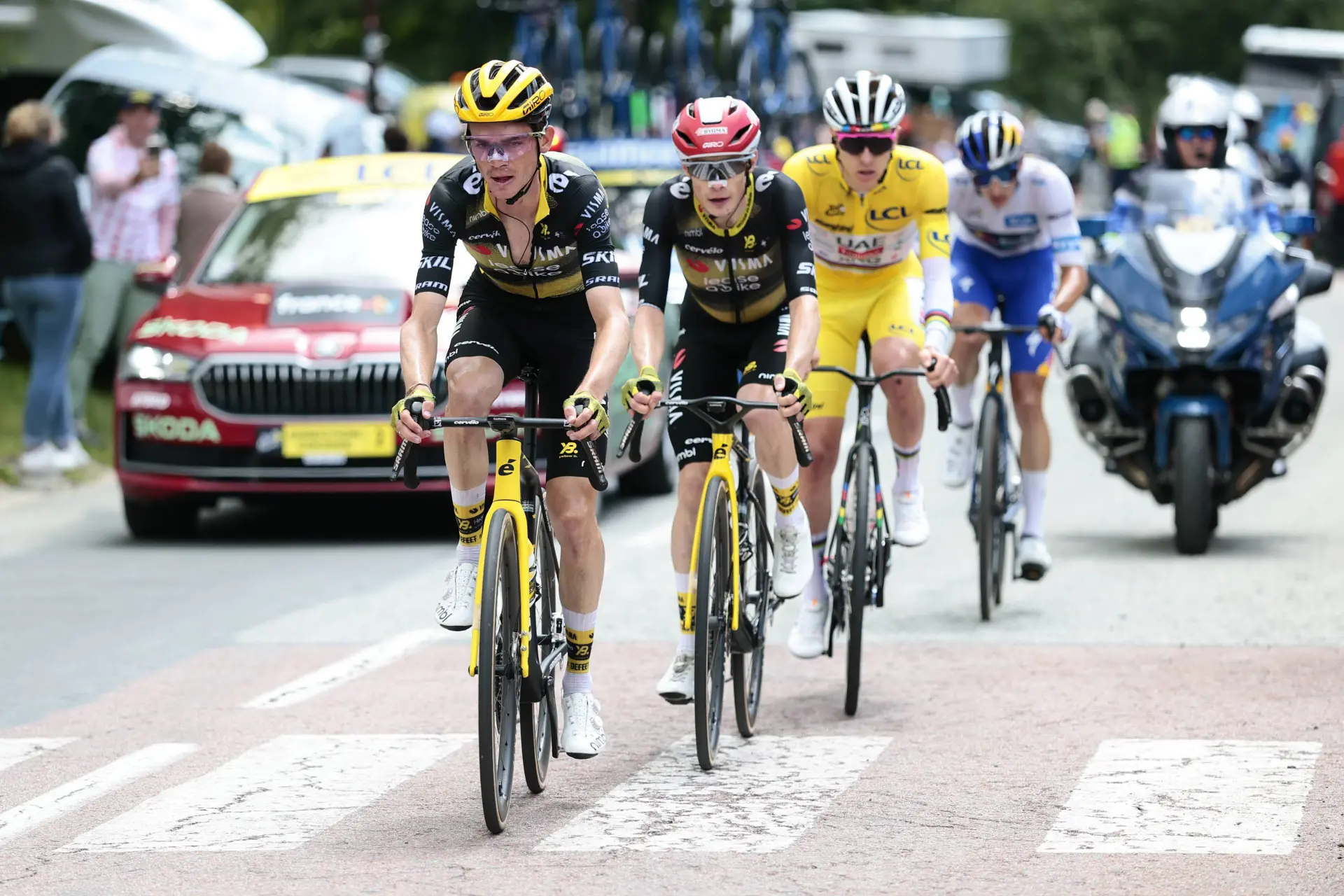
You spent time racing around Dutch Limburg with the US national team. How did those years shape you, especially as a non European rider?
Those were my first experiences in Europe with the national team. The first time I came I was 14. We stayed in Sittard and trained on the climbs, the Cauberg and the Three Point climb. I don’t even know the Dutch names for all those climbs yet, but they’re roads I know well. That place is part of my first memories of Europe as a kid, so I definitely have an emotional connection to it.
Those were my first experiences in Europe with the national team. The first time I came I was 14. We stayed in Sittard and trained on the climbs, the Cauberg and the Three Point climb. I don’t even know the Dutch names for all those climbs yet, but they’re roads I know well. That place is part of my first memories of Europe as a kid, so I definitely have an emotional connection to it.
What is your perspective on celebration and mental recovery after a big win, either yours or a teammate’s?
It’s different for every person, but I’m not a great example. I haven’t done a super good job of taking a moment when I achieve something and putting it in perspective. It’s hard in cycling because when you win and you’re going well, people want to continue that form. They think, if you can win that, you can win the next one. Thankfully in this team it doesn’t happen so much, it’s not like we change calendars when someone is on form, but at my previous team it happened a lot and you’d get raced out of shape. I think it’s important, and something the sport can improve on, to create meaning out of achievements, because that’s how you keep motivation. If you don’t celebrate in some way, whatever that means for each person, you start to question why you are trying to achieve those things.
It’s different for every person, but I’m not a great example. I haven’t done a super good job of taking a moment when I achieve something and putting it in perspective. It’s hard in cycling because when you win and you’re going well, people want to continue that form. They think, if you can win that, you can win the next one. Thankfully in this team it doesn’t happen so much, it’s not like we change calendars when someone is on form, but at my previous team it happened a lot and you’d get raced out of shape. I think it’s important, and something the sport can improve on, to create meaning out of achievements, because that’s how you keep motivation. If you don’t celebrate in some way, whatever that means for each person, you start to question why you are trying to achieve those things.
Is that something team staff actively transmits to you as well?
The best example is after the Vuelta last year, when we didn’t have the official podium ceremony. It was cool to see how much effort the team put into organising some sort of celebration, because they know how important it is. Since the last stage was cancelled, it would have been easy to pack up and go home and forget about it, but they made a huge effort because they are aware it’s important to create the memory that we did something and we should celebrate it and realise the work. It’s not just riders, there were hundreds of staff behind it, chefs, mechanics, soigneurs, everyone. They know that makes a difference going forward when you have that memory of celebrating and coming back together after doing something like that.
The best example is after the Vuelta last year, when we didn’t have the official podium ceremony. It was cool to see how much effort the team put into organising some sort of celebration, because they know how important it is. Since the last stage was cancelled, it would have been easy to pack up and go home and forget about it, but they made a huge effort because they are aware it’s important to create the memory that we did something and we should celebrate it and realise the work. It’s not just riders, there were hundreds of staff behind it, chefs, mechanics, soigneurs, everyone. They know that makes a difference going forward when you have that memory of celebrating and coming back together after doing something like that.
Are there any behind the scenes details you can share about how that Vuelta celebration came together?
I don’t even know how. I wasn’t part of the organisation at all. I remember finishing and as riders we were stuck with the police. They drove us under Madrid and we were in tunnels for a few hours so they could keep the convoy safe. As riders you don’t have your phone, so we were just in the car. By the time we got back to the hotel, they were already organising it, so I don’t know how they did it.
I don’t even know how. I wasn’t part of the organisation at all. I remember finishing and as riders we were stuck with the police. They drove us under Madrid and we were in tunnels for a few hours so they could keep the convoy safe. As riders you don’t have your phone, so we were just in the car. By the time we got back to the hotel, they were already organising it, so I don’t know how they did it.
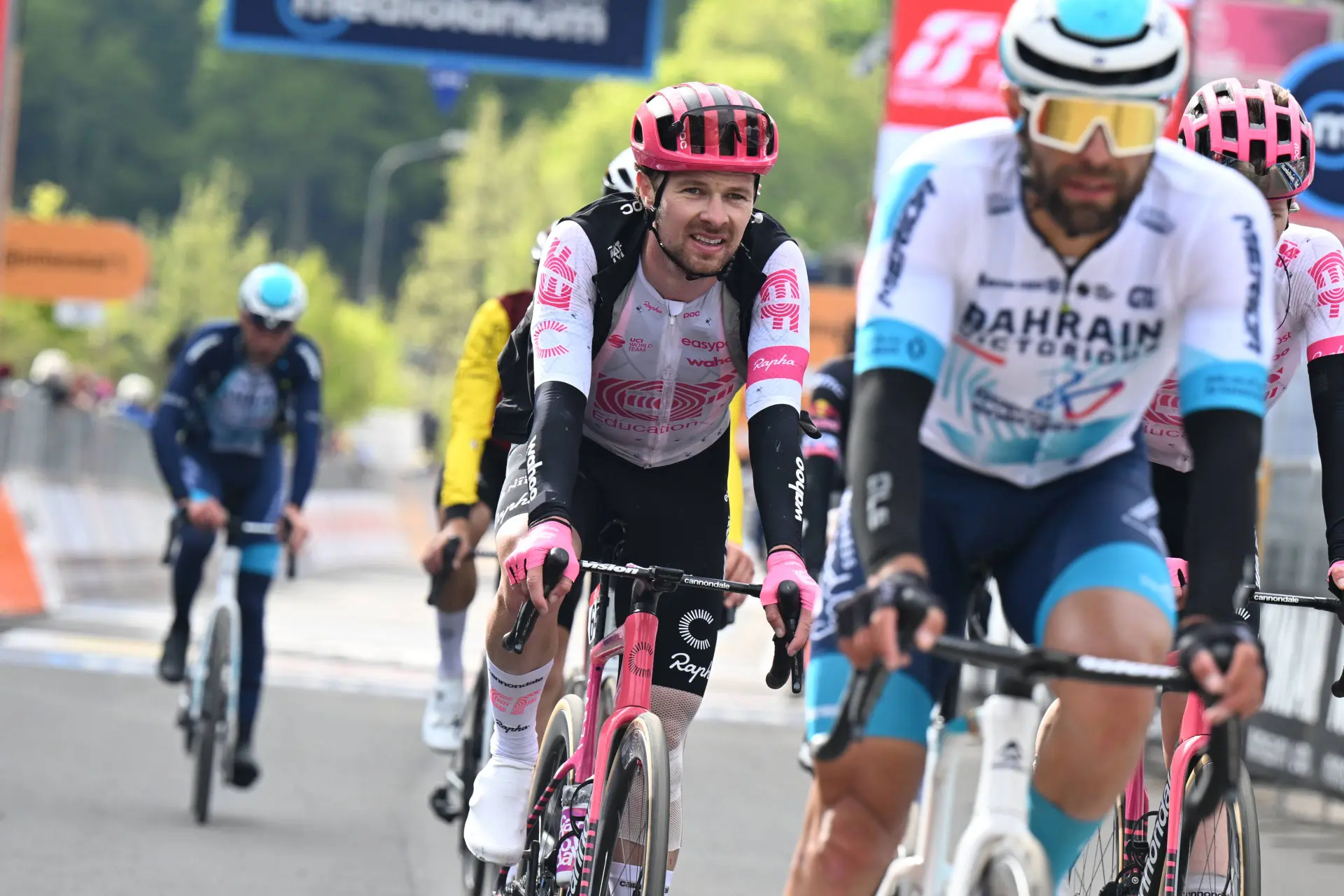
With more money coming into the sport, do you still see yourselves as the main competitors to UAE Team Emirates, or do you think you are being overtaken?
I spend zero energy or time thinking about that. I don’t know what to tell you. We do our best and try to show up at every race to try to win. I don’t sit there and compare. I’m sure there are other teams doing really well and preparing well.
I spend zero energy or time thinking about that. I don’t know what to tell you. We do our best and try to show up at every race to try to win. I don’t sit there and compare. I’m sure there are other teams doing really well and preparing well.
So you’re not looking at other teams and thinking maybe you should go over there instead?
No. I don’t know.
No. I don’t know.
Have you been surprised by how positive Wout’s progress looks after the ankle fracture?
No doubt. I don’t know anything about it, but when I heard he broke his ankle, my dad, who’s a doctor, was like, that’s going to be really bad, because ankle fractures can be complicated. I expected it worse. When Wout sent me a picture early in the new year and he was already pedalling on a trainer, I was shocked. I thought it was going to be much different than that. He was riding outside today, and I was surprised to even see him on the travel plan for this camp.
No doubt. I don’t know anything about it, but when I heard he broke his ankle, my dad, who’s a doctor, was like, that’s going to be really bad, because ankle fractures can be complicated. I expected it worse. When Wout sent me a picture early in the new year and he was already pedalling on a trainer, I was shocked. I thought it was going to be much different than that. He was riding outside today, and I was surprised to even see him on the travel plan for this camp.
How have you developed since joining a more organised structure compared to the Movistar years?
When you arrive in a structure like this where they have systems set up, it takes a huge weight off you. You don’t have to organise camps and wonder if you are doing the right training or whether you need to hire a nutritionist. Then you have more time in your day to organise your life and do other things. That’s what I’ve spent more time doing since I arrived here, setting up a life that makes me happy off the bike and supports my racing, making sure I show up motivated and content with myself, and not trying to manage burnout, just trying to be happy and be a happy person. You have more energy and ability to do that when those other things are taken care of.
When you arrive in a structure like this where they have systems set up, it takes a huge weight off you. You don’t have to organise camps and wonder if you are doing the right training or whether you need to hire a nutritionist. Then you have more time in your day to organise your life and do other things. That’s what I’ve spent more time doing since I arrived here, setting up a life that makes me happy off the bike and supports my racing, making sure I show up motivated and content with myself, and not trying to manage burnout, just trying to be happy and be a happy person. You have more energy and ability to do that when those other things are taken care of.
Did you lose weight, did you gain more, and what were the physical consequences of this change?
I’m a little bit lighter and I’m definitely stronger. I feel like every year that goes by, you get a little bit stronger if you keep consistent training. I was still pretty young until recently and my body was developing, so I think it’s natural progression. But the biggest change is your mental capacities opening up to other areas of your life.
I’m a little bit lighter and I’m definitely stronger. I feel like every year that goes by, you get a little bit stronger if you keep consistent training. I was still pretty young until recently and my body was developing, so I think it’s natural progression. But the biggest change is your mental capacities opening up to other areas of your life.
Is it in the back of your mind to one day make the step towards winning a three-week stage race?
Yeah, I’ve already put it as an objective I’d like to go for at some point in my career. It remains to be seen whether it’s possible or not. You only know if you try and show up. I can’t answer if it’s possible, but I would love to have an opportunity sometime to do it. I’m sure in the next four years we’ll find a moment where I can put a lot of resources into going for one and really trying to do GC again for it.
Yeah, I’ve already put it as an objective I’d like to go for at some point in my career. It remains to be seen whether it’s possible or not. You only know if you try and show up. I can’t answer if it’s possible, but I would love to have an opportunity sometime to do it. I’m sure in the next four years we’ll find a moment where I can put a lot of resources into going for one and really trying to do GC again for it.
Kieran WoodDeputy Editor-in-Chief
Kieran Wood is a sports journalist based in Wales and has been active in journalism since 2022. He regularly contributes to DartsNews.com and CyclingUpToDate.com, where he covers professional cycling and darts. In cycling, his work includes liveblogs from major races, including the Tour de France, the Giro d’Italia, and La Vuelta a España, alongside race reports and analysis. He has also conducted interviews with professional riders.
His reporting spans the full racing calendar, from one-day classics to stage races, with a focus on accurate, real-time coverage and clear contextual analysis. For statistics, results, and historical context, he regularly uses resources such as ProCyclingStats. To support reporting on rider activity and training context where relevant, he also references Strava.
In his work, Kieran places strong emphasis on careful sourcing, editorial accuracy, and updating articles as new, verified information becomes available.
claps 7visitors 7
Just in

Popular news
Latest comments
- I've had C7 issues my entire riding life some of which were road racing and it had zero affect on me or my positioning and I didn't even top notch massage people to work me over !frieders327-10-2026
- I like the fact that this non-news item has garnered so much response from the fans. It implies that Tadej's comeback is highly anticipated, even though many pundits say his dominance is bad for the sport.FredMan27-10-2026
- As a WvA, Pidders and MVDP fan, I friggin love this.anonymouscyclist27-10-2026
- Despite his crash, Jonas gave us some edge-of-seat stages in the first two weeks of the 2024 Tour, and even came back to beat Pog in one stage. In 2025 he said he felt like a new man and came out swinging. It's just this year that his challenge fizzled after Stage 1 and fans began to boo Tadej. It's more likely that ASO just can't face waiting two weeks for Jonas to launch his challenge next year.Hills3327-10-2026
- Bummed to see an Austrian guy not make it on what is nominally (ok ok not really) a German team. He didn't have a good 2026, and I hope that he finds his footing at Bardiani. They've got a long history of excellent coaching and development.RidesHills27-10-2026
- Subject to the top riders DNS DNF or sick/crash.abstractengineer27-10-2026
- Pogi has no challenger since 2024. Jonas is one level below, Remco has no balls, Sexias is too young. Whether ASO acknowledge or not is immaterialabstractengineer27-10-2026
- People keep referring to Pogačar and mountain-top finishes, and sure, he's succeeded on those often enough. Thing is, he succeeds on mountains, period. How often has he attacked on a climb, made time on the descent, and added time on the flat run in to the final? Often enough that they'd have to remove mountains for it not to be a Pogačar route. And then they'd have hills, and the guy who has won Flanders 3 times isn't going to suffer there, either. So if you remove those they have sprints and TTs, and last year he was mixing it up in a few sprints, as well. So, yeah, good luck folks. Let's see how he recovers before we make too many other claims. The seasons from 2024 to 2026 are three of the top 10 best cycling seasons ever (Merckx has something like 5 of the remaining), and I'm going to predict that 2027 is going to be up there with them.RidesHills27-10-2026
- The US has gone through a long convoluted process of defining how athletes can make money off their "Name, Image, and Likeness," and I see the point that Pederson and the other athletes are making here. Also, how very Mads Pederson to say, "Everyone has seen the somewhat tacky advertisements." You can almost see that sly smile on his face when he says it.RidesHills27-10-2026
- Vine coming from his background and then succeeding on a team full of superstars, so great. He's got solid wins (GC and TT), would be even more successful in the TT if he didn't live in the era of Ganna and Evenepoel, and seems to have a thing for the Vuelta. Aren't something like 1/3 of his wins there? (Checks procyclingstats - yes, 5 of the 14) Great guy, and I wish him all the success he can find!RidesHills27-10-2026
Loading
Write a comment