“Pogacar wins races through strength, not tactically – Van der Poel wins with cunning and tactics”: Vincenzo Nibali warns pure power won't be enough at Milano-Sanremo
CyclingSaturday, 03 January 2026 at 17:17

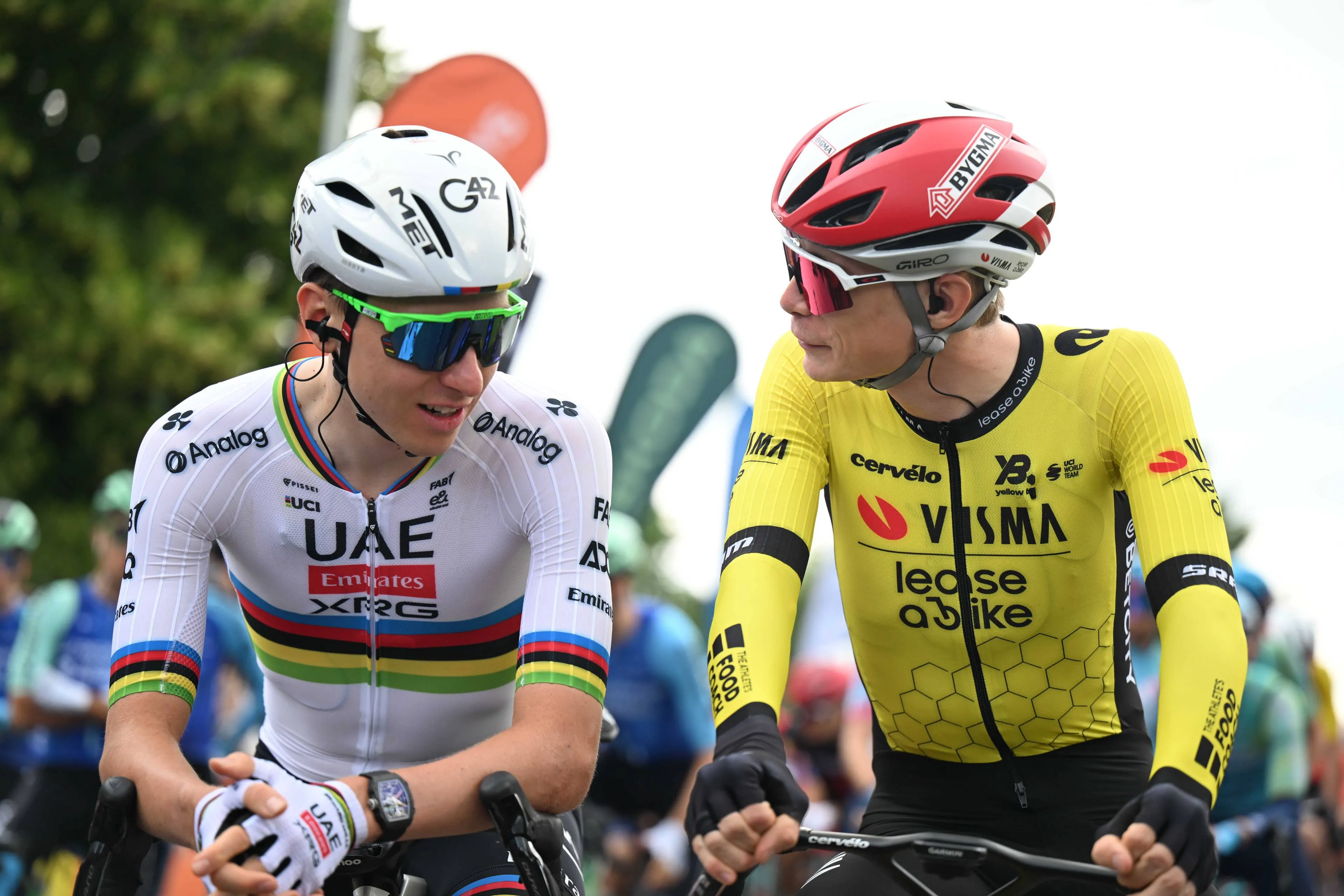
Raw strength is more than enough for Tadej Pogacar to dominate almost every race on the calendar. But according to Vincenzo Nibali, Milano-Sanremo plays by different rules. And if the world champion wants to finally add La Classicissima to his palmares, relying on brute force alone may not be enough, especially when measured against the racecraft of Mathieu van der Poel.
Speaking in conversation with Bici.Pro, Nibali drew a clear contrast between Pogacar’s overwhelming physical dominance and Van der Poel’s ability to win through timing, positioning and tactical restraint. “Any race he wins, he wins through strength, not tactically,” Nibali said of Pogacar. “He attacks because he is stronger. But who wins with cunning and tactics? Van der Poel.”
Why modern speed has changed everything
Nibali’s analysis begins with how much the peloton itself has evolved. In his view, today’s racing environment makes sustained attacking far harder than it was even a decade ago. “The peloton is now at an extremely high level, and then there are those who are simply out of scale,” he explained. “We used to race at an average of 42 kilometres per hour, today it is 47.”
That increase, Nibali stressed, is not down to training alone. “Five kilometres difference that is not only linked to preparation, but also to the racing package. The bike, the handlebars, the saddle, the seatpost, the wheels, the shoes, the socks, the shorts. Everything is more performant.”
The consequence is a peloton that no longer gives riders space to gamble. “To attack when the speed is 45 on average, you need to go at 50 kilometres per hour,” Nibali said. “The bar is raised and you have to hold that speed for longer, because the bunch does not let you go. That is why today it has become harder to go in the break and many riders give up.”
Pogacar’s strength and the price it demands
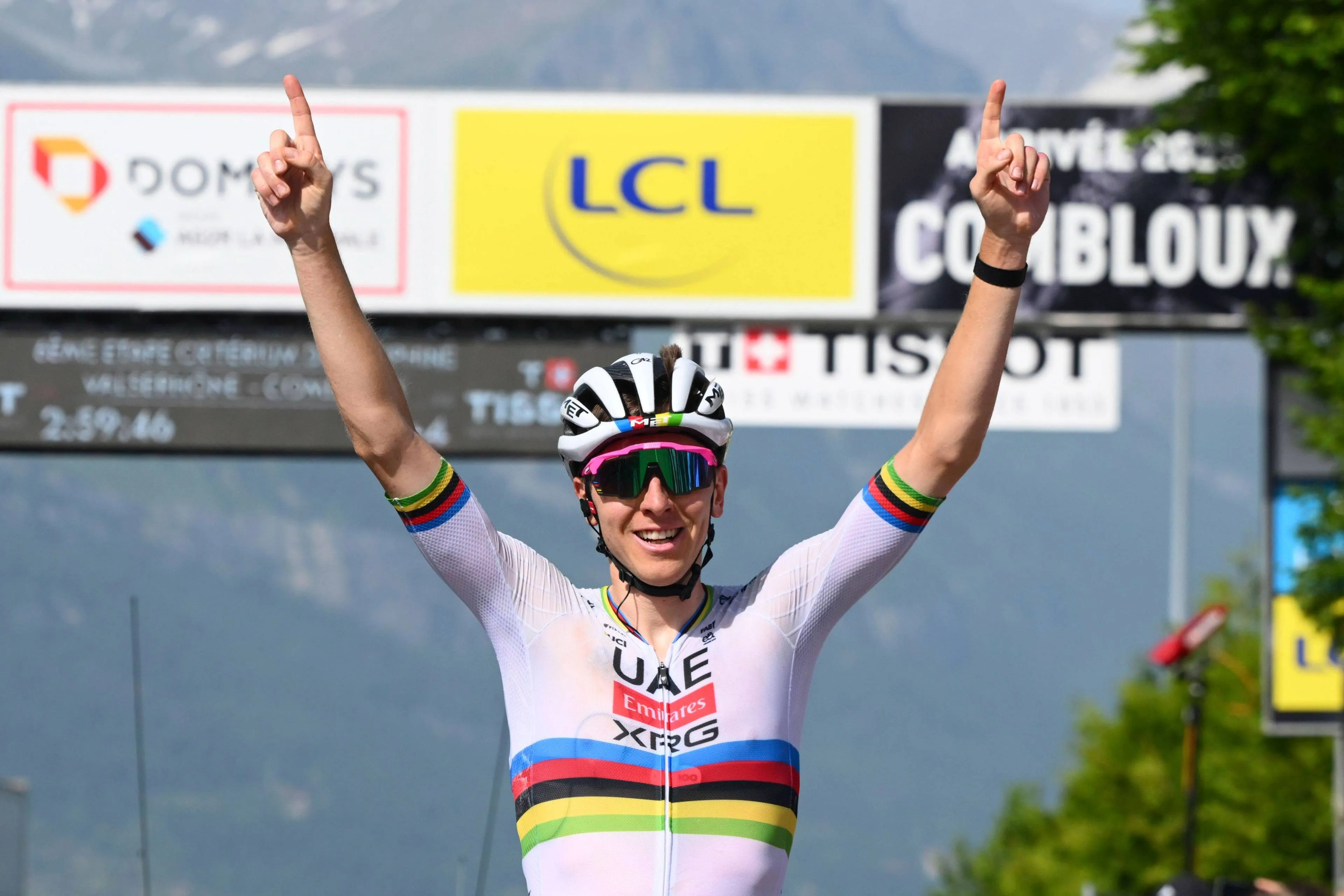
Within that context, Nibali sees Pogacar as a rare exception, a rider capable of forcing the race onto his terms. But even that ability has limits. “The exception is Pogacar, who has remarkable explosiveness, then settles into his own rhythm, sending everyone else into the red,” he said. “And when you are in the red, it takes a long time to recover.”
That effort, Nibali warned, carries a lasting cost. “Before you manage to clear the lactic acid, your legs go into crisis, and it can even take a week before you properly recover. When you race against Tadej, that is the main problem.”
Yet it is precisely because Pogacar can win so often through force that Nibali believes Milano-Sanremo presents a different challenge. “Perhaps his limit, if you can even call it a limit, is that he thinks he can manage everything with strength,” he said. “Look at Milano-Sanremo: he tries to drop everyone on the climb, without thinking about the possibility of winning it the way I did, on the descent.”
The Poggio moment that decided Milano-Sanremo 2025
Nibali was unequivocal when revisiting the decisive exchange between Pogacar and Van der Poel on the Poggio. “When Pogacar attacked and Van der Poel kept him in his sights, I immediately said that if Tadej was not careful, the other would counterattack and leave him there,” he recalled. “One second later that is exactly what happened, and he almost dropped him for real.”
What followed, in Nibali’s view, was the turning point of Milano-Sanremo. “At the top they looked at each other, but Tadej understood that the other still had enough to leave him behind, and he almost paid for it. In my opinion, he lost Milano-Sanremo at that exact moment.”
Van der Poel’s advantage did not end on the climb. “The other masterpiece came in the sprint,” Nibali added, “managed the way someone does who knows exactly how to handle those situations.”

Why tactics still matter at Milano-Sanremo
Despite its distance, Nibali remains adamant that Milano-Sanremo continues to reward riders who read the race rather than overpower it. “In Milano-Sanremo, the sprinter is always stronger,” he said. “Even if it is 300 kilometres, there is not that much difference.”
Only under very different conditions do the balance of power truly shift. “It is different if you have done 270 kilometres with 5,000 metres of climbing, because then the values level out and you might win the sprint.”
As for Pogacar, Nibali has little doubt the world champion will keep trying. “He has drawn up the plan of what he wants to try to win,” he said. “He will race in his own way again, trying to drop everyone.”
But Nibali’s warning is clear. At Milano-Sanremo, where timing, nerve and tactical clarity can outweigh raw watts, Pogacar may need more than just strength to finally claim the Monument that still eludes him.
claps 12visitors 11
Just in
Popular news
Latest comments
- Not exactly true. There were MANY riders who didn't dope whose results were buried under the Armstrong era ethical trash heap.PlanB24-06-2026
- My opionion is based on challenging your assertions that Visma failed as a collective unit with dealing with their riders. You have zero evidence of how they were treated instead relying on starts and algorithms. Here's a new one for you to provide statistics for...why did this team fail? Movistar rider Cat Ferguson ...., new tests delivered a more precise and decisive diagnosis: two fractures in the ankle, an injury that explained her stalled clinical progress and will force a reaassessment of her schedule in the short term.frieders324-06-2026
- Remco and Almeida were never on the same team so I'm not sure where you're getting this info from!frieders324-06-2026
- really like this guy. he is controversial to some, but I appreciate how he says his mind and isn't a programmed robot. talking about his Dad, his love of his country, it is good stuff. yeah there are a lot of USA haters out there right now, but to me a person should be loyal to their country. not necessarily the leaders. but to the country. and interesting comment - winning one for Luca. this seems as if it is an unpopular move by Trek.mij24-06-2026
- if there is one thing certain, one of these riders will fail somehow. it always seems the road actually does decide. when it was Jonas/Primoz on the same team, Primoz cracked and Jonas was the leader. no one had to appoint anyone. same will likely happen here. Look at the Giro this year. Bora goes in with 2 leaders. Hindley is the one who doesn't crack. even though he was probably secondary, he took the podium. the only time this doesn't seem to work is a situation like the Remco/Almeida Giro. Remco cracked, Almeida was having an amazing race, but he was ordered by the team to be at service to Remco. that was stupid. I don't think Denk will do the same.mij24-06-2026
- To be fair, doping in Armstrong's era was rampant throughout the peloton. His dominance was over other riders who had EPO coming out of their eyeballs as well. The fact that he was such a complete a**hole about it all is his to own though.DAS24-06-2026
- fatalistic French guywhkman23-06-2026
- Piganzoli was really fun to watch at the Giro.DAS23-06-2026
- does anyone believe Remco can win Le Tour? He seems to wilt in the high mountains every year, where we saw Lipo up with the GC men pretty much every dayCrashjames23-06-2026
- Please no... he's an amazing talent... not to be ruined by Movistar
 Rafionain-Glas23-06-2026
Loading
13 Comments