"I probably wouldn’t be capable of being a sports director": Vincenzo Nibali rules out a move to the team car
Cycling
Over the course of his long WorldTour career, Vincenzo Nibali worked with a big number of sports directors. From early figures such as Franceschi to experienced leaders like Ferretti, Martinelli and Amadio, all of them played a key role in Nibali's success.
Drawing on that experience, the former Giro, Tour and Vuelta winner was recently asked in an interview to bici.pro to assess whether four recently retired professionals that aim to become sports directors - Brambilla, Visconti, Gavazzi, and De Marchi - have what it takes to be a good manager.
De Marchi the “visionary”, Brambilla quick to read races
Nibali started with Alessandro De Marchi, who recently announced his retirement after 16 years in the professional peloton. “De Marchi was one of those riders who went in the breakaway all day. A hard worker, but in a certain sense also a visionary.” he said.
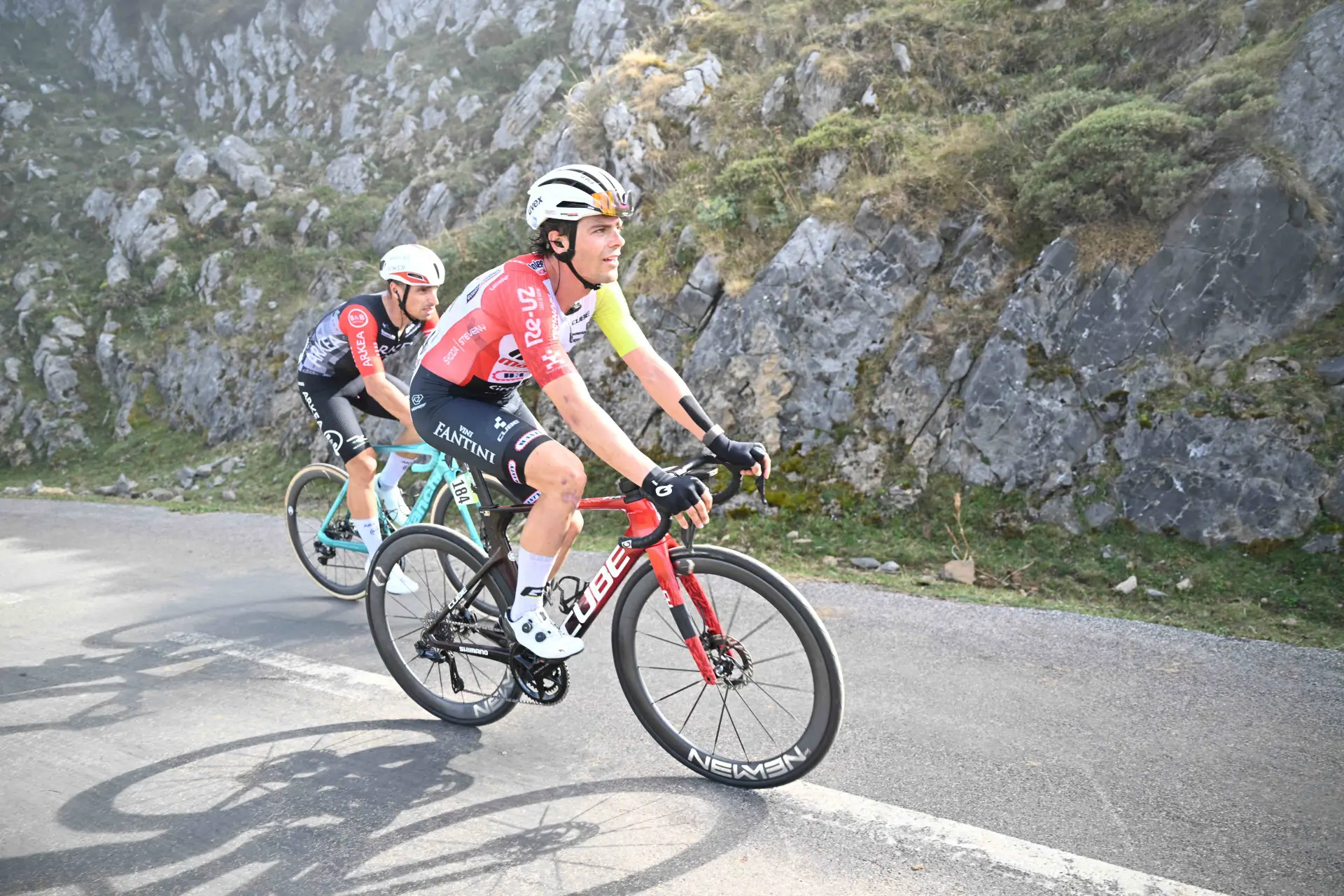
“As a rider he had great tenacity, a born fighter. Sometimes he didn’t speak much, other times he made himself heard with a firm, decisive voice and words that made you think. He went from one extreme to the other, so we’ll have to see whether that contrast will also emerge when he’s a sports director.”
That ability to make decisions under pressure, Nibali added, will be decisive for all four. “We’ll have to see whether they can be colder when it comes to making quick decisions. The same applies to the others. Like Brambilla, for example.”
Nibali knows Gianluca Brambilla well, having shared both team (they were teammates at Trek - Segafredo in 2020 and 2021) and room with him. “I know how he reasons. He’s thoughtful, but not too much, and he’s always found solutions quickly. He could be a director who gives very fast input from the team car and immediately reads what’s happening in the race.”

Gavazzi’s instincts and Visconti’s passion
Meanwhile, Francesco Gavazzi also received praise for his racing intelligence. “Gavazzi has the advantage of being fairly fast as well, so when he went into breakaways, he rarely made mistakes. In my opinion, he has the ability to become an excellent sports director.”
Giovanni Visconti, by contrast, stands out for a different characteristic. “Visconti is a bit more hot-blooded,” Nibali explained. “He’s hot-blooded like me, he comes from the south, so he’s more impulsive, but he’s also a very good listener. In my opinion, if Giovanni sits down and listens to what his riders say, he can turn that into a great tool to become an excellent sports director.”
Cycling has evolved a lot, and nowadays being a sports director implies much more than just giving radio instructions to the riders. “It’s true that today it’s not just about getting in the team car and talking on the radio. There are many other things to pay attention to.”
“The organisational aspect, but also reading maps, knowing how to use Veloviewer, explaining the stage, doing the planning. The old-school sports director, who used to go around the hotel rooms, has disappeared in recent years. Communications now arrive by email, so it’s a different role. But the four of them have what it takes to be very good.”

Vincenzo Nibali won the queen stage of the 2013 Giro d'Italia, celebrating his triumph in a snowy Tre Cime di Lavaredo
Why Nibali himself would not become a director
Despite his insight, Nibali does not see himself in that role. “I probably wouldn’t be capable of being a sports director,” he admitted.“I reasoned based on what I felt in my legs. I had an engine, I accelerated and went. If you don’t have that engine, you have to manage fatigue differently. You have to read the race and attack at very precise moments. I could afford to attack from far out.”
Nibali has actually completed a coaching course, but more for personal growth than to use it professionally. “I did the first-level course, I wanted to do the second as well, but then family life took over and I stopped. I did it because it’s highly educational. It helped me understand the importance of the psychological aspect, the approach to races, the regulations and convoy composition.”
For now, he concluded, becoming a sports director is not a priority, although he leaves a small door open. “I never thought about becoming a sporting director, because you're always on the move. It's not so much a question of desire as of the type of work. It's not a priority for me right now. Someone thought I could be the national team manager, and maybe that could happen in the very distant future, not now.”


Félix SernaCycling Journalist
Félix Serna is a writer at CyclingUpToDate and has been part of the team since 2025. He covers professional cycling across both the men’s and women’s calendars, with a focus on UCI rankings, race developments, and rider performance. His work includes interview-based reports, liveblogs, and tournament coverage designed to provide clear, accurate context throughout the season.
In his reporting, Félix regularly uses ProCyclingStats for results, statistics, and historical reference. He places strong emphasis on careful sourcing, editorial accuracy, and updating articles promptly when new, verified information becomes available. He holds a bachelor’s degree in International Studies.
claps 1visitors 1
Just in
Popular news
Latest comments
- Ahem, stage 16 of the 2025 Giro
 Rafionain-Glas11-10-2026
 - Can we get a comment from the UCI on this. The silence from Aigle is deafening! Come on cycling journalists , start annoying them to get a comment please.Paul53111-10-2026
- A shame to see him retire, I really liked him as a rider. His dignified tribute along with Matej Mohorovic to Gino Mader after his death was class and will always live in my memory. Enjoy your retirement.GregT11-10-2026
- A shame to see him retire, I really liked him as a rider. His dignified tribute along with Matej Mohorovic to Gino Mader after his death was class and will always live in my memory. Enjoy your retirement.GregT11-10-2026
- I thought Seixas had hit the end of the road from a fatigue standpoint, after the WC meltdown - and he still finished ok. This was impressive and an amazing return.mij11-10-2026
- totally, eating crow for breakfast this morning. after the world championships I thought we were looking at a late season fade from fatigue. way to go Paul!mij11-10-2026
- Well if UAE the best team in history comes knocking their the only team in the world who can get Seixas. Seixas will become unbeatable and incredible there. Lets see if he stays at decathlon or goes to UAE.miguel11-10-2026
- Pogi would have won the Vuelta at around 10 min. But it would have been boring for fools like you. Capish?PogiSloFans11-10-2026
- Rather than me describing the technology at length on here, If you google. Line-scan cameras. They are also sometimes called Slit-Scan cameras. Either search will fill you in. You can read all about how they. work. Enjoy! Just to be clear the cyclist is saying he wants to see exactly where the digital finish line is in relation to the actual physical finish. At this point we only have the word of the authority that the digital line corresponds to the exact starting edge of the physical finish line. That seems like a reasonable request to me.Prorodsandstuff11-10-2026
- 100% @Jumpyjohn, good point well raised.anonymouscyclist11-10-2026
Loading
Write a comment