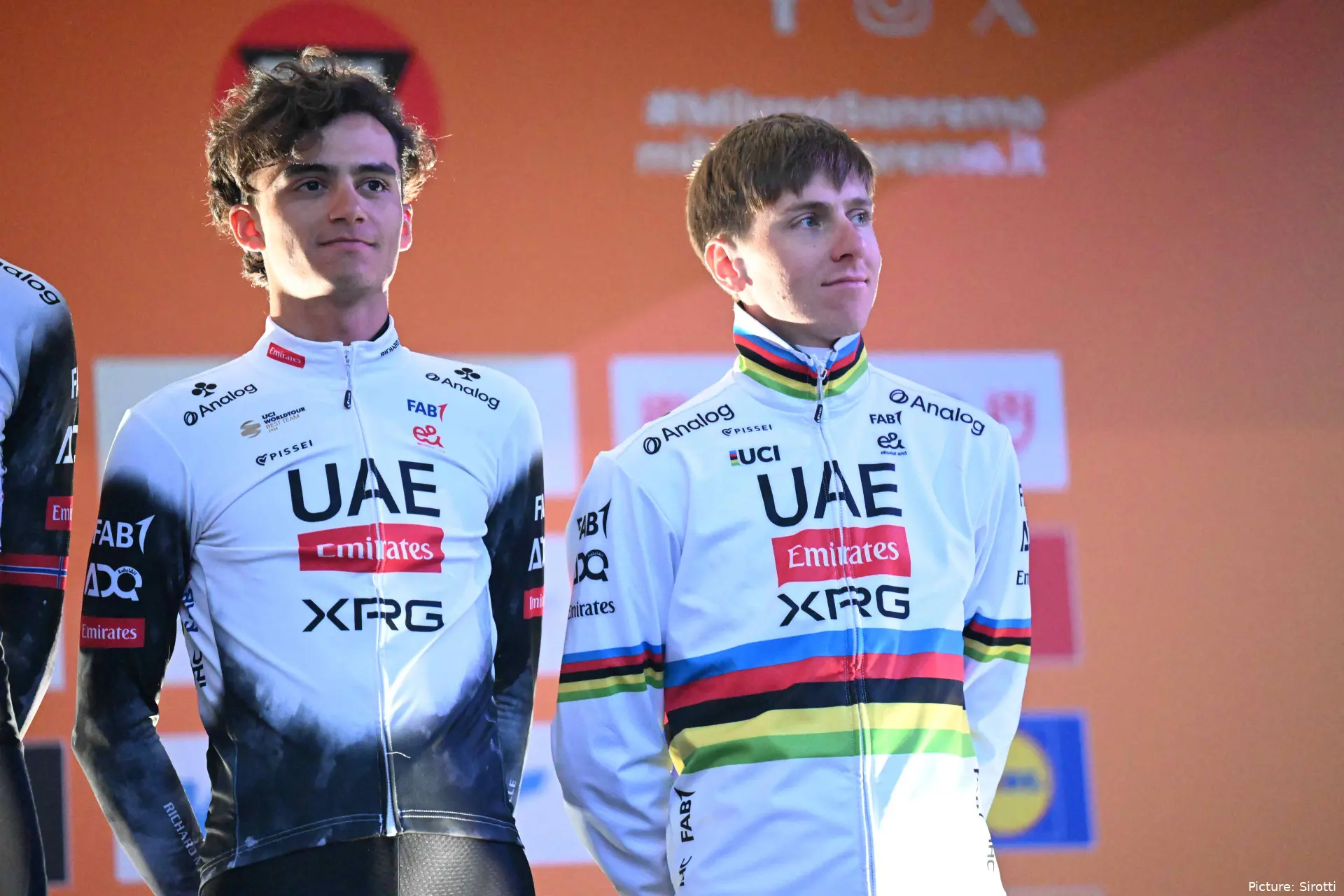
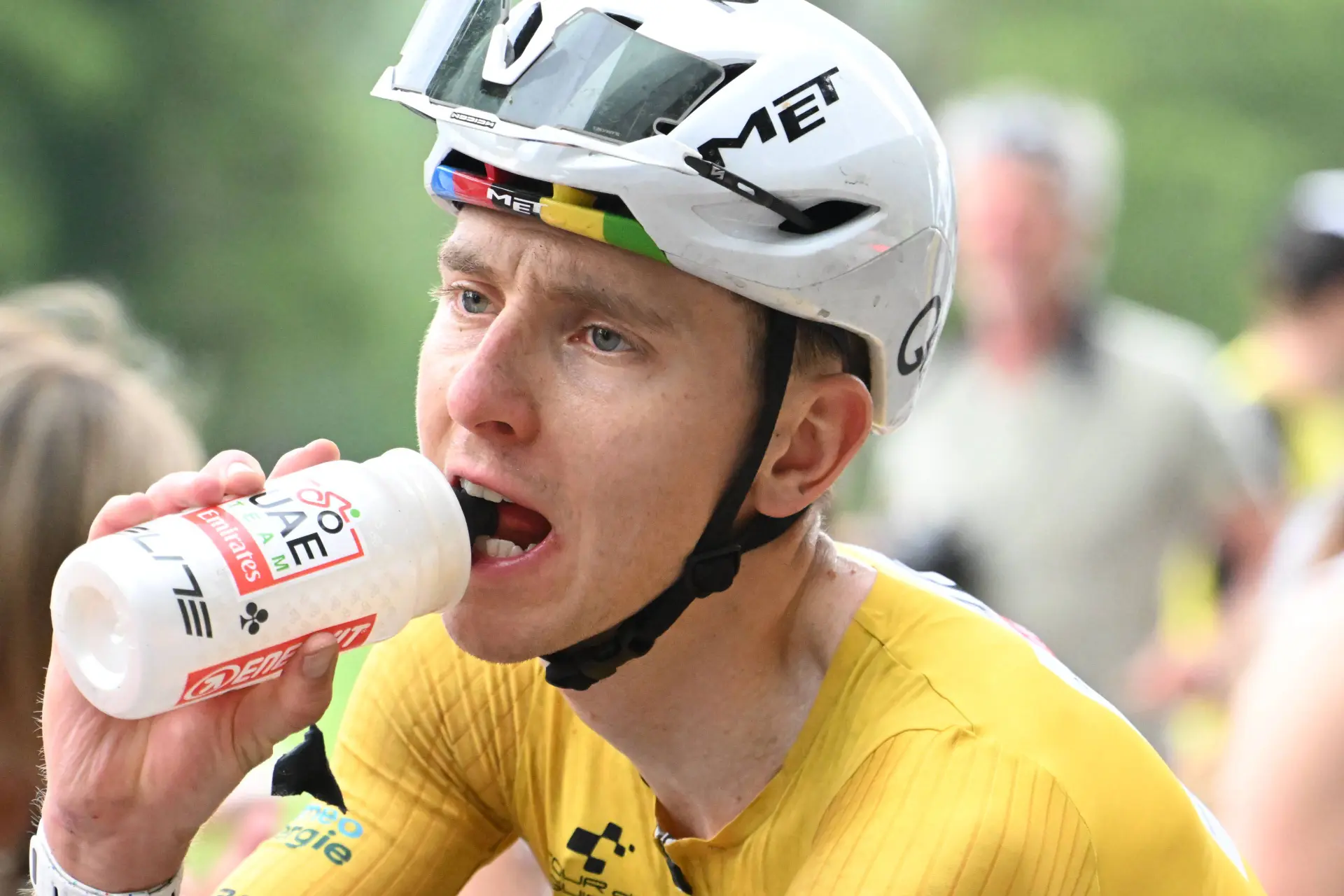
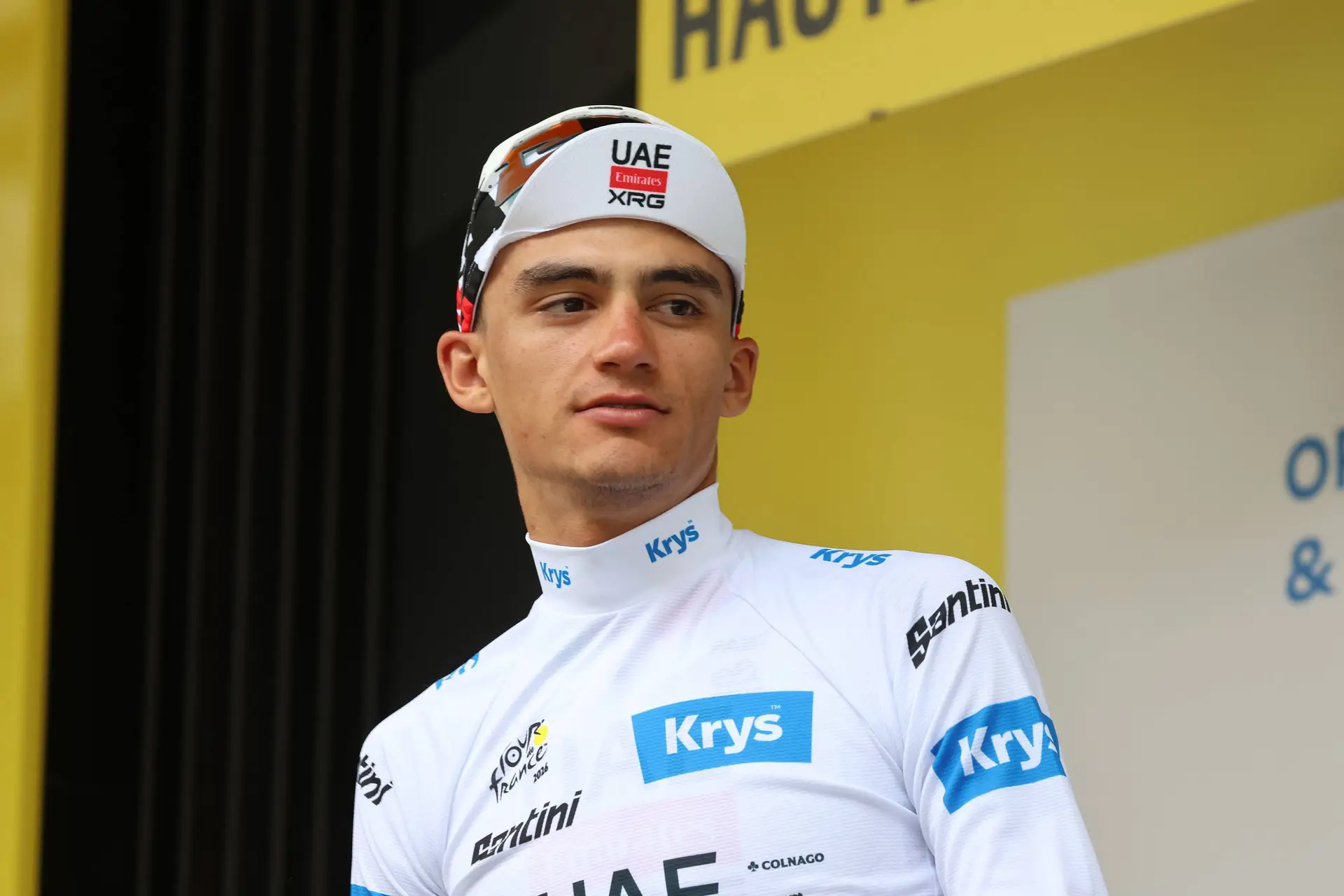
Tadej Pogacar and UAE Team Emirates - XRG are heading into 2026 with multiple major ambitions, but two races dominate their agenda: Milano-Sanremo and Paris-Roubaix. They are the only Monuments missing from Pogacar’s record, and the first of them has become an increasingly stubborn challenge.
Why Milano-Sanremo remains the toughest Monument for Pogacar
Milano-Sanremo offers very little climbing, limiting Pogacar’s opportunities to impose himself. His repeated attempts to force a selection on the Cipressa and the Poggio have shown how difficult it is to distance riders such as Mathieu van der Poel on terrain that simply does not suit major time gaps. The Cipressa is short, the Poggio is not steep enough, and the world champion has repeatedly found himself needing more decisive support at critical moments.
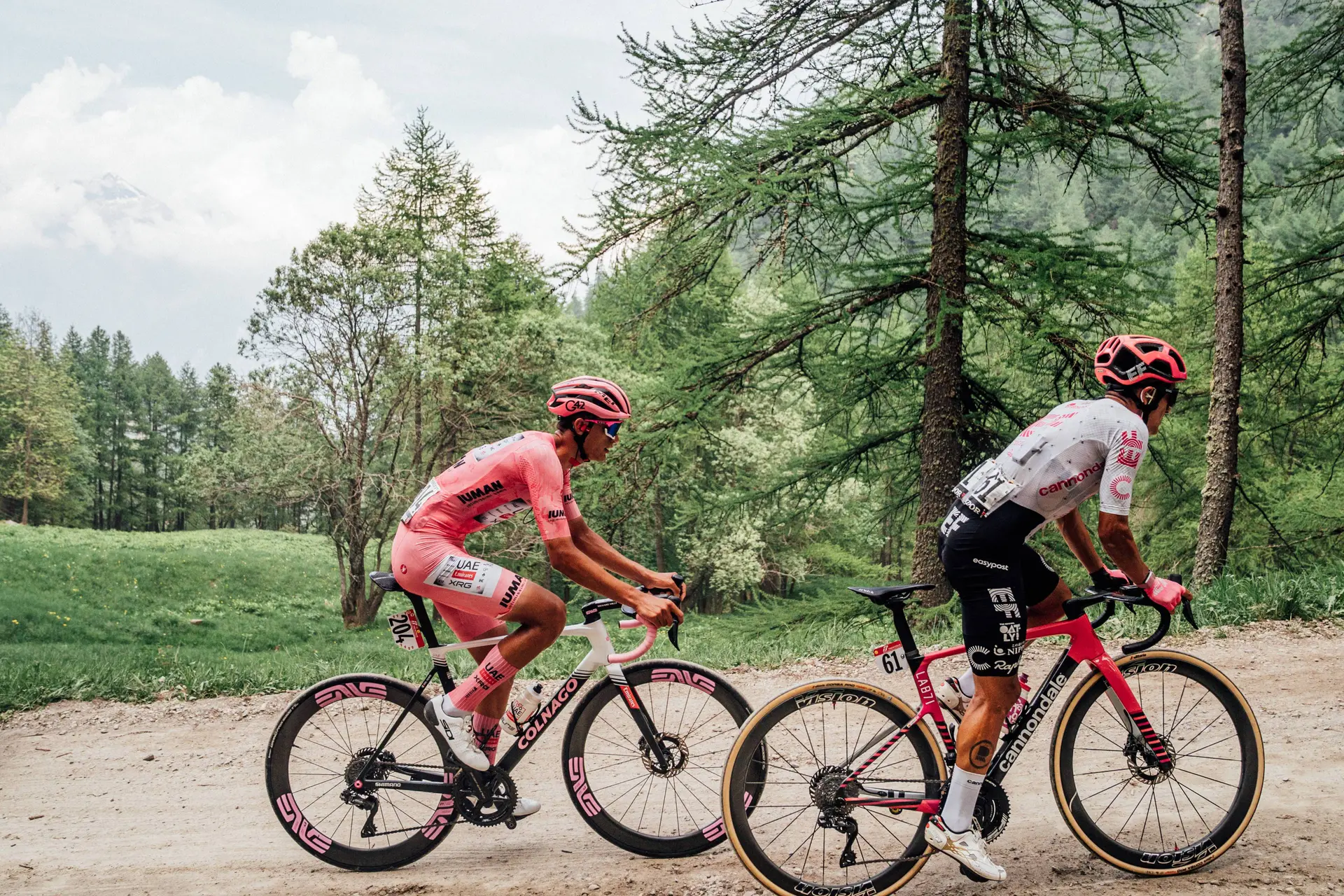
That was particularly clear in 2025, when Jhonatan Narvaez and Isaac del Toro were assigned to shape the race. Narvaez delivered precisely on the Cipressa, but Del Toro fell out of position, leaving Pogacar isolated when the race accelerated.
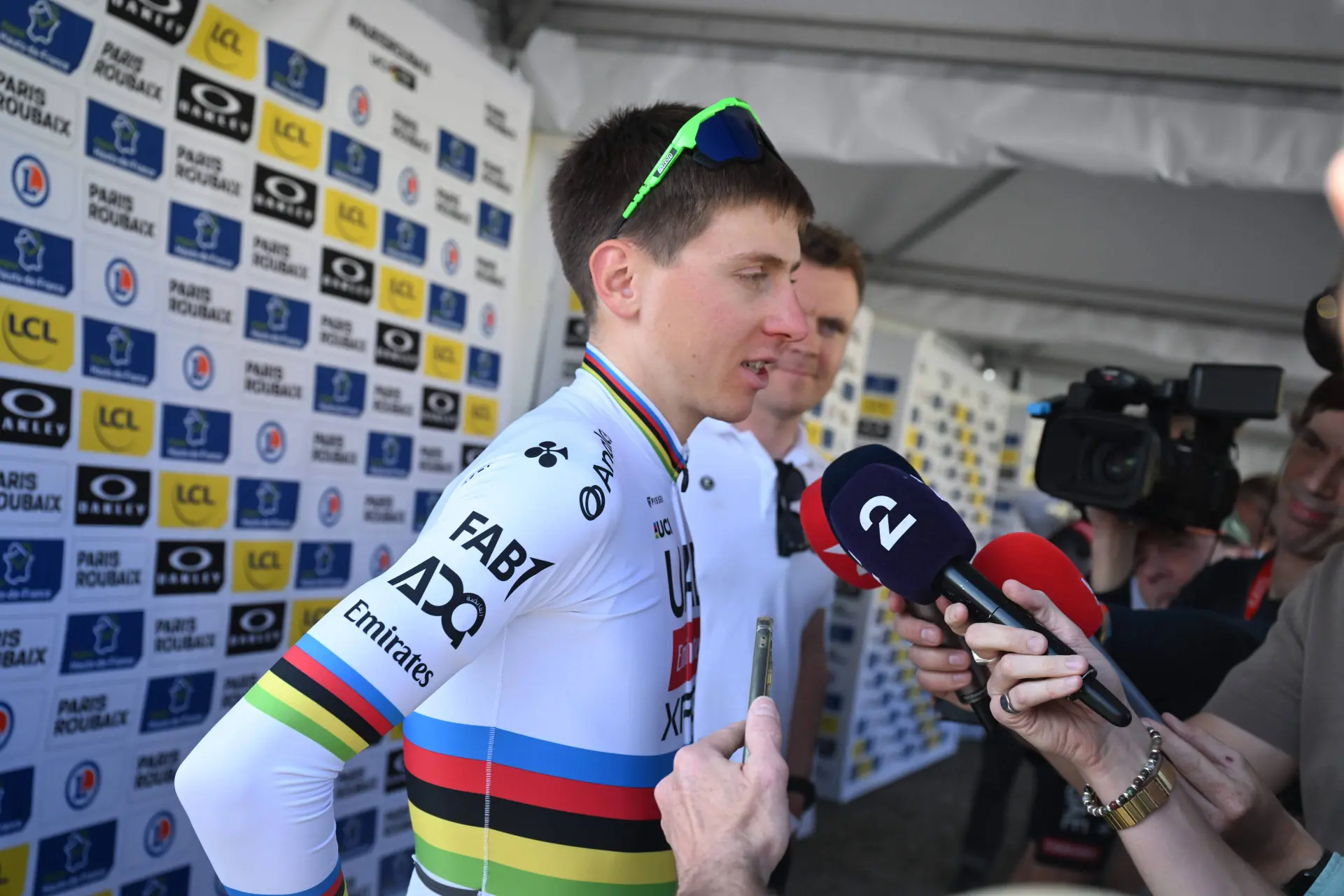
Team manager Joxean Matxin later explained the issue: “In the previous three editions we had tried each time on the Poggio. It was time to change that protocol. Isaac was to take over completely, Tadej would attack, and Jhonatan Narvaez would sit up and protect. Unfortunately, Del Toro had a positioning problem (on the Cipressa). He was too far back.”
With Milano-Sanremo returning as a core objective in 2026, UAE now require Del Toro to be perfectly prepared for a clearer execution of that plan.
The Del Toro factor: explosive power and elite descending
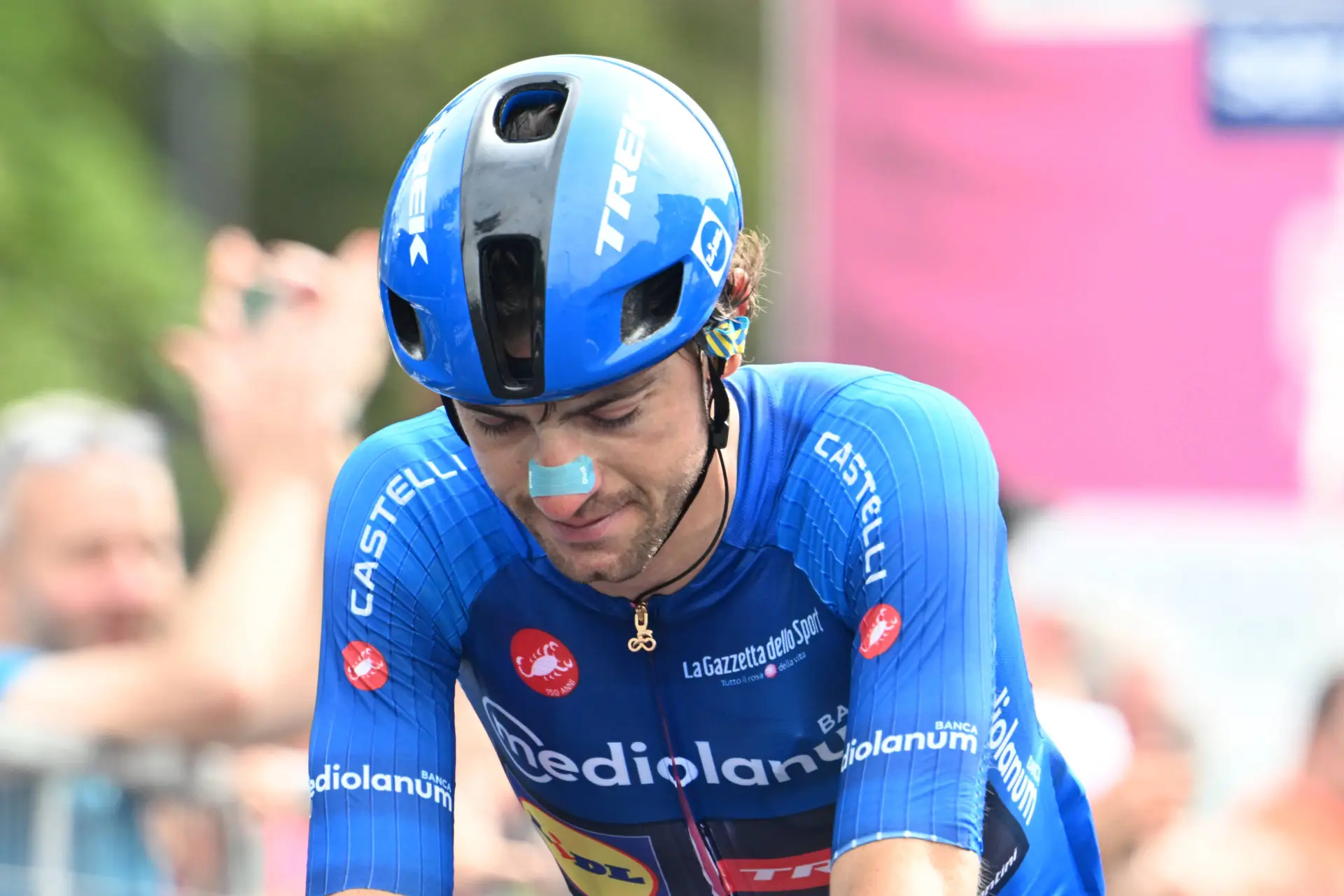
Del Toro’s importance comes down to the attributes he showcased throughout the past season. He produced more than 15 victories and finished second overall at the Giro d’Italia, numbers rarely achieved by a rider of his age. He succeeds not only because of his powerful accelerations, but also because of his exceptional descending – an area decisive in Milano-Sanremo’s final phase.
If Pogacar attacks on the Poggio as expected, UAE need Del Toro to remain in the reduced group. From there, his downhill speed becomes tactically essential. The team’s aim is to apply pressure not only on the climbs, but also on the technical descent into Sanremo, an area where Van der Poel is typically difficult to unsettle.
For UAE Team Emirates – XRG, the path to finally claiming Milano-Sanremo hinges on flawless execution. And in 2026, that means entering the race with the strongest possible version of Isaac del Toro — because Pogacar will not beat Van der Poel in a sprint, and their only route to victory lies in breaking the race open before the Via Roma.
Kieran WoodDeputy Editor-in-Chief
Kieran Wood is a sports journalist based in Wales and has been active in journalism since 2022. He regularly contributes to DartsNews.com and CyclingUpToDate.com, where he covers professional cycling and darts. In cycling, his work includes liveblogs from major races, including the Tour de France, the Giro d’Italia, and La Vuelta a España, alongside race reports and analysis. He has also conducted interviews with professional riders.
His reporting spans the full racing calendar, from one-day classics to stage races, with a focus on accurate, real-time coverage and clear contextual analysis. For statistics, results, and historical context, he regularly uses resources such as ProCyclingStats. To support reporting on rider activity and training context where relevant, he also references Strava.
In his work, Kieran places strong emphasis on careful sourcing, editorial accuracy, and updating articles as new, verified information becomes available.
claps 0visitors 0
Just in
Popular news
Latest comments
- exactly! He does nothing the rest of the year!frieders309-10-2026
- what I don't understand is how do we know the photo --Line of pixel capture, is actually lined up with the finish line on the road? in this case even a couple inches either way could have made for the difference.jad2909-10-2026
- Yes, question is, why is Ineos so easy to convince ?Mistermaumau09-10-2026
- Or maybe they’ll just abandon the sport and focus on RE, unless they can revive MU. Maybe it’s all just about budget adjustments in preparation for takeover by the new sponsor who might have no use for some people in their idea of a projectMistermaumau09-10-2026
- Sounds like management did their job pretty well then ;-)Mistermaumau09-10-2026
- Tour down under awaits... and nothing beyond that
 Rafionain-Glas09-10-2026
 - God, what a crowd gathers in these comments. You post a quote from a true champion—a quote that has nothing to do with his tragic accident (on the contrary, with his very passion)—and people interpret it however suits them.MajorPayne09-10-2026
- What needs to be understood? That you're linking a single statement to his death? Could it get any more stupid?MajorPayne09-10-2026
- Are you saying that statement led him somewhere related to religion? Could it get any more stupid?MajorPayne09-10-2026
- A broken contract by mutual agreement is perfectly fine. The problem is if one side does it without the other agreeing which isn't the case in this situationvappaxbipmv09-10-2026
Loading
2 Comments