"Enric was in a very aggressive, very ambitious mode" - Pedro Delgado on Mas and João Almeida's infamous Itzulia Basque Country moment
Cycling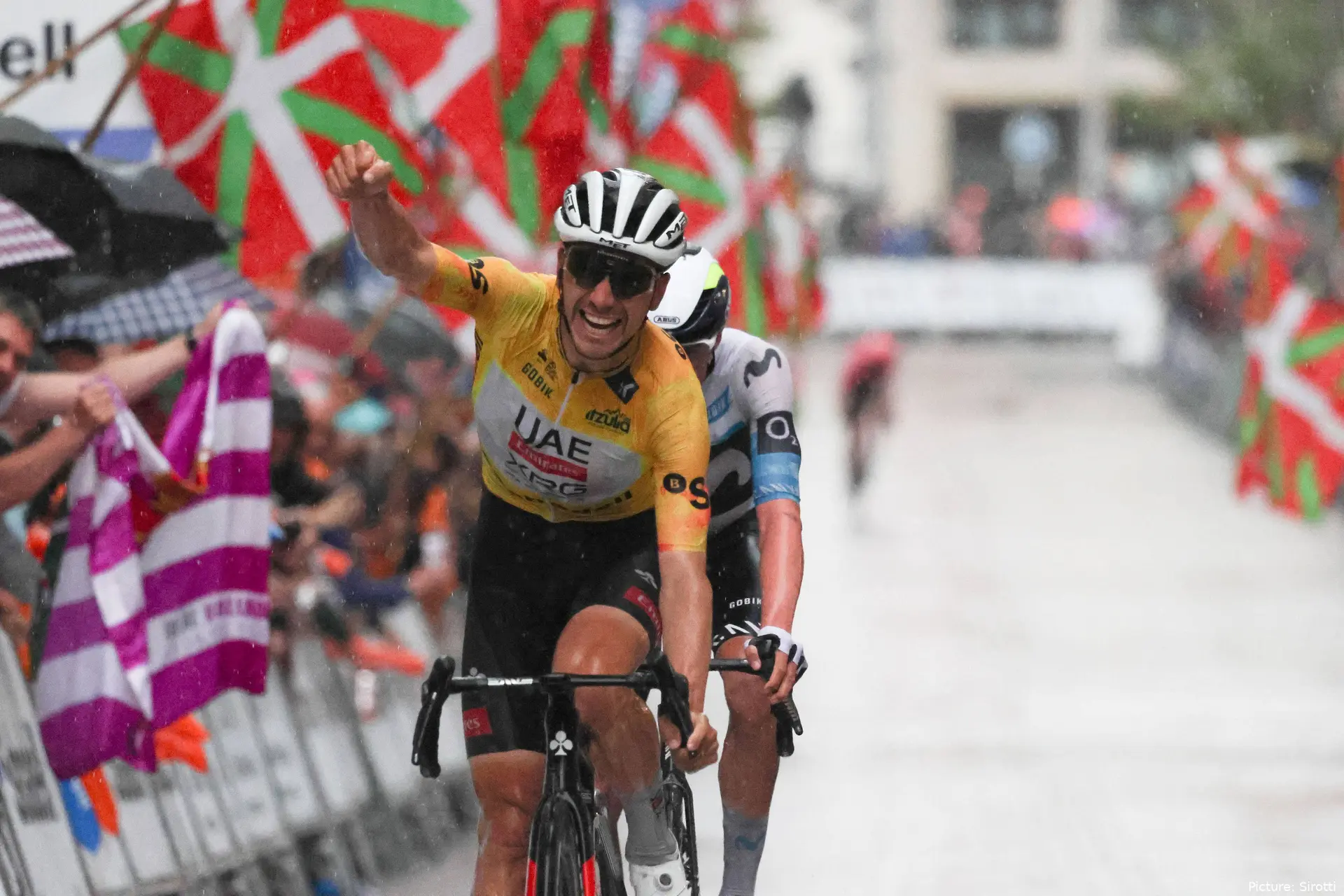
We attended the press-only launch of the new season of El Día Menos Pensado, which CyclingUpToDate and CiclismoAlDia were invited to, and one of the most discussed moments appears in the opening episode. It shows footage from Itzulia Basque Country in which Enric Mas asks João Almeida to gift him the stage, a scene that sparked debate and has now been recalled by Pedro Delgado in the context of this premiere.
The fifth season once again goes inside Movistar Team’s daily life, capturing sporting and human situations that define professional cycling. Fittingly, this first episode revisits one of the most telling passages, both for what happened in the race and for the team’s reaction after seeing themselves on camera.
The first episode of the new season includes the conversation between Enric Mas and João Almeida during a stage at Itzulia. The Movistar Team rider is seen asking the Portuguese to let him take the stage win, a moment clearly picked up by the TV cameras. At the time being Almeida had virtually confirmed the overall classification victory, but also went on to win the final stage ahead of Mas.
Inside the team, as shown in the episode, the situation is met with jokes and comments, noting they were unlucky that the TV motorbike caught it. That detail becomes a narrative thread, illustrating how a routine in-race exchange takes on a different dimension when recorded and broadcast.
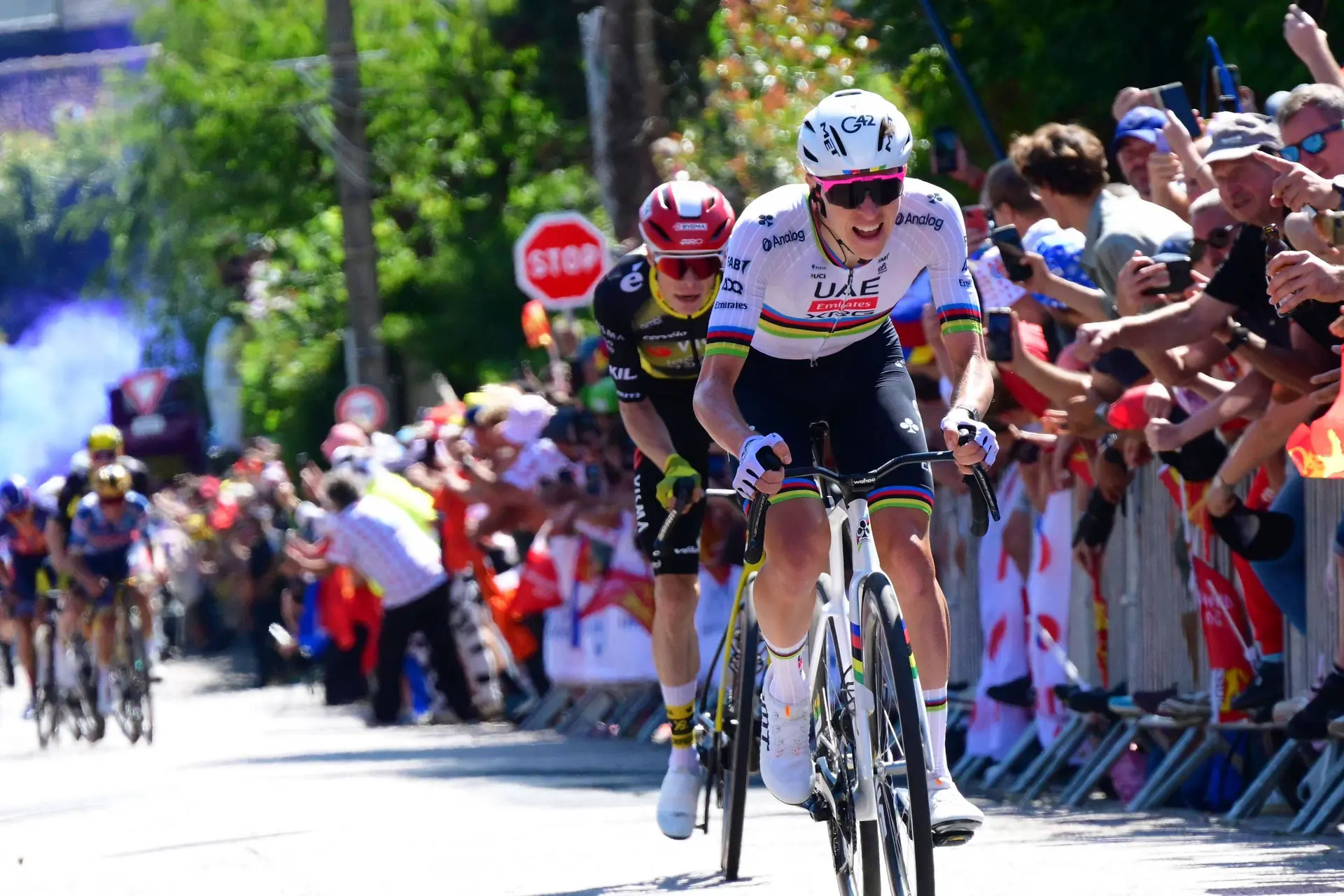
Almeida and Mas both made obvious choices
Delgado addressed the episode during the presentation, offering the view of someone who has lived the sport from the inside for many years. The former rider explained that these situations are not unusual in the peloton and framed them within cycling’s everyday dynamics.
“I’m actually, well, of course, lucky because I’ve seen a lot of things,” Delgado said, before recalling a similar case a year earlier. According to him, Carlos Rodríguez and Juan Ayuso acted the same way: one took the overall and the other won the stage. “They reached an understanding there, you win the race and I win the stage,” he summed up.
Delgado stressed that these kinds of agreements are part of cycling and far from exceptional. “It’s very common to share. All teams go through great moments and bad ones, and from time to time it’s good to have allies in a race,” he said.
He also made clear that, in the specific case of Itzulia, João Almeida chose not to agree to Enric Mas’s request, which fits the normal logic of professional cycling. As explained, Almeida’s decision not to cede the stage is legitimate and common in competition.
Delgado contextualized Mas’ stance, noting the Spaniard was racing aggressively and ambitiously, trying to take everything. “Enric was in a very aggressive, very ambitious mode and wanted everything. And you have to respect that,” he said, adding that the real issue was that the conversation was caught on camera.

Almeida beat Mas in the sprint on the final stage of the 2025 Itzulia
Read also
The value of showing what happens inside the team
Beyond the anecdote, 'Perico' Delgado highlighted El Día Menos Pensado as a tool to better understand cycling from the inside. He underlined that the series is possible because Movistar Team chooses to open its doors and show both the highs and the lows.
“Movistar Team opens the doors to us because they have to be the ones to open them,” he said, noting that these productions often show more “hardships than joys,” which he sees as a truthful reflection of the sport. Delgado linked this to his own career, recalling he rode eleven Tours and won one, which meant more tough days than victories.
He also praised the riders’ and staff’s ability to reset quickly. One of the most striking aspects of elite sport, he said, is how a team can move from disappointment to motivation in just 24 hours.
He pointed out that when a win arrives, all the previous effort seems worth it, but often you have to keep going without knowing what will happen. In that sense, he felt the new season of El Día Menos Pensado again mirrors the reality of modern cycling.
For Delgado, the series helps to understand a sport that, while keeping its broad parameters, has changed a lot over time. The current generation, technology, the role of the staff and other new elements add nuances not always visible from the outside.
In that vein, he valued how productions like El Día Menos Pensado help close followers of racing make sense of situations that would otherwise go unnoticed. The opening episode, with the scene between Enric Mas and João Almeida as one of its key moments, refocuses on showing cycling as it is, without embellishment or needless dramatics.

claps 0visitors 0
Just in
Popular news

Latest comments
- Bernal won the Tour because his attack stuck after Thomas’s was reeled in, and then they ended the stage due to the landslide - a deserved win, but contingent on many things. He won the Giro with quality and skill. And then, like so often happens for the cruelest of reasons, his injuries left him an incomplete version of his former self. He’s had a great career, what a great GC rider (8 of his 23 wins are GC, including 2 grand tours and 2 of the 7 major GC races), but already was struggling after COVID. I wish him the best, and if he retires, he should retire with pride for a career well done!RidesHills07-10-2026
- Roglič? In an interview he’ll continue to be hilariously dry about his goals, emphasize that he’s still having fun, and keep churning along until he doesn’t want to do this anymore. “Ah, you know, 100 wins would be nice, but eh - it’s just a number. I have fun, you know?” I can almost hear him saying those words. He’s not heading for low rank races to get the wins, he continues to race the major races (and I suspect would have won the Vuelta again were it not for that awful accident and that disgusting purple leg right before racing began).RidesHills07-10-2026
- BTW the list of classics you gave from PCS is participation, not winning
 Rafionain-Glas07-10-2026
 - Yes, though we saw that last week already.Jumpyjohn07-10-2026
- Or that riders get out in time.Jumpyjohn07-10-2026
- Hope he doesn’t stick with it just for that, would hate to see him exhibiting any has been footballer behaviour.Jumpyjohn07-10-2026
- Yep, that’s about it, couldn’t imagine someone wouldn’t get that.Jumpyjohn07-10-2026
- Time for your meds I thinkJumpyjohn07-10-2026
- No surprise here. Nice the oldies are having success, not the first discipline where you expect age to be an advantageJumpyjohn07-10-2026
- Any idea why Remco wasn’t there, Lombardia?Jumpyjohn07-10-2026
Loading
Write a comment