“He has to learn to sit on Mathieu’s wheel straight away, full stop” – Former world champion sees clear gap between Thibau Nys’ talent and race IQ
Cyclocross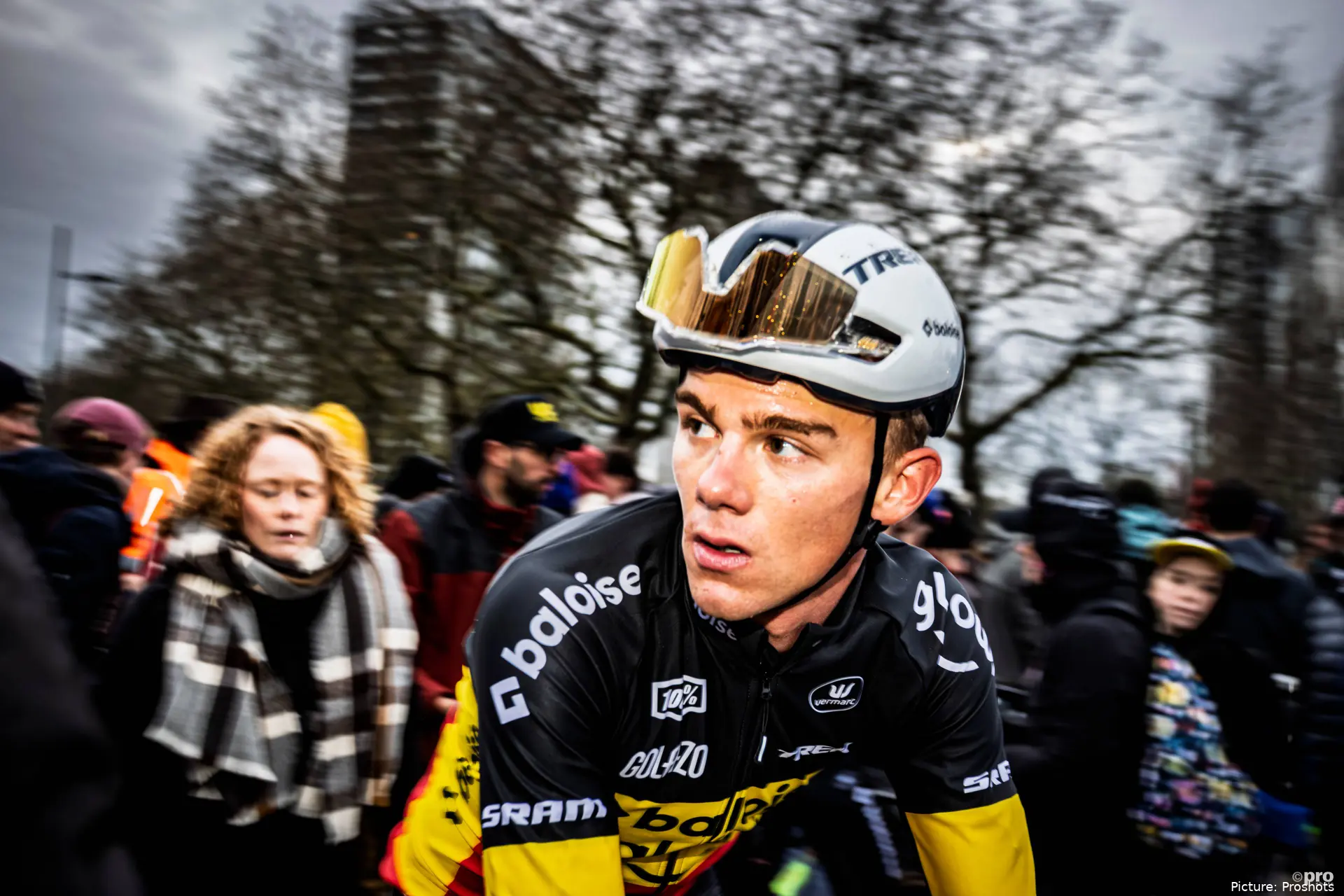
For Bart Wellens, Thibau Nys did not lose the battle with Mathieu van der Poel in the final laps at Benidorm. He lost it before the race had even found its rhythm.
“I thought Thibau was very good, but he rode a too casual first lap. Again he made the mistake of not immediately sitting on Mathieu’s wheel. He admitted that himself afterwards. He has to learn to sit on that wheel straight away, full stop,” Wellens writes in his latest Cross Professor column for Het Nieuwsblad.
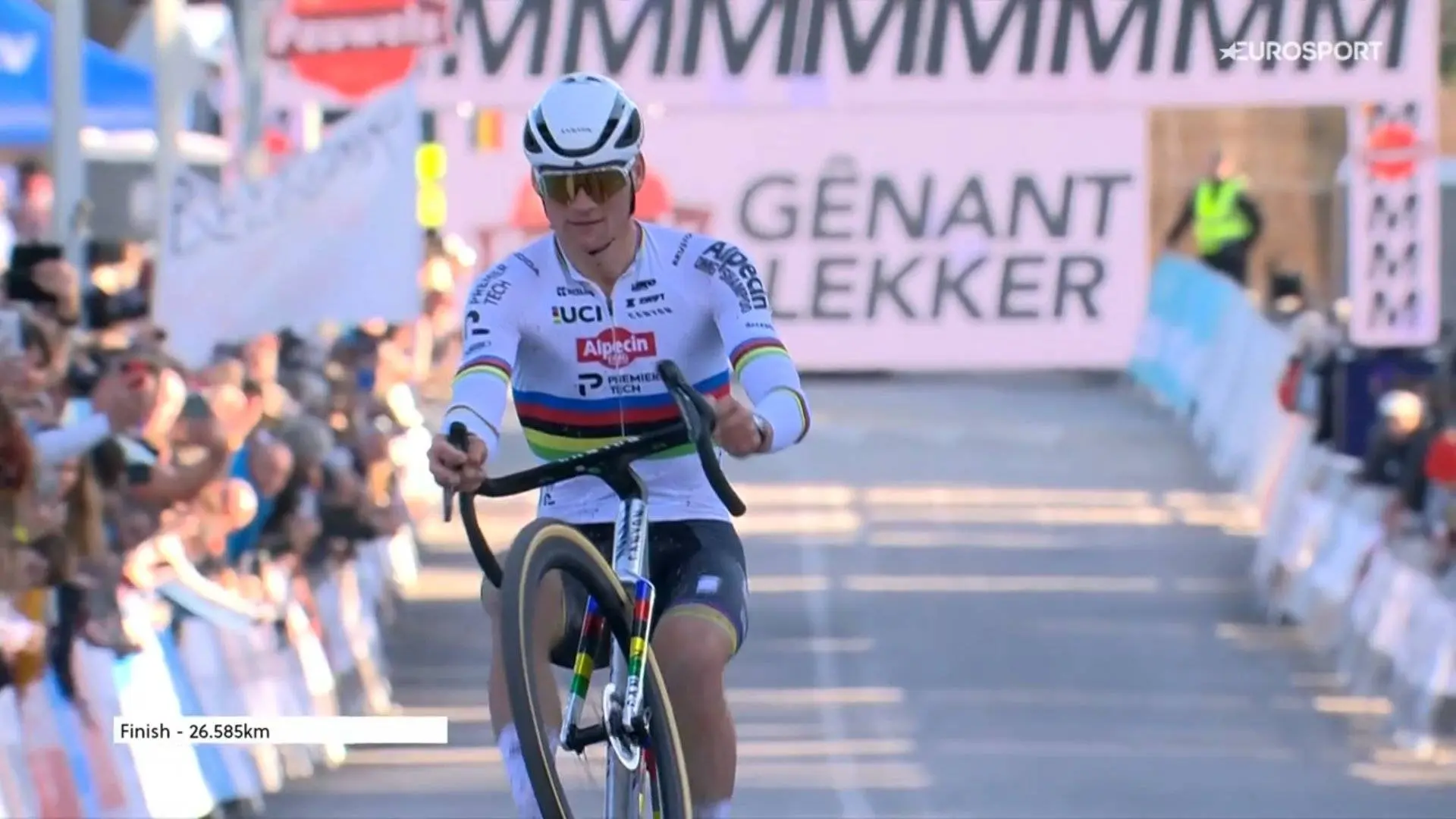
Benidorm was a textbook example of what Wellens meant. After an early crash by Toon Aerts split the group, Van der Poel accelerated hard on the rising finish straight and rode clear after just one lap. Nys was not close enough when that move came. By the time he had fought through the chaos, the world champion was already gone.
Nys then did what he always seems to do in these situations: he rode strongly, consistently, and with authority. He moved himself into the main chase, drove the pace for long stretches, and eventually rode to second place as “best of the rest”. But by then, the race for the win was long over.
For Wellens, that is exactly the problem. Nys has the engine. What he still lacks is the ruthless instinct for where to be when it matters most.
Read also
The first corner, not the last lap
“If he really wants to compete with Mathieu at the Worlds – and in my opinion he is the only one who can – then from the very first corner he has to be on Mathieu’s wheel,” Wellens wrote. “Let that be the task of the national coach towards the Worlds: Angelo De Clercq has to make sure the other Belgians are not in Thibau’s way in the first corners, so that he gets a clear run.”
That verdict is not about power. It is about awareness.
In Benidorm, Nys tried to correct his mistake. He pushed hard after Van der Poel’s attack, tried to bridge, and burned energy doing so. He never made it back. He dropped into a group he was clearly stronger than, and from there rode to second. Impressive, but ultimately irrelevant to the real fight. “I’m not saying he can drop Mathieu, but if we want to see more of a battle in Hulst, then he has no other choice,” Wellens added.
The pattern is becoming familiar. Against most riders, Nys can afford to be patient. Against Van der Poel, patience is punishment. One lapse in positioning is enough to turn a duel into a solo.
Benidorm showed that again. Van der Poel needed one acceleration, in one place, at one moment. Nys had the legs to race all afternoon. He did not have the wheel when it mattered.
That is why Wellens’ verdict cuts so sharply. The gap he sees is not between strength and weakness. It is between talent and race IQ. And until Nys learns to treat the first corner as the most important part of the race, every battle with Van der Poel will look the same: strong, brave, and already too late.

Kieran WoodDeputy Editor-in-Chief
Kieran Wood is a sports journalist based in Wales and has been active in journalism since 2022. He regularly contributes to DartsNews.com and CyclingUpToDate.com, where he covers professional cycling and darts. In cycling, his work includes liveblogs from major races, including the Tour de France, the Giro d’Italia, and La Vuelta a España, alongside race reports and analysis. He has also conducted interviews with professional riders.
His reporting spans the full racing calendar, from one-day classics to stage races, with a focus on accurate, real-time coverage and clear contextual analysis. For statistics, results, and historical context, he regularly uses resources such as ProCyclingStats. To support reporting on rider activity and training context where relevant, he also references Strava.
In his work, Kieran places strong emphasis on careful sourcing, editorial accuracy, and updating articles as new, verified information becomes available.
claps 5visitors 5
Just in

Popular news
Latest comments
- Slowly, very slowly... 5-7 yrs. ;)MajorPayne13-10-2026
- Up to this point: "It is just not yet at the level of Vingegaard and Pogacar." First Jonas, and then level of Tadej. Period!MajorPayne13-10-2026
- The sport has long had a divide between the more diesel-like riders and the more explosive riders. Where does Pogačar fit? His explosive attacks are followed by a high speed diesel climb and he's rarely been caught in the past 5 years (people can name the moments, it's so rare). Seixas is young and we have no idea where his body will end up on this spectrum (just like we didn't with Pogačar when he was 20 and being a diesel up the Vuelta mountains of 2019). Speculation is fun, being a fan while it unfolds is going to be more fun.RidesHills13-10-2026
- yeah it'll be an epoch shift when Pog can't drop people, and/or when they start dropping him.wrsty13-10-2026
- Yes, he won't ride away yet, but he will and that day will be notable
 leedorney13-10-2026
 - Expect the young French rider to slowly asphyxiate the Slovenian into retirement.
 Front24213-10-2026
 - My thinking is that Pog's experience and strength would have outweighed any fatigue in Il Lombardia. But the sad thing is, we'll never see peak Pog (call it Pog 2) go head to head with Seixas. However well he recovers from his crash, he'll return as Pog 3, with the shadow of severe concussion always there.Hills3313-10-2026
- Some speculation and opinion. Had Tadej not crashed out of the Vuelta he would have been less fresh and I'm not sure he would have beaten Seixas in this race. Maybe he would have been able to contest the race in a sprint and maybe not. Believe me when I say I keep up with many of Tadej's climbing feats and records and I understand how great he is but the Paul we just saw at Il Lombardia was not that far behind Tadej.awp13-10-2026
- Firstly, someone who says parenting is babysitting is delusional and shouldn't be taken seriously. Secondly, with pro athletes it is not the same as a normal worker. They are being rewarded for doing something for which they have a talent which doesn't actually help people (besides inspiration). It's quite a different dynamic
 Rafionain-Glas12-10-2026
 - only way for him to effectively learn to microdose is to go to uae. other than that there is no reason for him to go to uae.whkman12-10-2026
Loading
8 Comments