"People still laugh it off – It shouldn’t be a taboo": Lotte Kopecky calls for change on menstruation in cycling after Veronica Ewers’ viral retirement announcement
Cycling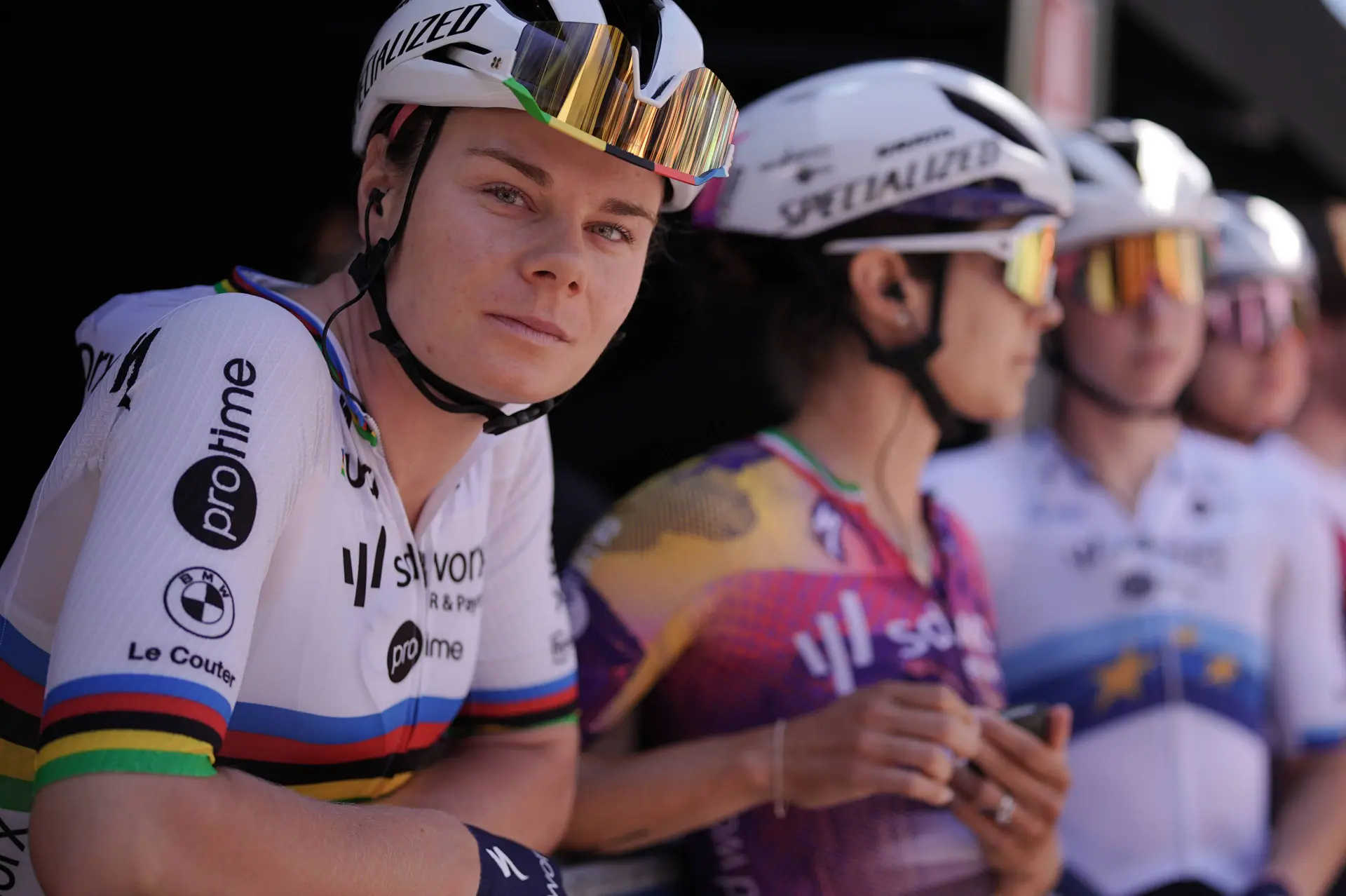
Lotte Kopecky has urged the sport to take menstruation seriously after what she describes as persistent embarrassment, silence and misunderstanding around the subject — even at the highest level of women’s cycling.
Fresh from being crowned Flandrienne of the Year, the former world champion sat down on the Cafe Koers podcast and made clear that the peloton’s growing conversation around menstrual health is overdue.
“A lot of riders have testified this season that it brings more discomfort than the outside world realises,” Kopecky said. “When you say that, people still often laugh it off. But many women have complaints during that period that can hinder performance.” She added that the stigma remains particularly strong within team structures: “Especially when the coach is male, there’s still some embarrassment around talking about it. But as a male coach you have to immerse yourself in it if you train women. It shouldn’t be a taboo. It’s part of the job.”
Kopecky also highlighted her own history with symptoms. “I used to suffer from it a lot too — my body retained a lot of fluid. If that comes back every month and it coincides with an important goal, you have a problem. You have to learn to understand your body. My advice is: don’t be afraid to ask for help.”
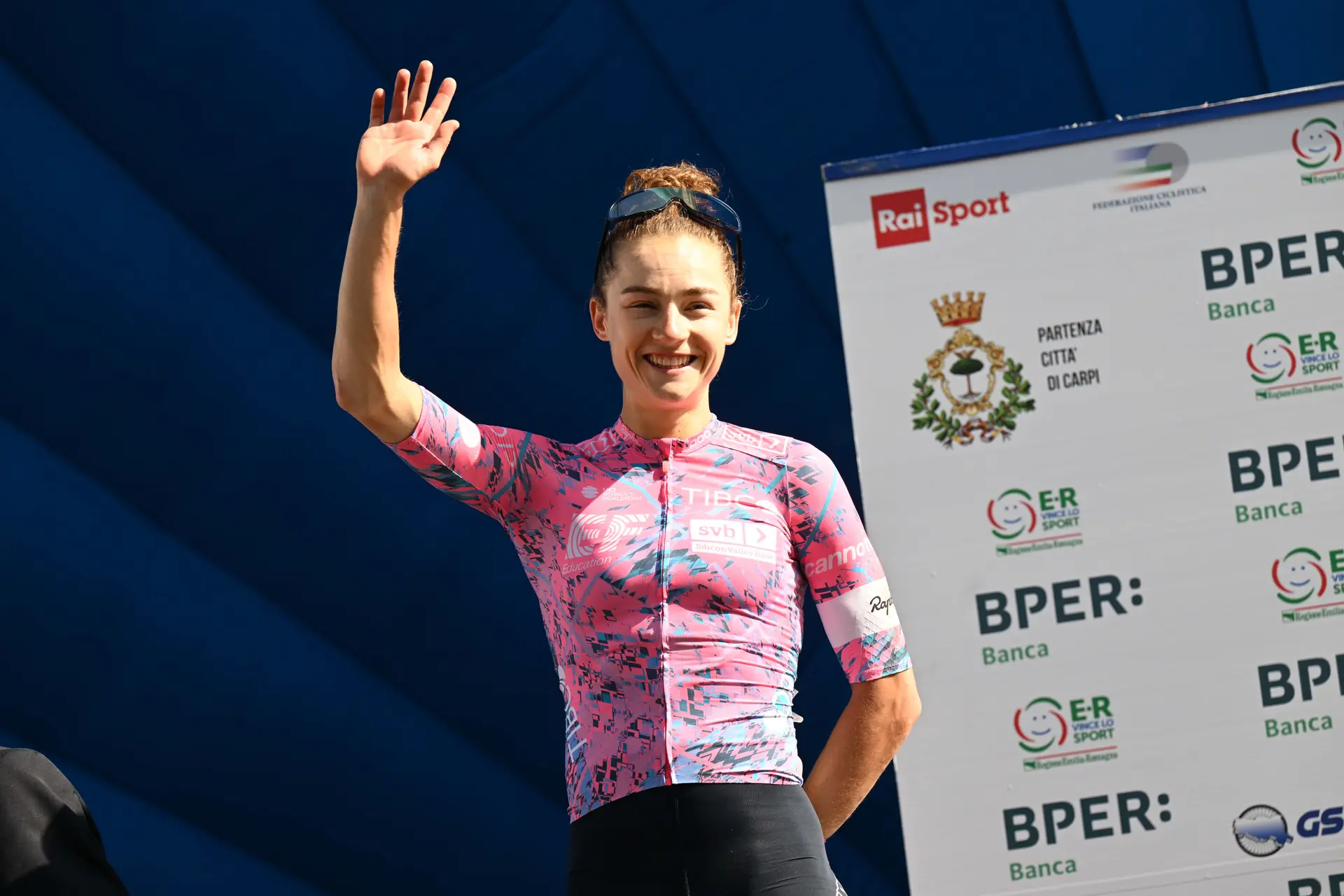
Her comments land at a moment when menstrual health has never been more visible in elite cycling — particularly after Veronica Ewers’ widely shared announcement that she will step back from racing in 2026 after years of battling RED-S and losing her natural cycle for more than a decade.
Read also
A peloton finally speaking openly
Ewers’ revelation has acted as a flashpoint in a much wider cultural shift. Across the last two seasons, several of the sport’s biggest names have spoken publicly about how their cycle affects both performance and long-term health.
Demi Vollering has stressed repeatedly that the menstrual cycle is “a normal part of life” and something riders should not fear discussing. She has spoken about low-energy days, disrupted sleep and coordination struggles — but also about phases where she feels physically stronger and benefits from better recovery. Her message is that performance can improve once riders understand their individual rhythm.
The visibility has extended into the Tour de France Femmes itself. Kim Le Court famously revealed she was on her period the day she won a stage and pulled on the yellow jersey at the Tour de France Femmes, stating simply: “My body is more tired than normal. That’s what we women deal with.”
And the issue isn’t limited to current riders. Lizzie Deignan has openly expressed concern that many young cyclists are losing their periods because of under-fuelling and over-training, citing long-term risks such as low bone density and compromised endocrine health.

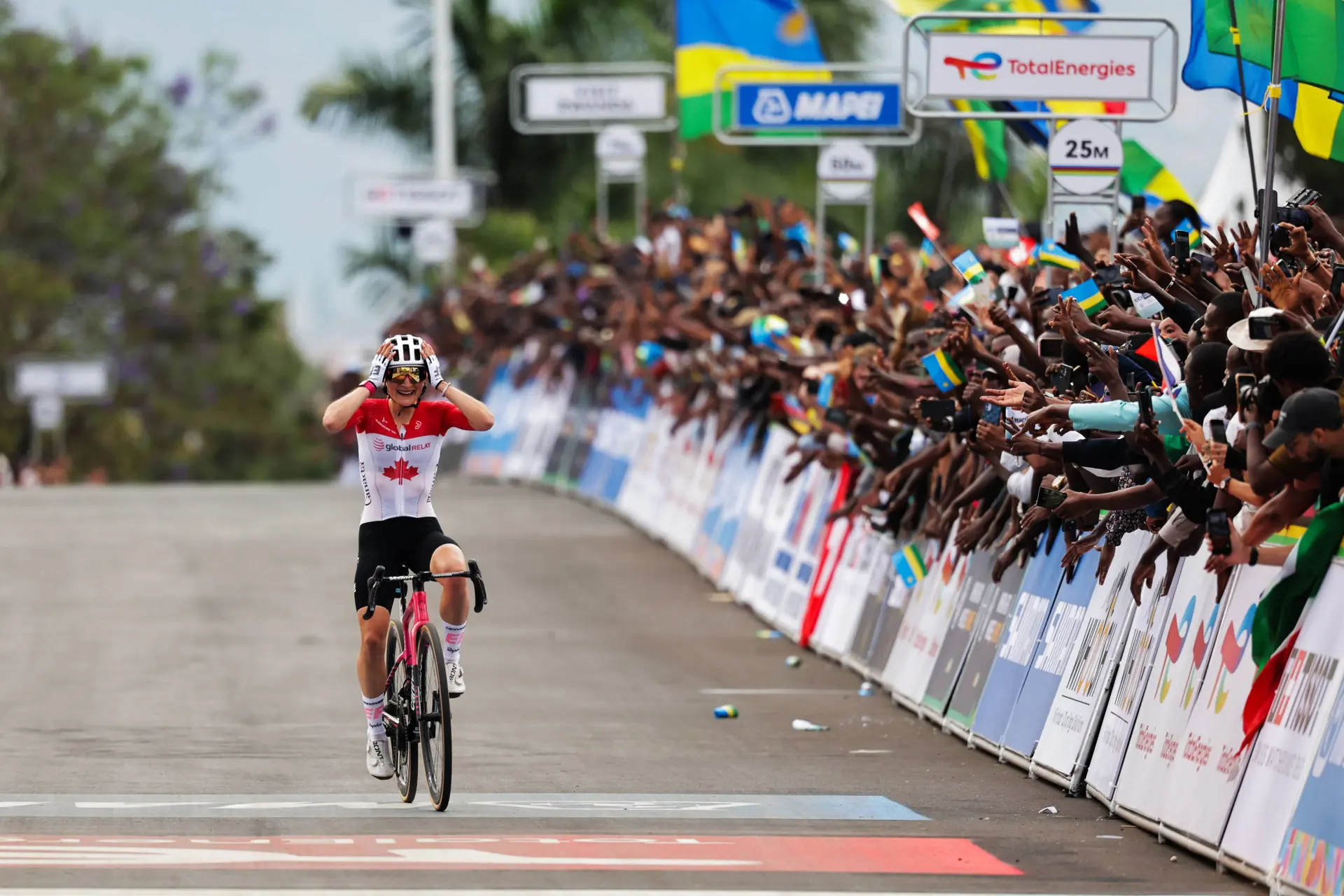
British cycling legend Lizzie Deignan has been one of those to speak out about the impact of menstruation in pro cycling
The sport waking up to a health issue, not an inconvenience
The steady chorus from stars like Kopecky, Vollering, Deignan and others is slowly shifting attitudes inside the sport. Once treated as a private inconvenience — or, in past eras, something to be avoided altogether using hormonal suppression — menstrual health is now increasingly seen as a key performance and wellbeing marker.
Ewers’ case has highlighted just how serious the long-term consequences can be, and why so many riders now want the sport to take the issue far more seriously.
Kopecky believes the next step is removing the shame from everyday conversations — especially within team environments where performance planning is decided. “It shouldn’t be a taboo. It belongs in the sport,” she said, emphasising that understanding symptoms is essential, not optional, for both athletes and the staff around them.
As the peloton continues to push back against silence, the subject is rapidly evolving from a whispered inconvenience to a legitimate performance and health priority. Kopecky’s latest call only strengthens the momentum — and judging by the wave of riders speaking up, women’s cycling has no intention of going backwards.

Kieran WoodDeputy Editor-in-Chief
Kieran Wood is a sports journalist based in Wales and has been active in journalism since 2022. He regularly contributes to DartsNews.com and CyclingUpToDate.com, where he covers professional cycling and darts. In cycling, his work includes liveblogs from major races, including the Tour de France, the Giro d’Italia, and La Vuelta a España, alongside race reports and analysis. He has also conducted interviews with professional riders.
His reporting spans the full racing calendar, from one-day classics to stage races, with a focus on accurate, real-time coverage and clear contextual analysis. For statistics, results, and historical context, he regularly uses resources such as ProCyclingStats. To support reporting on rider activity and training context where relevant, he also references Strava.
In his work, Kieran places strong emphasis on careful sourcing, editorial accuracy, and updating articles as new, verified information becomes available.
claps 2visitors 2
Just in

Popular news
Latest comments
- Seixas is exactly what I would like Pogi to be mentally and in his statements. Both come across as shy and who don't talk much but with Seixas, you can see that he enjoys success, that it boosts his ego, unlike Pogačar who seems to feel increasingly uncomfortable the more he wins. He's won so many times, people are saying he's boring. The french media hate him for winning so much, the french cycling fans are booing him... etc. etc. But remember one thing, Seixas will never physically reach Pogi's level. He's excellent, but he isn't at that level nor will ever be. His talking to the media, his relationship with people is already at a high level.PogiSloFans13-10-2026
- Paul Seixas is now the second-best rider in the world.megasmacky13-10-2026
- When will they start dropping Pogi? Oh yeah, when Pogi reaches 40+ years, that's when young cyclists will start dropping him. But until then... eat your hearts out and cry. Pogi will remain the G.O.A.T. for years to come. Capish?PogiSloFans13-10-2026
- I figure he would have found out how to outsprint Paul and take the win, maybe. He's 28 now but I would say he's right at the peak of his powers. It was great race though, Paul showed me something different about himself.awp13-10-2026
- Slowly, very slowly... 5-7 yrs. ;)MajorPayne13-10-2026
- Up to this point: "It is just not yet at the level of Vingegaard and Pogacar." First Jonas, and then level of Tadej. Period!MajorPayne13-10-2026
- The sport has long had a divide between the more diesel-like riders and the more explosive riders. Where does Pogačar fit? His explosive attacks are followed by a high speed diesel climb and he's rarely been caught in the past 5 years (people can name the moments, it's so rare). Seixas is young and we have no idea where his body will end up on this spectrum (just like we didn't with Pogačar when he was 20 and being a diesel up the Vuelta mountains of 2019). Speculation is fun, being a fan while it unfolds is going to be more fun.RidesHills13-10-2026
- yeah it'll be an epoch shift when Pog can't drop people, and/or when they start dropping him.wrsty13-10-2026
- Yes, he won't ride away yet, but he will and that day will be notable
 leedorney13-10-2026
 - Expect the young French rider to slowly asphyxiate the Slovenian into retirement.
 Front24213-10-2026
Loading
Write a comment