“People stick things on his back, shout at him, touch him… It’s just too much” — Tadej Pogacar’s mother raises concerns for welfare of world champion
Cycling
Tadej Pogacar’s 2025 Tour de France victory — his fourth — cemented his status as one of the most accomplished riders of the modern era. Yet behind the statistics, the dominance, and the trademark grin lies a more fragile truth: the mounting human cost of sustained excellence.
That truth was laid bare this week in a rare and candid interview given not by the Slovenian superstar himself, but by his mother, Marjeta Pogacar. Speaking to Le Parisien, she described a son worn down by pressure, exposure, and expectation — a young man “truly exhausted” by the weight of his own success.
“It’s not a burnout, but yes — overtired,” she said. “This year I saw that he was really tired. Exhausted, maybe. And I thought: now I understand, if he ever decides to stop cycling.”
That remark is striking not because it signals any imminent retirement — Pogacar is under contract with UAE Team Emirates through 2030 and has Olympic ambitions for Los Angeles 2028 — but because of the deeper implication: even the most dominant rider of a generation has limits, and they are being tested.
Beyond the podium
The remarks come just days after Pogacar himself admitted that the 2025 Tour was the hardest of his career. In an interview on the Tour 202 podcast, he revealed that a combination of brutal parcours, freezing weather, and knee pain brought him close to abandoning the race. “My body was in shock,” he said. “I didn’t feel great. A three-week race is never easy — every rider suffers. We’re already tired after the first week, and then there are still two more to go.”
To the outside world, the champion appeared as unshakable as ever — winning 20 races across the season and collecting yet another yellow jersey. But there were moments in July, even for fans watching on television, when something seemed amiss. The familiar lightness was gone. Pogacar was curt in interviews, distant, withdrawn. According to his mother, it wasn’t just physical fatigue; the mental strain was visible too.
“He was so tired — mentally and physically. And all of it under the eyes of millions of viewers.”
Life in a fishbowl
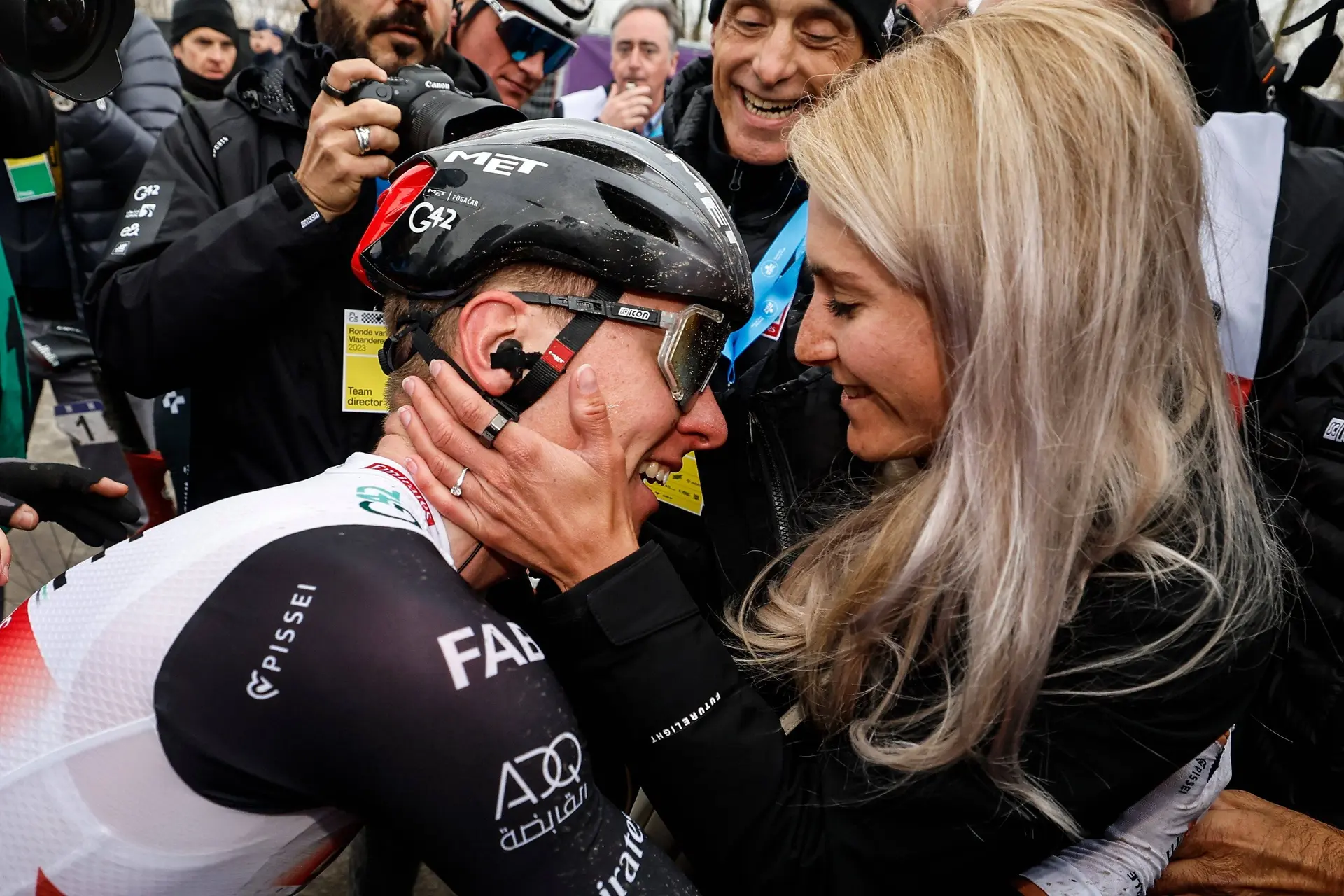
Much of that pressure is baked into the role: global stardom, team leadership, media duties, and the unavoidable expectation that he will win almost every time he pins on a number. But Marjeta Pogacar pointed to something more insidious — the physical and emotional intrusion that now follows her son wherever he goes. “People stick stickers on his back, shout at him, touch him… Sometimes it’s just too much. Because he wins too often, because he has no time for autographs.”
It’s an increasingly common concern in elite sport: the absence of boundaries in a hyper-connected, hyper-visible age. Pogacar’s growing status as a global figure — and, crucially, a likeable one — only intensifies the expectations and erodes personal space.
The adulation may be well-intentioned, but the effect is cumulative. His mother described this year as the first time she truly saw the toll — a rider stretched thin by the invisible demands of fame.
The weight of winning
Since bursting onto the WorldTour in 2019, Pogacar’s rise has been meteoric. Multiple Monuments, two World Championship titles, and now four Tours de France. Yet it’s the frequency of his success — and the pressure to maintain it — that may be the hardest to sustain.
Even Pogacar has started to acknowledge it. “I’m beginning to realise I can’t do this forever,” he said earlier this summer. “Was this my last Tour? You never know. A sporting career is short.”
His reflections are not the cries of a man planning to step away anytime soon — but they are the first signs of a recalibration, of an athlete gradually adjusting his outlook, his load, and perhaps, his limits.
Holding it together
And yet, despite the fatigue, the scrutiny, the moments of doubt, Pogacar remains remarkably composed. His joy in the bike is still evident. He continues to win across every terrain, from Strade Bianche to Liège–Bastogne–Liège to the Tour. He remains the most versatile and charismatic rider in the peloton.
A key part of that resilience, he’s said, comes from the structure around him — and the presence of those closest to him. “Urska is there too, so it often feels like home,” he said of his partner and training camps. “The schedule is demanding, but we’ve figured out how to make it work.”
Yet even the best-built support systems can’t fully shield an athlete from burnout. And when a rider’s own mother says, plainly, “Sometimes it’s all just too much,” it’s time the cycling world listens — not just with curiosity, but with care.
Marjeta Pogacar’s words are not a scandal, nor a warning shot. They’re a quiet, powerful reminder that even the most dominant figures in sport are human first. That excellence carries a cost. That behind the yellow jersey, the rainbow stripes, the watt-bombing and the wide smiles, there is a 27-year-old trying to hold everything together.

Kieran WoodDeputy Editor-in-Chief
Kieran Wood is a sports journalist based in Wales and has been active in journalism since 2022. He regularly contributes to DartsNews.com and CyclingUpToDate.com, where he covers professional cycling and darts. In cycling, his work includes liveblogs from major races, including the Tour de France, the Giro d’Italia, and La Vuelta a España, alongside race reports and analysis. He has also conducted interviews with professional riders.
His reporting spans the full racing calendar, from one-day classics to stage races, with a focus on accurate, real-time coverage and clear contextual analysis. For statistics, results, and historical context, he regularly uses resources such as ProCyclingStats. To support reporting on rider activity and training context where relevant, he also references Strava.
In his work, Kieran places strong emphasis on careful sourcing, editorial accuracy, and updating articles as new, verified information becomes available.
claps 7visitors 7
Just in

Popular news
Latest comments
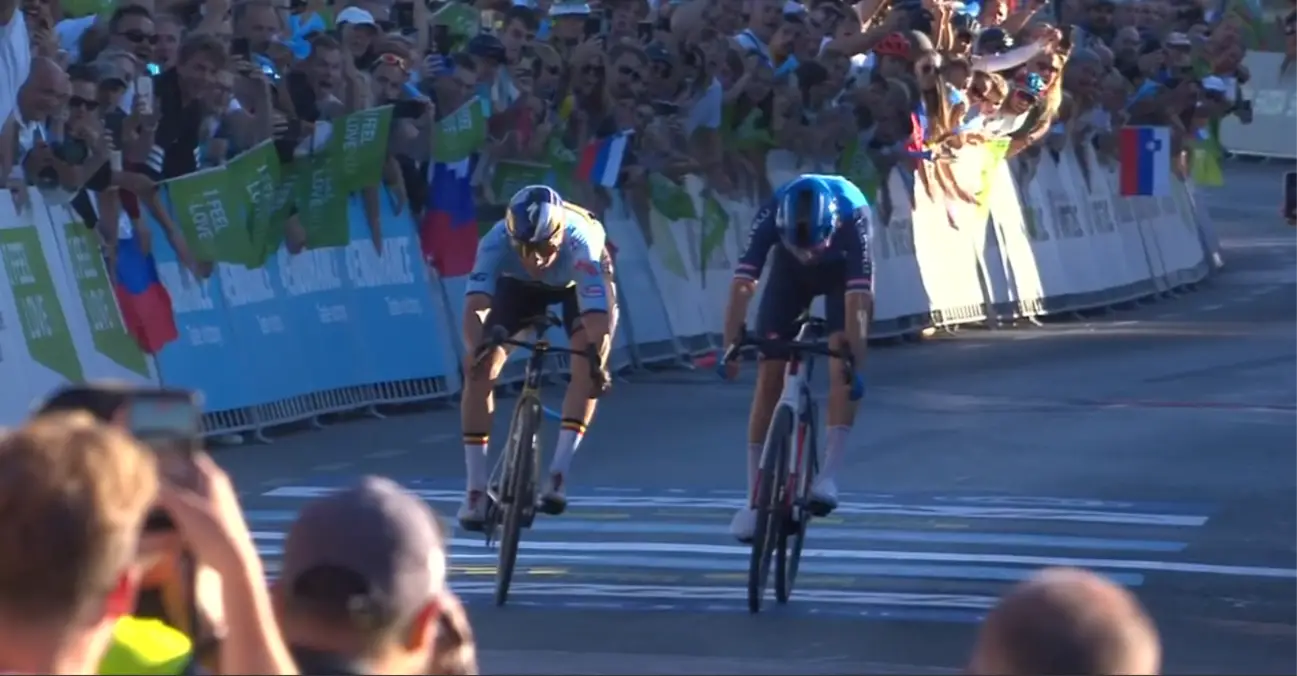
- That was a close finish!awp06-10-2026
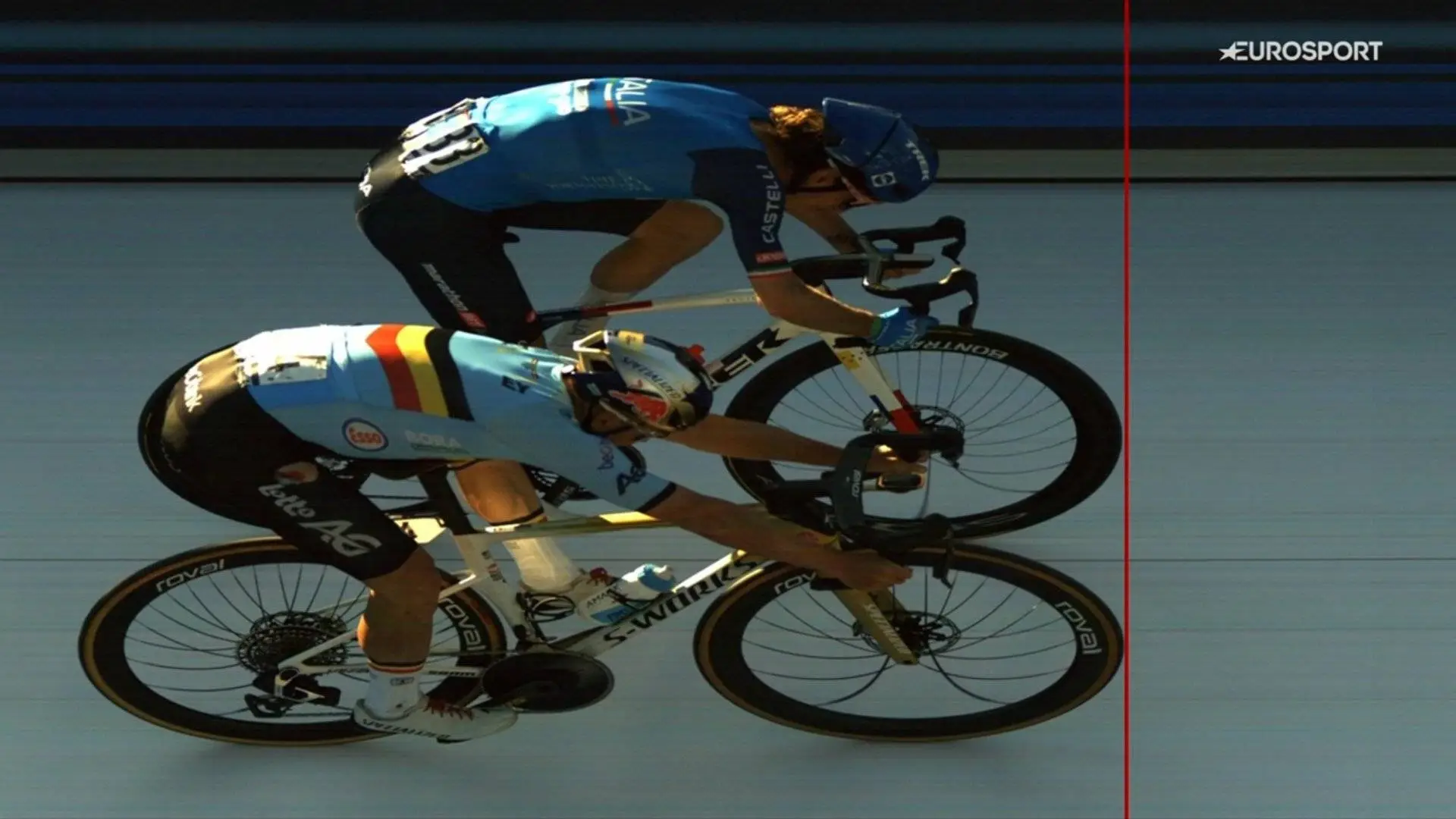
- I’d like to see the actual photo finish with the black (not white) line which they use to determine the winner. Ciccone’s photo sure does make it look questionable, but it doesn’t show the following… Which, from what I understand, it is the ‘9 o’clock’ of the wheel, crossing the black line first, which is used to determine the winner.anonymouscyclist05-10-2026
- I think Pogačar is going to have a really hard time becoming Belgian road champion. I mean, nothing seems impossible with the guy, but still. Kidding aside, this is honestly an incredible set of achievements. It's not the usual set of cycling achievements in terms of specific races, but seriously, all the championships he can, in road and TT?! And he's how young? That's really remarkable. Congratulations, Remco Evenepoel!RidesHills05-10-2026
- if you consult the second picture in ciccone's instagram post, which seems to show the actual finish line in top view, it rather looks like a ciccone win! if they do not retract their decision pro remco only, they loose the least bit of credibility they still have. you can argue about how to make racing safer, but you can't argue about a decision that completely lacks proof. they don't even share how far away from the real finish the image was taken. if they would, every 2nd semester physics bsc student would be able to simulate how many cm the delayed bike throw of ciccone would have resulted in. and we are not even talking cm or mm here! shame on the uci (is it uci or a europe specific association?) for their lack of transparancy!Ketterechts05-10-2026
- Interesting you claim Visma isn't a top 3 team anyomore yet their UCI rank is ...#3. Lidl Trek is only #5. Visma has 2 riders in the top 10, Lidl Treks top rider, Pederson is 16th. Their big Grand Tour signing, Ayuso is ranked 38th and has been a bust so far.GB05-10-2026
- Yes, it's fairer that way. A bit like Adam Bradać and Dušan Rajović in Poreć the other day, when they both were declared winners. As I said on the other thread, the uncertainty of the finish line - and the red line may not be on the right part finish line - is much more than that non-existent winning margin. But if they show the finish line here, they have to fo it everywhere and we know the problem there
 Rafionain-Glas05-10-2026
 - I truly appreciate the way that Ciccone in no way takes away from Evenepoel, praises him throughout, and casts no doubt on his fellow rider. That’s character. Also, he has every right to make these demands. I thought yesterday that the photo finish was clearer than it turned out to be, and now I’m amazed that they called it when there is enough doubt. Back in the day they had ties at moments like this. I wouldn’t mind seeing two European champions in the coming year, after a race that good.RidesHills05-10-2026
- From the photo it's literally a millimetre difference. The uncertainty of the finish line is considerably moreRafionain-Glas05-10-2026
- I wasn't trying to be too critical of Remco and said he just wins and is amazing - so compliments thrown in for sure too. just speaking out loud with my other comment on his demonstrations and vocalizations. yeah, don't change for sure Remco! because he is a winner. anyone that says otherwise is sorely mistaken. the first rider to win on all continents. the double olympic gold. monuments. grand tours. the first rider to have a championship at national, euro, world and olympics in TT and road. plus how many one day races, one week races, and more. he just makes me laugh - you KNOW there is always going to be something from Remco either before or after a race. many times both. and as I'm laughing and loving the drama, I have to shake my head and think put all of that into the pedals. his Jonas critique of no balls was not only funny, but IMO true of at least that stage. if Jonas had ridden, they basically would have solidified a top 3 for each of them. then it is just who is on one step. and this years tour was beyond impressive. so many times that guy was dropped, and there he is finishing top 3 for the stage. he does not give up, he is a fighter. cycling would suck without some Remcos thrown into the mix.mij05-10-2026
- All jokes aside, I agree. But being completely honest, I love Remco and the sheer chaos he brings. He totally lights up a race. His complaints over the Vuelta Stage 1 TT lighting? Electric. His anger towards Jonas’ lack of b*lls? Hilarious. Whining about a rider’s lack of support? Pure entertainment. Some of his complaints are totally fair, others are straight-up tantrums, but either way, cycling is so much more fun with him in it. You can't deny the spark he brings. It’s personalities like his that draw us to our sport. Never change, Remco.anonymouscyclist05-10-2026
Loading
Write a comment